
Health Tips
How Much Protein to Eat on GLP-1 to Prevent Muscle Loss

The content on this website – including articles, event announcements, personal experiences, and recommendations – is for informational and educational purposes only and is not medical advice. Always consult a qualified healthcare professional before making any changes to your diet, exercise, supplements, sleep habits, or wellness routines, especially if you are pregnant, nursing, on medication, or have any medical condition.

Disclaimer: This article is for informational and educational purposes only and is not a substitute for professional medical or nutrition advice. Protein needs vary based on kidney function, medical history, and individual circumstances. Always consult your prescribing healthcare provider or a registered dietitian before making significant dietary changes, especially if you have chronic kidney disease or other health conditions.
If you are asking how much protein to eat on GLP-1 to prevent muscle loss, you are already ahead of most people on these medications.
The concern is legitimate. Research on GLP-1 therapies consistently shows that a meaningful portion of total weight lost is lean mass, not just fat. A 2026 meta-analysis found that lean-mass loss constitutes 26–40% of total weight lost on GLP-1 receptor agonists. And here is the part that should get your attention: reported protein intake among GLP-1 users falls to approximately 54 grams per day—critically below the threshold needed to protect muscle.
You are not failing because you lack willpower. You are failing because nobody told you the number, the timing, or the practical strategy for hitting it when your appetite has been medically suppressed.
This guide gives you the exact targets, the research behind them, and the meal-level tactics to hit them without forcing down food you don’t want.
Why Muscle Loss on GLP-1 Matters More Than the Scale
Muscle is not just “tone.” It is metabolically active tissue. It governs strength, functional capacity, resting metabolic rate, and even how vulnerable you are to weight regain after stopping the medication.
A review published in the European Heart Journal explains that muscle loss with these drugs is multifactorial—related to caloric restriction, anabolic resistance, and hormonal shifts—and raises concerns about sarcopenia, frailty, and metabolic resilience. The authors call for a paradigm shift away from total weight loss toward “high-quality weight loss that preserves or enhances muscle mass”.
In simpler terms: the goal is not just to be lighter. It is to be lighter and metabolically stronger. And the two levers that make that possible are protein and resistance training.
Key Takeaways
- The minimum effective dose is 1.2 g/kg of adjusted body weight per day. For most adults on GLP-1, that translates to roughly 80–120 grams of protein daily.
- Most people on GLP-1 eat about 54 grams of protein per day. That is less than half the target for many users.
- Spread protein across meals, not in one sitting. Aim for 0.3–0.4 g/kg per meal, with 2.5–3 g of leucine per meal to trigger muscle protein synthesis.
- Adjusted body weight matters. If you have obesity, calculating protein needs on total body weight can overshoot; adjusted body weight is more accurate.
- Protein shakes are a tool, not a failure. If appetite is low, a shake with at least 20 g of protein is a practical bridge.
- Resistance training is the multiplier. Protein without resistance training is necessary but not sufficient. Two to three sessions per week is the research-supported minimum.
- You do not need to force-feed yourself. You need to prioritize protein first at every meal, choose low-volume, protein-dense foods, and supplement strategically.
- Monitor kidney function if you have CKD. Higher protein targets should be individualized with a doctor if you have chronic kidney disease.
1. How Much Protein to Eat on GLP-1: The 1.2–1.6 g/kg Target
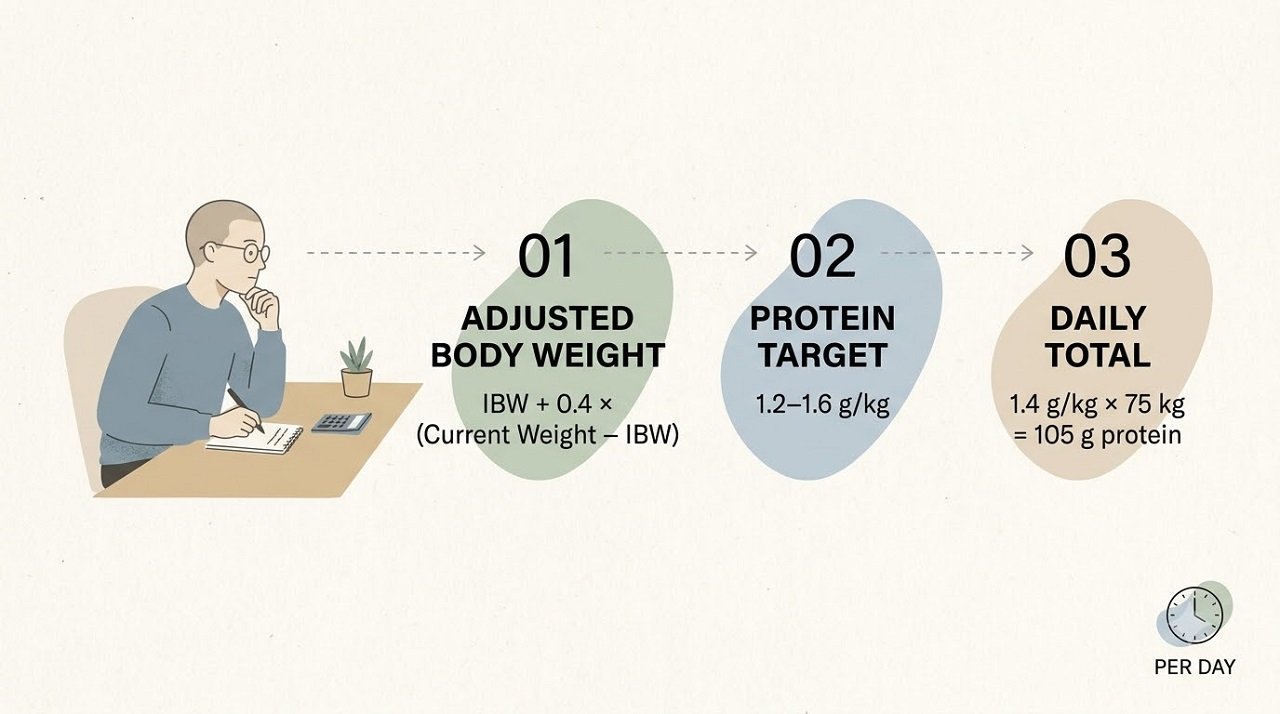
A 2026 narrative review published in Clinical Nutrition ESPEN synthesizes the evidence and provides a practical, dietitian-led framework. The authors recommend daily protein intakes of ≥1.2 g/kg, up to 1.6 g/kg in appropriate adults without chronic kidney disease, with meal-wise targets of 0.3–0.4 g/kg and 2.5–3 g of leucine per meal.
A separate study on protein intake in GLP-1 users used 1.2–2.0 g/kg of adjusted body weight as the reference range for hypocaloric diets. And a clinical trial abstract that combined GLP-1 therapy with high-protein guidance and resistance training used 0.8–1.6 g/kg per day as its target range, achieving a mean body weight loss of 15.85% with a relative increase in muscle mass of 5.05%.
Why adjusted body weight? If you have obesity, calculating protein on total body weight can overestimate needs because fat mass does not require the same protein support as lean mass. Adjusted body weight uses ideal body weight plus a fraction of the excess. Your doctor or dietitian can calculate this for you, but a common formula is: Ideal Body Weight + 0.4 × (Current Weight – Ideal Body Weight).
The practical translation for most adults: 80–120 grams of protein per day, with a floor of at least 60 grams.
2. The Timing: Why Spacing Matters as Much as the Total
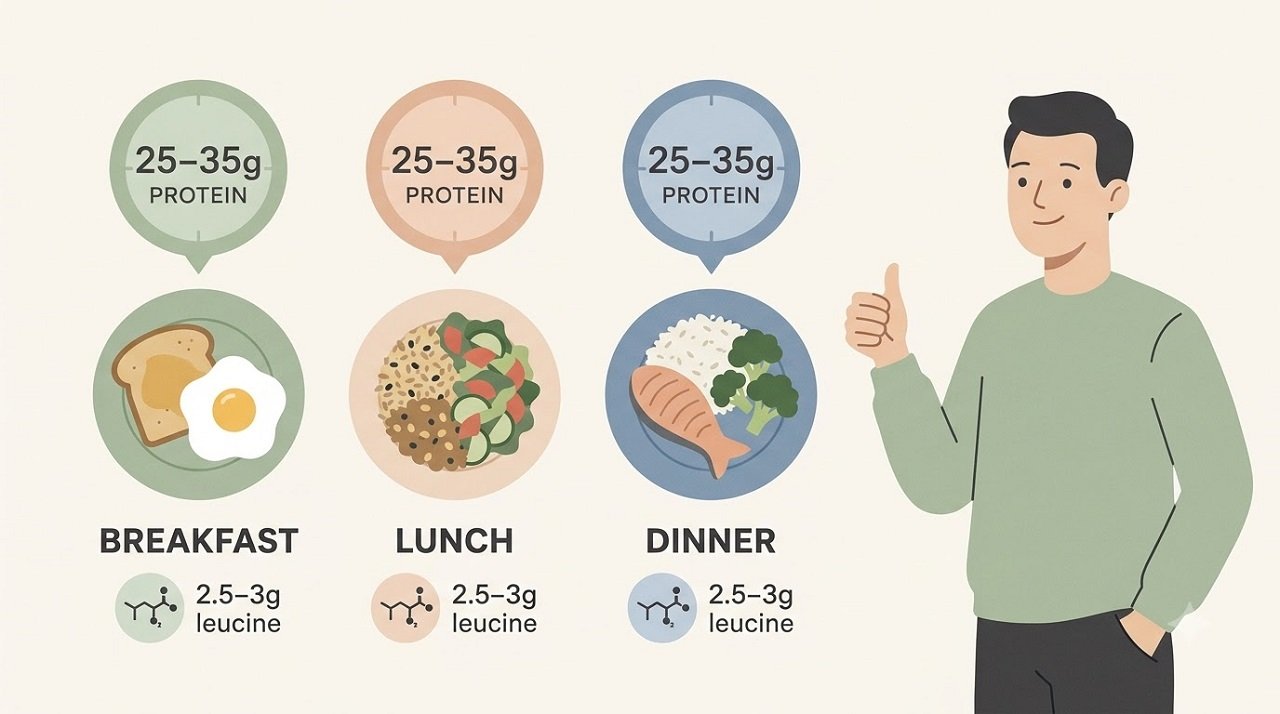
Muscle protein synthesis is not a switch that flips once per day. It is a pulsatile process that responds to each protein feeding. If you eat 80 grams of protein in one meal and nothing the rest of the day, you are not maximizing muscle preservation.
The 2026 Clinical Nutrition ESPEN review recommends meal-wise targets of 0.3–0.4 g/kg, which for a 75 kg adult translates to roughly 22–30 grams of protein per meal. Other clinical guidance recommends beginning each meal with 20–30 grams of protein from foods like fish, beans, chickpeas, or tofu, and aiming for 1.0–1.5 g/kg daily if moderately active.
The leucine threshold is the reason timing matters. Leucine is the amino acid that acts as the primary trigger for muscle protein synthesis. Research suggests that 2.5–3 grams of leucine per meal is the threshold for maximizing this response in most adults. You do not need to count leucine grams obsessively. You need to ensure each meal has a substantial, high-quality protein source—not just a token amount.
A practical meal template:
- Breakfast: Greek yogurt (20 g protein) with berries and nuts, or 2–3 eggs.
- Lunch: A palm-sized portion of chicken, fish, or tofu (25–30 g protein) with vegetables and a slow carbohydrate.
- Dinner: A palm-sized portion of salmon, lean beef, or lentils (25–30 g protein).
- Snack (if appetite allows): Cottage cheese, a protein shake, or a hard-boiled egg.
3. The Reality: Why Hitting the Number Feels Impossible (And What to Do)
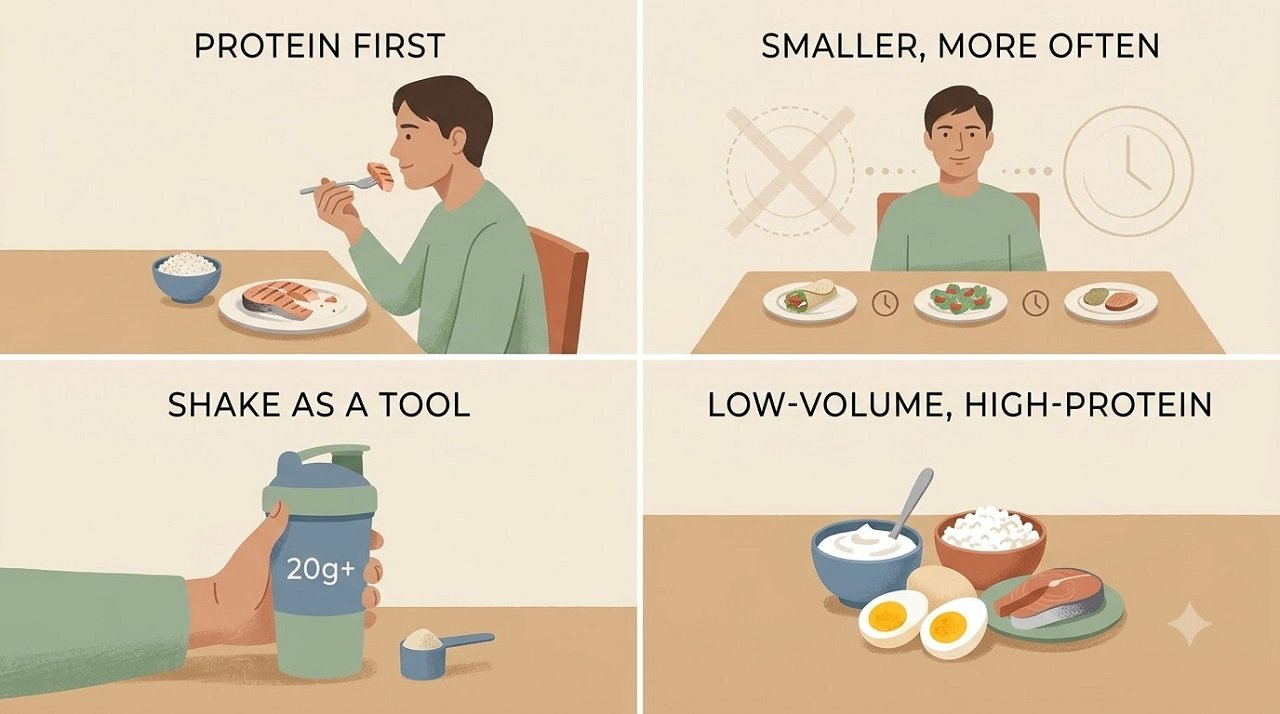
Here is the uncomfortable truth: only about 43% of GLP-1 users meet even the minimum protein target of 1.2 g/kg/day, according to a cross-sectional study of 60 adults using GLP-1 receptor agonists for weight loss. And the average intake in that sample was roughly 17.5% of calories from protein—not enough to protect lean mass during rapid weight loss.
The problem is not motivation. It is physiology. GLP-1 medications suppress appetite and slow gastric emptying. You feel full faster, stay full longer, and may experience nausea. Forcing down a large chicken breast is not realistic.
The solution is a strategy shift: prioritize protein density over meal volume.
The JAMA Internal Medicine guidance, summarized by University of Maryland Medical System, offers a practical framework: begin each meal with 20–30 grams of protein, and if appetite is very low, use protein shakes with at least 20 grams of protein per serving. Choose low-volume, protein-rich foods such as fish, eggs, Greek yogurt, and cottage cheese. Keep meals small but frequent—smaller meals plus snacks like fruit, a handful of nuts, or unsweetened yogurt—to maintain energy without overwhelming your digestive system.
The hierarchy of protein-dense, low-volume foods:
- Protein shakes and powders (20–30 g per serving, liquid volume is small)
- Greek yogurt and cottage cheese (high protein per spoonful)
- Eggs (6 g per egg, easy to eat when appetite is low)
- Canned fish, shrimp, and deli turkey (protein-dense, no cooking required)
- Tofu and tempeh (plant-based, versatile)
You are not aiming for a “balanced plate” in the traditional sense. You are aiming for protein first, volume second.
4. The Multiplier: Resistance Training Is Not Optional
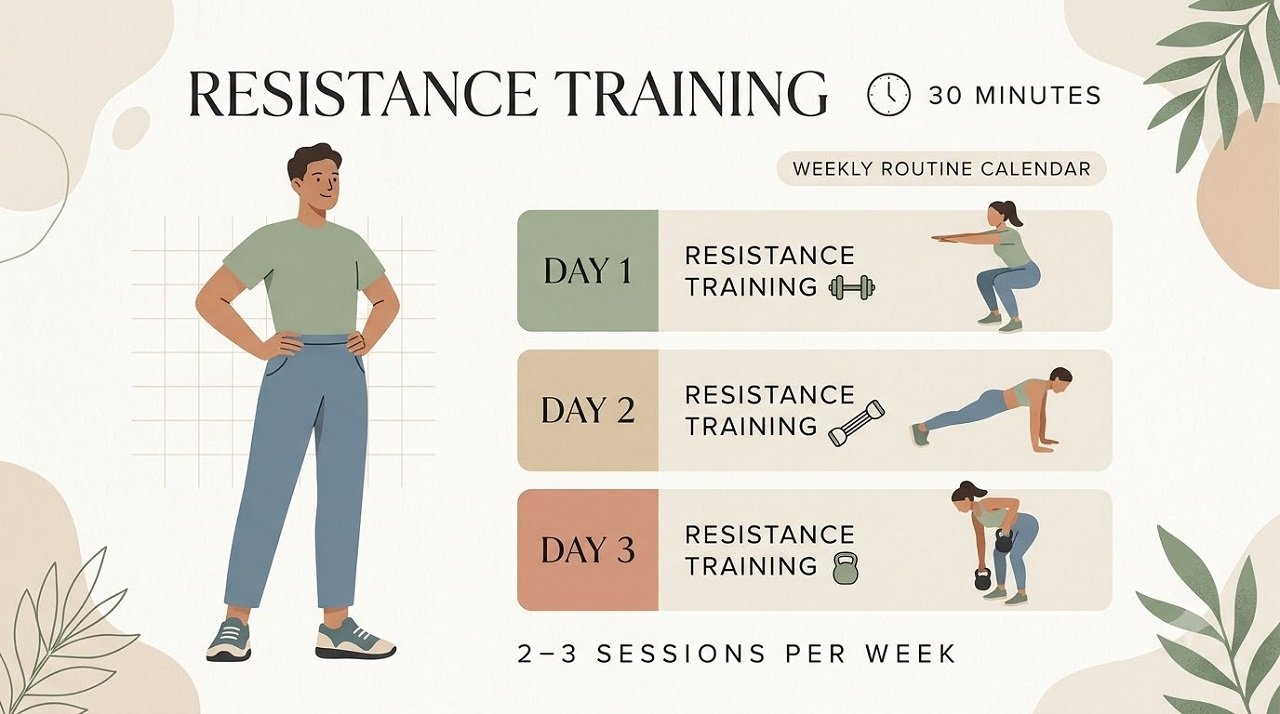
Protein alone will not preserve muscle if you do not give your muscles a reason to hold onto it.
The European Heart Journal review is unequivocal: resistance training is currently the suggested strategy for preserving skeletal muscle and functional capacity during pharmacologic weight loss, while optimized protein intake and other strategies may further mitigate muscle catabolism. A PubMed review on fat, muscle, and anti-obesity medications echoes this, noting that resistance training is the primary strategy and that adjunctive protein optimization can add further benefit.
A 2026 endocrine society abstract that combined GLP-1 therapy with high-protein guidance and at least two resistance training sessions per week reported a favorable shift in body composition: fat mass reduced by 5.32% while muscle mass increased by 5.05% over 12 months.
The minimum effective dose: Two to three sessions per week, each lasting 30–45 minutes. You do not need a gym. Bodyweight squats, incline push-ups, resistance band rows, and chair dips are sufficient to signal to your muscles that they are needed. The goal is not to become a powerlifter. The goal is to give your body a reason to keep the muscle it has.
5. The Special Cases: When the Standard Numbers Don’t Apply
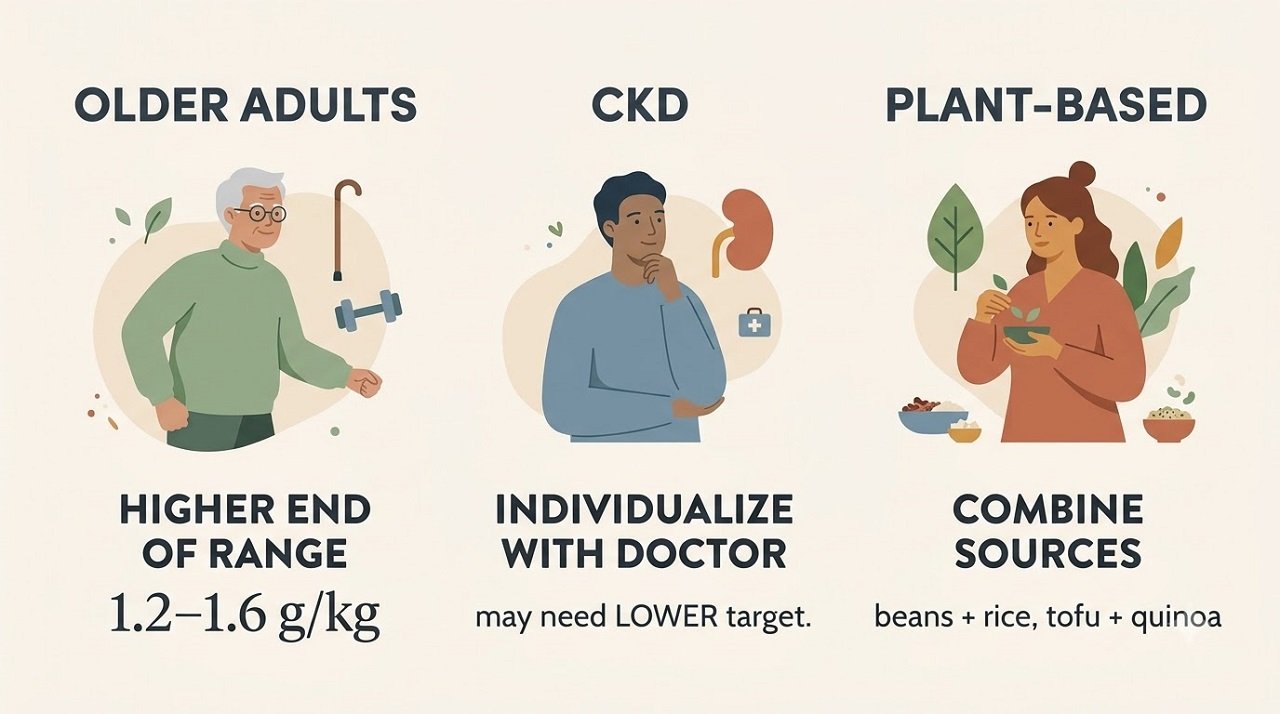
The 2026 Clinical Nutrition ESPEN review specifically addresses adaptations for older adults, type 2 diabetes, chronic kidney disease (CKD), vegetarian/vegan diets, and sarcopenic obesity. The standard numbers are a starting point, not a universal prescription.
Older adults: Muscle protein synthesis becomes less responsive to protein intake with age—a phenomenon called anabolic resistance. The review suggests that older adults may need to be at the higher end of the protein range, and the European obesity guideline specifically calls for “particular attention to muscle loss in older adults”.
Chronic kidney disease: Higher protein intake may be contraindicated depending on the stage of CKD. The review specifies “up to 1.6 g/kg in appropriate adults without chronic kidney disease”. If you have CKD, your protein target must be individualized with your nephrologist or dietitian.
Plant-based eaters: Plant proteins are generally lower in leucine and may be less anabolic than animal proteins. The solution is not to abandon plant-based eating—it is to combine sources (beans with rice, tofu with quinoa) and to be intentional about total intake and leucine content.
Sarcopenic obesity: If you already have low muscle mass and high body fat before starting GLP-1, the stakes are higher. The review flags this population as needing adapted monitoring and potentially more aggressive protein and resistance training targets.
6. The Monitoring: How to Know If It’s Working
You cannot manage what you do not measure. The 2026 review recommends monitoring schedules using DXA or bioelectrical impedance analysis (BIA) to track body composition changes, alongside a structured laboratory panel that includes vitamin D, B12, iron studies, folate, zinc, and thiamine in high-risk patients.
Practical metrics you can track without a lab:
- Protein intake: Use a simple app for one week to estimate your average daily grams. Most people are shocked by how low it is.
- Strength benchmarks: Can you do more push-ups or squats than you could a month ago? Are daily tasks (carrying groceries, climbing stairs) getting easier or harder?
- Body composition: If available, a DXA scan at baseline and every 3–6 months is the gold standard. BIA scales are less precise but can track trends.
The red flag: If you are losing weight rapidly but your strength is declining, your protein intake is low, and you are not resistance training, you are likely losing more lean mass than necessary. That is the moment to adjust.
The Bottom Line: Protein and Iron, Not Just a Shot
GLP-1 medications are powerful tools. But they are not a complete strategy. The research is clear: without adequate protein and resistance training, a meaningful portion of the weight you lose will be muscle.
The fix is not complicated, but it requires intention:
- Aim for 1.2–1.6 g/kg of adjusted body weight daily, with a practical target of 80–120 grams for most adults.
- Spread it across meals, with 25–35 grams per meal and a leucine threshold of 2.5–3 grams.
- Prioritize protein-dense, low-volume foods and use protein shakes as a tool when appetite is suppressed.
- Resistance train two to three times per week. This is not optional if muscle preservation is the goal.
- Monitor your strength and, if possible, your body composition. The scale alone does not tell you what you are losing.
You are not just trying to weigh less. You are trying to build a body that is metabolically stronger on the other side of the medication. Protein and resistance training are how you do that.
Frequently Asked Questions
How much protein to eat on GLP-1 to prevent muscle loss?
Most adults on GLP-1 medications should aim for 1.2–1.6 grams of protein per kilogram of adjusted body weight per day, which typically translates to 80–120 grams daily. If you have obesity, calculating on adjusted body weight is more accurate than total body weight. Begin each meal with 20–30 grams of protein.
Does GLP-1 cause muscle loss?
Yes, GLP-1 therapy is associated with lean-mass loss. Research shows that 26–40% of total weight lost on GLP-1 receptor agonists is lean mass, not just fat. This is not unique to GLP-1s—it also occurs with bariatric surgery and intensive calorie restriction—but it is clinically relevant because lean mass supports strength, metabolic rate, and long-term weight maintenance.
What protein is best on a GLP-1?
The best protein is protein you can actually eat and tolerate when your appetite is suppressed. Low-volume, protein-dense foods are ideal: Greek yogurt, cottage cheese, eggs, fish, shrimp, and lean poultry. If solid food is difficult, protein shakes with at least 20 grams of protein per serving are a practical tool. Plant-based eaters should combine sources (beans with rice, tofu with quinoa) to ensure adequate leucine intake.-5-11
How do I get enough protein when I’m not hungry?
Protein first at every meal. Take a bite of your protein source before you touch your carbohydrate or vegetable. Eat smaller, more frequent meals rather than three large ones. Keep protein shakes ready for low-appetite days. And do not force-feed—prioritize density over volume.
Can I prevent muscle loss on GLP-1 without exercise?
Protein alone helps, but it is not enough. The research consistently identifies resistance training as the primary strategy for preserving muscle during pharmacologic weight loss. Two to three sessions per week of bodyweight or resistance-band exercises is the minimum effective dose.
Should I stop GLP-1 if I’m losing muscle?
Do not stop your medication without consulting your prescribing doctor. The goal is not to stop the medication—it is to optimize your nutrition and exercise so that the weight you lose is higher quality. If you are concerned about muscle loss, the conversation to have with your doctor is about protein targets, resistance training, and body composition monitoring—not about stopping treatment abruptly.
Sources
- Johnson, B., McGlasson, T., Thomas, O., Kreider, R., & Jones, R. (2025). Suboptimal protein intake for hypocaloric diet needs while using glucagon-like peptide-1 receptor agonists. Journal of the International Society of Sports Nutrition. https://www.tandfonline.com/doi/10.1080/15502783.2025.2550139
- Medical nutrition in the glucagon-like peptide-1 (GLP-1) era: Protein strategies, micronutrient monitoring, and lean mass preservation. (2026). Clinical Nutrition ESPEN. https://www.sciencedirect.com/science/article/abs/pii/S2405457726004018
- The GLP-1 Nutritional Paradox: A Global Meta-Analysis of Sarcopenic Risks and Micronutrient Gaps in the Post-Obesity Era. (2026). Europe PMC. https://europepmc.org/article/PPR/PPR1311812
- Khan, M. S., et al. (2026). Fat, muscle, and anti-obesity medications in cardiovascular disease prevention. European Heart Journal. https://pubmed.ncbi.nlm.nih.gov/41914150/
- Thompson, D. (2025, July 16). Experts recommend healthy lifestyle changes alongside GLP-1 drug use. Medical Xpress. https://medicalxpress.com/news/2025-07-experts-healthy-lifestyle-glp-drug.html
- SAT-719 – Mitigating Sarcopenic Risk in GLP-1 Pharmacotherapy: Impact of a Multi-Pillar Digital Metabolic Reset Program on Muscle Mass Preservation. (2026). Endocrine Society. https://endo2026.endocrine.org/fsPopup.asp?PresentationID=1845247&mode=presInfo
- How Much Protein Should I Eat on a GLP-1? (2026). Ro. https://ro.co/weight-loss/how-much-protein-to-eat-glp-1/
- European obesity guideline: pair GLP-1s with nutrition, muscle, mental health. (2026). Epocrates. https://www.epocrates.com/online/article/european-obesity-guideline-pair-glp-1s-with-nutrition-muscle-mental-health












Disclaimer: This article is for informational and educational purposes only and is not a substitute for professional medical or nutrition advice. If you have diabetes, chronic kidney disease, or other health conditions, consult your healthcare provider or a registered dietitian before making significant dietary changes.
You sit down to eat. You take two bites. Maybe three. And then a wall goes up—not nausea, not disgust, just a heavy, unshakable fullness that makes the rest of the plate feel impossible.
If this is you on a GLP-1, you are experiencing early satiety, one of the most common and least explained effects of these medications. And the solution is not to force more food. The solution is to change the order in which you eat it.
This is called meal sequencing, and the research on it is remarkably consistent: the sequence in which you consume protein, fiber, and carbohydrates can meaningfully influence satiety hormones, blood sugar response, and how full you feel after a meal. For GLP-1 users, it is not a gimmick. It is a practical strategy for making every bite count when your stomach will only accept a few.
Why Meal Sequencing Matters More on a GLP-1
GLP-1 medications slow gastric emptying and reduce gastric accommodation—food lingers in your stomach longer, and your stomach does not stretch to hold a large meal. The result is that fullness arrives after a handful of bites instead of a full plate.
Meal sequencing works with this physiology rather than against it. Research on the subject explains that consumption of protein and/or fat before carbohydrate promotes secretion of glucagon-like peptide-1 (GLP-1) from the gut and delays gastric emptying. In other words, the order of your food can amplify the very mechanism your medication is already activating.
A systematic review on macronutrient ordering found that a carbohydrate-last meal pattern was effective at lowering postprandial glucose excursions and showed some evidence of increasing GLP-1 and GIP levels. The PATTERN study, a randomized controlled crossover trial in healthy adults, found that a vegetable-first, meat-second, rice-last (V-M-R) sequence stimulated higher GLP-1 release than other meal sequences.
For a GLP-1 user, this means a simple, free, side-effect-free tool: eat your protein first, save your carbohydrates for last.
Key Takeaways
- Protein first, carbohydrates last. The order of your meal can boost natural GLP-1 secretion and extend satiety.
- Aim for 25–30 g of protein per meal. Research shows this range has a strong impact on satiety levels.
- Add fiber before carbohydrates. Vegetables or a small salad before the starch can further slow digestion and flatten blood sugar.
- The V-M-R sequence (vegetables → meat → rice) stimulates the highest GLP-1 release in randomized trials.
- Meal sequencing is a behavioral tool, not a calorie hack. It helps you feel fuller on less volume—it does not replace the need for adequate protein and resistance training.
- It is practical, free, and requires no supplements. You are simply changing the order of the food already on your plate.
- The research is promising but not definitive. A systematic review rated the certainty of evidence as low, so treat it as a helpful tool, not a guaranteed cure.
- Protein-first is especially critical on a GLP-1 because the medication already suppresses appetite—sequencing ensures the protein is not the food left behind.
1. The Science of Food Order: How Sequencing Works
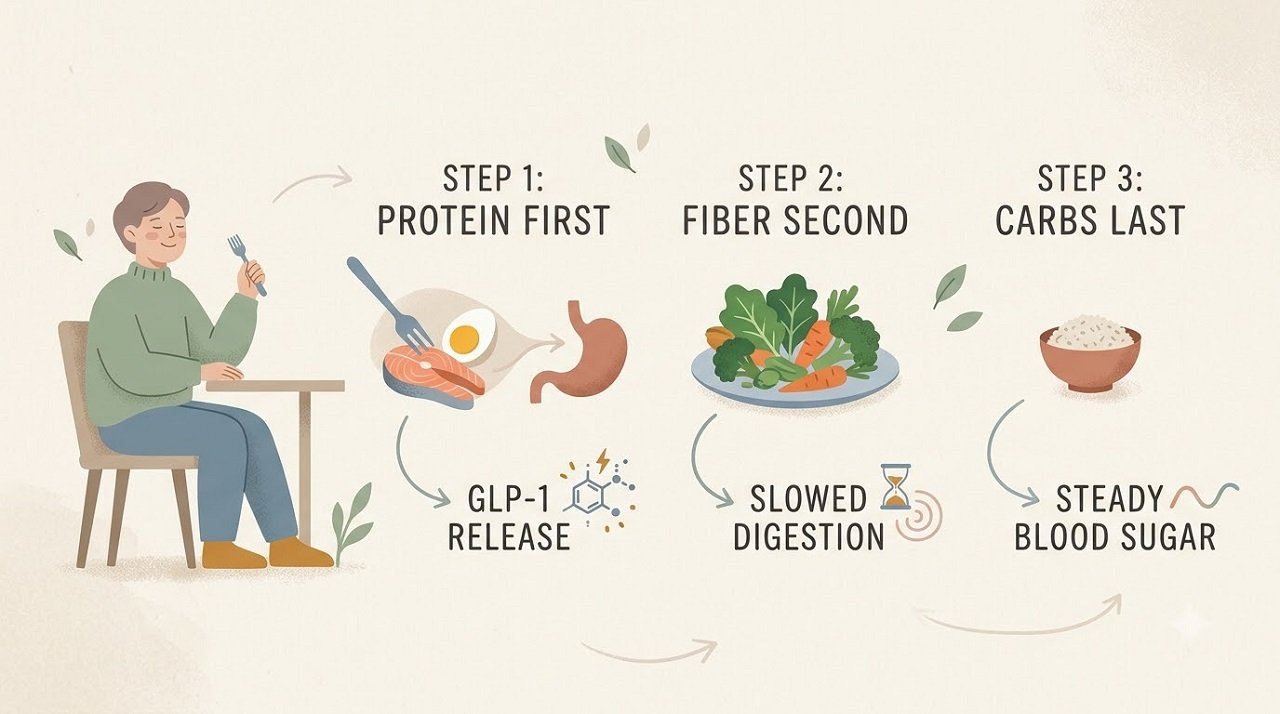
The mechanism behind meal sequencing is rooted in the incretin effect—the phenomenon where food in the gut triggers the release of hormones that regulate digestion, satiety, and blood sugar.
A review published in Nutrients explains the chain of events clearly: consumption of protein and/or fat before carbohydrate promotes secretion of GLP-1 from the gut, ameliorates secretions of insulin and glucagon, and delays gastric emptying—thereby improving postprandial glucose excursion. GLP-1 is known to suppress appetite by acting on the hypothalamus via the afferent vagus nerve.
In practical terms, this means that when you eat your protein first, you are giving your body a head start on the satiety signaling that would otherwise arrive later—or not at all, if you fill up on carbohydrates first.
A randomized controlled crossover trial in healthy adults found that the V-M-R sequence (vegetables, then meat, then rice) stimulated higher GLP-1 release than other meal sequences and attenuated the glycemic response without increasing demand for insulin. The researchers concluded that the sequence of food intake has “great potential as a novel and simple behavioral strategy”.
2. The Protein-First Protocol: What to Eat and In What Order
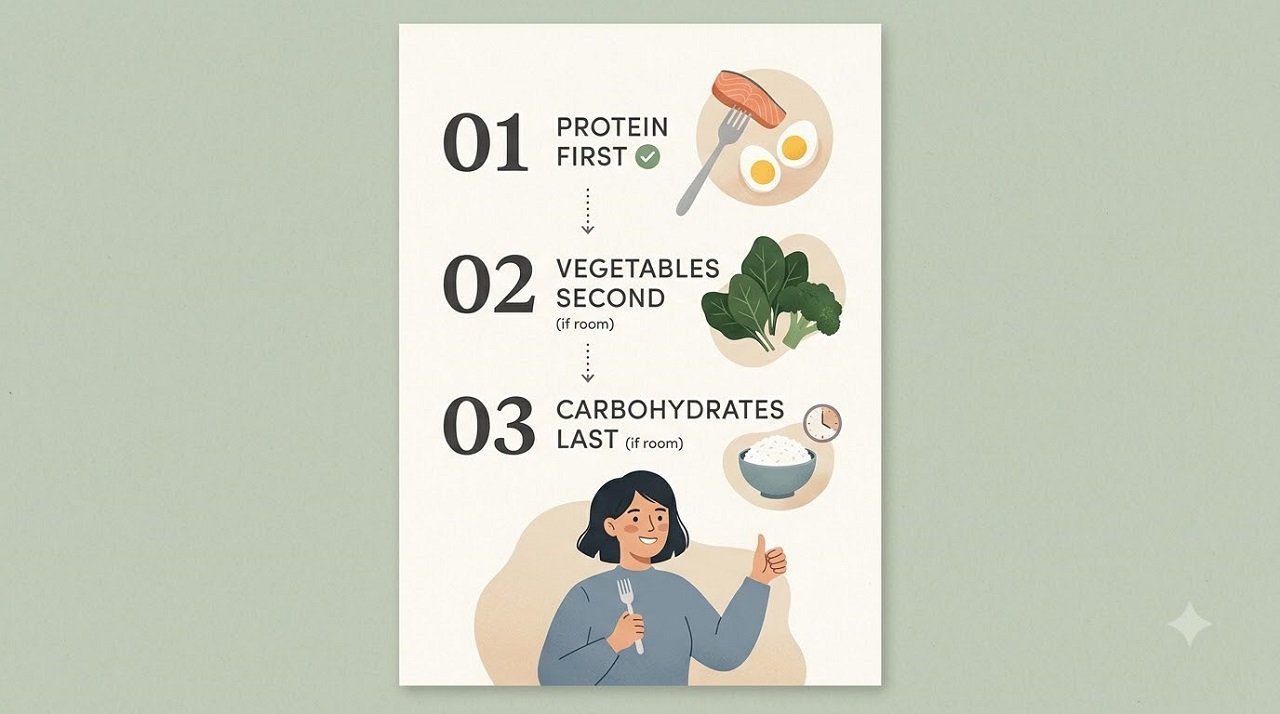
The research supports a specific order: protein first, fiber second, carbohydrates last.
Ohio State University’s registered dietitian guidance is explicit: eating protein and fiber before carbohydrates helps boost GLP-1 hormones, which signal more fullness. The recommended plate order is to start with vegetables, move on to protein and healthy fats, and finish with carbohydrates. The PATTERN study found that the V-M-R sequence (vegetables, meat, rice) produced the highest GLP-1 release. A systematic review in Diabetes/Metabolism Research and Reviews concluded that a carbohydrate-last meal pattern effectively reduces postprandial glucose excursions in individuals with diabetes and showed evidence of increasing GLP-1 levels.
The practical protocol for GLP-1 users:
- Take three deliberate bites of protein before touching anything else on the plate. This ensures that even if you are full after three bites, the protein is already in.
- Then move to vegetables or fiber (a small handful of spinach, a few cherry tomatoes) if you have room.
- Leave carbohydrates for last (rice, bread, pasta, potatoes)—and only if you are still hungry.
The goal is not to force a full plate. The goal is to prioritize the most satiety-boosting, muscle-preserving macronutrient in the smallest possible volume.
3. Why 25–30 Grams of Protein Per Meal Is the Target
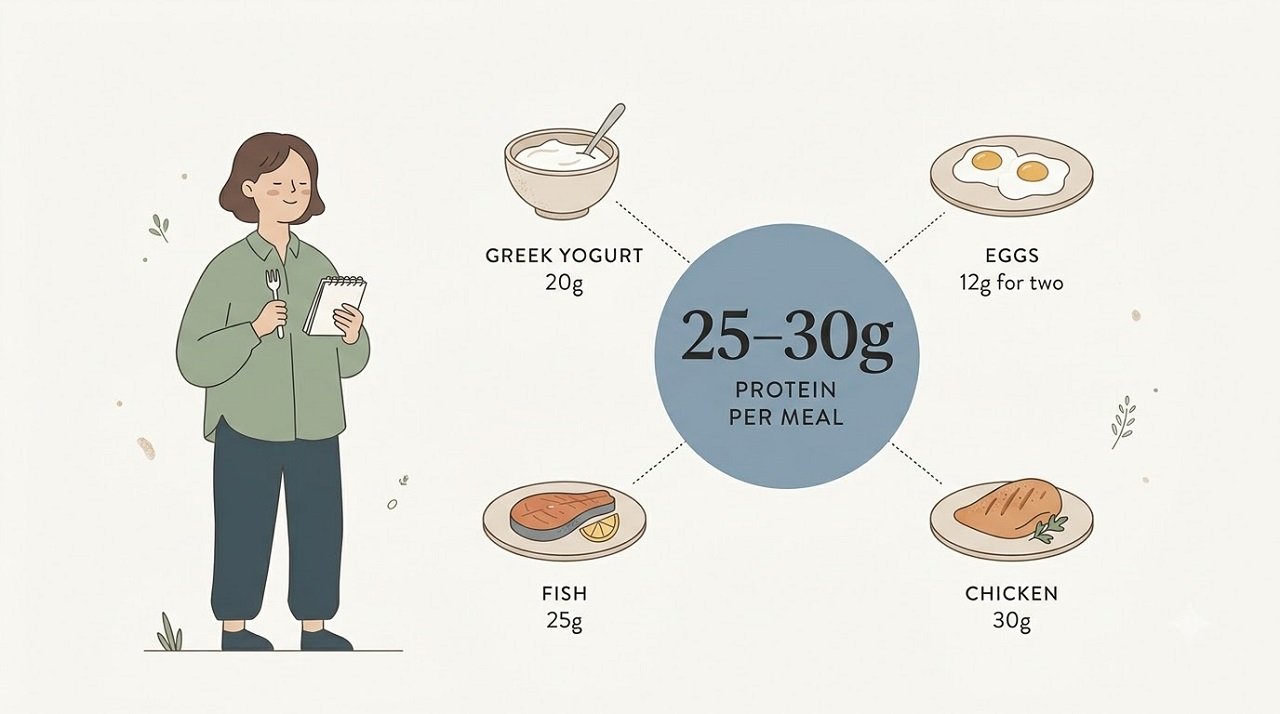
The research is consistent on the protein threshold for satiety. Ohio State University’s guidance states that at least 25–30 g of protein per meal has a strong impact on satiety levels. The UAE randomized crossover trial found that 25–30 g of protein per meal can increase satiety and reduce energy intake, noting that the 100 g of chicken breast used in the study contained approximately 30 g of protein.
For GLP-1 users, this is the number to anchor every meal around. If you can only eat a few bites, those bites should be protein-dense enough that even a small portion delivers a meaningful dose.
Practical translation:
- Greek yogurt: 3/4 cup delivers roughly 20 g.
- Eggs: Two large eggs deliver about 12 g.
- Canned fish: 3 oz of tuna or salmon delivers 20–25 g.
- Chicken or fish: A palm-sized portion delivers 25–30 g.
- Protein shake: One scoop of whey isolate delivers 20–30 g in a small liquid volume.
The goal is not to eat a large meal. The goal is to ensure that whatever you do eat clears the 25 g protein threshold before fullness shuts you down.
Hit Your Protein Target Without the Guesswork
Wondering what your exact daily protein number should be? Our complete guide on how much protein to eat on GLP-1 to prevent muscle loss breaks down the adjusted body weight formula and the research-backed range.
4. Meal Sequencing for Blood Sugar and Diabetes
If you have diabetes or prediabetes alongside your GLP-1 therapy, meal sequencing has an additional evidence base.
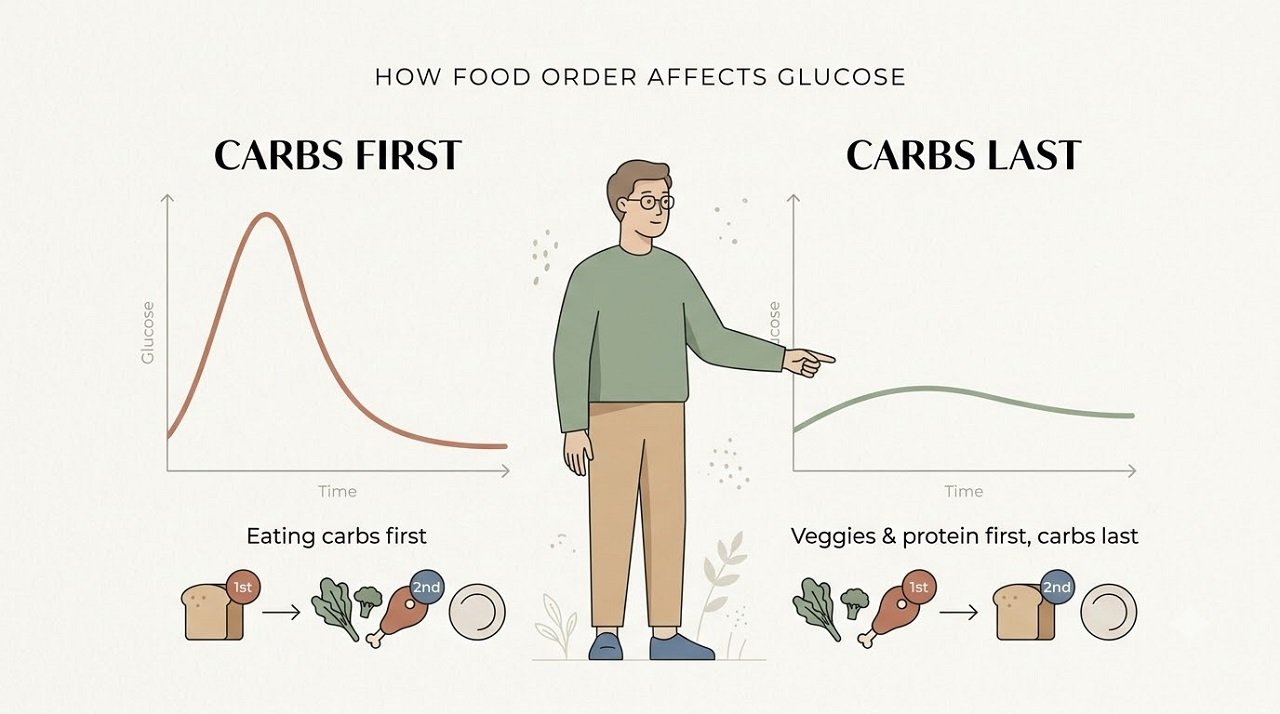
Harvard Health reports that proponents of food sequencing say it may help manage blood sugar and control appetite, especially for people with diabetes, prediabetes, or gestational diabetes. A systematic review found that when carbohydrates are eaten last, blood sugar rises tend to be more moderate within 30 to 90 minutes after a meal.
The mechanism: when you eat vegetables and protein first, the fiber and protein slow the absorption of carbohydrates you eat later, meaning blood sugar rises more gradually rather than spiking sharply. A systematic review in Diabetes/Metabolism Research and Reviews concluded that carbohydrate-last meal patterns effectively reduce postprandial glucose excursions in individuals with diabetes and showed some evidence of lowering insulin levels and increasing GLP-1 and GIP levels. The PATTERN study found that the V-M-R sequence attenuated the glycemic response compared with rice-first sequences.
The practical translation: If you are managing blood sugar, the same sequence that helps with early satiety—protein first, carbs last—also helps with glucose control. The two goals are aligned.
5. Meal Sequencing for Weight Loss: What the Research Actually Says
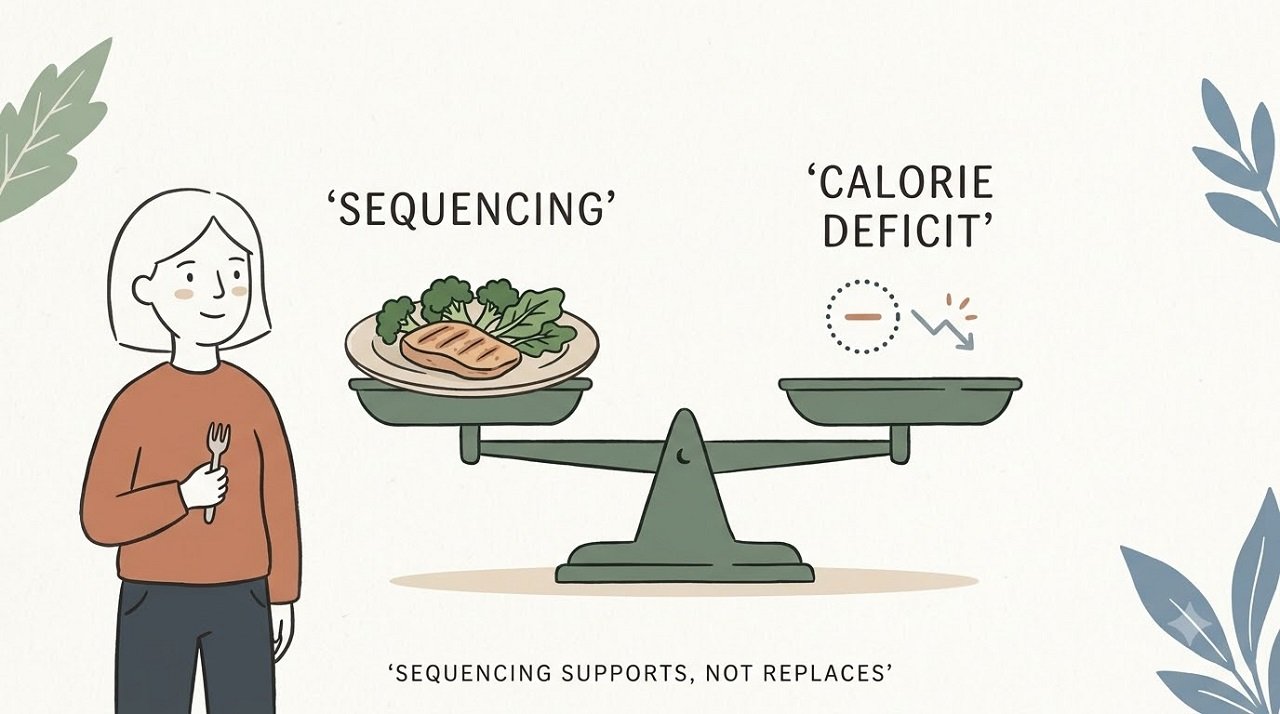
This is where honesty matters. Meal sequencing is not a magic bullet for weight loss, and the research reflects that.
A randomized controlled pilot study of the food order behavioral intervention in prediabetes found that the food-order group decreased body weight by 3.6 lbs and showed a trend toward lower HbA1c, with sensitivity analysis showing significant weight loss in pre-COVID participants.
A cluster-randomized trial in prediabetes found that the group receiving meal-sequence instructions exhibited greater reduction in body weight than the conventional guidance group. However, a systematic review rated the certainty of evidence as low, and a news analysis noted that “there is no strong, long-term evidence that meal sequencing alone leads to weight loss”.
The honest takeaway: Meal sequencing is a supporting behavioral tool, not a standalone weight-loss intervention. It helps you feel fuller on less volume, which can make a calorie deficit easier to sustain. It does not replace the need for adequate protein, resistance training, and overall energy balance.
For GLP-1 users, this is actually good news. The medication is already doing the heavy lifting on appetite suppression. Meal sequencing simply ensures that the food you can eat is optimized for satiety and muscle preservation.
6. Meal Sequencing Breakfast: The Most Important Meal to Sequence
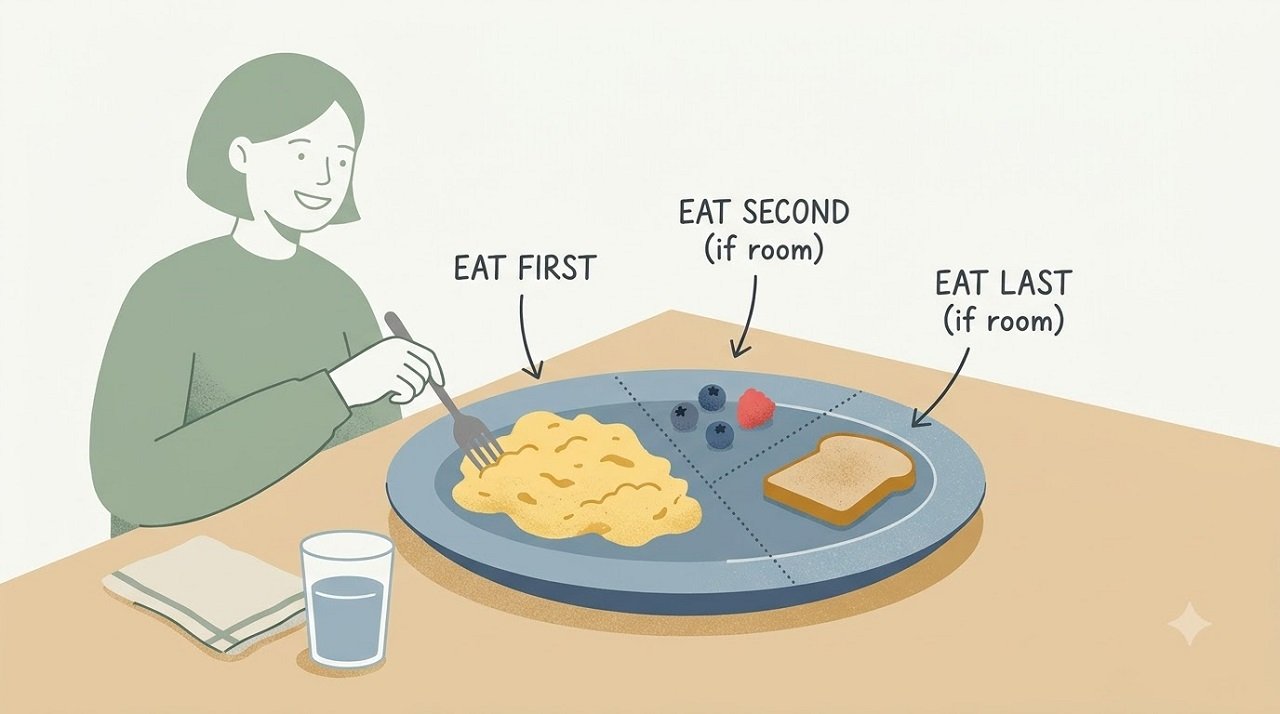
Breakfast is where meal sequencing matters most, because it is the meal where early satiety is often the most pronounced and where the temptation to reach for quick carbohydrates is the highest.
The Healthwise guidance for GLP-1 users is blunt: eat protein first at every meal, and the breakfast examples it provides are built around this principle—cottage cheese with blueberries, Greek yogurt, or scrambled eggs, each delivering 27–30 g of protein.
A protein-first breakfast sequence:
- Eggs, Greek yogurt, cottage cheese, or a protein shake first—before the toast, fruit, or cereal.
- A small portion of fruit or vegetables second, if there is room.
- Toast, cereal, or other carbohydrates last, and only if you are still hungry.
If you struggle specifically with breakfast, our guide on what to eat for breakfast on Ozempic when you can only eat 3 bites breaks down the morning protocol in more detail. For the deeper protein math, see our complete guide on how much protein to eat on GLP-1 to prevent muscle loss.
Struggling Specifically in the Morning?
If your appetite shuts down at breakfast, don’t miss our step-by-step protocol on what to eat for breakfast on Ozempic when you can only eat 3 bites —including the 3-bite sequencing plan.
7. The Limitations: When Sequencing Is Not Enough
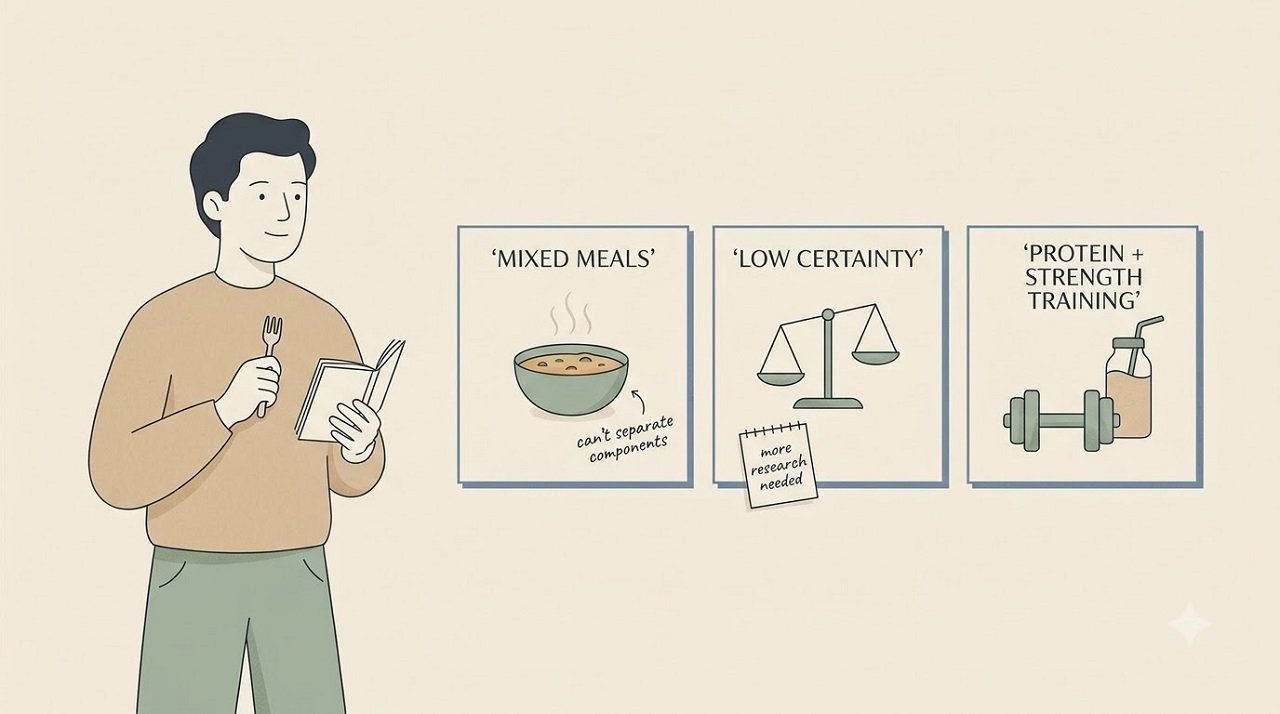
Meal sequencing is a useful tool, but it is not a universal solution. There are real-world limitations you should know about.
Mixed meals are hard to sequence. As the Providence registered dietitian notes, “when we eat combination foods, such as whole grains and starchy veggies (carb + fiber), beans and lentils (carb + fiber + protein), or even mixed meals like soups, casseroles, stir fries, we can’t always separate out the fiber from the protein and carbohydrates”. In those cases, the overall recommendation is to focus on balanced meals and hitting your fiber and protein goals rather than forcing a rigid sequence.
The evidence certainty is low. The systematic review on macronutrient ordering rated the certainty of evidence as low, with significant heterogeneity in study design limiting overall confidence in the findings.
Sequencing does not replace the fundamentals. Protein first is a strategy to ensure you hit your protein target when appetite is suppressed. It is not a substitute for adequate total protein intake or resistance training—both of which are required for muscle preservation on a GLP-1.
The bottom line: Use meal sequencing as a practical, free, low-risk tool. Do not treat it as a cure-all.
Ready to Solve the 100g Protein Problem?
This is the deep-dive guide on Ozempic makes me full after 2 bites but I need 100g protein —covering liquid protein, the best powders, and a plan for the days you can barely eat.
Frequently Asked Questions
Does meal sequencing help with weight loss?
It can support weight loss by increasing satiety and reducing the volume of food you need to feel full, but the evidence for sequencing alone as a weight-loss intervention is low-certainty. A pilot study in prediabetes found modest weight loss in the food-order group, but a systematic review rated the certainty of evidence as low. Treat it as a supporting tool, not a standalone solution.
What is the best food order for blood sugar?
Protein and fiber first, carbohydrates last. A systematic review found that carbohydrate-last meal patterns effectively reduce postprandial glucose excursions in individuals with diabetes and showed some evidence of increasing GLP-1 levels. Harvard Health notes that when carbohydrates are eaten last, blood sugar rises tend to be more moderate within 30 to 90 minutes after a meal.
Does eating protein first help you feel full?
Yes. Ohio State University guidance states that at least 25–30 g of protein per meal has a strong impact on satiety levels. Research shows that eating protein before carbohydrates helps boost GLP-1 hormones, which signal more fullness.
What is the meal sequencing strategy for GLP-1?
Protein first, fiber second, carbohydrates last. This sequence boosts natural GLP-1 secretion, slows gastric emptying, and extends satiety—which is especially valuable when medication-induced early satiety makes it difficult to eat a full meal. Aim for 25–30 g of protein per meal before touching carbohydrates.
Does meal sequencing work for diabetes?
Yes, the research is strongest in this area. A systematic review concluded that carbohydrate-last meal patterns effectively reduce postprandial glucose excursions in individuals with diabetes and showed some evidence of lowering insulin levels and increasing GLP-1. A randomized trial found that the V-M-R sequence (vegetables, meat, rice) attenuated the glycemic response without increasing insulin demand.
What is meal sequencing for breakfast?
Eat your protein first—eggs, Greek yogurt, cottage cheese, or a protein shake—before the toast, fruit, or cereal. Aim for 25–30 g of protein. Then have a small portion of fruit or vegetables if there is room, and save any carbohydrates for last.
Is meal sequencing worth trying on a GLP-1?
Yes, it is a free, low-risk, side-effect-free tool that aligns with the medication’s mechanism. It helps you prioritize protein when appetite is suppressed and may extend satiety. However, it is not a substitute for adequate protein intake, resistance training, or medical guidance.
What does Reddit say about food sequencing?
Community discussions on platforms like Reddit reflect strong anecdotal support for protein-first eating, with users reporting improved satiety and flatter glucose curves. However, these are anecdotal reports, not clinical evidence. The research evidence, while promising, is still rated as low-certainty.
Sources
- Iizuka, K. (2020). A Review of Recent Findings on Meal Sequence: An Attractive Dietary Approach to Prevention and Management of Type 2 Diabetes. Nutrients. https://pmc.ncbi.nlm.nih.gov/articles/PMC7551485/
- McKenzie, R., Sterling, C., O’Hara, H., & Woodside, J. (2026). The Impact of Macronutrient Ordering on Postprandial Glycaemic Control in Diabetes: A Systematic Review. Diabetes/Metabolism Research and Reviews. https://onlinelibrary.wiley.com/doi/full/10.1002/edm2.70228
- Sun, L., Goh, H. J., Govindharajulu, P., Leow, M. K., & Henry, C. J. (2020). Postprandial glucose, insulin and incretin responses differ by test meal macronutrient ingestion sequence (PATTERN study). Clinical Nutrition. https://oar.a-star.edu.sg/public/communities-collections/articles/16303
- Hernandez, J. (2025, December 8). Eat Smart to Help Feel Full Longer. Ohio State University. https://pfmx01.osumc.edu/news/eat-smart-help-feel-full-longer
- Providence Basecamp. (2025, August). Ask the RD. https://providencebasecamp.org/asktherd/august2025
- Hendley, J. (2026, April 16). Is food sequencing worth a try? Harvard Health. https://www.health.harvard.edu/diet-and-nutrition/is-food-sequencing-worth-a-try
- Postprandial Glucose and Insulin Response to Meal Sequence Among Healthy UAE Adults: A Randomized Controlled Crossover Trial. (2024). Diabetes, Metabolic Syndrome and Obesity. https://www.tandfonline.com/doi/full/10.2147/DMSO.S468628
- Eating and Lifestyle Tips While Taking GLP-1 Medications. (2026, March 12). Healthwise. https://www.healthwise.net/mystlukes/Content/StdDocument.aspx?DOCHWID=custom.cn17
- A Randomized Controlled Pilot Study of the Food Order Behavioral Intervention in Prediabetes. (2023). MDPI. https://www.mdpi.com/2072-6643/15/20/4452
PubMed.https://pubmed.ncbi.nlm.nih.gov/37892527/
Health Tips
Ozempic Makes Me Full After 2 Bites but I Need 100g Protein: How to Hit Your Target Anyway
Disclaimer: This article is for informational and educational purposes only and is not a substitute for professional medical or nutrition advice. Protein needs vary based on kidney function, medical history, and individual circumstances. Always consult your prescribing healthcare provider or a registered dietitian before making significant dietary changes, especially if you have chronic kidney disease.
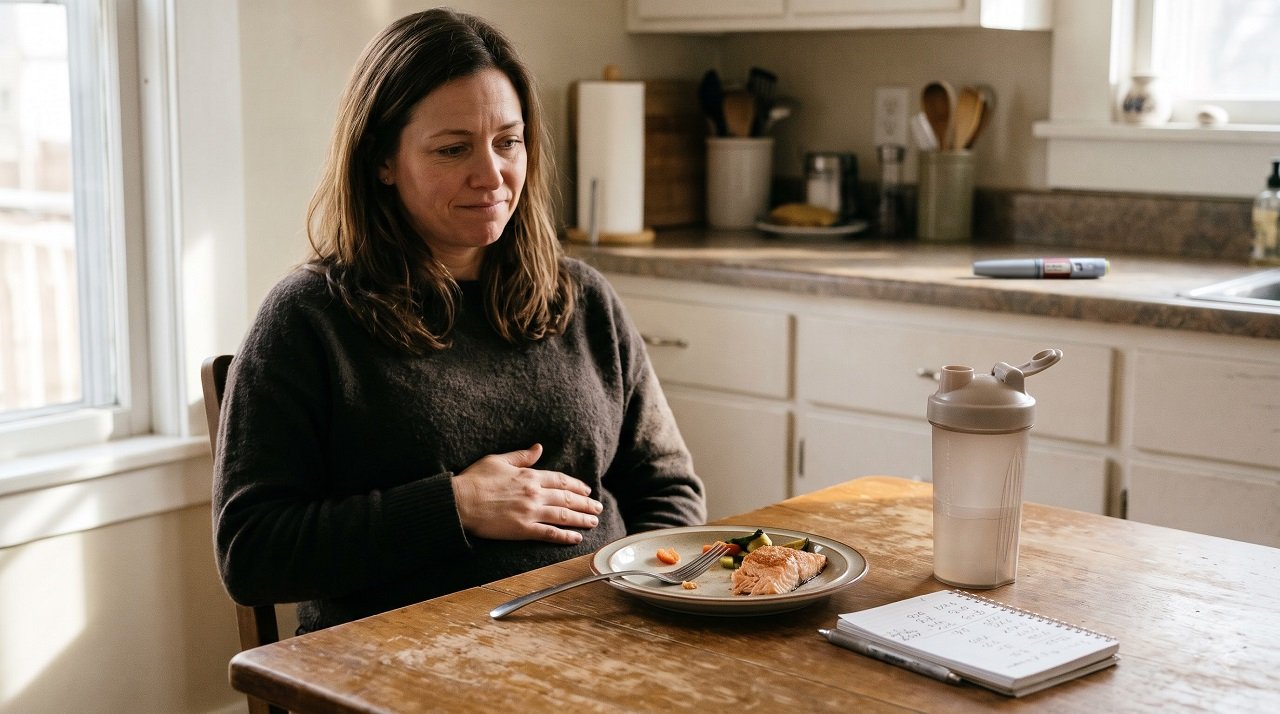
You sit down to eat. You are genuinely hungry—or at least, you think you are. You take two bites. Maybe three. And then a wall goes up.
Not nausea. Not disgust. Just full. Uncomfortably, immediately full, the way you would feel after a holiday dinner, except you have eaten the equivalent of an appetizer.
And then the panic sets in: I still need 100 grams of protein today. How am I supposed to get there when I can barely eat two bites?
If this is you, you are not doing anything wrong. You are experiencing early satiety, one of the most common and least explained effects of GLP-1 medications. And it creates a very specific, very solvable problem: how do you hit a protein target that feels impossible when your stomach will only accept a few bites at a time?
This guide answers that question directly. It explains the mechanism, gives you a protein-first sequencing strategy, tells you how to choose the right protein powder, and provides a practical plan for hitting 100 grams of protein even on days when your appetite shuts down.
Why You Feel Full After Two Bites (The Mechanism)
GLP-1 medications do not just “reduce appetite” in a vague sense. They change the mechanics of digestion.
Research on GLP-1 and gastric function shows that the hormone slows gastric emptying—food lingers in your stomach far longer than it used to. Normally, your stomach empties as you eat, draining from the bottom while you add from the top, so the stretch builds gradually. On a GLP-1, the drain is nearly closed. Whatever you ate at breakfast may still be sitting there when you start lunch.
There is a second layer. The upper stomach normally relaxes to accommodate incoming food, a reflex called gastric accommodation. GLP-1 signaling appears to blunt how much that reflex gives, so the same volume of food presses harder against the walls. Less give, more stretch, earlier stop.
The result: your stretch receptors reach their threshold after a handful of bites instead of a full plate, and the “enough” signal arrives early and loud. This is not a malfunction. It is the intended mechanism doing exactly what it does.
The problem is downstream. Protein is the most satiating macronutrient, meaning it is often the food your body is least interested in when you are already full. So the very nutrient you need most during weight loss becomes the hardest one to eat.
Key Takeaways
- 100 g of protein is a realistic and research-supported target. A 2025 joint advisory recommends 80–120 g daily for most adults during active weight loss.
- Volume is the enemy, protein density is the goal. When you can only eat a few bites, every bite must count.
- Eat protein first, always. Begin each meal with 20–30 g of protein before touching carbohydrates.
- Liquid protein is a tool, not a failure. Protein shakes with at least 20 g per serving are explicitly recommended when appetite is very low.
- Whey isolate is the gold standard for muscle preservation. It is fast-digesting, low-lactose, and rich in leucine.
- Distribute protein across 3–5 eating windows, not one large meal. Aim for 25–30 g per main meal.
- Calories still matter, but protein comes first. A 1,600 kcal diet with 25–30% protein is a common framework.
- Resistance training is the multiplier. Protein without resistance training is necessary but not sufficient.
1. The 100 g Target: Why It Is Realistic (and How to Calculate Yours)
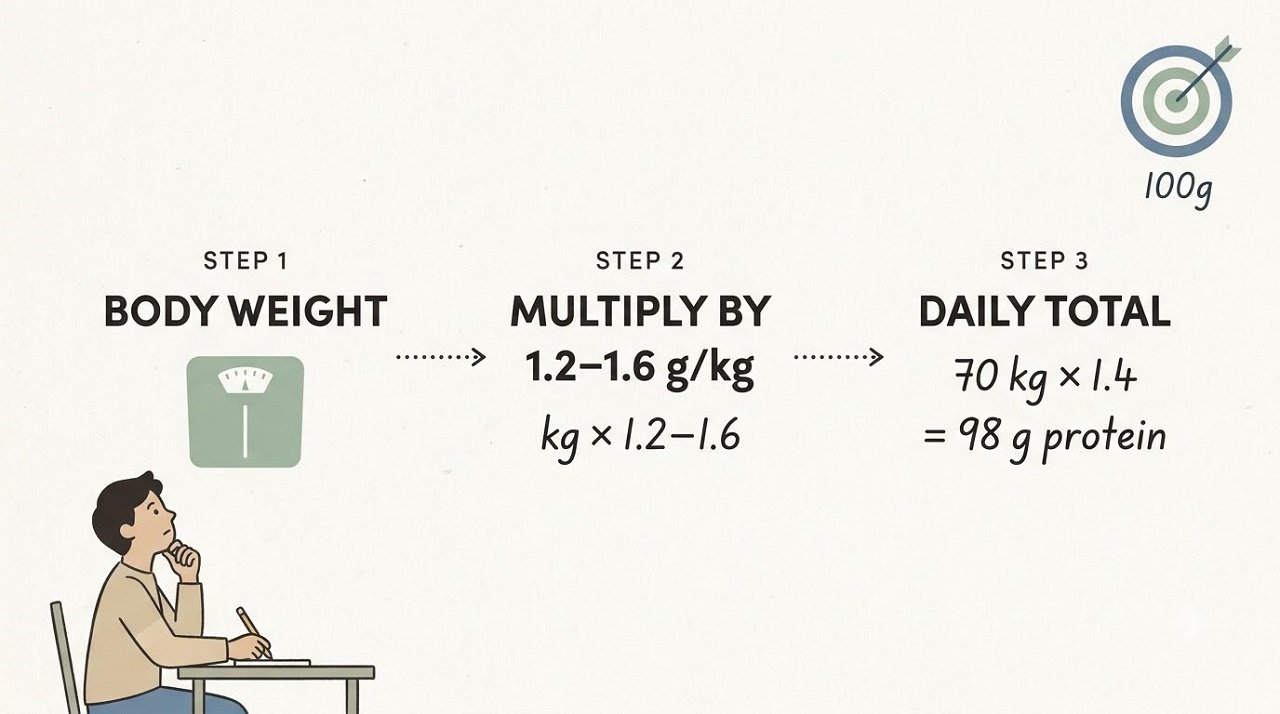
A practical starting point for many adults on a GLP-1 is 80–120 g of protein per day, or roughly 1.0–1.2 g/kg/day for general guidance, with moderately active adults benefiting from 1.0–1.5 g/kg/day. The JAMA patient page recommends 1.0–1.5 g of protein per kg of body weight daily if moderately active. A 2025 expert consensus statement recommends 1.2–1.5 g/kg actual body weight/day, or 25–30% of energy on a 1,600 kcal/day diet.
Why 100 g is a reasonable target: For a 70–80 kg adult, 1.2–1.5 g/kg lands almost exactly at 84–120 g. The “100 g” figure is not arbitrary—it sits squarely in the middle of the evidence-based range for most adults during active weight loss.
If you have obesity: Calculating on total body weight can overshoot. Many clinicians use adjusted body weight or ideal body weight for the calculation. A simple approach is to use your goal weight or a reference weight rather than your current weight.
If you have chronic kidney disease: Higher protein targets may be contraindicated. Your protein target must be individualized with your nephrologist or dietitian. Do not apply the 100 g target without medical guidance.
“For a full breakdown of adjusted body weight and the exact protein range, see our guide on how much protein to eat on GLP-1 to prevent muscle loss.”
2. The Sequencing Strategy: Protein First, Every Single Time
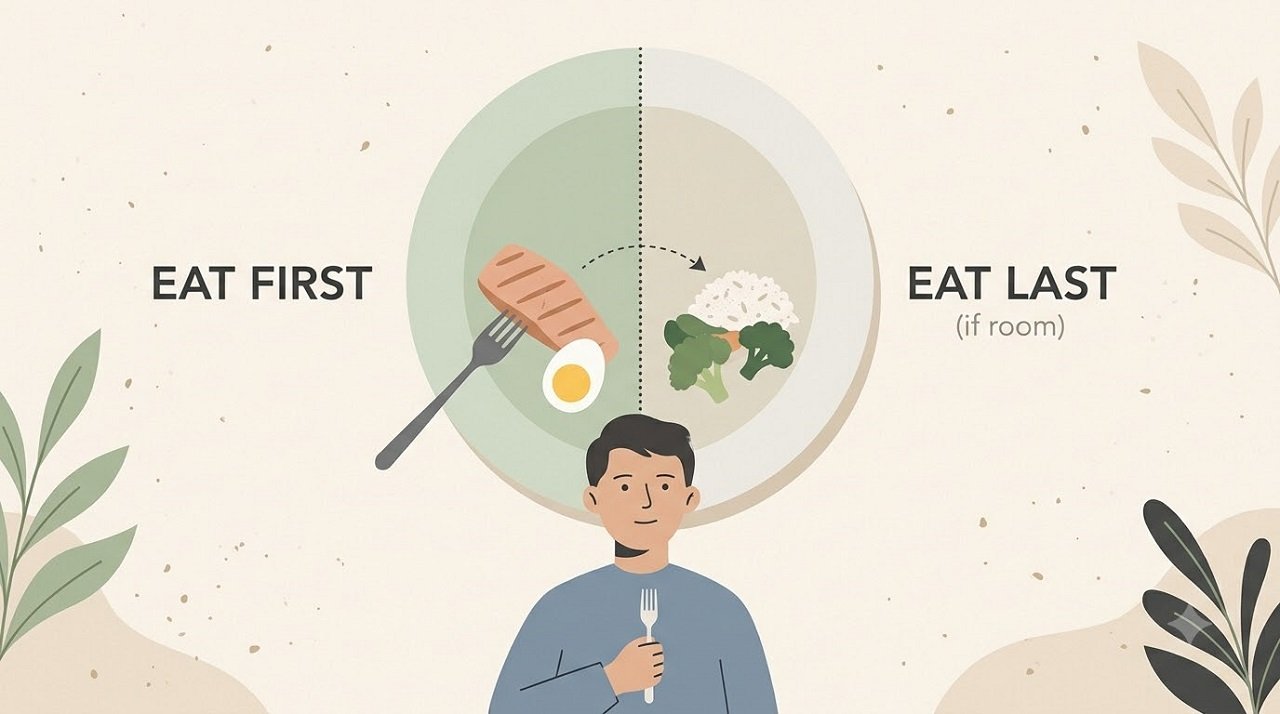
If you take only one thing from this article, take this: the order in which you eat matters as much as what you eat.
On a GLP-1, fullness arrives fast. If you eat your rice, bread, or vegetables first, you will be done before you have touched the protein. The JAMA guidance is explicit: begin each meal with 20 to 30 g of protein from foods like fish, beans, chickpeas, or tofu. The 2025 joint advisory echoes this, recommending that protein-rich foods be consumed first in a meal to increase the likelihood of sufficient intake.
The practical rule: Put your protein on the fork first. Take three bites of protein before you touch anything else on the plate. If you are full after those three bites, you have still consumed the most important part of the meal.
The meal sequence:
- Protein first (eggs, fish, Greek yogurt, cottage cheese, or a shake).
- Vegetables second (only if you have room).
- Carbohydrates last (only if you are still hungry).
You are not aiming for a “balanced plate” in the traditional sense. You are aiming for protein first, volume second.
3. Liquid Protein: Your Secret Weapon When Solid Food Fails
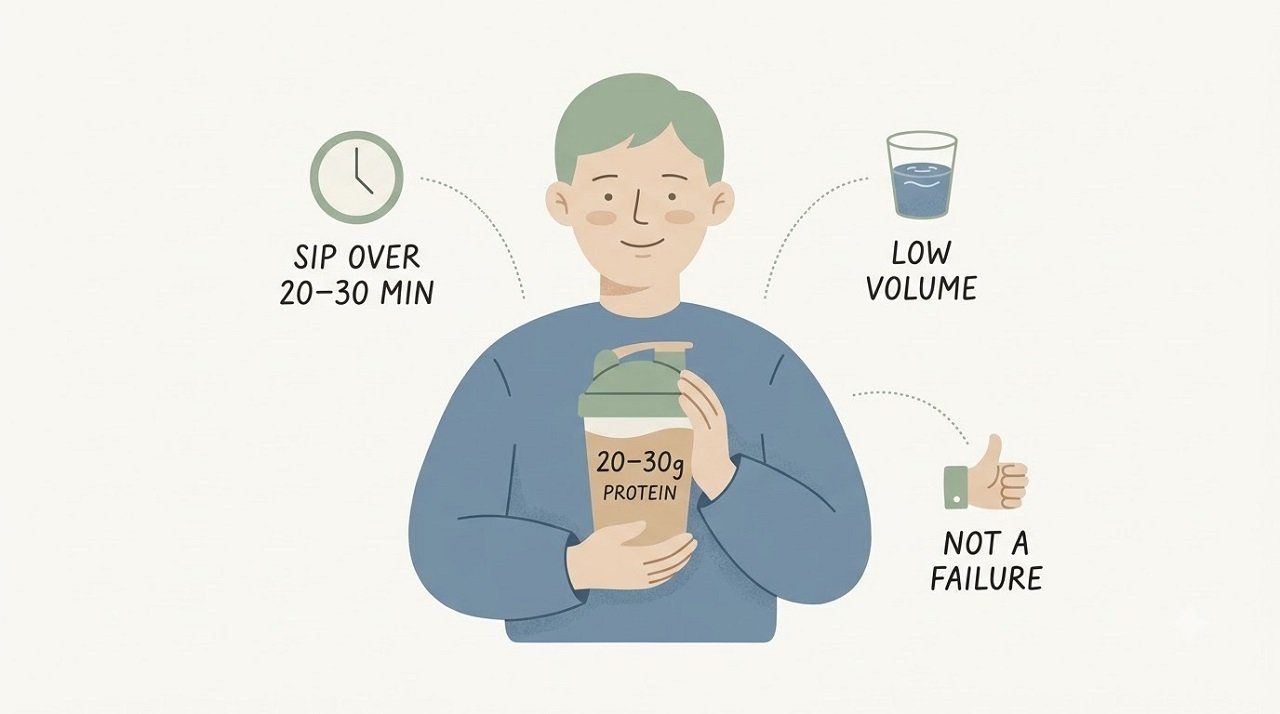
There is a persistent myth that using protein shakes is “cheating” or a sign that you are not trying hard enough to eat real food. This is false.
The JAMA guidance explicitly recommends protein shakes with at least 20 g of protein per serving when appetite is very low. The 2025 expert consensus and the Advances in Nutrition clinical practice table both recommend oral nutritional supplements (ONS) in patients with reduced appetite, food aversions, or early satiety. A liquid protein source bypasses the volume problem entirely. You are not filling your stomach with bulky food; you are delivering protein in the smallest possible volume.
How to use liquid protein strategically:
- Choose a shake with 20–30 g of protein per serving. This is the standard recommendation for GLP-1 users.
- Sip slowly over 20–30 minutes. Do not chug it. Slow sipping gives your stomach time to tolerate the liquid without triggering nausea.
- Serve it cold. Cold, lightly flavored, thinner drinks may reduce nausea compared to thick, room-temperature shakes.
- Choose neutral or sour over sweet. GLP-1 users frequently report that intense sweetness triggers nausea.
- Use it as a supplement, not a replacement for all meals. The goal is to fill the protein gap on days when solid food is difficult, not to abandon solid food entirely.
A shake is not a failure. It is a precision tool for a specific physiological problem.
“If you struggle specifically at breakfast, our guide on what to eat for breakfast on Ozempic when you can only eat 3 bites breaks down the morning protocol.”
4. Best Protein Powder for GLP-1: What to Look For
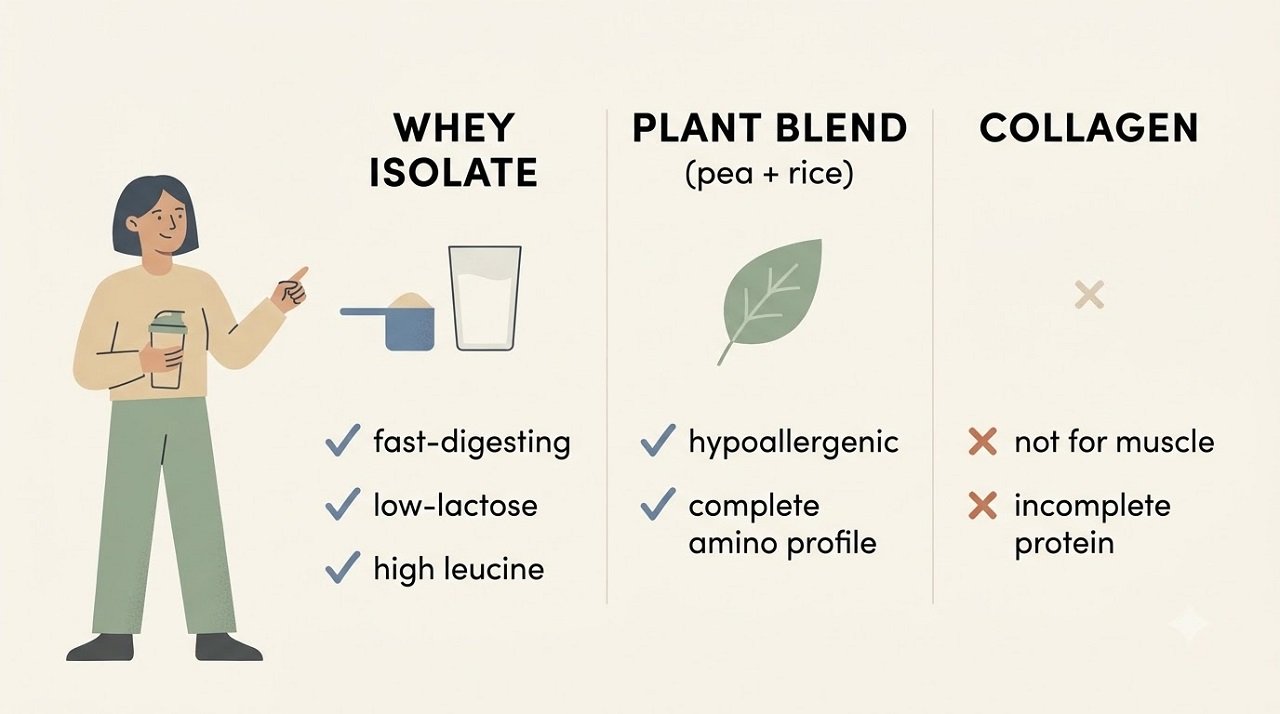
Not all protein powders are created equal, and the GLP-1 context changes the calculus.
Whey protein isolate is the gold standard for muscle preservation. It is derived from milk, fast-digesting, low in lactose, and rich in leucine—the amino acid that triggers muscle protein synthesis. US News reports that whey protein is “considered the gold standard for muscle preservation” because its amino acids are highly bioavailable, especially leucine.
Plant-based blends (pea + rice) are the best alternative if you are dairy-free or sensitive to whey. A pea-plus-rice blend provides a complete amino acid profile and is described as one of the “most evidence-backed options” for GLP-1 users.
Collagen is not a muscle-preservation protein. It is having a marketing moment, but it is an incomplete protein—low in leucine and not designed to stimulate muscle protein synthesis. If your goal is muscle preservation, collagen should not be your primary protein powder.
What to look for on the label:
- 20–30 g of protein per serving (the GLP-1 standard).
- Under 5 g of sugar (to avoid nausea and blood sugar swings).
- No sugar alcohols if you have GI symptoms—they can worsen bloating and diarrhea.
- Whey isolate or hydrolysed whey for easy digestion.
- Pea or soy protein as plant-based alternatives with smooth consistency.
A note on protein calculators: Online GLP-1 protein calculators (for Ozempic, Wegovy, Zepbound, or Mounjaro) typically use a formula of 1.2–1.6 g/kg of body weight or ideal body weight to estimate your daily target. They are a useful starting point, but they are not a substitute for individualized guidance from your doctor or dietitian, especially if you have kidney disease or other health conditions.
5. How Many Calories Should You Eat on a GLP-1?
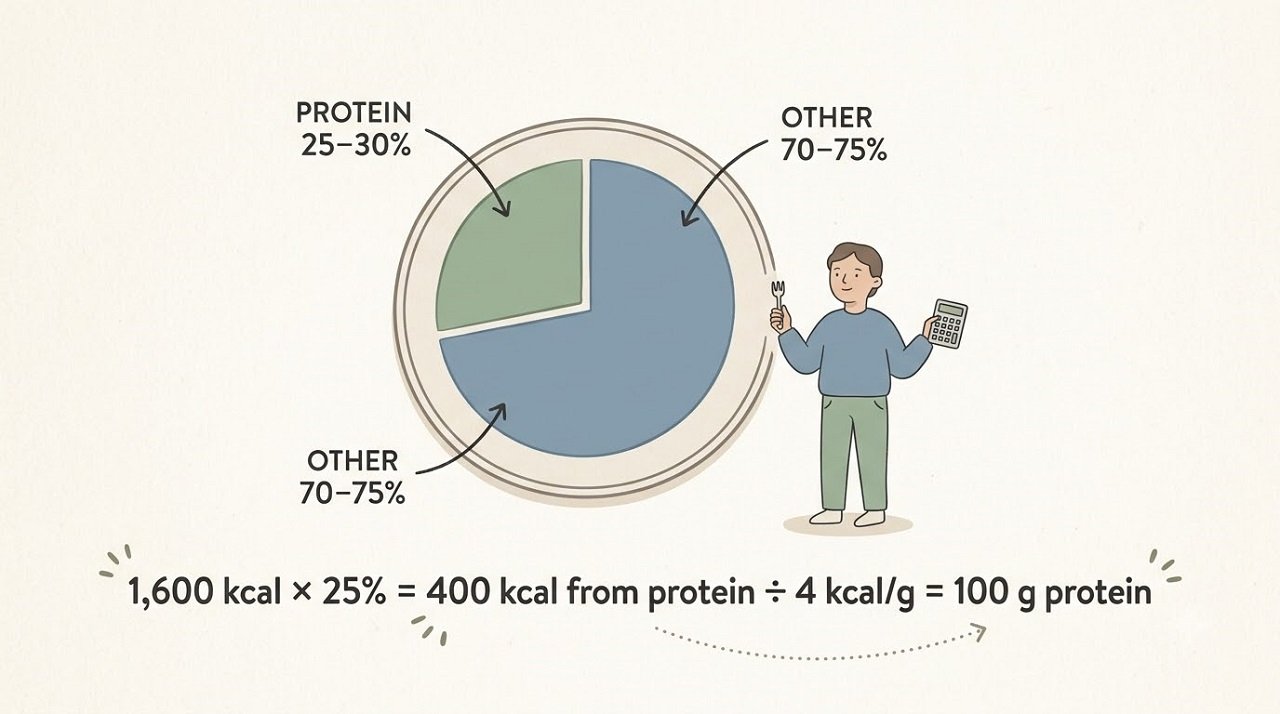
This is a question that gets asked constantly, and the answer matters for hitting your protein target.
A 2025 expert consensus statement recommends that during the weight-loss phase on GLP-1 therapy, protein intake should be 1.2–1.5 g/kg of actual body weight per day, or equivalent to 25–30% of energy on a 1,600 kcal/day diet. General calorie guidance for GLP-1 users suggests women should not go below 1,200–1,500 calories per day, and men should not go below 1,500–1,800 calories per day. A common deficit is 500–750 fewer calories per day from maintenance.
The practical translation: If you are eating around 1,600 calories per day, and you want 25–30% of those calories from protein, that works out to 100–120 g of protein. The 100 g target and the calorie target are not in conflict—they are two sides of the same plan.
The hierarchy: Protein first, then calories. If you are struggling to eat enough, do not force calories for the sake of calories. Prioritize protein density. A day where you eat 1,200 calories but hit 100 g of protein is better for muscle preservation than a day where you eat 1,800 calories but only hit 60 g of protein.
6. Soft Protein Foods for Dose Increase Days
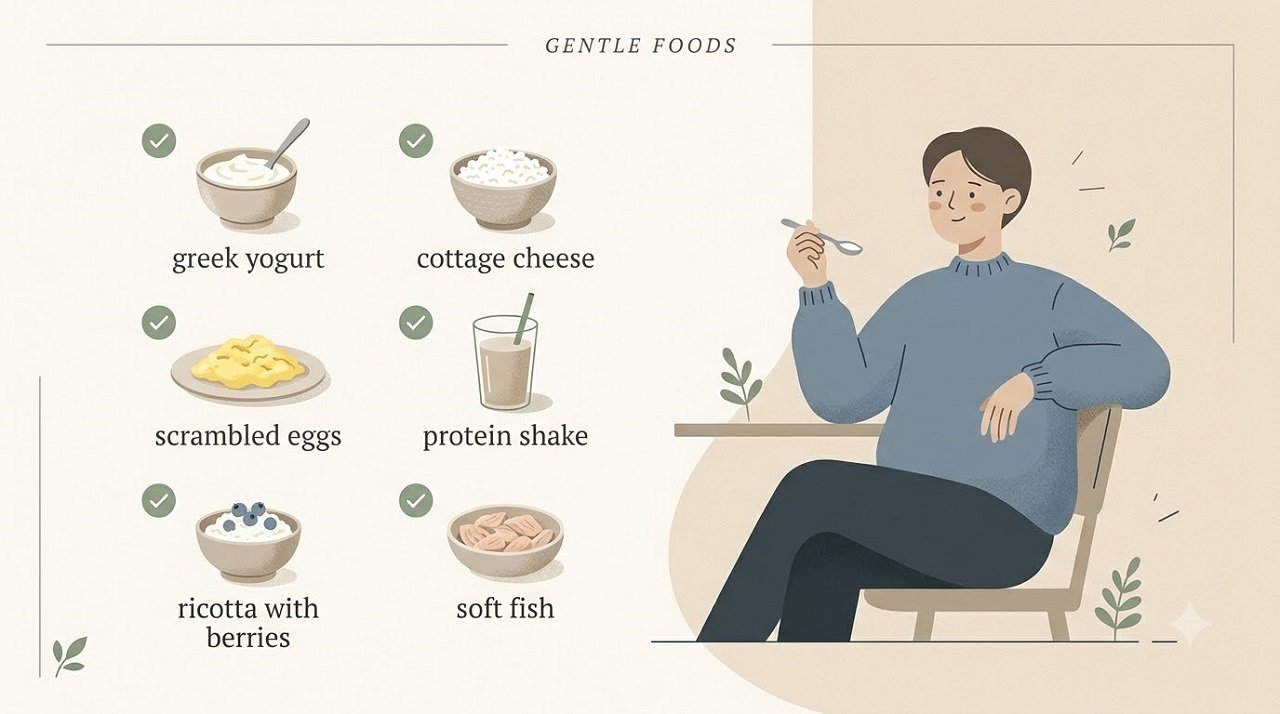
Dose increase days are the hardest. Research on GLP-1 side effects confirms that most GI issues occur during dose increases and can be mitigated by eating smaller, more frequent meals and choosing easily digestible, bland foods during dose escalation.
The soft protein hierarchy for dose increase days:
- Greek yogurt (plain, unsweetened—soft, cold, high-protein).
- Cottage cheese (soft, spoonable, 14 g protein per 1/2 cup).
- Scrambled eggs (soft, warm, easy to tolerate).
- Ricotta cheese (soft, mild, 14 g protein per 1/2 cup).
- Protein shakes (liquid, low-volume, 20–30 g protein).
- Soft fish (canned tuna or salmon mixed with a little Greek yogurt).
The Advances in Nutrition clinical practice guidance recommends cold, bland foods for nausea and separating fluids from meals by 30–60 minutes to prevent early satiety and nausea. On dose increase days, do not force volume. Sip a shake. Eat a few spoonfuls of yogurt. The goal is protein, not a full plate.
7. The Multiplier: Resistance Training
Protein alone will not preserve muscle if you do not give your muscles a reason to hold onto it.
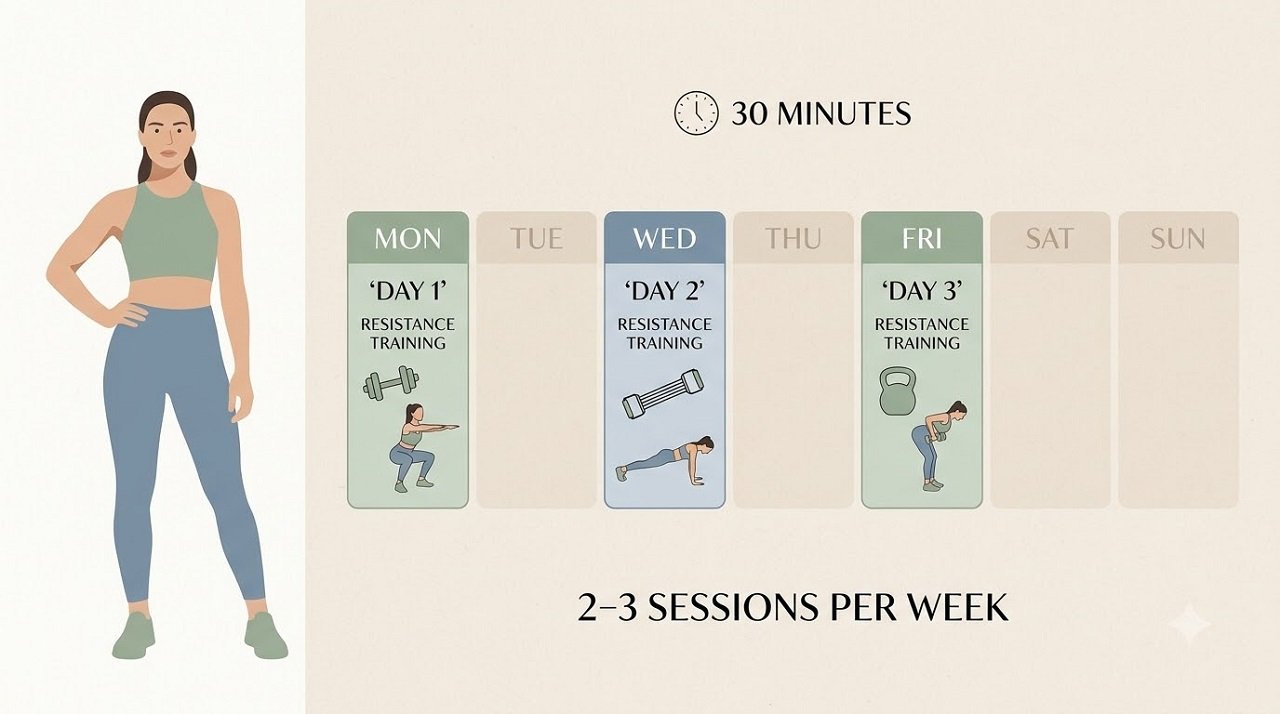
The JAMA guidance is explicit: strength training 2 to 3 times weekly for 30 minutes using bands, weights, or body weight exercises (squats, lunges) is recommended to retain muscle and overall health. The Advances in Nutrition clinical practice table recommends resistance-based physical activity 2–3 times per week to maintain strength and functional capacity, and combining resistance training with aerobic exercise to enhance lean body mass preservation.
The minimum effective dose: Two to three sessions per week, each lasting 30 minutes. You do not need a gym. Bodyweight squats, incline push-ups, resistance band rows, and chair dips are sufficient to signal to your muscles that they are needed.
8. What to Do on the Days You Cannot Eat at All
Some days, even soft protein feels impossible. Your stomach is sensitive, your appetite is gone, and forcing food makes everything worse.
The emergency protocol:
- Do not force solid food. Forcing a meal when your body is signaling stop can worsen nausea and create a negative association with eating.
- Sip a protein shake slowly over 30 minutes. Even if you cannot finish it, 10–15 g of protein is better than zero.
- Try a clear protein drink instead of a creamy shake. US News reports that clear, juice-like protein drinks may be better tolerated than thick, creamy shakes, especially during the first months of treatment or after dose increases.
- Eat a few spoonfuls of Greek yogurt or cottage cheese. Small, cold, soft, and protein-dense.
- Hydrate. Dehydration can worsen nausea and fatigue. The JAMA guidance recommends 2 to 3 liters of fluid daily, mainly water.
- Do not skip protein entirely. Even a small amount is better than none. The goal is damage control, not perfection.
When to call your doctor: If you cannot keep fluids down for more than 24 hours, have severe abdominal pain, or are showing signs of dehydration (dark urine, dizziness, confusion), contact your prescribing healthcare provider.
Frequently Asked Questions
How do I get 100g of protein on Ozempic?
Eat protein first at every meal, prioritize low-volume high-protein foods (Greek yogurt, cottage cheese, eggs, fish, protein shakes), and use liquid protein to fill the gap when solid food is difficult. Spread protein across 3–5 eating windows, aiming for 20–30 g per meal or snack. A protein shake with 25 g of protein can bridge the gap on low-appetite days.
What is the best protein powder for GLP-1?
Whey protein isolate is the gold standard for muscle preservation—it is fast-digesting, low-lactose, and rich in leucine. Pea-plus-rice blends are the best plant-based alternative. Look for 20–30 g of protein per serving, under 5 g of sugar, and no sugar alcohols if you have GI symptoms. Avoid relying on collagen as your primary protein powder—it is an incomplete protein and not designed for muscle preservation.
How many calories should I eat on a GLP-1?
General guidance suggests women should not go below 1,200–1,500 calories per day and men should not go below 1,500–1,800 calories per day. A 2025 expert consensus recommends 25–30% of energy from protein on a 1,600 kcal/day diet, which translates to roughly 100–120 g of protein. Protein comes first; calories are secondary.
Can I drink protein shakes instead of meals on Ozempic?
Yes, when appetite is very low. The JAMA guidance explicitly recommends protein shakes with at least 20 g of protein per serving when appetite is very low. However, shakes should be used as a supplement, not a complete replacement for all meals. Solid protein foods are more satiating and should be prioritized when tolerated.
Is 100g of protein too much on Ozempic?
No. 100 g of protein is within the evidence-based range of 80–120 g daily for most adults during active weight loss. For a 70–80 kg adult, 1.2–1.5 g/kg lands at 84–120 g. If you have chronic kidney disease, your protein target must be individualized with your doctor.
Why do I feel full after 2 bites on Ozempic?
GLP-1 medications slow gastric emptying and reduce gastric accommodation, meaning food stays in your stomach longer and your stomach does not stretch to hold a large meal. Stretch receptors reach their threshold after a few bites instead of a full plate. This is a predictable medication effect, not a sign that something is wrong.
Can I skip protein on days I can barely eat?
Do not skip protein entirely. Even a small amount—a few spoonfuls of Greek yogurt, half a protein shake—is better than zero. The goal is damage control, not perfection. If you cannot tolerate solid food, sip a protein shake slowly over 20–30 minutes.
Sources
- I Am Taking a GLP-1 Weight-Loss Medication—What Should I Know? (2025). JAMA Internal Medicine. https://jamanetwork.com/journals/jamainternalmedicine/fullarticle/2836527
- GLP-1 and Protein: Intake Recommendations, Foods, and More. (2026). GoodRx. https://www.goodrx.com/classes/glp-1-agonists/glp-1-protein
- Nutritional and lifestyle supportive care recommendations for management of obesity with GLP-1-based therapies: An expert consensus statement. (2025). ScienceDirect. https://www.sciencedirect.com/science/article/pii/S0002916525002400
- Strategies to address incretin-based OMM nutritional challenges: clinical practice. (2025). Advances in Nutrition. https://advances.nutrition.org/action/showFullTableHTML?isHtml=true&tableId=tbl2&pii=S2161-8313(25)00160-7
- Best Protein Powders, Drinks and Shakes for GLP-1 Users. (2026). US News & World Report. https://health.usnews.com/best-diet/medication/articles/best-protein-powders-drinks-and-shakes-for-glp-1-users-how-to-protect-muscle-while-losing-weight
- Why You Feel Full After Two Bites on Ozempic: Early Satiety and How to Still Get Your Protein. (2026). Lumen Labs. https://lumenlabs.works/article/lean/why-you-feel-full-after-two-bites-on-ozempic-early-satiety-and-how-to-still-get-/
- How to Get Enough Protein on GLP-1 Medications. (2026). The RX Index. https://therxindex.com/guides/how-to-get-enough-protein-on-glp-1/
- Here’s Exactly How Much Protein to Eat If You’re on a GLP-1. (2025). SELF. https://www.self.com/story/how-much-protein-eat-glp-1-drug

Disclaimer: This article is for informational and educational purposes only and is not a substitute for professional medical or nutrition advice. If you are experiencing severe nausea, vomiting, or cannot keep fluids down, contact your prescribing healthcare provider. Protein needs vary based on kidney function and medical history.
You sit down to breakfast. You take three bites. And then it happens—a wall goes up.
Not nausea, exactly. Not fullness in the traditional sense. More like a switch has been flipped, and your body is telling you, clearly and unambiguously: stop.
If this is happening to you on Ozempic, Wegovy, or any GLP-1 medication, you are not doing anything wrong. You are experiencing early satiety, one of the most common and least explained effects of these medications. And it creates a very specific problem: how do you get enough protein to protect your muscle when your stomach will only accept a few bites?
This guide answers that question directly. It explains the mechanism, gives you a protein-first meal sequencing strategy, and tells you exactly what to eat for breakfast when three bites is all you can manage.
Why You Feel Full After Three Bites (The Mechanism)
GLP-1 medications do not just “reduce appetite” in a vague sense. They change the mechanics of digestion.
Research on GLP-1 and gastric function shows that the hormone relaxes the stomach during fasting but retards gastric emptying—food stays in your stomach longer, and the signals of fullness arrive much faster than they would without the medication. GLP-1 also diminishes fundic tone and inhibits fundic volume waves, meaning the upper part of your stomach does not stretch to accommodate a large meal the way it normally would. The result is that even a small volume of food triggers stretch receptors and satiety signals that would normally require a much larger meal.
This is why traditional breakfast advice fails. A plate of toast, fruit, and cereal is high in volume and low in protein. It fills you up before you have eaten anything that actually protects your muscle.
Key Takeaways
- Volume is the enemy, protein is the goal. When you can only eat a few bites, every bite must be protein-dense.
- Eat protein first, always. The joint advisory from leading nutrition organizations recommends consuming protein-rich foods first in a meal to increase the likelihood of adequate intake.
- Aim for 20–30 g of protein at breakfast. This is the target recommended by the JAMA patient page for GLP-1 users.
- Liquid protein is a tool, not a failure. Protein shakes with at least 20 g per serving are explicitly recommended when appetite is very low.
- Smaller, more frequent meals may work better than three large ones. The joint advisory notes that small, frequent meals can be effective when hunger and food interest are low.
- Low-volume, nutrient-dense foods are the priority. Fish, eggs, Greek yogurt, cottage cheese, and nuts/seeds are specifically recommended.
- Do not force volume. Forcing a large meal when your stomach is telling you to stop can worsen nausea and food aversions.
- This is a solvable problem. You do not need to eat a big breakfast. You need to eat a strategic one.
1. The Golden Rule: Protein First, Every Time
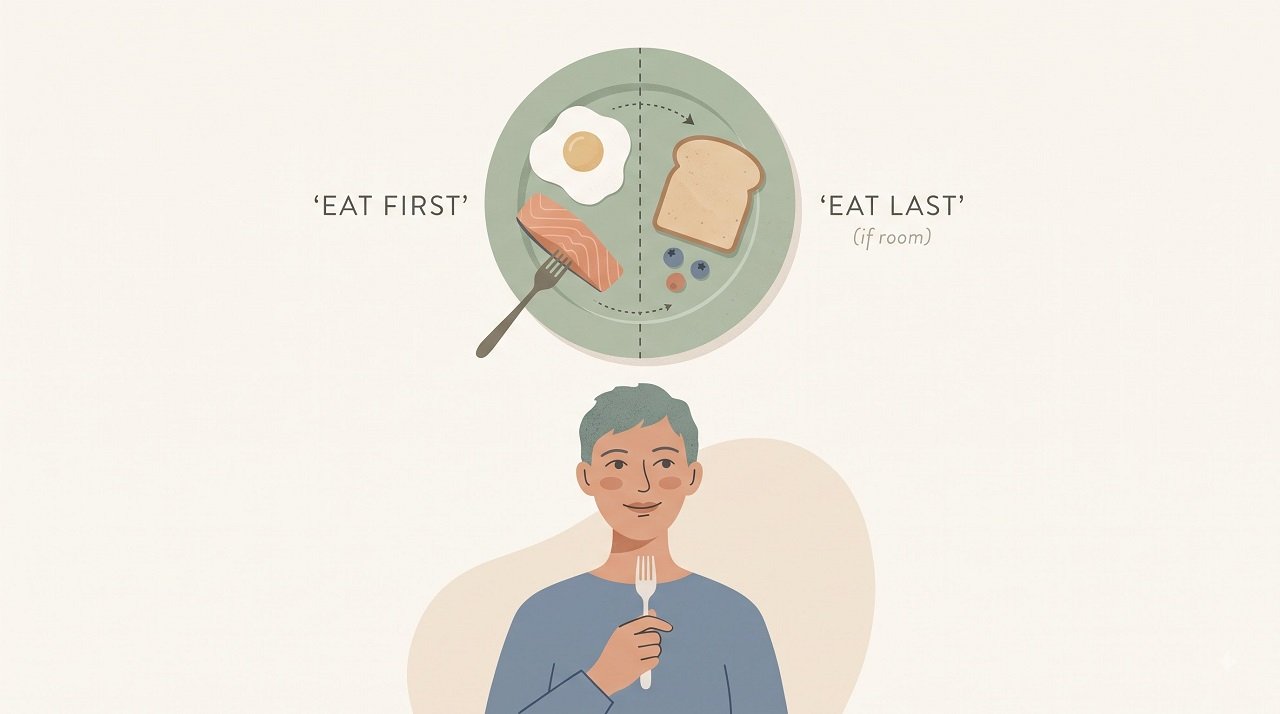
If you take only one thing from this article, take this: the order in which you eat matters as much as what you eat.
On a GLP-1, fullness arrives fast. If you eat your toast, fruit, or cereal first, you will be done before you have touched the protein. The joint advisory from the American College of Lifestyle Medicine, the American Society for Nutrition, the Obesity Medicine Association, and The Obesity Society explicitly recommends that protein-rich foods be consumed first in a meal to increase the likelihood of sufficient consumption.
The JAMA patient page for GLP-1 users is even more specific: begin each meal with 20 to 30 grams of protein from foods like fish, beans, chickpeas, or tofu.
The practical rule: Put your protein on the fork first. Take three bites of protein before you touch anything else on the plate. If you are full after those three bites, you have still consumed the most important part of the meal.
2. What to Eat: The Lowest-Volume, Highest-Protein Breakfast Foods
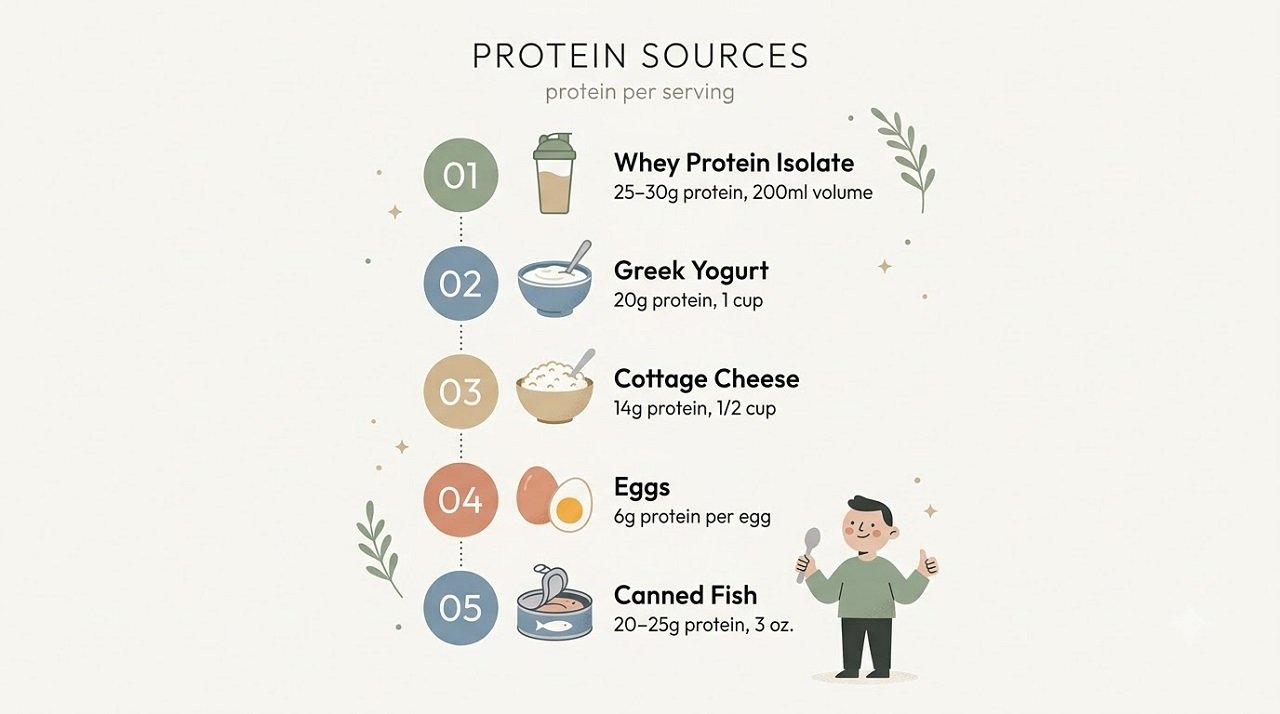
The joint advisory specifically recommends lower-volume, nutrient-dense protein foods for individuals on GLP-1s, including fish, eggs, Greek yogurt, cottage cheese, and nuts/seeds. The JAMA guidance adds protein shakes with at least 20 g per serving as a practical option when appetite is very low.
Here is the practical hierarchy for breakfast when you can only eat a few bites:
Tier 1: Liquid or semi-liquid protein (lowest volume, highest density)
- Whey protein isolate shake: 25–30 g protein in about 200 ml of liquid. This is the single most protein-dense breakfast option available.
- Greek yogurt smoothie with protein powder: 30+ g protein in a small glass.
Tier 2: Soft, spoonable protein (low volume, easy to eat)
- Greek yogurt (plain, unsweetened): 15–20 g protein per 3/4 cup. Add a few nuts for texture and fat.
- Cottage cheese: 14 g protein per 1/2 cup. A small portion with a sprinkle of everything bagel seasoning or a few berries.
- Ricotta cheese: 14 g protein per 1/2 cup, soft and easy to tolerate.
Tier 3: Solid protein in small portions
- Eggs: 6 g protein per egg. Two scrambled eggs is 12 g—a reasonable target if you can manage them.
- Canned fish (tuna, salmon): 20–25 g protein per 3 oz. A small portion mixed with a little Greek yogurt or avocado.
- Deli turkey or chicken: 10–15 g protein per 2 oz. A few slices rolled up with a slice of cheese.
Tier 4: Carbohydrates and fiber (only if there is room)
- A small slice of whole-grain toast.
- A few berries.
- Half a banana.
The order matters. Start at Tier 1 or 2. Move to Tier 3 if you can. Only reach Tier 4 if you are still hungry—which, on a GLP-1, you may not be.
3. The “3-Bite Breakfast” Protocol
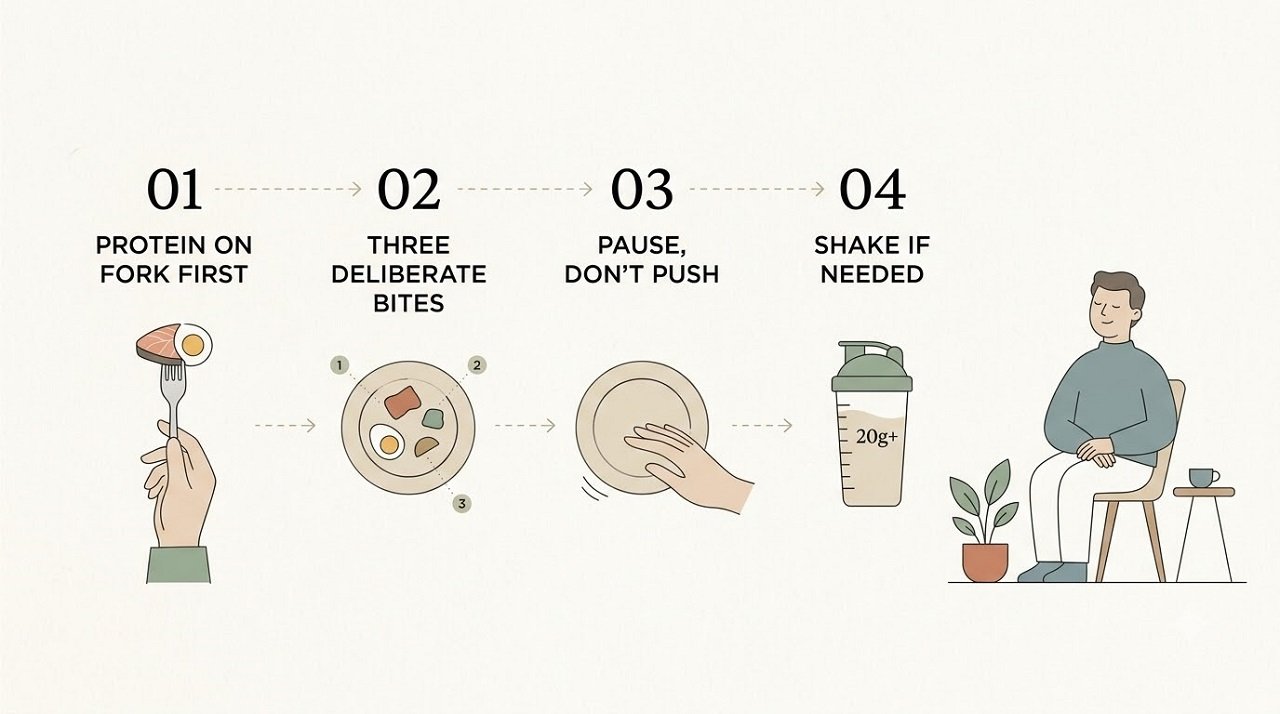
This is the practical, step-by-step approach for the days when your appetite shuts down entirely.
Step 1: Put protein on the fork first. Before you look at the rest of the plate, take a bite of the most protein-dense food you have. If it is Greek yogurt, take a spoonful. If it is eggs, take a bite. Do not start with toast, fruit, or cereal.
Step 2: Take three deliberate bites of protein. Chew slowly. Do not rush. The goal is not to finish the plate. The goal is to get the protein in before the fullness signal arrives.
Step 3: Pause. Do not push. If your body is telling you to stop after three bites, listen. Forcing more food can trigger nausea and create a negative association with eating, which makes the problem worse over time.
Step 4: If you cannot eat more, use a shake. This is why protein shakes are a tool, not a failure. The JAMA guidance explicitly recommends protein shakes with at least 20 g per serving when appetite is very low. Sip it slowly over 20–30 minutes. You are not “cheating” by using a shake. You are solving a volume problem with a liquid solution.
4. Meal Sequencing: Why the Order of Bites Matters
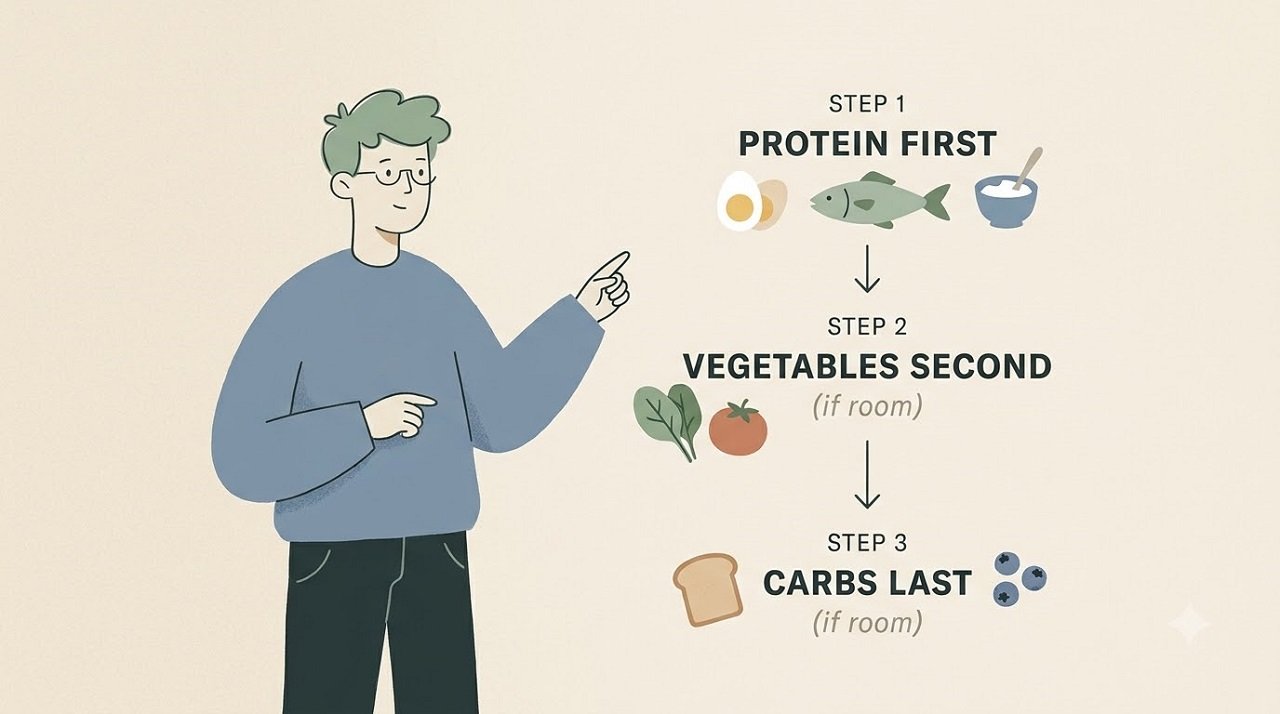
Research on meal sequencing—the order in which you eat different macronutrients—suggests that consuming protein and/or fat before carbohydrate promotes the secretion of GLP-1 from the gut and delays gastric emptying. The PATTERN study found that a sequence of vegetables, then protein, then carbohydrate stimulated higher GLP-1 release than other meal sequences.
On a GLP-1 medication, this effect is amplified. You are already receiving exogenous GLP-1. Adding protein first gives your body the strongest possible satiety and muscle-preservation signal in the smallest possible volume.
The breakfast sequence:
- Protein first (eggs, fish, Greek yogurt, cottage cheese, or a shake).
- Vegetables second (a small handful of spinach or a few cherry tomatoes—only if you have room).
- Carbohydrates last (a small slice of toast or a few berries—only if you are still hungry).
The goal is not to eat all three. The goal is to ensure that whatever you do eat is protein-forward.
5. The Backup Plan: Protein Shakes as a Strategic Tool
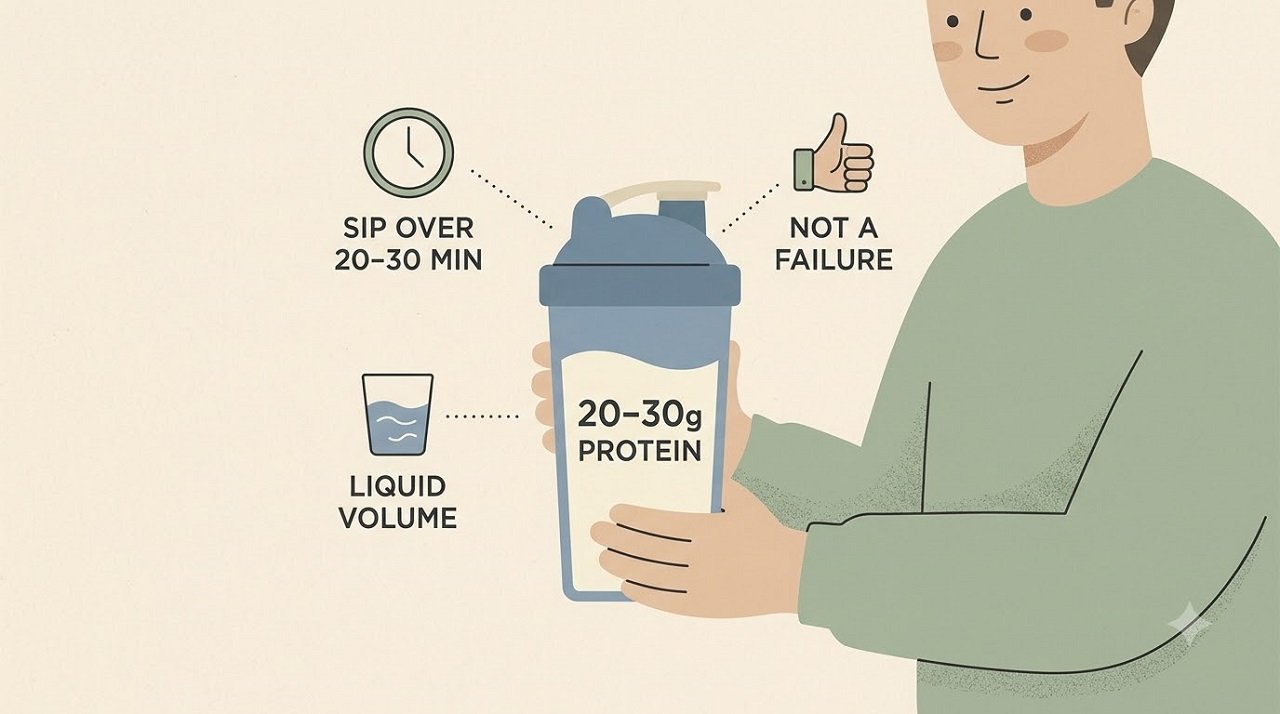
There is a persistent myth that using protein shakes is “cheating” or a sign that you are not trying hard enough to eat real food. This is false.
The JAMA guidance for GLP-1 users explicitly recommends protein shakes with at least 20 g of protein per serving when appetite is very low. The joint advisory notes that some individuals can meet protein targets by supplementing with high-protein shakes and other fortified products.
How to use a shake strategically:
- Choose a whey or plant protein isolate with at least 20–25 g of protein per scoop and minimal added sugar.
- Mix with water or unsweetened milk to keep the volume low.
- Sip slowly over 20–30 minutes. Do not chug it. Slow sipping gives your stomach time to tolerate the liquid without triggering nausea.
- Use it as a supplement, not a replacement for all meals. The goal is to fill the protein gap on days when solid food is difficult, not to abandon solid food entirely.
A shake is not a failure. It is a precision tool for a specific physiological problem.
6. What to Avoid (And Why)
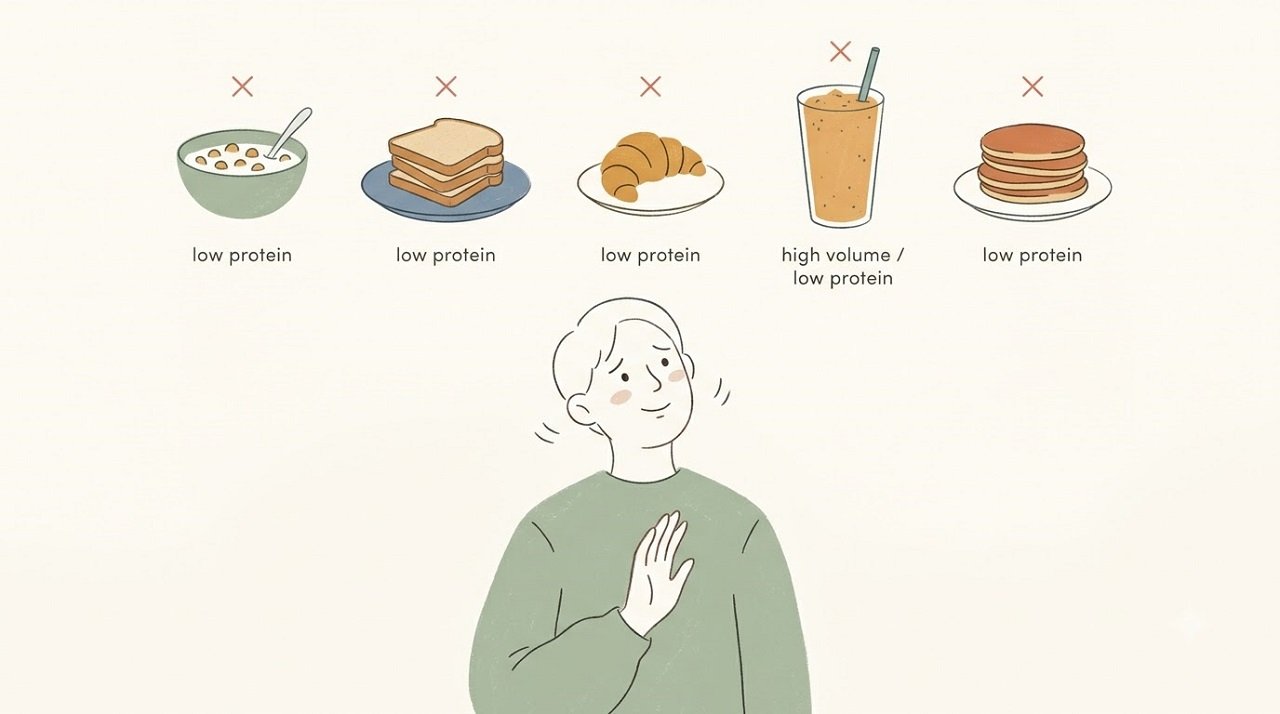
When you can only eat a few bites, the foods you choose matter enormously. High-volume, low-protein breakfast foods will fill you up before you have consumed anything useful.
Foods to de-prioritize at breakfast on a GLP-1:
- Cereal and granola (high volume, low protein, often high sugar).
- Toast and pastries (high volume, low protein).
- Large fruit smoothies (high volume, low protein unless fortified).
- Pancakes, waffles, and bagels (high volume, low protein).
- High-fat fried foods (can worsen nausea and delay gastric emptying further).
The JAMA guidance specifically recommends avoiding high-fat foods for nausea and choosing smaller portions for heartburn. If you are going to eat any of these foods, eat them after your protein, and only if you have room.
7. When to Talk to Your Doctor
This article is about a common, manageable side effect. But there are situations where early satiety is a signal that something else needs attention.
Contact your prescribing healthcare provider if:
- You cannot keep fluids down for more than 24 hours.
- You are experiencing severe abdominal pain, persistent vomiting, or signs of dehydration (dark urine, dizziness, confusion).
- You are losing weight so rapidly that you are concerned about muscle wasting or malnutrition.
- Early satiety is accompanied by pain or difficulty swallowing.
- You have chronic kidney disease and are unsure how much protein is safe for you.
The joint advisory emphasizes that ongoing monitoring and follow-up should include regular re-assessment of dietary intake and hydration during therapy to identify and address emerging deficiencies. Your doctor or a registered dietitian can help you individualize your protein target and ensure you are meeting your nutritional needs.
The Bottom Line: Three Bites Can Still Be Enough
Early satiety on a GLP-1 is not a sign that you are failing. It is a predictable physiological effect of the medication. The solution is not to force more food. The solution is to make the food you can eat count.
Protein first. Low volume, high density. A shake when solid food is not possible. And a willingness to listen to your body’s signal to stop without interpreting it as defeat.
You do not need a big breakfast. You need a strategic one. Three bites of the right food is infinitely better than a full plate of the wrong food.
Frequently Asked Questions
What should I eat for breakfast on Ozempic?
Prioritize protein-dense, low-volume foods: Greek yogurt, cottage cheese, eggs, canned fish, or a protein shake with at least 20 g of protein. Eat the protein first, before any toast, fruit, or cereal. The JAMA patient page recommends beginning each meal with 20–30 g of protein.
Why do I feel full after 3 bites on Ozempic?
GLP-1 medications slow gastric emptying and reduce fundic accommodation, meaning your stomach does not stretch to hold a large meal and food stays in it longer. This triggers satiety signals after a very small volume of food. It is a predictable effect of the medication, not a sign that something is wrong.
How do I get enough protein if I can’t eat much?
Use a protein-first strategy and keep a protein shake on hand for low-appetite days. A shake with 20–30 g of protein in a small liquid volume can bridge the gap when solid food is difficult. The JAMA guidance explicitly recommends protein shakes when appetite is very low.
What is the best breakfast for Ozempic nausea?
Choose bland, low-fat, protein-forward foods: plain Greek yogurt, a small portion of cottage cheese, scrambled eggs, or a protein shake sipped slowly. Avoid high-fat, fried, and heavily spiced foods, which can worsen nausea. If nausea is severe, start with a few plain crackers or a small amount of rice before attempting protein.
Can you eat bread on Ozempic?
Yes, but it should not be the first thing you eat. Bread is high in volume and low in protein, so it can fill you up before you have consumed anything that protects muscle. If you want bread, eat your protein first, then have a small slice only if you still have room.
Is it okay to skip breakfast on Ozempic?
If you are not hungry, forcing a large breakfast can worsen nausea and create a negative association with eating. However, skipping breakfast entirely may make it harder to hit your daily protein target. A small protein-first breakfast or a shake is a better compromise than either forcing a full meal or skipping protein altogether.
Can I drink a protein shake instead of eating breakfast?
Yes. A protein shake with at least 20 g of protein is a legitimate breakfast option when appetite is suppressed. It is not a failure or a cheat—it is a practical solution to a volume problem. Sip it slowly over 20–30 minutes.
Sources
- Nutritional priorities to support GLP-1 therapy for obesity: a joint Advisory from the American College of Lifestyle Medicine, the American Society for Nutrition, the Obesity Medicine Association, and The Obesity Society. (2025). PMC. https://pmc.ncbi.nlm.nih.gov/articles/PMC12612741/
- I Am Taking a GLP-1 Weight-Loss Medication—What Should I Know? (2025). JAMA Internal Medicine. https://jamanetwork.com/journals/jamainternalmedicine/fullarticle/2836527
- Buckley, K. (2025). GLP-1 Nutrition Toolkit: Protein, Fiber & Hydration. Stanford Medicine. https://med.stanford.edu/content/dam/sm/healthlibrary/documents/ntf-glp1-nutrition.pdf
- van der Klaauw, A. A., et al. (2013). High protein intake stimulates postprandial GLP1 and PYY release. Obesity. https://pubmed.ncbi.nlm.nih.gov/23666746/
- Meal sequence: consumption of protein and/or fat before carbohydrate promotes GLP-1 secretion and delays gastric emptying. (2020). PMC. https://pubmed.ncbi.nlm.nih.gov/32825124/
- Effect of GLP-1 on gastric volume, emptying, maximum volume ingested, and postprandial symptoms in humans. (2002). American Journal of Physiology-Gastrointestinal and Liver Physiology. https://journals.physiology.org/doi/10.1152/ajpgi.2002.282.3.G424

PEMF Webinar

Decode Your Digestion Workshop

Meal Sequencing for Early Satiety on GLP-1: Why Protein First Changes Everything
PEMF Webinar

HBOT ( Hyperbaric Oxygen Therapy ) Webinar

The 4-7-8 Breathing Technique: Step-by-Step Guide and What the Research Actually Shows
-
 Events56 minutes ago
PEMF Webinar
-
 Events1 month ago
HBOT ( Hyperbaric Oxygen Therapy ) Webinar
-
 Natural Sleep Remedies6 months ago
The 4-7-8 Breathing Technique: Step-by-Step Guide and What the Research Actually Shows
-

 Events5 months ago
The Anti-Cancer Body with Dr. Michael Karlfeldt
-

 Events5 months ago
Why You Can’t Trust Big Pharma
-

 Home Remedies5 months ago
Natural Home Remedies for Restless Legs at Night
-

 Events5 months ago
The Cancer Conversation Your Oncologist Cannot Have in 15 Minutes
-

 Events6 months ago
Beyond the Brain