
Meal Plans
The Ultimate Guide to Meal Prep Containers: What to Buy and How to Use Them

The content on this website – including articles, event announcements, personal experiences, and recommendations – is for informational and educational purposes only and is not medical advice. Always consult a qualified healthcare professional before making any changes to your diet, exercise, supplements, sleep habits, or wellness routines, especially if you are pregnant, nursing, on medication, or have any medical condition.
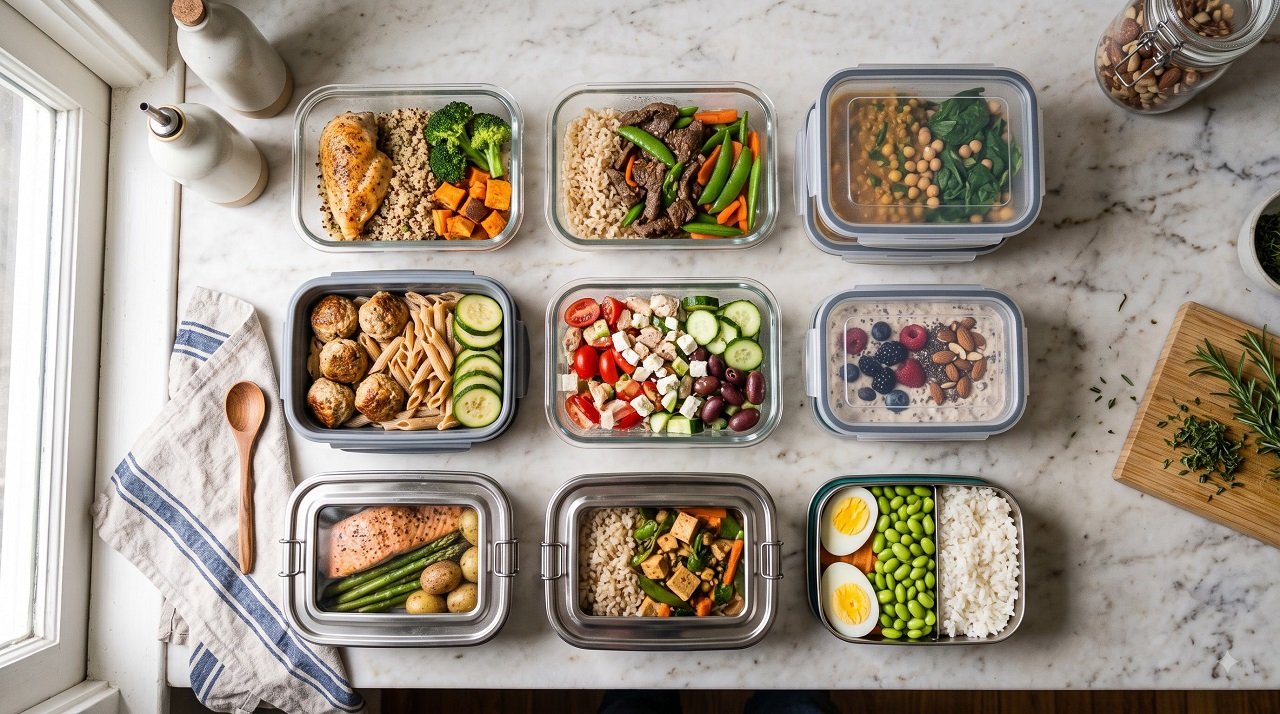
Disclaimer: This article provides general educational information about food storage and container materials and is not a substitute for official food safety or product safety guidance. Follow manufacturer instructions for your specific containers.
Before getting into what to buy, here’s something worth knowing that changes how you should think about the containers you probably already own: a 2023 peer-reviewed study in Environmental Science & Technology found that microwaving plastic containers — including ones labeled “microwave-safe” — released as many as 4.22 million microplastic particles and 2.11 billion nanoplastic particles per square centimeter of plastic within just 3 minutes of heating. A 2026 Greenpeace International review synthesizing 24 peer-reviewed studies confirmed the pattern: microwaving consistently released far more particles than refrigerated or room-temperature storage, and old or scratched containers released roughly double the particles of new ones.
This doesn’t mean plastic containers are unusable — it means how you use them matters more than most buying guides mention. Here’s a genuinely research-informed guide, not just a product list.
📥 Download the printable storage chart, buying checklist, and reheating safety tips (PDF)
What to Look For When Buying
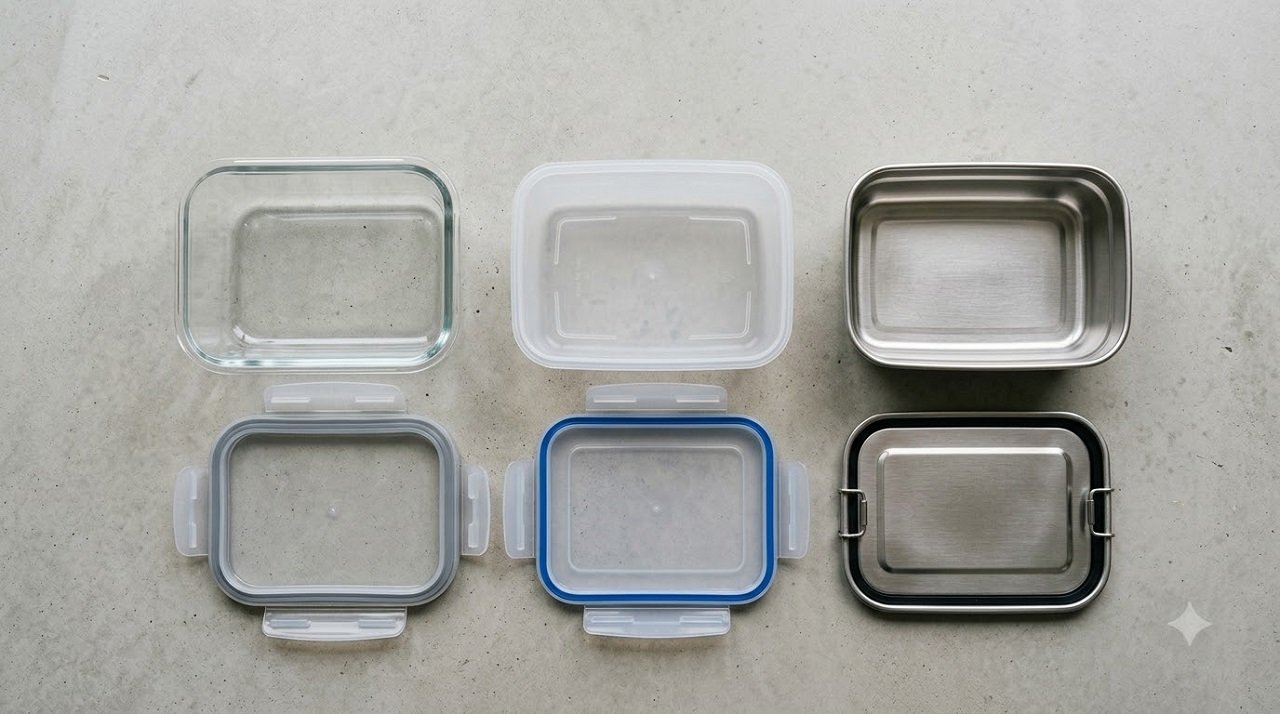
Material: Glass vs. Plastic vs. Stainless Steel
Glass doesn’t release microplastics when heated, is fully microwave and oven safe (check for BPA-free lids specifically, since lids are often still plastic), and doesn’t absorb odors or stains the way some plastics do over time. The tradeoffs: heavier, breakable, and typically more expensive upfront.
Plastic is lighter, cheaper, and often stackable more efficiently, but given the research above, it’s worth being deliberate: use plastic containers for cold storage and reheating in the oven or on the stovetop, not for regularly microwaving food directly in them — especially once they show any visible scratching or cloudiness, which the research specifically links to higher particle release.
Stainless steel doesn’t leach microplastics and is very durable, but isn’t microwave-safe at all (metal in a microwave is a fire/spark hazard) — better suited for cold storage, freezer storage, or oven reheating.
Compartments vs. Single-Container
Divided/compartmentalized containers keep sauces and textures separate until you’re ready to eat — useful if you’re prepping meals with a wet component (dressing, sauce) that would make other ingredients soggy overnight. Single-compartment containers are more flexible for soups, stews, and casserole-style meals where separation doesn’t matter.
Size Standardization
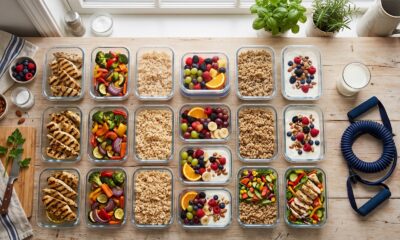
Buying one or two consistent sizes (rather than a mismatched set) makes stacking in your fridge and freezer significantly more space-efficient, and makes portioning more consistent since you’re not guessing at different container volumes each time.
Actually Check the Labels
“Microwave-safe” indicates a container won’t melt or warp in the microwave — it does not mean the material won’t release particles into your food when heated, based on the research above. These are two different safety claims that get conflated.
How to Store Meal Prepped Food Safely
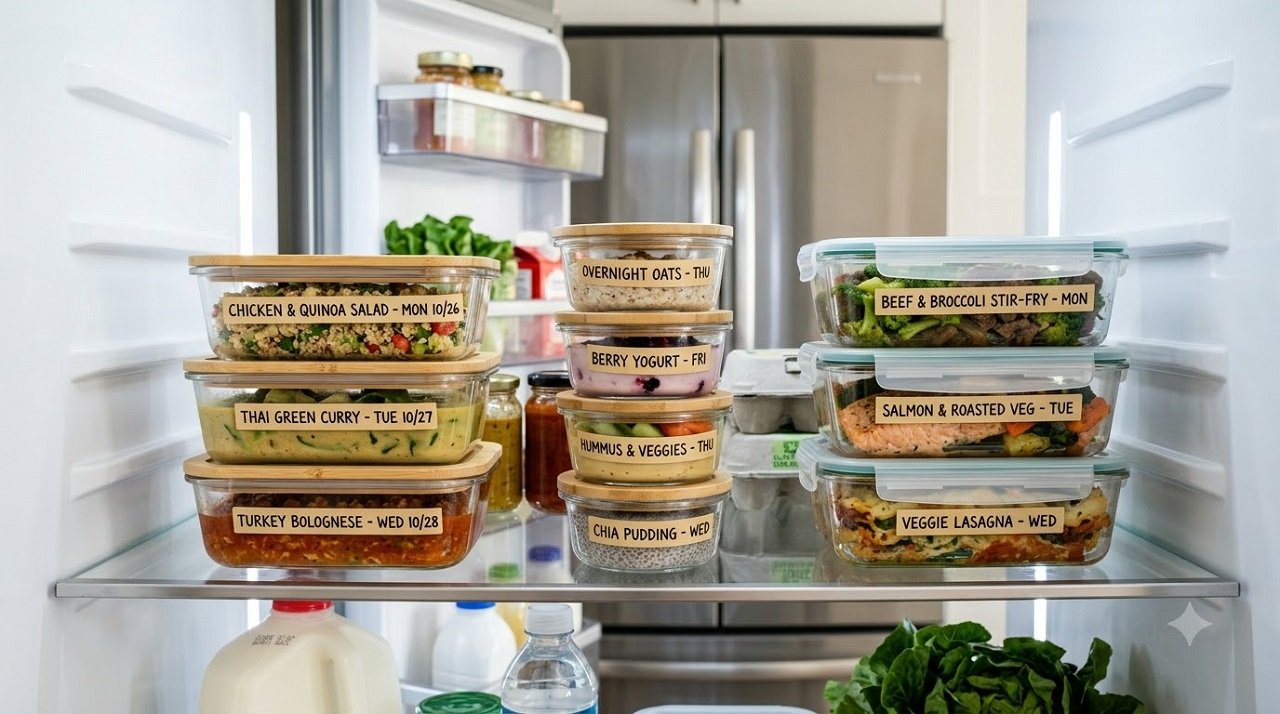
📥 Get the printable storage chart — print it and stick it on your fridge for quick reference.
| Food Type | Fridge (Safe Window) | Freezer |
|---|---|---|
| Cooked grains (rice, quinoa) | 5-7 days | Up to 3 months |
| Cooked poultry/meat | 3-4 days | Up to 3 months |
| Cooked fish/shellfish | 3-4 days | Up to 3 months |
| Soups and stews | 3-4 days | Up to 3 months |
| Cut raw vegetables | 3-5 days | Not recommended (texture changes significantly) |
| Cooked eggs (not in shell) | 3-4 days | Not recommended |
General food safety guidance: cool food to room temperature within about 2 hours of cooking before refrigerating (or 1 hour if the room is above 90°F), since leaving food in the “danger zone” (40-140°F) too long allows bacteria to multiply regardless of what container it’s in.
How to Reheat Meal Prep Safely (and With Fewer Microplastics)
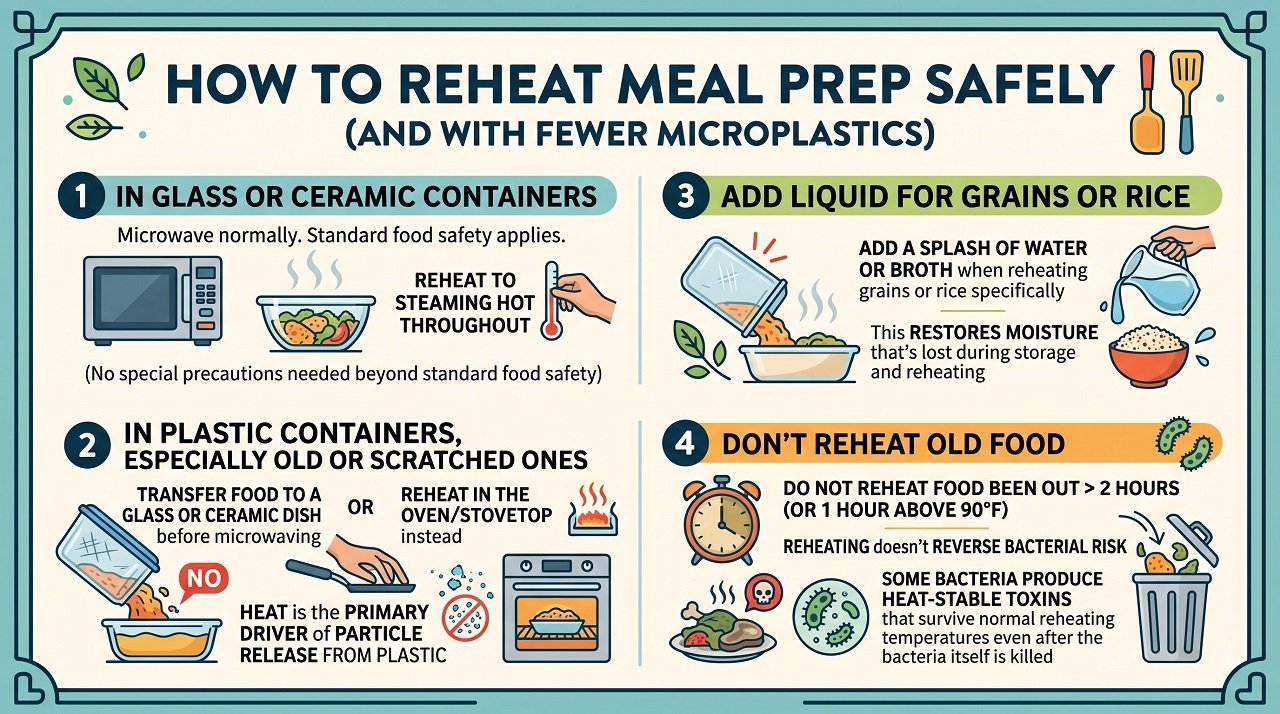
- In glass or ceramic containers: microwave normally — no special precautions needed beyond standard food safety (reheat to steaming hot throughout).
- In plastic containers, especially older or scratched ones: transfer food to a glass or ceramic dish before microwaving, or reheat in the oven/stovetop instead, based on the research showing heat is the primary driver of particle release from plastic.
- Add a splash of water or broth when reheating grains or rice specifically — this restores moisture that’s lost during storage and reheating.
- Don’t reheat food that’s been out of refrigeration for more than 2 hours (or 1 hour above 90°F) — reheating doesn’t reverse bacterial risk, and some bacteria produce heat-stable toxins that survive normal reheating temperatures even after the bacteria itself is killed.
Cleaning and Container Lifespan
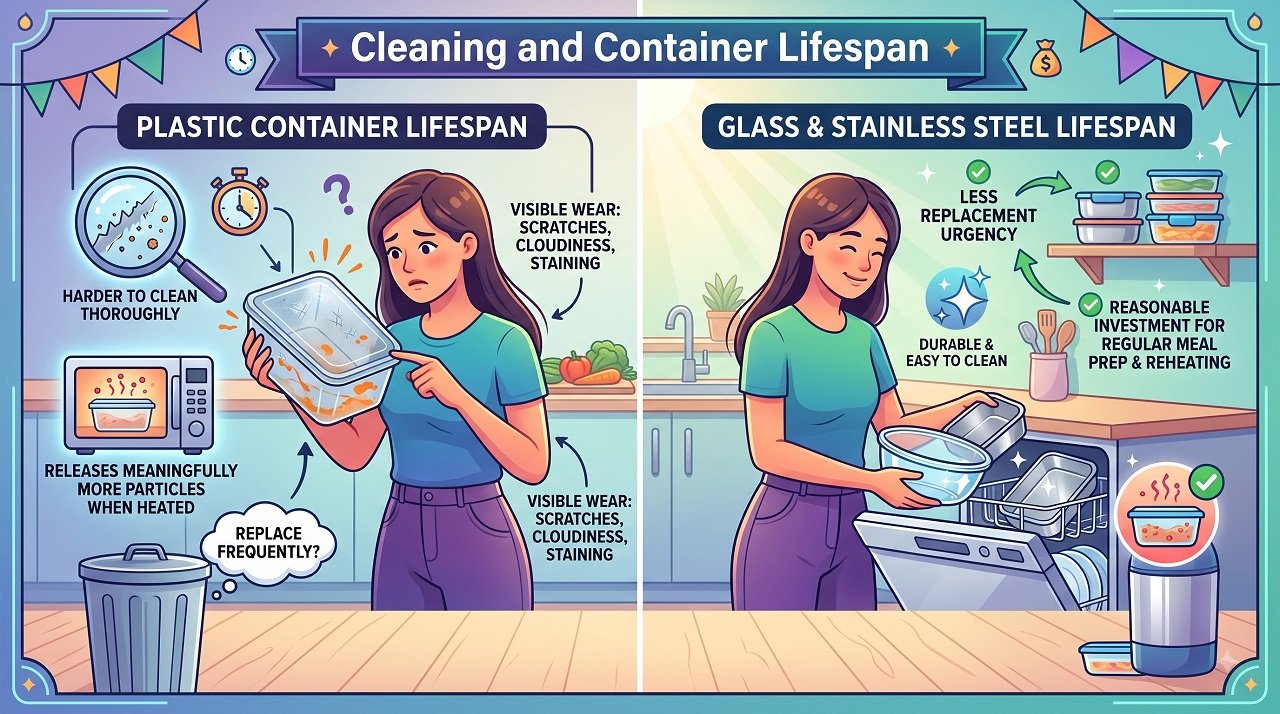
Replace plastic containers once they become visibly scratched, cloudy, or stained — beyond being harder to clean thoroughly, the research above specifically found scratched/worn containers release meaningfully more particles when heated. Glass and stainless steel containers don’t have this same replacement urgency, which is part of why they’re a reasonable investment if you meal prep regularly and reheat often.
Frequently Asked Questions
Is it actually dangerous to microwave plastic containers?
The research shows real, measurable particle release, including from containers labeled microwave-safe — but the long-term health significance of that exposure is still an active area of research, not fully settled. If you want to minimize exposure while research continues, transferring food to glass before microwaving is a reasonable, low-effort precaution.
How long does meal prep actually last in the fridge?
It depends on the food type — see the table above. Most cooked proteins and grains are good for 3-7 days; cut raw vegetables have a shorter safe window.
Do I need different containers for freezing vs. fridge storage?
Glass, quality plastic rated for freezer use, and stainless steel all generally work for both, but leave extra headspace in any container going into the freezer, since liquids expand as they freeze.
What’s the best all-around container material?
Glass offers the best combination of safety (no microplastic release), versatility (oven, microwave, fridge, freezer all safe), and durability over time — the main tradeoffs are weight and breakability, which matter more if you’re transporting meals daily versus storing them at home.
Sources Referenced in This Article
- Cheng, W., et al. “Assessing the Release of Microplastics and Nanoplastics from Plastic Containers and Reusable Food Pouches: Implications for Human Health.” Environmental Science & Technology, 2023. pubs.acs.org/doi/10.1021/acs.est.3c01942
- Greenpeace International — “Reheating plastic food containers: what science says about microplastics and chemicals in ready meals,” synthesizing 24 peer-reviewed studies, 2026. greenpeace.org
- Food Safety Magazine — “Report Raises Concerns About Microplastics, Chemicals Released by Microwavable Meals,” 2026. food-safety.com
- USDA FSIS — “Danger Zone” (40°F – 140°F) and safe food storage guidance. fsis.usda.gov
- USDA FSIS — “Leftovers and Food Safety.” fsis.usda.gov






Disclaimer: This meal plan provides general educational information and is not a substitute for individualized nutrition or feeding advice. If you have concerns about your child’s growth, nutrition, or eating patterns — including signs of a feeding disorder rather than typical picky eating — talk to your pediatrician or a pediatric feeding specialist.
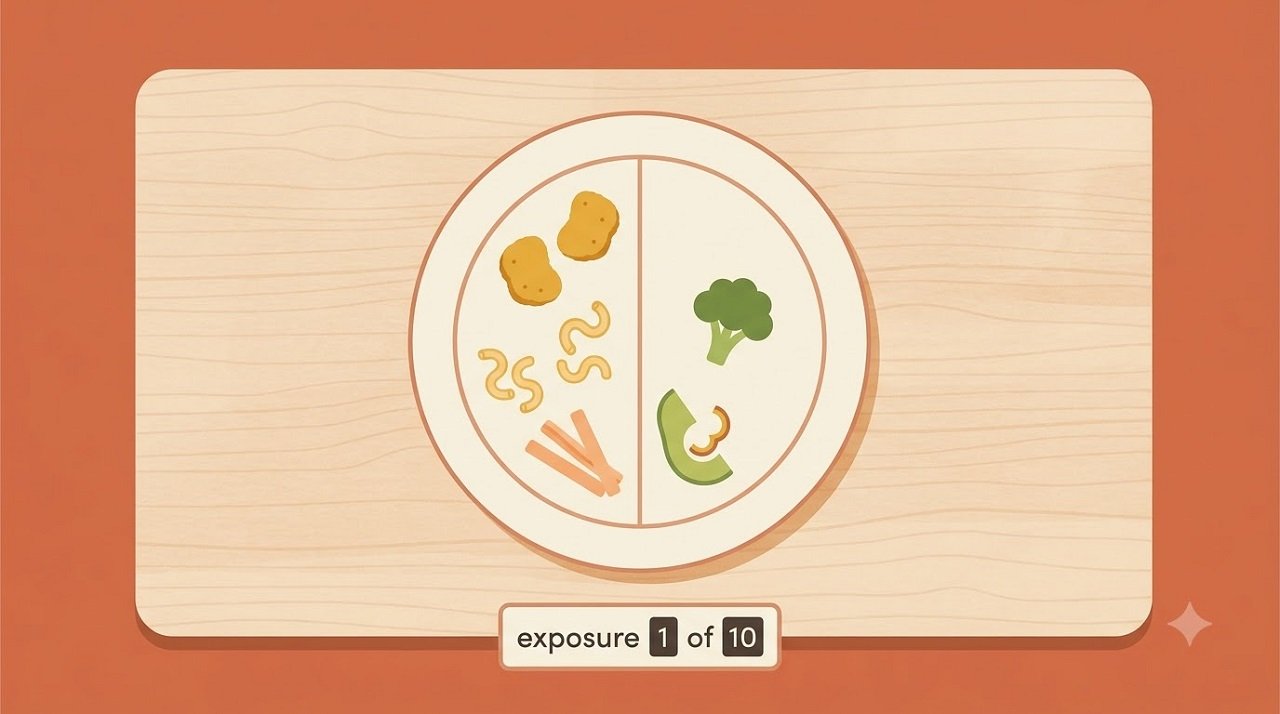
Most “picky eater” meal plans do one of two things: hand you a separate kids’ menu to cook alongside dinner, or teach you how to hide vegetables so your child doesn’t notice them. Here’s what the actual child-development research points to instead: a study following 3,022 infants found many caregivers didn’t realize their child needed 8 to 15 exposures to a new food before accepting it — most parents give up after two or three tries, well before the point where acceptance typically happens. The same research found something counterintuitive: pressuring a child to eat a food actually makes them like it less, while eating the same meal together as a family — no separate kid plate — measurably increases acceptance through modeling.
This plan is built around that research: one 30-minute family meal, every night, with no separate kid menu — just a reliable “safe” component on the plate alongside whatever’s new, repeated without pressure, as many times as it takes.
📥 Download the printable 7-day guide and grocery list (PDF) — includes the family-style meal plan, grocery checklist, and storage tips.
What This Plan Actually Targets
The core structure, every night:
- One family meal — everyone eats the same thing, prepared once, in 30 minutes or less
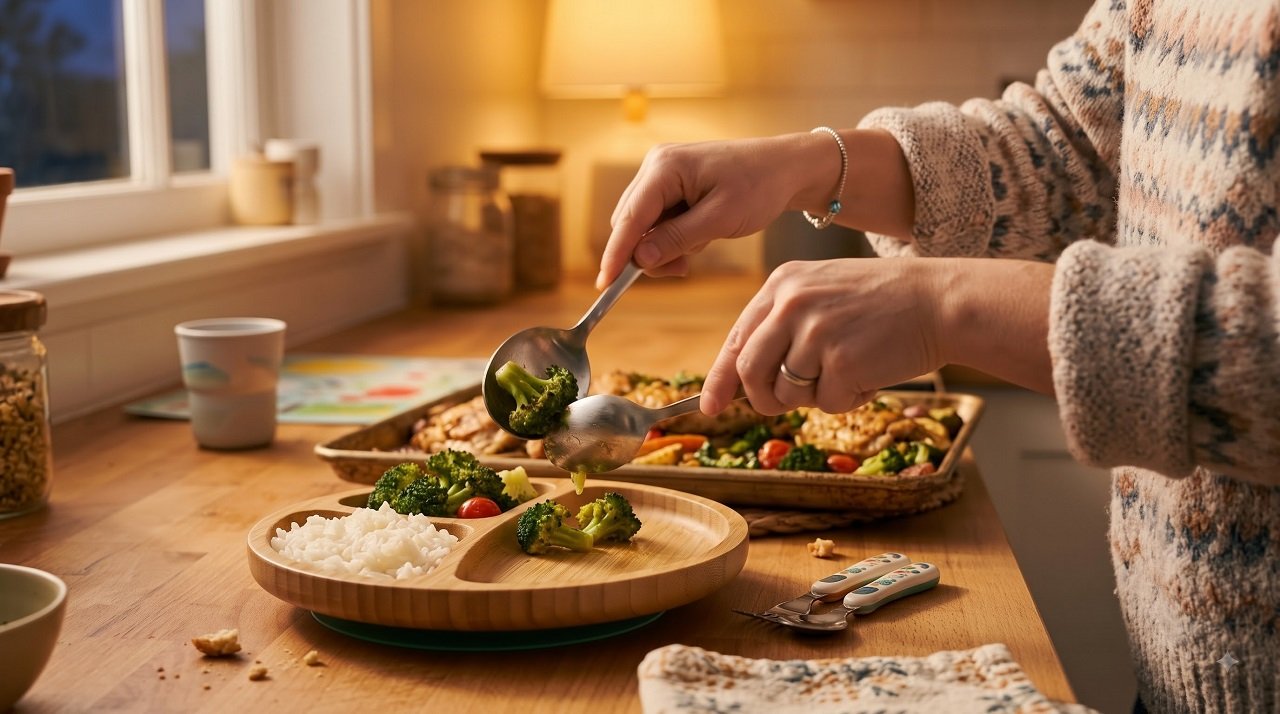
- A “safe” component always on the table — something your picky eater reliably accepts, served alongside the meal, so they’re never facing a plate with nothing they’ll eat
- A new or less-preferred food included without pressure — no “just try one bite” bargaining. It’s there, it’s normal, no comment needed if it goes untouched
Why no pressure matters, specifically: research on food neophobia consistently finds that coercive feeding practices (bargaining, rewards for eating, pressure) backfire — children pressured to eat a food tend to develop a stronger dislike for it over time, not less. The research-supported approach is closer to “keep offering it calmly and repeatedly, without comment on whether they eat it.”
Your 7-Day Family Meal Plan (30 Minutes or Less)
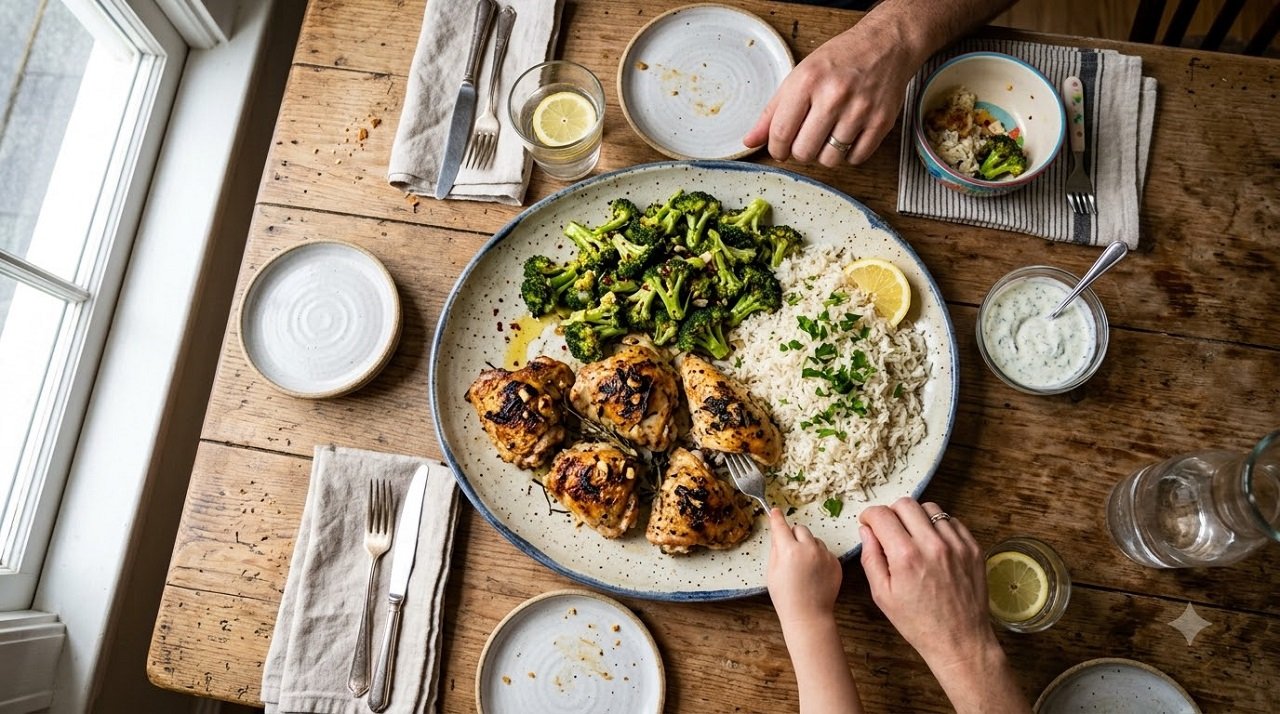
Each night includes the full family meal plus a note on the “safe” component and the “exposure” food for picky eaters.
Day 1
- Meal: Sheet-pan chicken thighs, roasted broccoli, and rice
- Safe component: Plain rice
- Exposure food: Broccoli (offer plain, no sauce required)
Day 2
- Meal: Turkey taco bowls (seasoned ground turkey, rice, black beans, shredded cheese, diced tomato, avocado)
- Safe component: Rice and cheese
- Exposure food: Black beans or avocado, served separately so it’s easy to avoid or try
Day 3
- Meal: Baked salmon, buttered pasta, steamed carrots
- Safe component: Buttered pasta
- Exposure food: Salmon (a small, plain piece alongside, no pressure to finish it)
Day 4
- Meal: Sheet-pan sausage and roasted vegetables (bell peppers, zucchini, onion) over rice
- Safe component: Rice and sausage
- Exposure food: Roasted vegetables, offered plain
Day 5
- Meal: Homemade-style pizza (store-bought dough or flatbread, sauce, cheese, and vegetable toppings on one half)
- Safe component: Plain cheese half
- Exposure food: Vegetable-topped half, offered as its own option, not mixed in
Day 6
- Meal: Stir-fry (chicken, broccoli, carrots, snap peas) over rice
- Safe component: Rice and plain chicken
- Exposure food: Stir-fried vegetables
Day 7
- Meal: Breakfast-for-dinner (scrambled eggs, whole-grain toast, fruit)
- Safe component: Toast and fruit
- Exposure food: Eggs (a genuinely common picky-eater sticking point worth repeated, low-pressure exposure)
Your Grocery List
📥 Get this list as a printable PDF — includes the full 7-day guide, grocery checklist, and storage tips.
Protein: chicken thighs, ground turkey, salmon, sausage, chicken breast, eggs
Produce: broccoli, carrots, bell peppers, zucchini, onion, snap peas, avocado, diced tomato, fruit (whatever’s in season)
Pantry: rice, pasta, black beans, taco seasoning, pizza dough or flatbread, pizza sauce, shredded cheese, whole-grain bread, butter, olive oil
Dairy: shredded cheese, butter, eggs
Storage and Reheating Guide
- Sheet-pan meals (Day 1, Day 4): Fridge 3-4 days; reheat in the oven or a covered pan to keep vegetables from getting soggy.
- Rice and pasta: Batch-cook extra at the start of the week; fridge up to 5 days.
- Ground meat dishes (Day 2, Day 6): Fridge 3-4 days, or freeze portions up to 3 months.
- Salmon: Best within 2 days; reheat gently, not in the microwave, to avoid drying it out.
- Pizza (Day 5): Reheats well in a hot oven or air fryer for a few minutes — better texture than the microwave.
Tips for Making This Actually Work
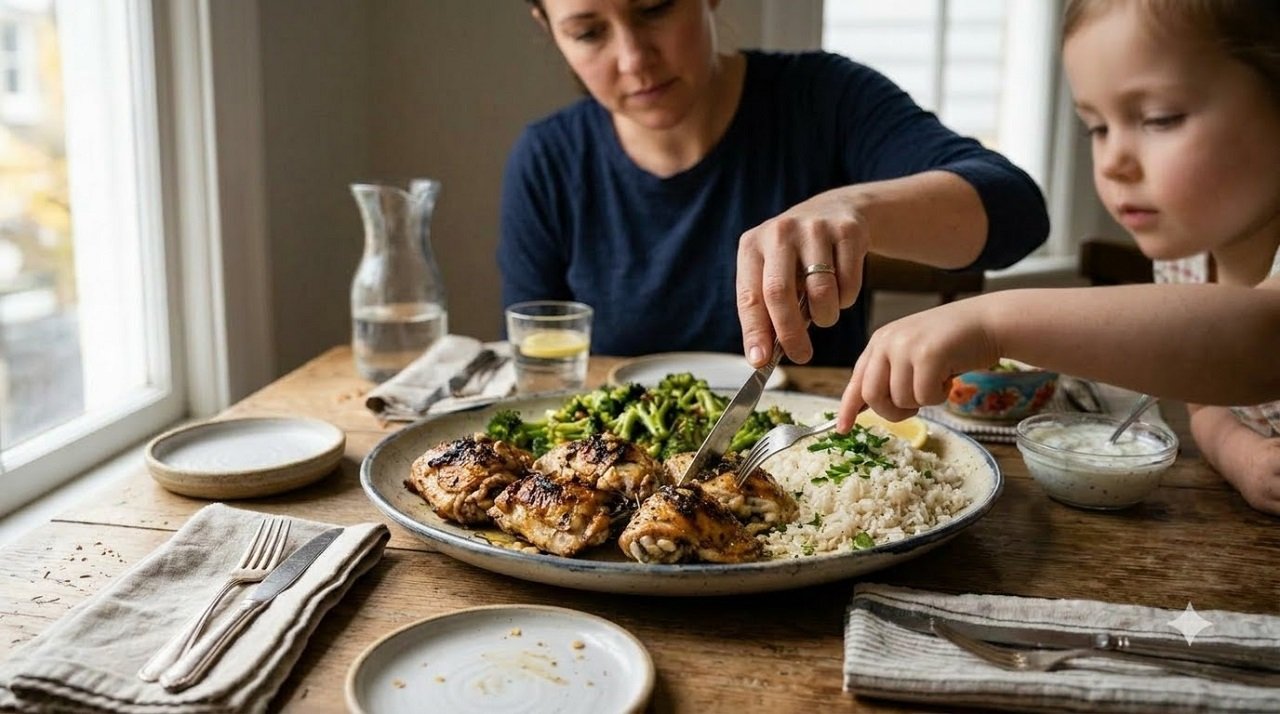
- Don’t announce the “new” food as a big deal. Just put it on the table like everything else — research on food neophobia specifically finds that low-key, repeated, pressure-free exposure works better than making a food’s presence a negotiation.
- Expect it to take weeks, not days. The 8-15 exposure research means a food your child rejects on night one might genuinely take a month of intermittent, calm reintroduction before it clicks — that’s normal, not a sign the approach isn’t working.
- Batch-cook your rice, pasta, and proteins at the start of the week so the “30 minutes” claim holds up even on your most exhausted weeknights.
- You eating the food matters — research on food modeling shows children are more likely to try something when they see a trusted adult eating it too, not just serving it.
FAQ
How do I get my picky eater to try new foods?
Repeated, low-pressure exposure — research suggests it can take 8-15 exposures before a child accepts a new food, and pressuring them to eat it tends to backfire, making them like it less over time.
Is it bad to make separate meals for picky eaters?
Not “bad,” but research suggests family-style meals (everyone eating the same food, with a reliable safe component included) support food acceptance better than a consistently separate kid menu, partly through modeling.
How many times should a child try a new food before I give up?
Research points to 8-15 exposures as a more realistic number than the 2-3 tries most parents stop at — many families give up on a food well before the point where genuine acceptance tends to happen.
What is food neophobia?
The natural wariness of new foods common in young children, believed to be an evolutionary protective mechanism; it typically peaks between ages 2-6 and decreases with age and repeated, low-pressure exposure.
What if my child is an extremely limited eater, beyond typical picky eating?
If your child eats a very narrow range of foods, has significant mealtime distress, or shows signs of a feeding disorder rather than typical pickiness, talk to your pediatrician — this may benefit from a pediatric feeding specialist, not just a meal plan adjustment.
Sources Referenced in This Article
- “Picky Eating in Children.” PMC. ncbi.nlm.nih.gov/pmc/articles/PMC4422022
- Cooke, L. “The importance of exposure for healthy eating in childhood: A review.” Journal of Human Nutrition and Dietetics, 2007.
- Cole, N.C., et al. “Correlates of picky eating and food neophobia in young children: A systematic review and meta-analysis.” Nutrition Reviews, 2017.
- Caton, S.J., et al. “Repetition counts: Repeated exposure increases intake of a novel vegetable in UK pre-school children.” British Journal of Nutrition, 2013.
Disclaimer: This meal plan provides general educational information and is not a substitute for individualized nutrition advice. If you have kidney disease or another condition affecting protein metabolism, talk to your doctor or a registered dietitian before significantly increasing your protein intake.
Most high-protein meal plans focus entirely on one number: your daily gram total. Here’s the research most of them skip: how you spread that protein across the day matters independently of the total itself.
A randomized crossover trial published in The Journal of Nutrition (Mamerow et al., 2014) gave healthy adults the same total daily protein two different ways — evenly split across three meals (~30g each) versus skewed toward dinner (10g breakfast, 16g lunch, 63g dinner, the pattern most people actually eat). The even-distribution pattern produced 25% higher 24-hour muscle protein synthesis than the skewed pattern, despite identical total protein intake. A large dinner portion couldn’t make up for what was missed earlier in the day. This finding has been replicated in other trials (Areta et al., 2013, found a similar 31-48% advantage for evenly-spaced protein after exercise) and specifically matters for older adults, where the effective per-meal threshold rises to closer to 35-40g due to age-related anabolic resistance.
This plan is built directly around hitting 25-40g of protein at every meal, not just a daily total — and it connects to the current protein guidance we cover in Nutrition Basics: the newer 2025-2030 Dietary Guidelines Advisory Committee recommendation of 1.2-1.6g/kg body weight, well above the older 0.8g/kg minimum.
📥 Download the printable grocery list and 7-day guide (PDF) — includes the full week at a glance, a checkbox grocery list, and storage tips.
What This Plan Actually Targets
Two things, layered together:
- A daily protein total in the 1.2-1.6g/kg range (roughly 82-109g for a 150lb/68kg adult) — the range supported by current dietary guidelines advisory research, not the outdated 0.8g/kg minimum
- 25-40g of that protein at every single meal, rather than a light breakfast and a protein-heavy dinner — this is the part most high-protein content skips, despite the real research behind it
A practical note on totals: exact protein needs vary by body weight, activity level, and individual goals. This plan targets a representative ~150lb adult at moderate activity — adjust portions up or down to hit your own daily target while keeping the per-meal distribution principle intact.
Your 7-Day High-Protein Meal Plan
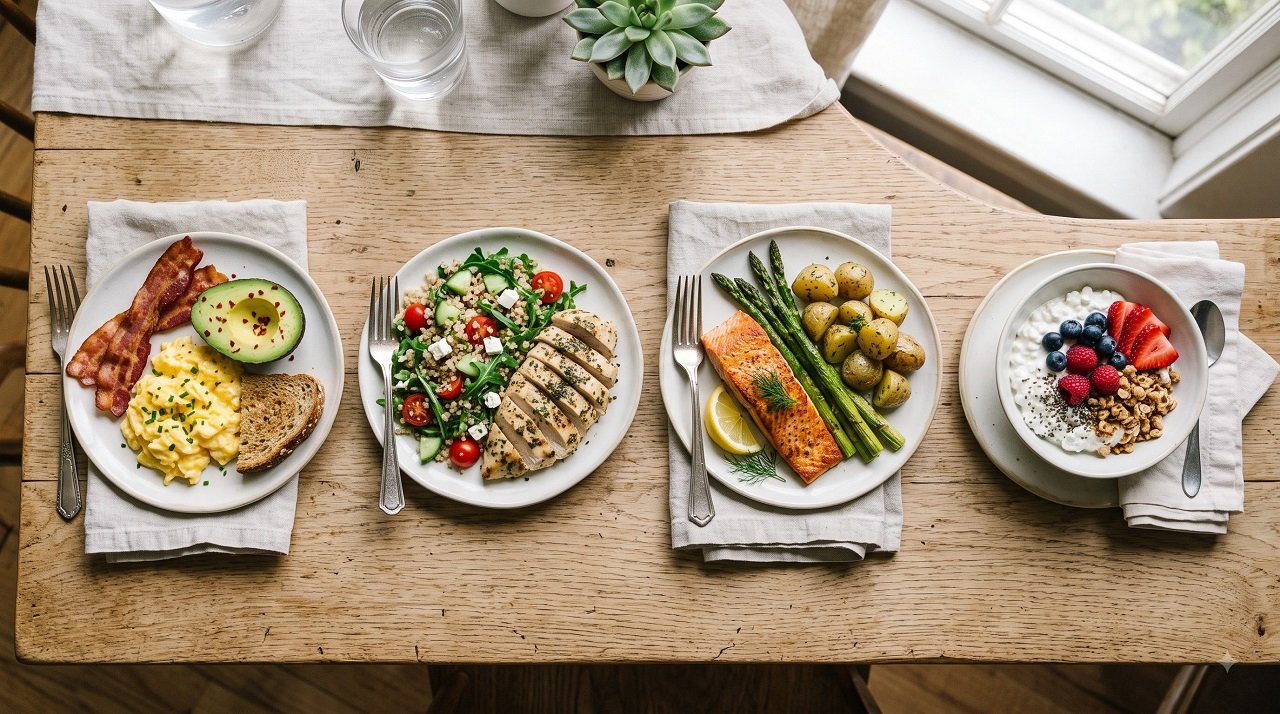
Approximate daily nutritional snapshot (varies by exact portions): ~2,000-2,200 calories, 100-115g protein spread across 4 meals (25-30g each), 180-210g carbohydrates, 65-80g fat.
Day 1
- Breakfast (28g protein): Greek yogurt with a scoop of protein-rich granola and berries
- Lunch (30g protein): Grilled chicken breast over mixed greens with chickpeas
- Dinner (32g protein): Baked salmon with quinoa and roasted broccoli
- Snack (15g protein): Cottage cheese with sliced cucumber
Day 2
- Breakfast (26g protein): Three-egg scramble with spinach and feta
- Lunch (28g protein): Turkey and black bean bowl with brown rice
- Dinner (30g protein): Lean beef stir-fry with mixed vegetables
- Snack (14g protein): A protein shake or a small handful of edamame
Day 3
- Breakfast (25g protein): Cottage cheese with berries and walnuts
- Lunch (30g protein): Tuna salad (olive oil-based) over greens with a side of lentils
- Dinner (32g protein): Grilled shrimp with quinoa and asparagus
- Snack (13g protein): Greek yogurt with a few almonds
Day 4
- Breakfast (27g protein): Protein oats made with milk, topped with peanut butter
- Lunch (29g protein): Grilled chicken and quinoa salad with chickpeas
- Dinner (31g protein): Baked cod with black beans and roasted vegetables
- Snack (14g protein): Cottage cheese with pineapple
Day 5
- Breakfast (26g protein): Egg and turkey sausage scramble with vegetables
- Lunch (28g protein): Salmon salad (olive oil-based) over greens with lentils
- Dinner (33g protein): Lean steak with sweet potato and green beans
- Snack (15g protein): A protein shake
Day 6
- Breakfast (25g protein): Greek yogurt parfait with granola and walnuts
- Lunch (30g protein): Turkey chili with beans
- Dinner (32g protein): Grilled chicken thighs with brown rice and Brussels sprouts
- Snack (13g protein): Hard-boiled eggs (2) with a small apple
Day 7
- Breakfast (27g protein): Three-egg omelet with black beans and cheese
- Lunch (29g protein): Shrimp and quinoa bowl with roasted vegetables
- Dinner (30g protein): Baked salmon with lentils and asparagus
- Snack (14g protein): Cottage cheese with berries
Your Grocery List
📥 Get this list as a printable PDF — includes the full 7-day guide, grocery checklist, and storage tips.
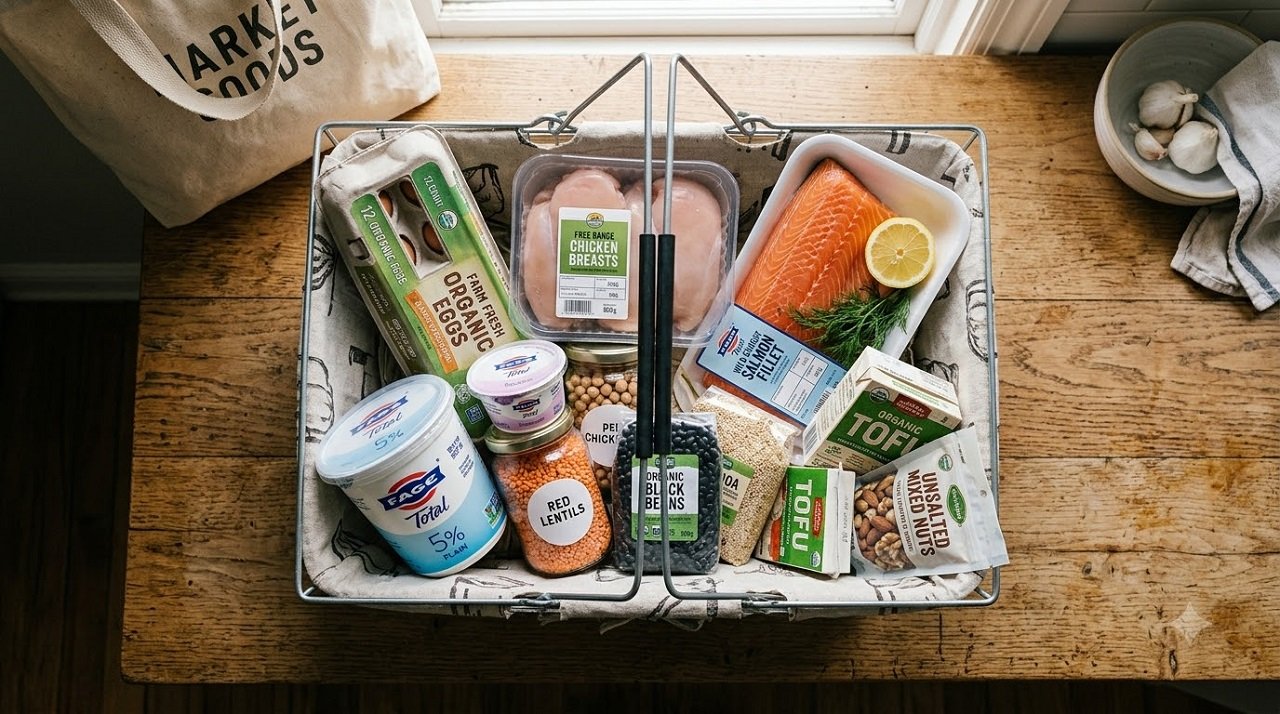
Protein: chicken breast, chicken thighs, salmon, cod, shrimp, lean beef, lean steak, turkey (ground and sausage), eggs, Greek yogurt, cottage cheese, canned tuna
Produce: spinach, mixed greens, broccoli, asparagus, Brussels sprouts, cucumber, berries, pineapple, apple, sweet potato
Grains and legumes: quinoa, brown rice, lentils, black beans, chickpeas, protein-rich granola, oats
Pantry: olive oil, peanut butter, walnuts, almonds, feta, protein powder (for shakes/snacks)
Storage and Reheating Guide
- Grains and legumes (quinoa, rice, lentils): Batch-cook and store in the fridge up to 5 days, or freeze in portioned bags up to 3 months.
- Fish (salmon, cod, shrimp): Best within 2-3 days; reheat gently in a covered pan or oven at 275°F rather than the microwave.
- Chili and stews: Freeze well up to 3 months — good to double a batch.
- Hard-boiled eggs: Keep about a week unpeeled, in the shell.
- Cooked chicken and beef: Fridge 3-4 days, or freeze portions up to 3 months.
Tips for Hitting Your Protein Targets Consistently
- Front-load breakfast specifically — this is the meal most people under-eat protein at (a typical Western breakfast is 10-15g), and it’s also the meal the research shows makes the biggest relative difference, since your body has gone the longest without protein overnight.
- A protein shake counts as a real meal-distribution tool, not a cop-out — if you’re short on time for breakfast or a snack, a shake with 25-30g protein serves the same distribution purpose as a whole-food meal.
- Don’t try to “bank” protein for later in the day — the research specifically found a large dinner portion couldn’t compensate for an under-protein breakfast and lunch, so consistency across meals matters more than a big finish.
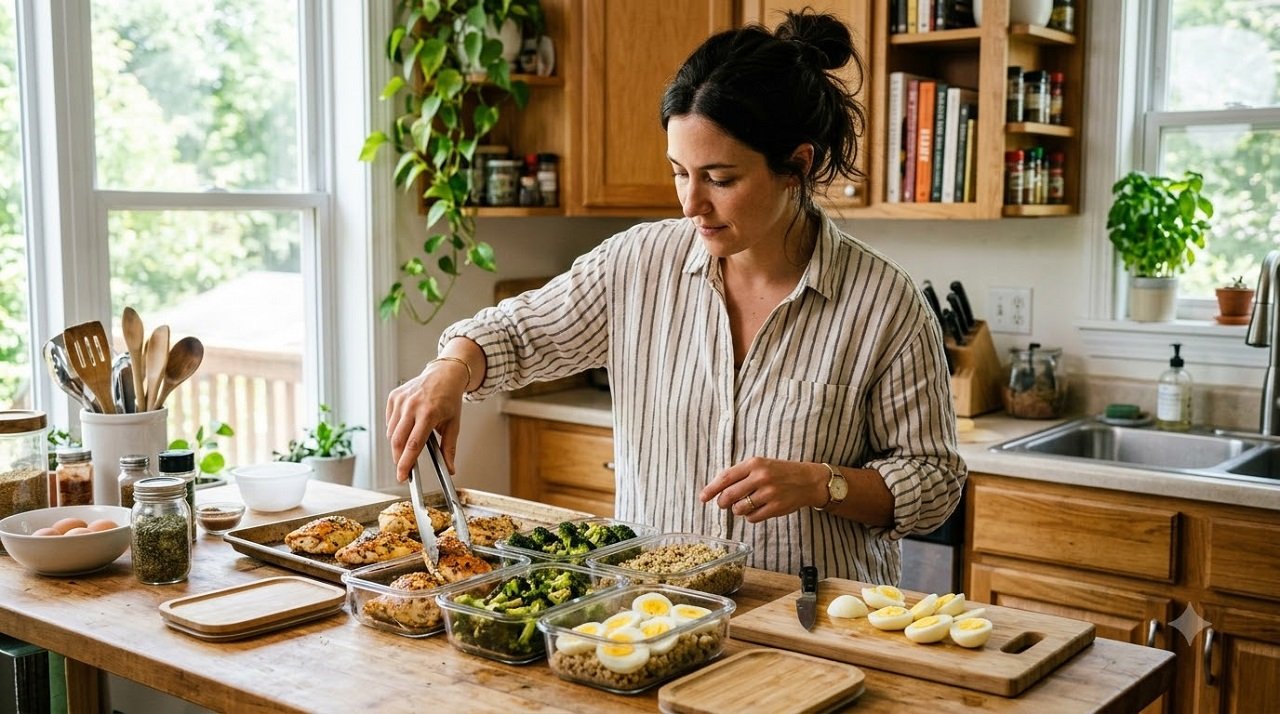
- Batch-cook proteins at the start of the week (a tray of baked chicken thighs, hard-boiled eggs, cooked quinoa) to make hitting the per-meal target fast on busy days.
FAQ
Is there a limit to how much protein my body can use in one meal?
Earlier research suggested a hard ceiling around 20-25g per meal, but more recent studies (including a 2023 Cell Reports Medicine trial) found muscle protein synthesis stayed elevated for over 12 hours after a 100g protein meal — there’s no strict per-meal ceiling. What the distribution research shows is a practical optimization pattern, not a hard limit: spreading protein across meals produces measurably more benefit than concentrating it, even though your body can technically use more than 30g at once.
How much protein do I actually need per day?
Current Dietary Guidelines Advisory Committee research points to 1.2-1.6g/kg body weight as a reasonable target for general health, higher than the older 0.8g/kg RDA minimum. Individual needs vary by activity level and goals — see our Nutrition Basics guide for the full context on this number.
Do older adults need more protein per meal?
Yes — research suggests the effective per-meal threshold for maximizing muscle protein synthesis rises to roughly 35-40g in older adults, due to age-related anabolic resistance (reduced muscle responsiveness to protein), compared to about 25-30g in younger adults.
Can I hit my protein targets without meat?
Yes, though it takes more deliberate planning — combining plant sources (legumes, quinoa, tofu, Greek yogurt if not fully plant-based) across a meal to reach the 25-30g range works, since plant proteins are generally less concentrated per serving than animal sources.
Does protein timing around workouts matter more than daily distribution?
The even-distribution research is a stronger, more consistently replicated finding than the older “anabolic window” concept — evenly spacing protein across your day matters more for overall muscle protein synthesis than precisely timing one dose right after a workout.
Sources Referenced in This Article
- Mamerow, M.M., et al. “Dietary protein distribution positively influences 24-h muscle protein synthesis in healthy adults.” The Journal of Nutrition, 2014. pubmed.ncbi.nlm.nih.gov/24477298
- Areta, J.L., et al. “Timing and distribution of protein ingestion during prolonged recovery from resistance exercise alters myofibrillar protein synthesis.” The Journal of Physiology, 2013.
- Trommelen, J., et al. “Muscle protein synthesis rates subsequent to a large bolus of protein ingestion.” Cell Reports Medicine, 2023.
- PMC — Per meal dose and frequency of protein consumption for lean mass and muscle performance
- 2025-2030 Dietary Guidelines Advisory Committee protein recommendations (referenced in our Nutrition Basics guide)
Disclaimer: This meal plan provides general educational information and is not a substitute for medical advice. If you experience severe diarrhea, persistent abdominal pain, or fever after antibiotics, contact your doctor promptly. If you have a diagnosed inflammatory condition, autoimmune disease, or digestive disorder, talk to your doctor or a registered dietitian before making significant dietary changes.
Most advice for gut health after antibiotics starts and ends with “take a probiotic.” A 2018 study published in Cell (Suez et al.) complicated that advice in a way most content online still hasn’t caught up to: researchers found that generic multi-strain probiotic supplements can actually delay the return of your own native gut bacteria after antibiotics, compared to just letting your gut recover naturally. A third group who received a transplant of their own pre-antibiotic stool recovered fastest of all — a research procedure, not a home remedy, but informative about what actually works.
We cover that study in more depth in How to Increase Good Bacteria in Gut Naturally After Antibiotics. This meal plan is the practical follow-through: instead of building your recovery around a probiotic supplement, it’s built around prebiotic fiber and anti-inflammatory whole foods — the approach the research actually supports feeding your own surviving bacteria, rather than introducing outside strains that may compete with your gut’s natural recovery.
📥 Download the printable grocery list and 7-day guide (PDF) — includes the full week at a glance, a checkbox grocery list, and storage tips.
Why Anti-Inflammatory Eating Specifically Matters Here
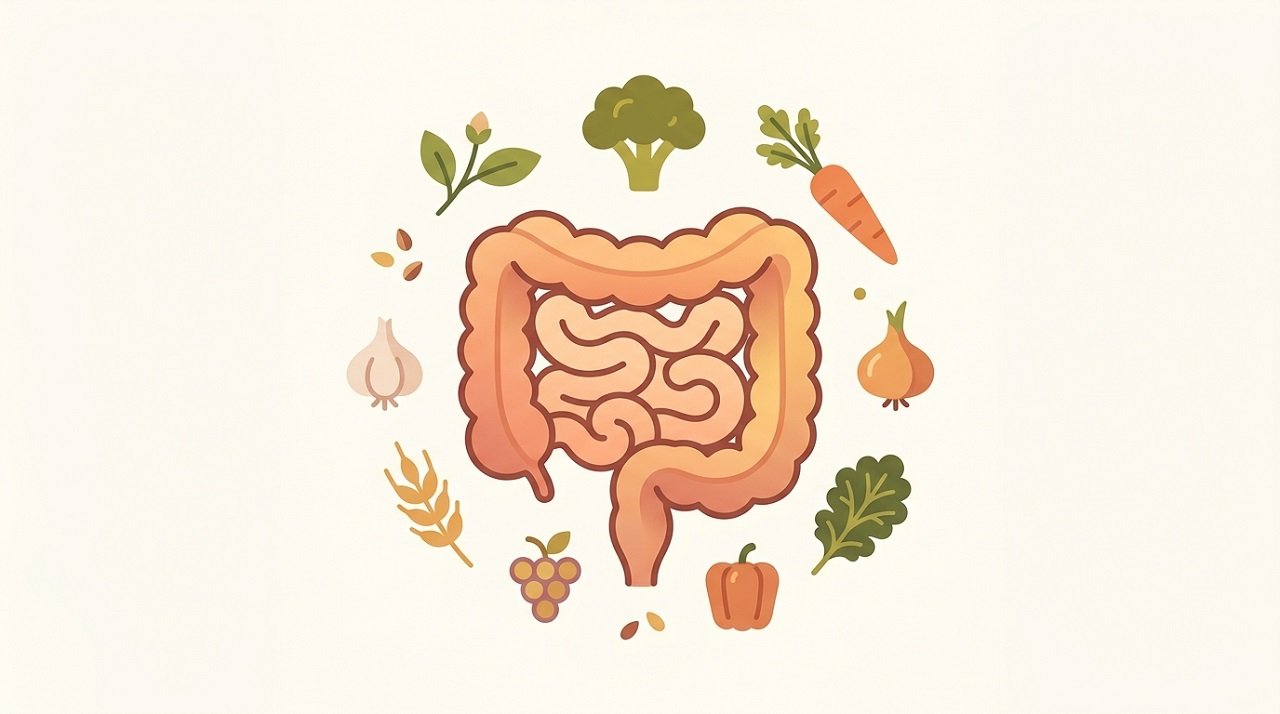
Antibiotics don’t just reduce bacterial diversity — the disruption itself is associated with a temporary increase in gut inflammation and permeability while your microbiome re-establishes itself. This is exactly where anti-inflammatory eating principles and gut recovery overlap: the same foods that reduce chronic inflammation generally — fiber-rich vegetables, legumes, fatty fish, olive oil — are also the foods that feed your native bacteria and support gut barrier function during this recovery window.
According to Harvard Health, “there isn’t one single anti-inflammatory diet” — which is useful here too, since it means this plan doesn’t need to be followed with rigid precision to help. The pattern matters more than perfection: more whole, plant-rich foods, more omega-3s, fewer ultra-processed foods.
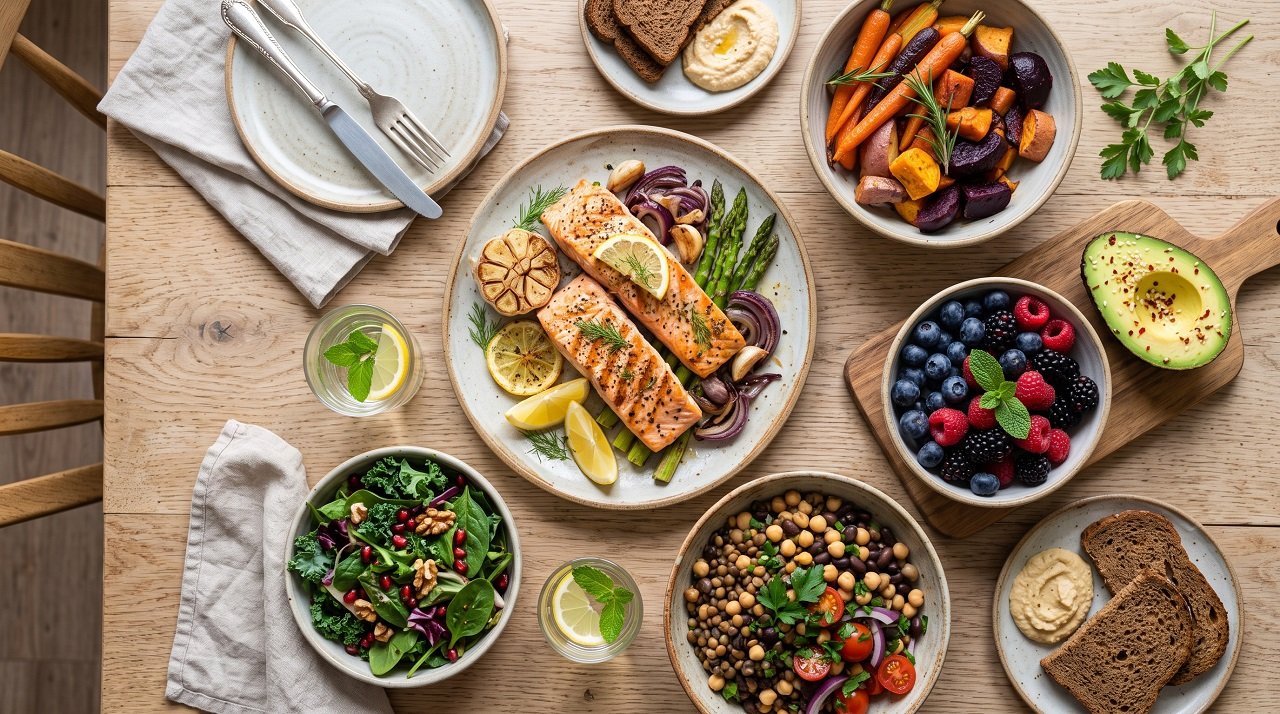
Eat more of: fruits, vegetables, whole grains, legumes, fatty fish, nuts, seeds, olive oil, herbs and spices
Eat less of: ultra-processed foods (packaged snacks, processed meats, sugary cereals, fast food) — these are associated with higher inflammation markers and offer little of the fiber your recovering gut bacteria need
A simple daily target: at least two servings of fatty fish per week, and at least five servings of fruits and vegetables per day (roughly two fruits, three vegetables) — this also puts you well above typical prebiotic fiber intake from a standard Western diet.
What This Plan Leans On Instead of Probiotic Supplements
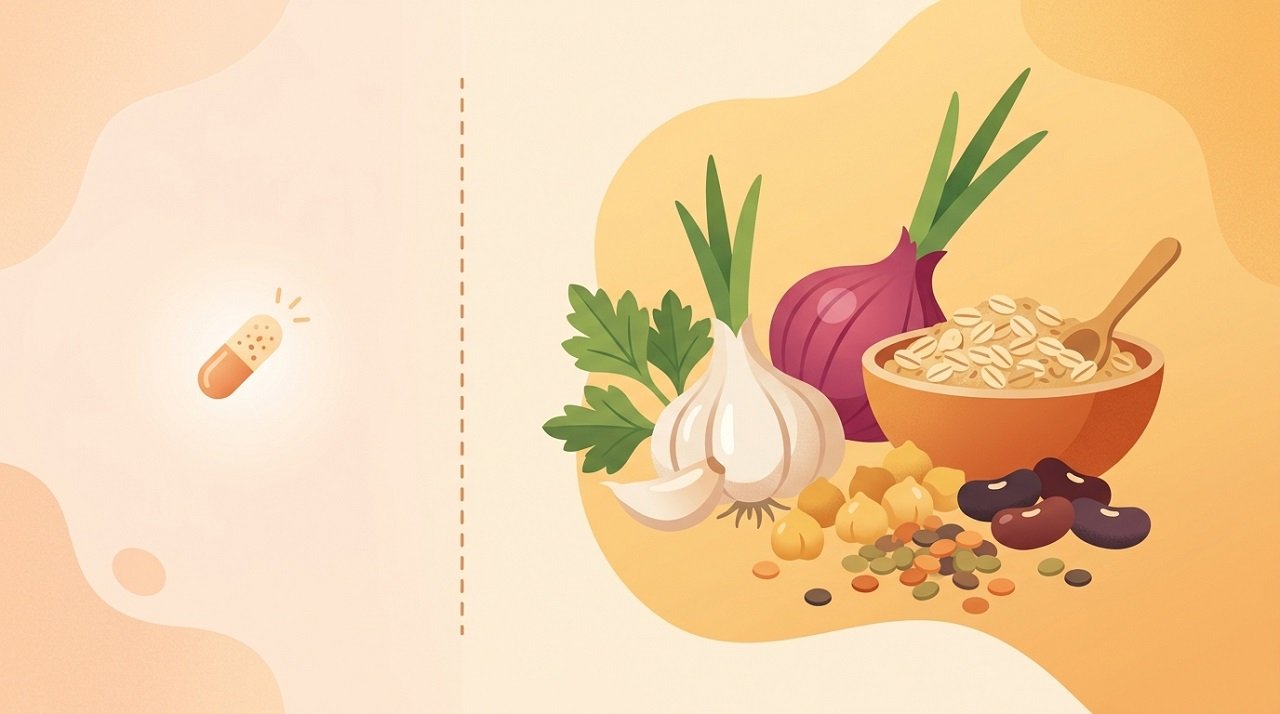
The seven days below are built with prebiotic-rich foods in every single day — garlic, onions, oats, legumes, and a wide variety of colorful vegetables — specifically because prebiotic fiber feeds your own surviving bacteria directly, rather than introducing an outside bacterial population the way a supplement does. If you’re also eating fermented foods (yogurt, kimchi) alongside this, that’s fine — the point isn’t to avoid all probiotic sources, it’s to not rely on a concentrated supplement as your primary recovery strategy in the weeks right after antibiotics.
Your 7-Day Anti-Inflammatory Meal Plan
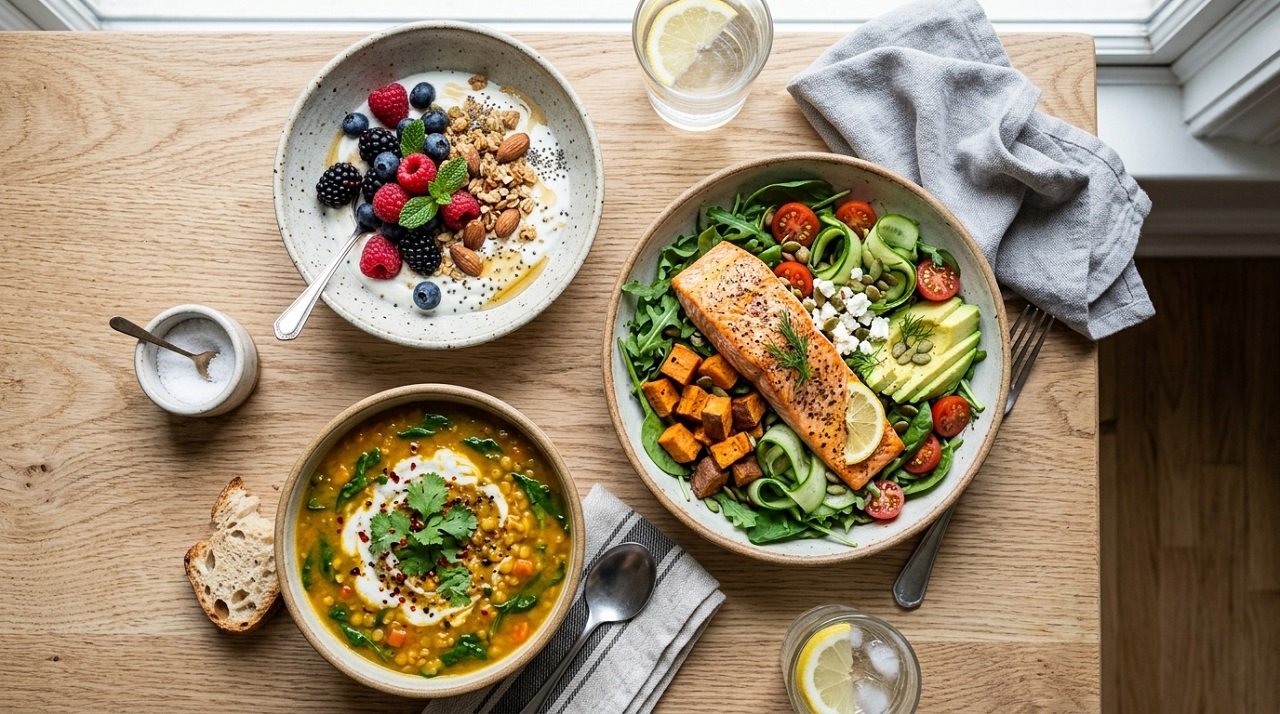
Day 1
- Breakfast: Greek yogurt with mixed berries, chia seeds, and a drizzle of honey
- Lunch: Grilled salmon over mixed greens with cherry tomatoes, cucumber, and olive oil vinaigrette
- Dinner: Turmeric-spiced lentil soup with a side of sautéed spinach
- Snack: A small handful of walnuts and an apple
Day 2
- Breakfast: Oatmeal topped with sliced banana, ground flaxseed, and cinnamon
- Lunch: Quinoa bowl with roasted sweet potato, black beans, avocado, and lime
- Dinner: Baked cod with roasted Brussels sprouts and wild rice
- Snack: Carrot and celery sticks with hummus
Day 3
- Breakfast: Smoothie with spinach, frozen blueberries, unsweetened almond milk, and a scoop of ground flaxseed
- Lunch: Whole-grain wrap with grilled chicken, roasted red peppers, and mixed greens
- Dinner: Stir-fried tofu with broccoli, bell peppers, and ginger over brown rice
- Snack: A handful of almonds and orange slices
Day 4
- Breakfast: Whole-grain toast with avocado, a poached egg, and a sprinkle of chili flakes
- Lunch: Mediterranean chickpea salad with cucumber, tomato, olives, feta, and olive oil
- Dinner: Grilled salmon with roasted asparagus and a small baked sweet potato
- Snack: Plain yogurt with fresh figs
Day 5
- Breakfast: Chia pudding made with almond milk, topped with mixed berries
- Lunch: Lentil and vegetable soup with a side salad
- Dinner: Baked chicken thighs with roasted cauliflower and quinoa
- Snack: Sliced apple with natural almond butter
Day 6
- Breakfast: Vegetable omelet (spinach, mushrooms, tomatoes) with a side of berries
- Lunch: Tuna salad (made with olive oil and lemon instead of mayo) over greens with whole-grain crackers
- Dinner: Turmeric roasted vegetables and chickpeas over brown rice
- Snack: A handful of walnuts and a pear
Day 7
- Breakfast: Whole-grain pancakes topped with fresh berries
- Lunch: Grilled shrimp and avocado salad with mixed greens and citrus vinaigrette
- Dinner: Baked salmon with roasted Brussels sprouts and wild rice
- Snack: Dark chocolate (70%+ cocoa) with a handful of berries
Anti-Inflammatory Grocery List
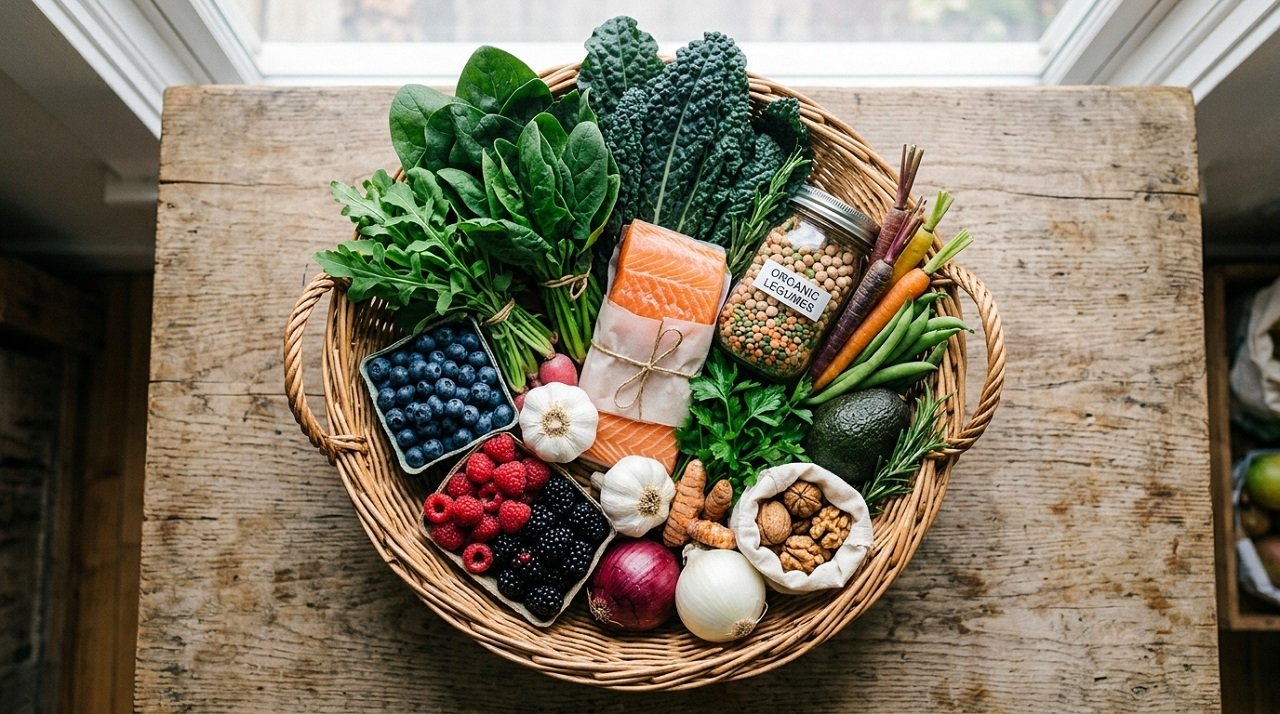
📥 Get this list as a printable PDF — includes the full 7-day guide, grocery checklist, and storage tips.
Produce: spinach, mixed greens, broccoli, cauliflower, Brussels sprouts, bell peppers, sweet potatoes, cucumber, cherry tomatoes, avocado, berries (blueberries, strawberries, raspberries), banana, apples, oranges, pears, figs, lemon, lime, garlic, ginger
Protein: salmon, cod, shrimp, chicken thighs, eggs, tofu, canned tuna, chickpeas, black beans, lentils
Dairy and alternatives: plain Greek yogurt, unsweetened almond milk, feta cheese
Grains: oats, quinoa, brown rice, whole-grain bread, whole-grain wraps, whole-grain crackers
Pantry: olive oil, walnuts, almonds, chia seeds, ground flaxseed, turmeric, cinnamon, chili flakes, honey, dark chocolate (70%+ cocoa)
Tips for Making This Sustainable
- “Eat the rainbow” is a genuinely useful shortcut — Harvard Health specifically recommends a wide range of colorful plant foods, since different pigments correspond to different protective phytochemicals. Aiming for variety in color is a simpler mental model than trying to track individual nutrients.
- Small swaps compound over time — trading a muffin for a fresh berry salad, or fries for a baked sweet potato, is a more sustainable strategy than an all-or-nothing overhaul.
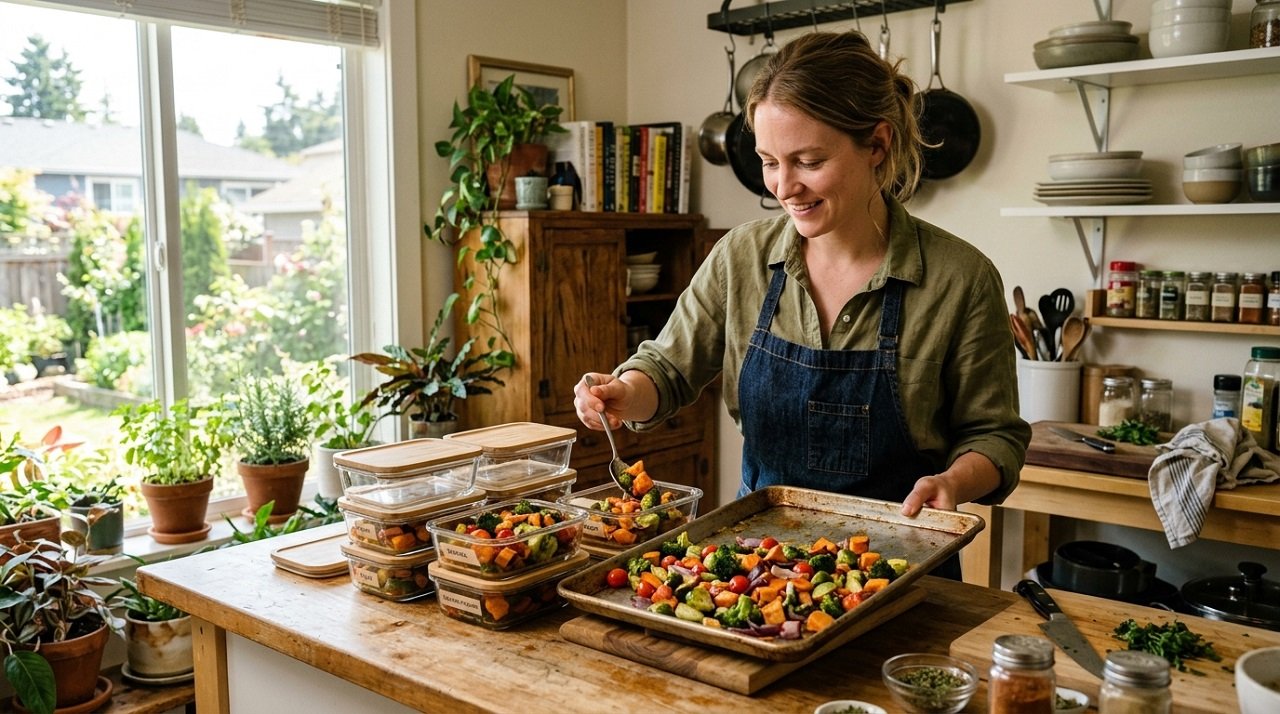
- Batch-cook grains and roasted vegetables at the start of the week to make weeknight assembly faster.
- Coffee doesn’t need to be eliminated — Harvard Health notes coffee contains polyphenols with anti-inflammatory properties; moderate intake isn’t something this plan asks you to cut.
FAQ
Should I skip probiotics entirely after antibiotics?
Not necessarily — probiotics may still help with specific issues like antibiotic-associated diarrhea. The point isn’t that probiotics are useless, it’s that relying on a concentrated supplement as your primary recovery strategy isn’t as well-supported as the research once suggested. Prebiotic fiber and whole foods have a more consistent evidence base for supporting your own bacteria’s return.
How is this different from just eating a high-fiber diet?
It’s largely the same core idea, applied specifically: this plan combines prebiotic fiber (which feeds your existing bacteria) with anti-inflammatory whole foods (which reduce the inflammation that accompanies gut disruption), rather than treating “fiber” and “anti-inflammatory eating” as separate goals.
Is there one “correct” anti-inflammatory diet?
No — Harvard Health is explicit that there isn’t a single official anti-inflammatory diet. The Mediterranean diet and DASH both incorporate similar underlying principles.
How long does gut recovery after antibiotics actually take?
Research generally shows it takes several weeks to a few months for gut bacteria to return toward their prior state, and per the Suez et al. 2018 study, generic probiotics may extend rather than shorten that timeline for some people — which is part of why this plan emphasizes food-based prebiotic fiber instead.
Is this plan safe for someone with an autoimmune condition?
The general principles (more whole foods, less ultra-processed food) are broadly safe, but specific autoimmune conditions sometimes require additional dietary considerations. Talk to your doctor or a registered dietitian familiar with your specific condition before treating this as a complete plan.
When should I see a doctor instead of just following this plan?
If you experience severe or persistent diarrhea, abdominal pain, fever, or blood in your stool after antibiotics, contact your doctor promptly — these can indicate C. difficile infection, which requires medical treatment, not dietary changes alone.
Sources Referenced in This Article
- Suez, J., et al. “Post-Antibiotic Gut Mucosal Microbiome Reconstitution Is Impaired by Probiotics and Improved by Autologous FMT.” Cell, 174(6), 2018, 1406-1423.
- Harvard Health — The Best Anti-Inflammatory Diets
- Harvard Health — Quick-Start Guide to an Anti-Inflammation Diet
- Harvard Health — Fighting Inflammation with Food
- Harvard Health — Top Anti-Inflammatory Foods
- Harvard Health — Anti-Inflammatory Food Superstars for Every Season


From Leaky Gut to Resilience: The Beta Glucan Breakthrough

Chamomile Tea for Sleep: How Much to Drink (And When)

Instant Relief for Trapped Gas Pain: Why Direction Matters More Than the Pose

PEMF Webinar

Why You Can’t Trust Big Pharma

The Anti-Cancer Body with Dr. Michael Karlfeldt
-
 Events2 months ago
PEMF Webinar
-
 Events3 months ago
Why You Can’t Trust Big Pharma
-
 Events4 months ago
The Anti-Cancer Body with Dr. Michael Karlfeldt
-

 Events3 months ago
The Cancer Conversation Your Oncologist Cannot Have in 15 Minutes
-

 Natural Sleep Remedies4 months ago
The 4-7-8 Breathing Technique: Step-by-Step Guide and What the Research Actually Shows
-

 Events5 months ago
Beyond the Brain
-

 Events4 weeks ago
HBOT ( Hyperbaric Oxygen Therapy ) Webinar
-
 Gut Health3 months ago
Unlock Incredible Gut Health Hacks and Transform Your Well-being Today!