
Health Tips
How to Get Rid of Red Eyes Fast Without Eye Drops: Natural and Effective Remedies

The content on this website – including articles, event announcements, personal experiences, and recommendations – is for informational and educational purposes only and is not medical advice. Always consult a qualified healthcare professional before making any changes to your diet, exercise, supplements, sleep habits, or wellness routines, especially if you are pregnant, nursing, on medication, or have any medical condition.
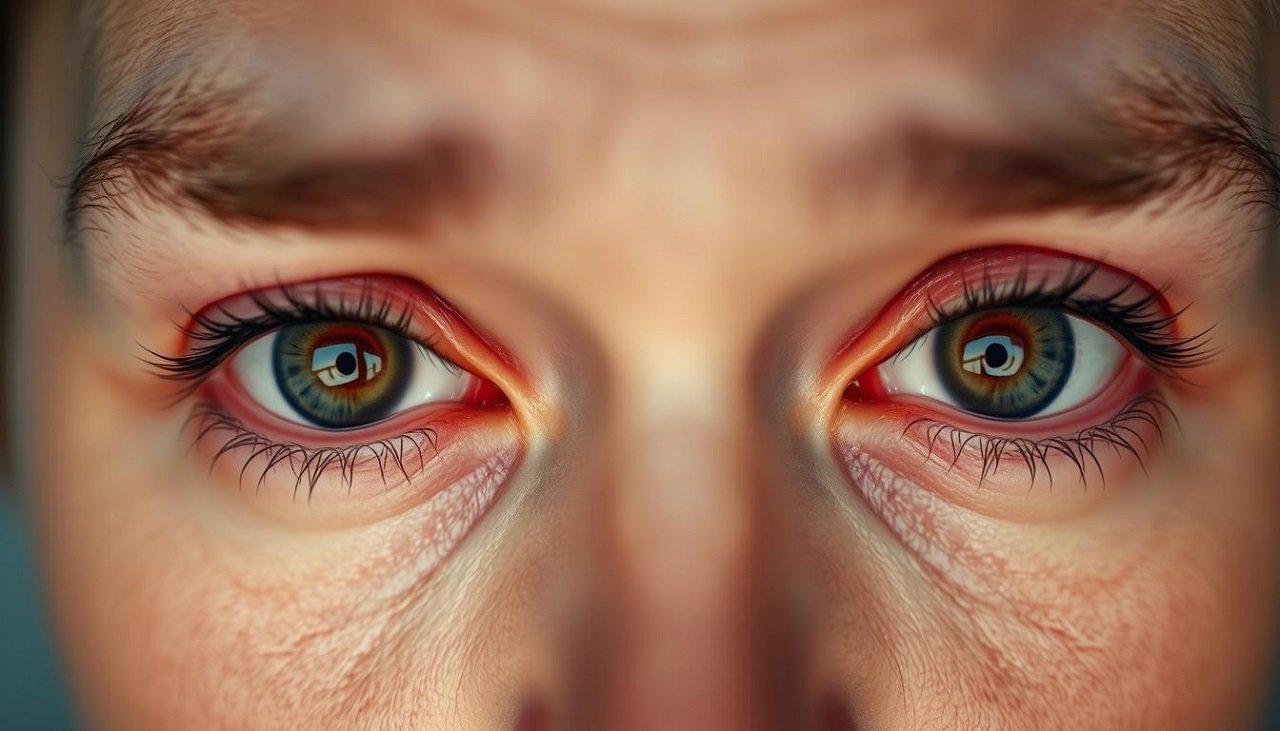
Medical disclaimer: This article is for general informational and educational purposes only and is not a substitute for professional medical advice, diagnosis, or treatment. Most red eyes are caused by everyday irritants like dryness, allergies, or screen strain and clear up with simple home care, but some causes need a doctor’s attention. Always seek medical care for the warning signs listed below, and consult an eye doctor if redness is frequent, severe, or doesn’t improve.
Cold compresses, reduced screen time, and staying hydrated are the fastest, most reliable ways to calm red eyes without reaching for eye drops. Most redness from dryness, allergies, or screen strain improves within a few hours using these methods, but persistent pain, vision changes, or discharge are signs to see a doctor instead of relying on home remedies.
🚨 When Red Eyes Need Urgent Medical Attention
Before trying home remedies, it’s worth knowing the signs that mean you should skip the natural approach and see a doctor instead:
- Severe eye pain or a feeling like something is stuck in your eye that won’t go away
- Sudden vision changes, blurriness, or sensitivity to light
- Thick discharge or pus, especially if your eyelids are stuck together in the morning
- Redness that doesn’t improve or gets worse after a few days of home care
- A chemical splash in the eye — rinse immediately with clean water for 20 minutes and seek emergency care right away, without rubbing the eye or applying any drops first
If you notice any of these, the remedies in this article aren’t a substitute for prompt medical evaluation.
Do you get tired of having red, itchy, and sore eyes? Red eyes can be really annoying and uncomfortable. But, there are ways to make them go away fast without eye drops. Knowing why your eyes get red is key. It could be because of allergies, dry eyes, or infections.
Many people get red eyes from things like dust, not enough sleep, or too much screen time. Studies on computer vision syndrome suggest that roughly half to the large majority of people who spend extended time on screens experience some degree of eye strain, which can make eyes look bloodshot. But, there are natural ways to make your eyes less red — like using cold compresses, drinking lots of water, and taking breaks from screens.
Learning how to get rid of red eyes without eye drops is really helpful. By knowing why your eyes get red and trying home remedies, you can make your eyes look better. You can keep your eyes healthy and clear without using medicine.
Key Takeaways
- Red eyes can be caused by various factors, including allergies, dry eyes, and eye infections.
- Natural remedies for red eyes, such as cold compresses and hydration, can help reduce eye redness.
- Practicing the 20-20-20 rule can help alleviate eye strain and reduce redness.
- Staying hydrated and using a humidifier can help maintain eye moisture levels and reduce redness.
- Not every home remedy is equally safe — some popular ones, like putting rose water directly in the eye, carry real irritation and infection risk (more on that below).
- Know the warning signs that mean it’s time to see a doctor rather than rely on home remedies alone.
Understanding What Causes Red Eyes
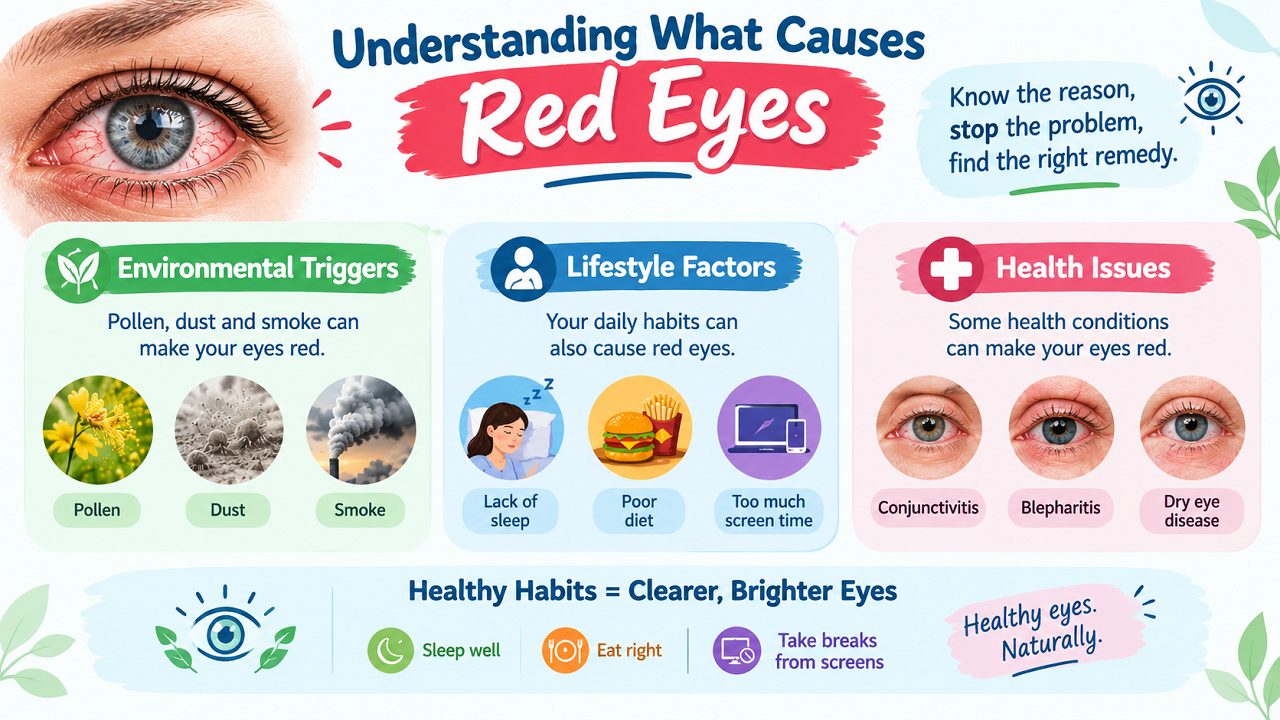
Red eyes can happen for many reasons. These include things around us, how we live, and health issues. To reduce redness in eyes naturally, knowing why it happens is key. Allergies, dry eyes, and infections are common causes. By finding out why, we can stop and fix red eyes, and find good remedies for bloodshot eyes.
Things like pollen, dust, and smoke can make eyes red. Not sleeping enough, eating badly, and too much screen time also play a part. To get rid of red eyes quickly, we need to tackle these issues. Simple changes like sleeping well, eating right, and taking breaks from screens can help reduce redness in eyes naturally.
Some health problems can also make eyes red. These include conjunctivitis, blepharitis, and dry eye disease. Knowing the reasons for red eyes helps us prevent and treat them. This way, we can keep our eyes healthy and reduce redness in eyes naturally.
The Cold Compress Method for Quick Relief

Looking for ways to soothe red eyes without drops? Home remedies can help. The cold compress method is one such way. It works by reducing swelling and tightening blood vessels.
A cold compress is simple to make. Just soak a clean cloth in cold water, wring it out, and place it on your closed eyes for a few minutes. You can do this several times a day.
A quick clarification: official guidance on using a cold compress for 15-minute stretches, every few hours, generally refers to care after an actual eye injury — not everyday redness from dryness or screen strain, which usually improves with just a few minutes of a cool compress. If you’ve had any kind of eye injury, see a doctor rather than relying on a compress alone. Either way, avoid icing the eye directly or leaving a compress on for more than 20 minutes at a time to prevent skin irritation from the cold.
The cold compress method is not just for red eyes. It can also make dark circles under your eyes look smaller, making it a useful home remedy for more than one eye-area concern. Adding the cold compress to your daily routine can help soothe red eyes without drops.
Some benefits of the cold compress method include:
- Reducing inflammation and constricting blood vessels
- Providing quick relief from red eyes
- Being a natural and less expensive alternative to artificial tears
- Helping to reduce the appearance of dark circles
Effective Ways to Get Rid of Red Eyes Fast Without Eye Drops
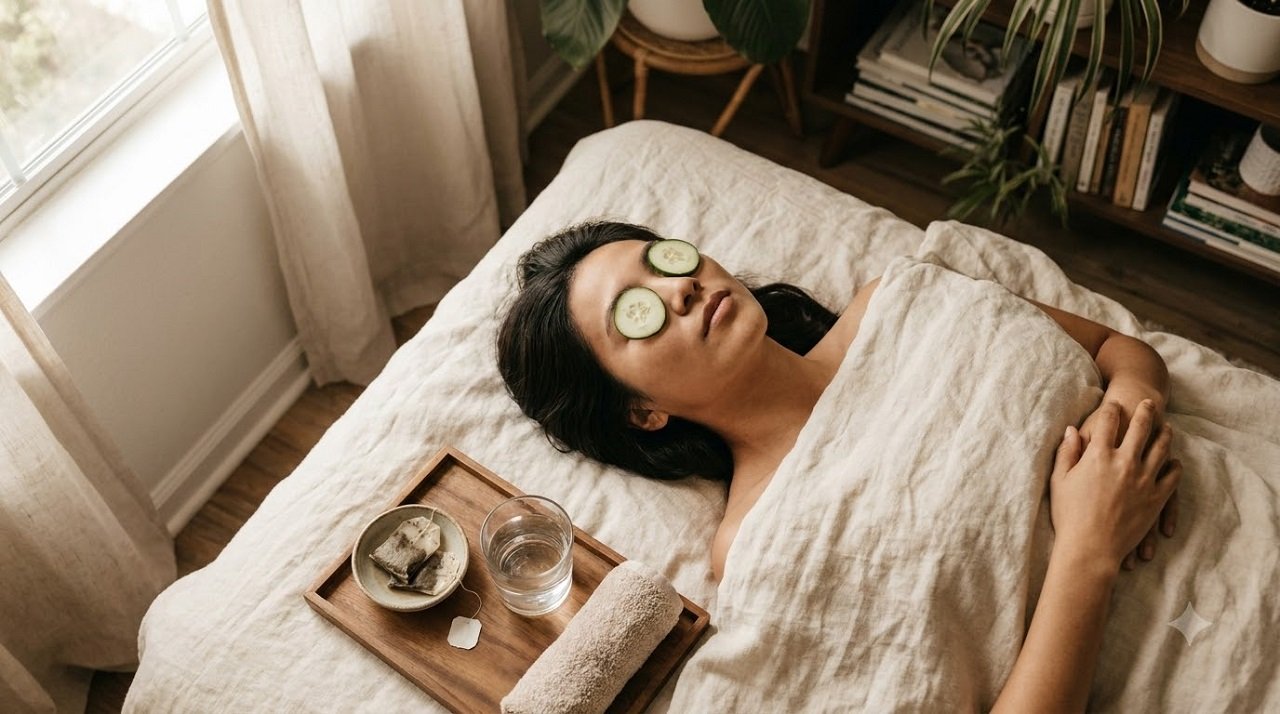
Red eyes can be annoying and uncomfortable. But, there are natural ways to make them better. You can try cucumber slices, tea bags, and rose water — just with a bit of care on how you use the last one.
Cucumber Slices Treatment
Cucumber slices can help because they have anti-inflammatory properties. Just slice a cucumber and put the slices over your closed eyelids for 10-15 minutes.
Tea Bag Therapy
Tea bags can calm your eyes and make them less red. Soak a tea bag in hot water, let it cool completely before use (to avoid any risk of burns), then place it over your closed eyelids for 5-10 minutes.
Rose Water: Use With Caution
Rose water is a popular suggestion for red eyes, but it’s worth knowing the real risk here: most commercial and homemade rose water isn’t sterile or formulated for use in or around the eyes, and applying it near your eyes can actually cause irritation or, in some cases, infection. If you want to try it, use a cotton pad soaked in rose water over closed eyelids only — never let it get into the eye itself — and choose a product specifically labeled safe for eye-area use rather than a general cosmetic or food-grade rose water. If in doubt, skip it and stick with a plain cold compress instead.
Using these natural remedies with other tips can help your eyes. Getting enough sleep, staying hydrated, and avoiding irritants are also good. By trying these, you can say goodbye to red, itchy eyes.
If your symptoms don’t get better, see a doctor. Combining these natural remedies with a healthy lifestyle can keep your eyes healthy. This way, you can avoid red eyes.
Simple Eye Habits to Reduce Strain and Redness
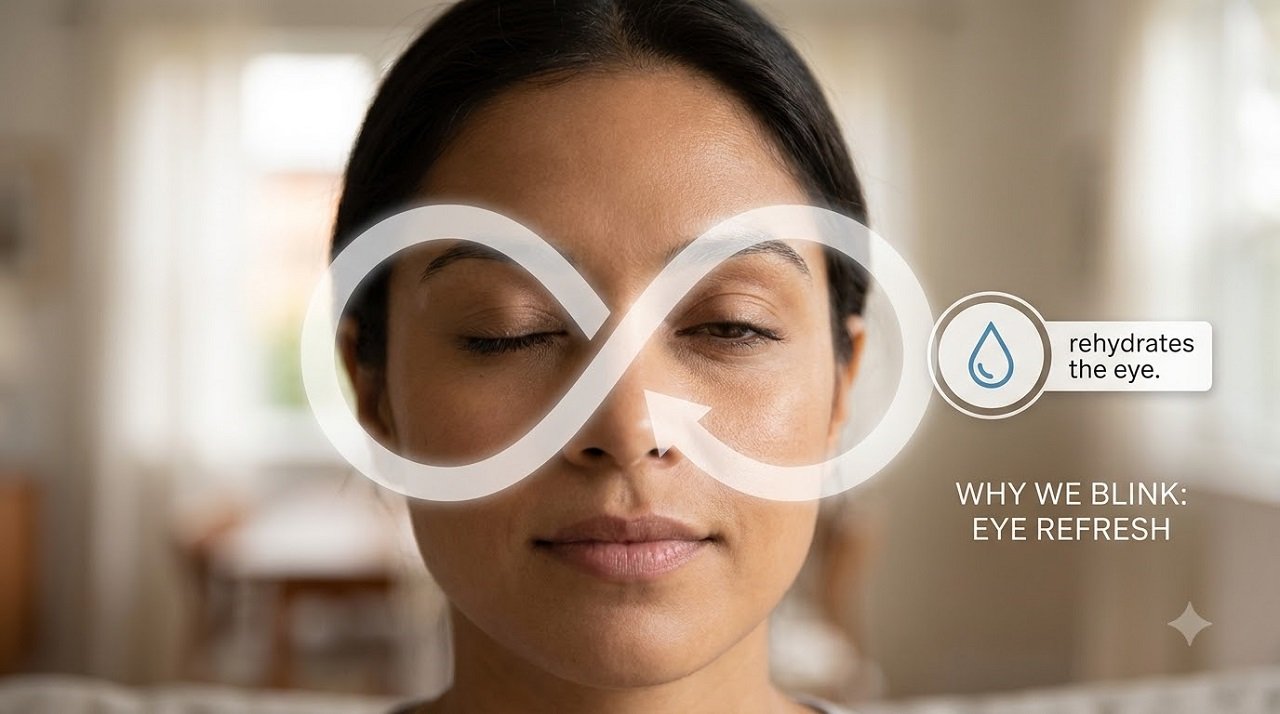
Giving your eyes regular breaks can make them feel better, especially if screen time or reading is a big part of your day. This mainly helps with redness caused by eye strain and dryness, rather than redness from allergies or infection — so think of it as one piece of the puzzle, not a cure-all.
To ease digital eye strain, try rolling your eyes gently in circles, first clockwise, then counterclockwise, and blinking fully and frequently to keep your eyes lubricated. Doing this a few times a day, alongside regular screen breaks, can help keep your eyes more comfortable.
Here are more tips for getting rid of red eyes quickly:
- Frequent, full blinking to prevent dry and sore eyes
- Placing cucumber slices on the closed eyelids for 10-15 minutes
- Using cold, fully-cooled chamomile tea bags to relieve redness and puffiness
Drink lots of water to help your eyes. It helps prevent dryness, which is a common contributor to redness. With these habits and tips, you can reduce redness in eyes naturally and keep your eyes clear.
Dietary Changes That Help Combat Red Eyes
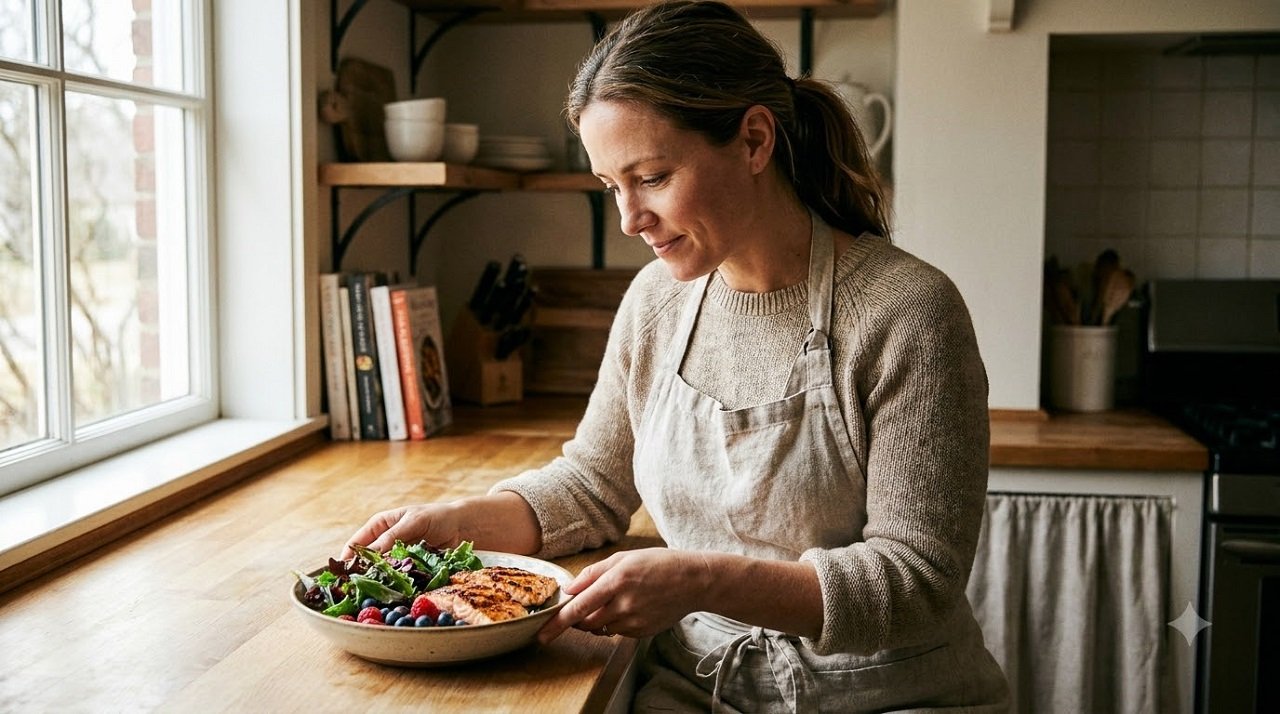
Diet can support eye comfort and health, especially over time. Eating foods rich in omega-3 fatty acids like salmon and walnuts may help with dryness-related redness. Drinking enough water is also key to avoid dehydration, which can make eyes look red and feel gritty.
Leafy greens like spinach and kale are great for eyes. They contain lutein and zeaxanthin, antioxidants linked to eye health. Citrus fruits, berries, and fatty fish like tuna and sardines may also support overall eye comfort.
Drinking plenty of water is important too. Aim for at least eight glasses a day, and limit sugary drinks that can contribute to dehydration. These simple changes can support eye comfort and overall eye health over time, alongside — not instead of — the quicker remedies above.
| Foods | Benefits |
|---|---|
| Salmon and walnuts | Rich in omega-3 fatty acids, may help with dryness-related redness |
| Leafy greens like spinach and kale | Rich in lutein and zeaxanthin, support eye health |
| Citrus fruits and berries | High in antioxidants, support overall eye health |
Environmental Adjustments for Prevention

Preventing red eyes is easier with a few simple environmental changes. Using a humidifier adds moisture to the air, which helps fight dryness and irritation, especially in heated or air-conditioned rooms.
Also, staying away from pollen and dust helps. Keep windows closed when pollen counts are high. Use air purifiers and clean surfaces often if allergies are a frequent trigger for you.
Other ways to stop red eyes include limiting screen time, wearing sunglasses outside to block UV rays, and avoiding smoky or dusty environments when possible.
Here are more tips to help prevent red eyes:
- Get enough sleep to avoid eye strain
- Drink enough water to stay hydrated
- Avoid irritants like smoke and strong chemical fumes
By following these tips, you can reduce how often your eyes turn red. Always take care of your eye health and use natural approaches where they fit your routine.
Digital Screen Usage and Eye Redness
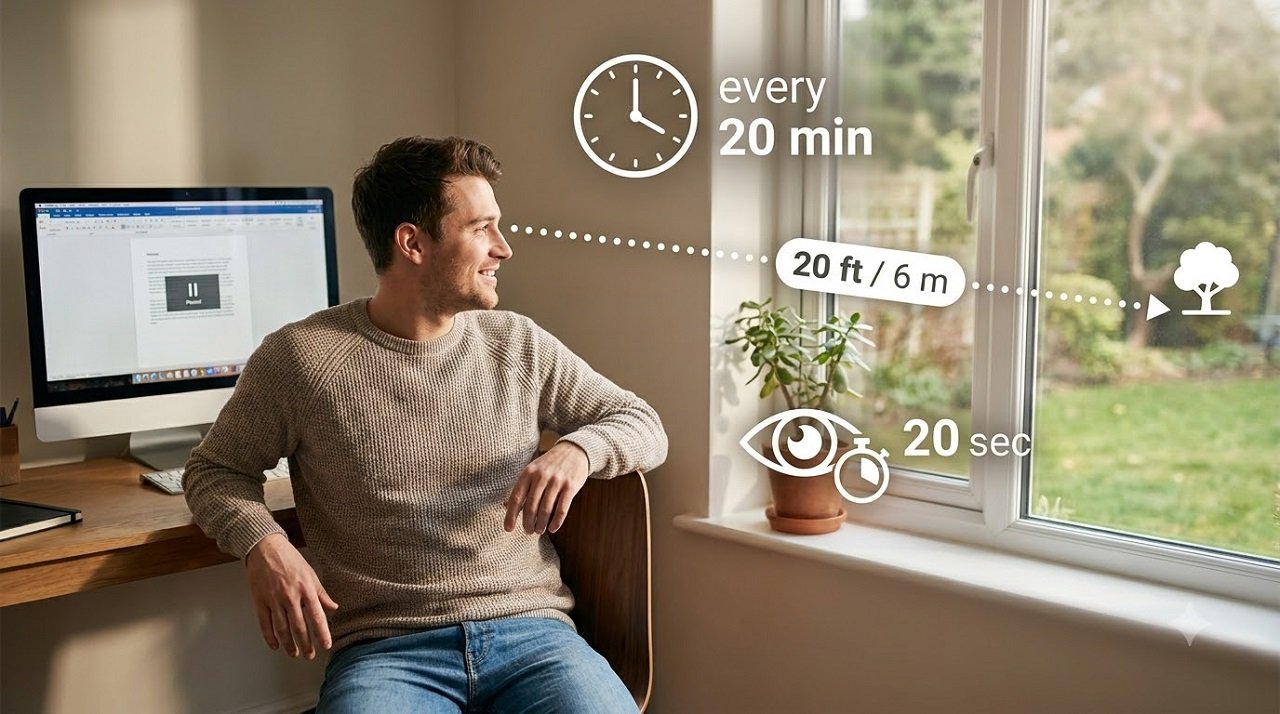
Digital screens are a big part of our lives, and they can genuinely contribute to red eyes. This happens partly because we blink less often when focused on a screen, which lets eyes dry out faster. Following the well-known 20-20-20 rule can help reduce this.
This rule means every 20 minutes, look at something about 20 feet away for 20 seconds. Pairing this with good screen placement, appropriate brightness, and blue light filtering (if it’s comfortable for you) can help reduce eye strain over the course of a day.
Some ways to lessen eye strain are:
- Taking regular breaks to look away from the screen
- Adjusting screen brightness and contrast to match your surroundings
- Using blue light filtering glasses or screen filters if you find them helpful
By building these habits into your day, you can lower your risk of screen-related eye redness and keep your eyes more comfortable.
When to Seek Professional Medical Help
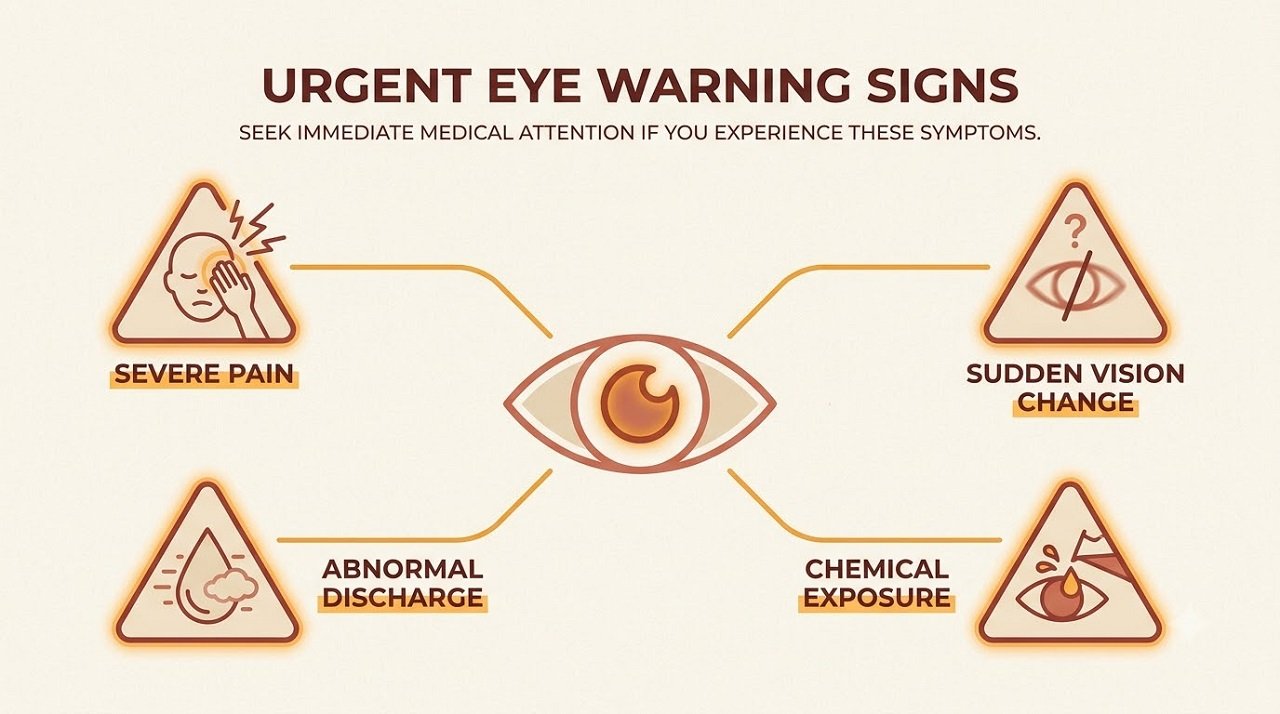
Home remedies can help with red eyes. But some cases need a doctor right away. Look for signs like constant redness, pain, or vision changes.
Red eyes might mean something more than irritation, like an infection. Watch for these signs:
- Persistent redness or swelling that doesn’t improve
- Severe pain or discomfort
- Blurred vision or sensitivity to light
- Discharge or pus in the eye
Some eye conditions, like glaucoma, can also cause eye redness alongside other symptoms, such as eye pain or halos around lights. If you have unusual symptoms or a relevant eye health history, see a doctor rather than relying on home remedies.
For emergencies, like a chemical splash, get help fast. Rinse your eye with clean water for 20 minutes right away. Don’t rub your eye or use drops without a doctor’s guidance first. This helps protect your vision.
In short, home remedies are genuinely useful for everyday redness, but knowing when to see a doctor matters just as much. Spotting the warning signs early helps protect your eyes from bigger problems.
Long-term Prevention Strategies
To keep your eyes healthy and clear, it helps to build long-term habits rather than just reaching for a quick fix each time. Adding natural remedies for red eyes to your daily life can help prevent redness and support eye health over time.
Effective ways to reduce red eyes without relying on medication include regular eye exams, wearing protective eyewear when appropriate, and avoiding known allergens and irritants where you can. Eating foods rich in omega-3 fatty acids and drinking plenty of water helps too. Reducing smoking and managing stress can also help reduce how often your eyes get irritated.
By making these simple changes, you can reduce how often red eyes show up and support your overall eye health. Knowing the common causes of eye redness — like dryness, allergies, or screen strain — is also important, since it helps you pick the right remedy rather than guessing.
Some key tips for long-term prevention include:
- Getting regular eye exams to catch any issues early
- Wearing protective eyewear for activities that could affect your eyes
- Avoiding allergens and irritants that commonly trigger redness for you
- Eating a balanced diet rich in omega-3 fatty acids and staying hydrated
Conclusion: Maintaining Healthy, Clear Eyes Naturally
To keep your eyes healthy and clear, lifestyle changes and good nutrition both help. Understanding why your eyes get red is key — this way, you can address the actual cause rather than just the symptom.
Looking for a quick fix or a long-term strategy? This article covers both: a cold compress and screen breaks for fast relief, and dietary and environmental changes for the long run. Used together, they can meaningfully reduce red eyes and support overall eye comfort.
It’s also worth remembering what causes redness in the first place. Conditions like conjunctivitis, blepharitis, and dry eye disease can all play a role. By addressing these where relevant, and knowing when to see a doctor, you can keep your eyes clear and more comfortable day to day.
Here are some important tips for healthy eyes:
- Drink enough water to support healthy tear production
- Limit exposure to known irritants, like smoke and heavy dust
- Go for regular eye exams to catch problems early
By following these tips and paying attention to your eye health, you can reduce redness naturally and more consistently over time.
Final Thoughts
Managing red eyes without eye drops is genuinely possible for most everyday causes. Home remedies like cold compresses, cucumber slices, and cooled tea bags can help quickly, while hydration and a nutrient-rich diet support your eyes over the longer term.
If your red eyes don’t improve, or you notice any of the warning signs covered earlier, see a doctor rather than continuing to rely on home remedies. A combination of natural care and timely professional input, when needed, is the most reliable way to keep your eyes healthy.
Being proactive about eye comfort — and knowing when it’s time for a professional opinion — is the key to keeping your eyes clear and comfortable.
Frequently Asked Questions
What is the fastest way to get rid of red eyes naturally?
A cold compress applied for a few minutes is usually the fastest option, since it constricts blood vessels and reduces visible redness almost immediately. Taking a break from screens and blinking fully also helps if strain or dryness is the cause.
Why are my eyes red even though I’m not tired?
Redness isn’t always about tiredness — allergies, dry air, screen time, dust, or mild irritation can all cause red eyes even with adequate sleep. If redness is new or unusual for you, it’s worth considering recent changes in your environment or routine.
Is it bad to use eye drops every day?
Some over-the-counter redness-relief drops that work by constricting blood vessels can cause rebound redness with frequent, long-term use, which is one reason some people look for drop-free alternatives. Preservative-free artificial tears are generally considered safe for more frequent use — ask your eye doctor if you’re using drops daily.
When should I worry about red eyes?
See a doctor if redness comes with significant pain, vision changes, discharge, light sensitivity, or doesn’t improve after a few days of home care. Treat a chemical splash in the eye as an emergency and rinse immediately with clean water.
How can a cold compress help get rid of red eyes?
A cold compress constricts blood vessels near the surface of the eye and reduces swelling, which visibly calms redness. Soak a clean cloth in cold water, wring it out, and hold it over closed eyes for a few minutes at a time.
What are some effective home remedies for getting rid of red eyes fast?
Cold compresses, chilled cucumber slices, and cooled tea bags are among the most commonly recommended options. Use caution with rose water, since most products aren’t sterile enough for safe eye-area use.
How can eye exercises or habits help reduce redness?
Simple habits like full, frequent blinking and the 20-20-20 rule mainly help with redness caused by digital eye strain and dryness, rather than redness from allergies or infection — so they work best alongside, not instead of, addressing the actual cause.
What dietary changes can help combat red eyes?
Foods rich in omega-3 fatty acids, like salmon and walnuts, and antioxidant-rich leafy greens may support eye comfort over time. Staying well-hydrated is one of the simplest and most effective dietary habits for reducing dryness-related redness.
Scientific References
- Mayo Clinic — Eyestrain: Diagnosis and treatment: https://www.mayoclinic.org/diseases-conditions/eyestrain/diagnosis-treatment/drc-20372403
- Mayo Clinic — Chemical splash in the eye: First aid: https://www.mayoclinic.org/first-aid/first-aid-eye-emergency/basics/art-20056647
- Medical News Today — Cold compress for eyes: Benefits, how to make one, and more: https://www.medicalnewstoday.com/articles/cold-compress-for-eyes
- Medical News Today — Red eyes: Home remedies and health tips: https://www.medicalnewstoday.com/articles/313606
- Cleveland Clinic — Why Your Eyes Are Always Red (and How To Fix Them): https://health.clevelandclinic.org/why-are-my-eyes-always-red
- All About Vision — Causes and Treatment for Bloodshot Eyes: https://www.allaboutvision.com/conditions/symptoms/red-eyes/overview-or-bloodshot-eyes/
- All About Vision — 10 Tips for Computer Eye Strain Relief: https://www.allaboutvision.com/conditions/computer-vision-syndrome/digital-eye-strain/relief/
- Healthline — How to Get Rid of Red Eyes: https://www.healthline.com/health/eye-health/how-to-get-rid-of-red-eyes
- Healthline — 20 Causes, Symptoms, and Complications of Red Eyes: https://www.healthline.com/health/eye-redness
- WebMD — Why Are My Eyes Red?: https://www.webmd.com/eye-health/why-eyes-red
- Healthdirect Australia — Conjunctivitis (pink eye): https://www.healthdirect.gov.au/conjunctivitis












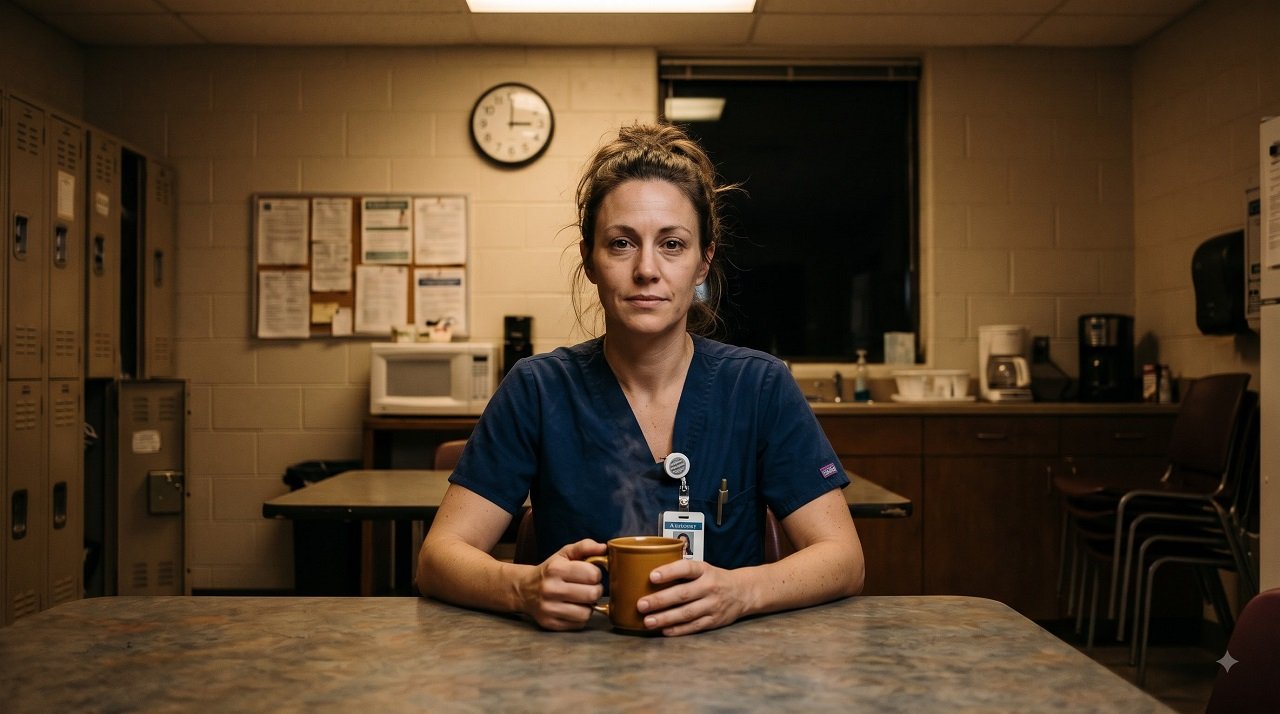
⚠️ MEDICAL DISCLAIMER: This article is written for general informational and educational purposes only. It is not a substitute for professional medical advice, diagnosis, or treatment. All health claims in this article are based on peer-reviewed research and reputable medical institutions cited at the end. Night shift workers experiencing persistent health issues should consult a licensed healthcare provider. Do not ignore professional medical advice because of something you have read here.
If you work night shifts, here are the most important health tips you need: protect your sleep first, eat your main meal before your shift, move your body regularly, and get annual cardiometabolic screenings — these four habits are the foundation of long-term health for night workers. The research is clear: night shift work has been linked to sleep disturbances, fatigue, reduced cognitive function, and higher long-term health risks, especially when sleep and recovery are not managed consistently. But the risks are not inevitable — and this guide shows you exactly what to do about them.
Whether you are a nurse, a factory worker, a security guard, a truck driver, or a call centre worker — this is your practical, plain-language guide to protecting your body for the long run. No fluff. No generic advice. Just what the research actually says, translated into real steps you can take today.
🗝️ Key Takeaways
- One in five night shift workers develops shift work sleep disorder, and more than half suffer from disordered sleep.
- A 2024 cohort-based meta-analysis found that night shift workers had a 30% higher diabetes incidence compared to day workers.
- Night-shift work, especially over extended periods, may be associated with accelerated brain aging, as indicated by higher BAI and alterations in sleep architecture.
- “When internal rhythms are dysregulated, you have this enduring stress in your system that we believe has long-term health consequences.”
- The risks are real — but they are not inevitable. The right daily habits make a measurable difference, and this guide tells you exactly what those habits are.
Moving Beyond Generic Health Advice
Type “health tips for night shift workers” into Google right now and you will find hundreds of articles giving you the same five tips — drink water, get blackout curtains, exercise sometimes, eat well, and try to sleep.
That is not wrong. But it is not enough.
What most articles never tell you is what actually happens inside your body after five, ten, or twenty years of working against your natural circadian rhythm. They skip the biology. They skip the real data. And they skip the specifics of why each tip works at a molecular level — which is exactly what motivates you to actually do them.
This article gives you all of that.
The Sleep Crisis Night Shift Workers Are Not Being Told About

Sleep is the single most powerful recovery tool for night workers. Think of sleep not as “what is left over,” but as a scheduled appointment with your health.
That is advice from a physician who spent over a decade working night shifts. And it is backed by some alarming numbers. Aim for 7–9 hours per 24-hour period. Most night workers fall significantly short. The Journal of Biological Rhythms found night workers average just 5.7 hours of sleep after night shifts. 58.2% of shift workers are dissatisfied with their sleep quality. One in five develops shift work sleep disorder, losing 1–4 hours of sleep per night.
The situation is even harder for rotating shift workers. Research across eight European countries found that the shortest sleep duration and the poorest sleep quality were reported between night shifts — with 29.3% of night workers rating their sleep as “poor” or “very poor.” Workers reported that night shifts result in fragmented and split sleep patterns with difficulties in re-adjusting to normal sleep patterns when not working nights. Most workers reported feeling exhausted for several days after night shifts, including during annual leave. Circadian rhythm misalignment and sleep deprivation result in excessive fatigue, with workers describing it as feeling “completely wiped out,” “permanent grogginess,” and “brain fog” to the extent of short-term memory loss.
This is not ordinary tiredness. This is chronic sleep debt accumulating over years — and it has measurable consequences for your brain, heart, metabolism, and mood.
✅ Sleep Health Tips for Night Shift Workers — That Actually Work
1. Treat sleep like a non-negotiable appointment
Do not run errands, do laundry, or scroll social media after your shift ends. Go home and sleep first. Everything else can wait.
2. Build a sleep environment that works at any hour
Use blackout curtains and an eye mask. Night shift workers should find a dark room away from high-traffic areas of the living space to get their best sleep. Limiting caffeine and blue light around sleep time helps you fall asleep faster and more soundly.
3. Use light strategically to reset your biological clock
There is strong evidence that modulating exposure to light helps shift workers adapt. Wearing blue-light blocking glasses or sunglasses on your commute home after a night shift helps signal to your brain that it is time to wind down — not wake up. This reduces melatonin suppression caused by morning daylight exposure.
4. Understand that split sleep is not failure — it is strategy
If you cannot achieve a full 7–9 hours in one block, a 4-hour main sleep followed by a 90-minute nap before your next shift is significantly better than one broken 5-hour attempt.
5. Keep your schedule consistent on rest days
The Sleep Foundation recommends maintaining the same sleep and wake times even on days off for permanent night shift workers. Wildly switching your schedule on weekends undoes any circadian adaptation you have built.
6. Avoid caffeine 5–6 hours before sleep
Caffeine’s half-life can keep your nervous system activated long after you feel tired. A coffee at 7am is still 50% active in your system at 1pm when you are trying to sleep.
What Happens to Your Body After 10 Years of Night Shifts?

This is the section most health websites skip entirely.
They talk about fatigue. They rarely tell you what a decade of circadian disruption actually does inside your body — organ by organ, system by system. Research from Washington State University and the Pacific Northwest National Laboratory found that night shifts may throw off the natural rhythms that regulate our blood sugar, metabolism and inflammation, increasing our risk of serious metabolic disease. There is strong evidence in existing literature of a link between shift and night work to negative health outcomes including cardiovascular, gastrointestinal and metabolic disorders such as diabetes and metabolic syndrome.
Let us break it down by body system.
🧠 Your Brain After Long-Term Night Shift Work
The effects on your brain are not just about feeling foggy after a long shift. The damage runs deeper and builds over time — and a 2024 study gave us the most specific evidence yet. Shift work disrupts circadian rhythms and alters sleep patterns, resulting in various health problems. Researchers evaluated the brain age index (BAI) derived from sleep EEG results in night-shift workers and compared it with that in daytime workers.
Extended periods of night-shift work were associated with accelerated brain aging. Night-shift workers exhibited significantly higher BAI, and a longer duration of night-shift work was correlated with increased BAI, particularly in older shift workers.
In plain English? A 2024 Sleep Medicine study found evidence of accelerated brain aging in long-term night shift workers, particularly in deep sleep quality. The longer you work nights without managing your health, the older your brain functions relative to your actual age.
❤️ Your Heart
With around 15 to 20% of the workforce engaging in night shift work in modern society, the consequences of night work on cardiovascular risks are substantial. Compared to day workers, there are reported higher risks of cardiovascular diseases (estimated at 40%) and of metabolic syndrome (1.5 times) in shift workers.
The dose–response relationship of night shift duration was most pronounced with Type 2 diabetes, consistent with a meta-analysis of 28 independent reports including 244,266 participants, showing a 7% increase in diabetes risk for every 5 years of night shift work. Night shift workers had higher rates of hypertension, antihypertensive medication use, and elevated cholesterol compared to their day-working counterparts.
✅ Heart Health Tips:
- Get a cardiovascular check at least every 6 months — blood pressure, cholesterol, and resting heart rate
- Avoid smoking — it multiplies the cardiovascular risk of circadian disruption
- Eat a balanced meal before the shift begins — eating heavy meals at 2–3am puts additional metabolic stress on an already-compromised system
- Do at least 20–30 minutes of moderate movement on your rest days — even walking counts
🩸 Diabetes, Metabolism and Metabolic Syndrome
Scientists at Washington State University and the Pacific Northwest National Laboratory found new clues as to why night shift workers are more prone to diabetes, obesity, and other metabolic disorders. Looking more closely at proteins involved in glucose regulation, researchers observed a nearly complete reversal of glucose rhythms in night shift participants.
They also found that processes involved in insulin production and sensitivity, which normally work together to keep glucose levels within a healthy range, were no longer synchronized in night shift participants.
Research found that night shift work or rotating shift work was linked with elevated glucose levels and diabetes (or insulin resistance), elevated blood pressure and overall metabolic syndrome. Night-shift workers showed significantly higher rates of elevated blood pressure (+3.2%), triglycerides (+5.7%), and BMI over the overweight threshold (+3.6%) compared to non-night-shift workers.
✅ Diabetes and Metabolic Health Tips:
- Avoid eating heavy carbohydrates between midnight and 5am
- The CDC recommends not eating between midnight and 6am to maintain typical eating patterns.
- Get your HbA1c (blood sugar) tested once a year
- Stay physically active on rest days — even a 30-minute walk measurably improves insulin sensitivity
- Adjusting meal times or trying to only eat during the day may help regulate blood sugar better.
🎗️ Cancer Risk
Scientific evidence has established the effects of night work on health both in the short term — insomnia, excessive sleepiness, difficulty concentrating or lack of energy — and in the long term, including a moderately high risk of developing cardiovascular disease, type 2 diabetes, depression, and cancer. In light of the scientific evidence, the IARC (International Agency for Research on Cancer) has listed night work as a probable human carcinogen (Group 2).
This does not mean night shift work will cause cancer. It means the circadian disruption and melatonin suppression associated with long-term night work are recognised mechanisms that elevate risk. The key is not to panic — it is to attend all recommended screenings and not skip annual health checks.
The Right Diet for Night Shift Workers
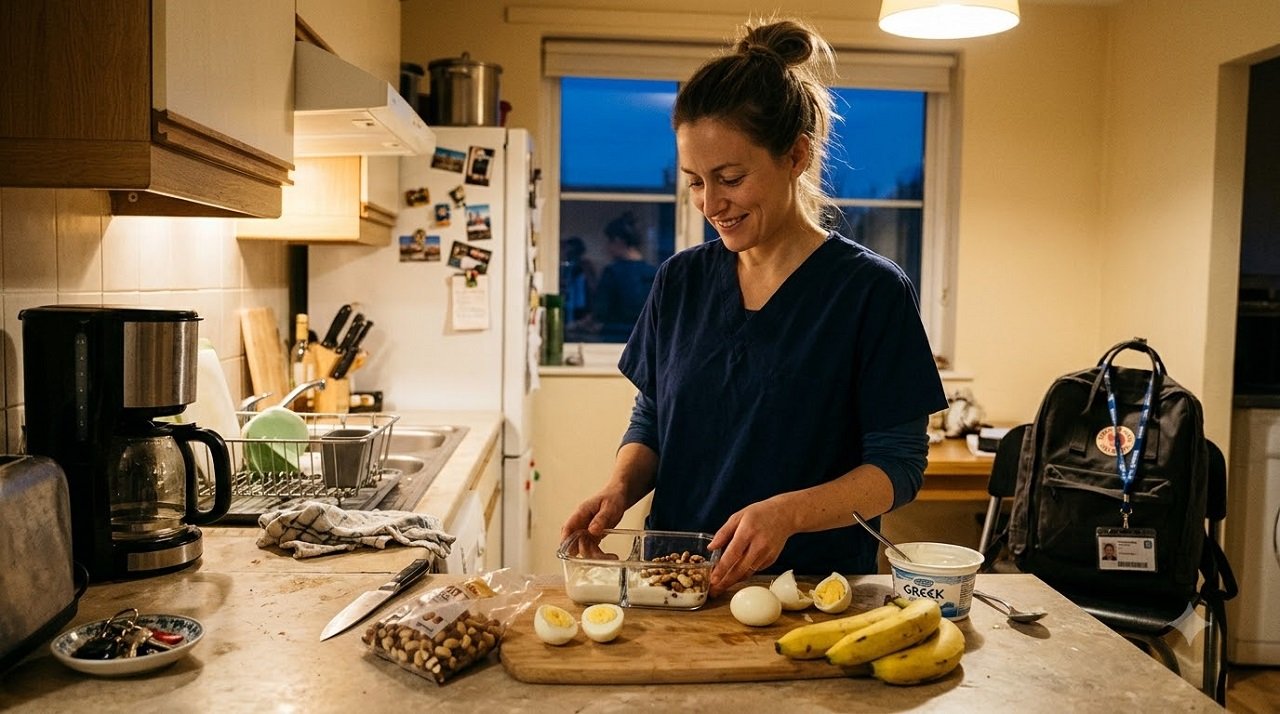
Food is one of the most powerful tools night shift workers have — and one of the most underused. Research shows that night workers who eat their largest meal before their shift and have small regular snacks during work report better energy levels and fewer digestive problems. When night shift workers eat could be as crucial for heart health as what they eat — a fact that most nutrition articles written for general audiences completely ignore. Insulin sensitivity drops at night — meaning that the same meal you eat at noon has a significantly different metabolic effect when eaten at 2am. Your body is simply not designed to process large amounts of food during your biological night.
✅ Night Shift Nutrition Plan — Timing Is Everything
| Time | What To Do |
|---|---|
| Before shift starts | Eat your main balanced meal — protein, complex carbs, vegetables |
| During shift (midnight–3am) | Small snack only — nuts, fruit, yoghurt, or boiled egg |
| Late shift (3am–end) | Water or herbal tea only if possible — avoid heavy food |
| After shift (before sleeping) | Nothing heavy for at least 1 hour before sleep |
| On rest days | Align eating with daylight hours as much as possible |
Additional Nutrition Tips:
- Prioritise whole foods over processed ones. Night shift workers are at higher risk for metabolic syndrome and obesity.
- Eat fibre-rich foods — fruits, vegetables, and whole grains — to support digestive health during your shift
- Avoid heavy, greasy meals during your shift, as they cause discomfort when digestion is naturally slow.
- Stay hydrated consistently — dehydration worsens brain fog, fatigue, and cognitive performance
- Most night shift workers benefit from 1,000 to 4,000 IU of vitamin D3 daily since they rarely get natural sunlight exposure
How to Exercise When You Work Nights

You do not need a 90-minute gym session. In fact, the wrong exercise at the wrong time can actually make things worse. Exercise helps regulate circadian rhythms, improves mood, and supports metabolic health. You do not need intense workouts after a long shift. Research found that people on shift work schedules burn fewer total daily calories, and a 2025 Medicine meta-analysis found night shift workers have a 3.6% higher rate of obesity.
Regular movement directly counteracts this — but timing and intensity matter.
✅ Exercise Plan for Night Shift Workers — Realistic and Simple
After your shift (before sleeping): A 15–20 minute slow walk is ideal. It lowers cortisol, helps your body begin its cool-down process, and improves mood without spiking your core temperature enough to delay sleep.
On rest days: Moderate cardio 3–4 times per week is the evidence-based recommendation — 30–45 minutes of whatever you enjoy: walking, cycling, swimming, or gym work.
During your shift: Stand and stretch for 2–3 minutes every hour. Take a 5-minute walk during your break instead of sitting. Do shoulder rolls and neck stretches at your workstation. When you are off shift, try to spend some time outdoors to counter the psychological effects of working the night shift. The fresh air and vitamin D from sunshine will do wonders for your physical and mental health.
Avoid: Intense workouts within 2–3 hours of your sleep time. They raise your core body temperature and delay sleep onset — the exact opposite of what you need.
Night Shift and Mental Health: The Hidden Struggle

Let’s not rush past this section. Night shift work takes a toll on your mental health that most people do not talk about — and the data is striking. Studies show a statistically significant association between night shift work and depression among nurses, with an odds ratio of 1.49 (95% CI: 1.26, 1.76). This demonstrates that nurses who work night shifts are at risk of developing depression.
A survey of 9,789 female nurses in South Korea showed that night shift nurses faced a 1.52-fold higher risk of depressive symptoms compared to non-night shift nurses. Psychological health and social relationships were better among day shift than night shift workers.
There was a pronounced correlation between night shifts and heightened levels of anxiety, stress, and depression. The prevalence rates for moderate to severe clinical insomnia, fatigue, and moderate to severe depression among shift workers were 42%, 48%, and 32% respectively.
The mechanism behind this is well understood: disrupted circadian rhythm and insufficient sleep quality and quantity have been recognised as two of the most significant factors in the long-term impacts of night shift work on mental health.
Social isolation compounds the problem. Extended working hours and demanding tasks at night readily contribute to psychological stress and fatigue, further compounding physical and mental strain.
✅ Mental Health Tips for Night Shift Workers
- Connect with other night workers who understand your lifestyle. Shared experience with people on the same schedule is one of the most effective mood protectors
- Build relationships with other shift workers, keep a few regular social commitments that fit your schedule, and clearly communicate your needs to family and friends to support long-term sustainability.
- Get 10–15 minutes of natural daylight when you wake up — even afternoon sunlight helps reset your mood hormones and serotonin levels
- Eat at least one meal with your family daily. Schedule time weekly to catch up with friends, either in person or by video chat.
- Comprehensive, multi-target interventions should be implemented to lower depression risk and safeguard mental health — if you notice persistent low mood or inability to enjoy daily activities, speak to your GP. It may be Shift Work Sleep Disorder (SWSD), which is diagnosable and treatable.
Annual Health Screenings Every Night Shift Worker Needs

Do not wait until something feels wrong. By the time symptoms appear, the problem has often been building for years. Shift and night workers should have the opportunity to be screened for disorders linked with their work — and yet many never are. Because night shift work can increase long-term risk, prevention is key. Early awareness allows early intervention, and empowers shift workers to stay ahead of potential problems.
✅ Your Annual Night Shift Worker Health Checklist
| Screening Test | Frequency | Why It Matters |
|---|---|---|
| Blood pressure | Every 6 months | Elevated cardiovascular risk in night workers |
| HbA1c (blood sugar) | Yearly | Metabolic syndrome and T2D risk is higher |
| Cholesterol panel | Yearly | Dyslipidaemia and elevated triglycerides are common |
| Vitamin D levels | Yearly | Night workers rarely get adequate sunlight exposure |
| Mental health screening | Yearly | Depression and anxiety risk is significantly elevated |
| Cancer screenings (age-appropriate) | As recommended | IARC lists night work as probable carcinogen Group 2 |
| Sleep disorder screening | Yearly | 926.5% of shift workers have Shift Work Disorder |
People Also Ask — Night Shift Health Questions Answered
❓ Is night shift work bad for your health long term?
Working night shift does increase certain health risks, but it is not automatically “bad” for your health if you manage it intentionally. Research links long-term night work to higher rates of sleep disorders, metabolic issues like diabetes, heart disease, mood problems, and some cancers. The key word is *intentionally.*
❓ What are the health effects of working night shift?
Shift work, especially night shifts, disrupts the circadian rhythm, causes sleep disturbances, and alters hormonal and metabolic function. These disturbances are associated with an increased risk of metabolic syndrome, type 2 diabetes, cardiovascular diseases, and mental health disorders.
❓ How many hours of sleep do night shift workers get?
The recommended target is 7–9 hours per 24-hour period. Most night workers fall significantly short. The Journal of Biological Rhythms found night workers average just 5.7 hours of sleep after night shifts.
❓ What happens to your body after 10 years of night shifts?
Cardiovascular disease risk increases approximately 7% for each 5-year increment of night shift exposure. Diabetes risk is higher in those working more than 10 years of nights versus fewer years. Brain aging accelerates, metabolic disorders deepen, and mental health risks compound with cumulative exposure.
❓ Can night shift work cause permanent damage?
Future research should focus on broader demographics and longitudinal designs to elucidate the long-term effects. Night shift work, particularly with cumulative and long-term exposure, is associated with sleep disruption, reduced well-being, and early cardiometabolic alterations. Early lifestyle intervention significantly reduces the risk of permanent damage.
❓ What is the best diet for night shift workers?
Research shows that night workers who eat their largest meal before their shift and have small regular snacks during work report better energy levels and fewer digestive problems. Avoid heavy meals between midnight and 5am, and align eating with daylight hours on rest days as much as possible.
❓ Does exercise help night shift workers?
Absolutely. Exercise helps regulate circadian rhythms, improves mood, and supports metabolic health. Even 20–30 minutes of moderate movement three times per week is enough to measurably reduce cardiovascular and metabolic risk.
❓ How long does it take for night shift to affect your health?
Research from WSU found measurable changes in blood glucose rhythms after just three days of a night shift schedule. Cardiovascular and cancer health risks build over years of chronic exposure, with most studies finding significant effects after 5 or more years of regular night shift work.
Final Word: You Keep the World Running. These Habits Help Keep You Running.
Night shift work is not going away. Hospitals, emergency services, logistics, manufacturing, and security all depend on people who work while others sleep.
But that does not mean your body has to pay the full price.Night shift work is essential, but it requires intentional self-leadership. Night shift workers are not “broken daytime people.” They are a unique population with unique physiology, and when supported properly, they can thrive.
Sleep better. Eat smarter. Move regularly. Get your screenings done. Stay connected.
You chose a schedule that keeps the world running. These habits are how you make sure you keep running too.
⚠️ END DISCLAIMER: This article is intended for general informational purposes only and does not substitute professional medical advice. If you work night shifts and are experiencing persistent health issues — including sleep problems, fatigue, low mood, or cardiovascular symptoms — please consult a licensed healthcare provider. All statistics and health claims in this article are sourced from peer-reviewed research and medical institutions referenced below.
📚 Sources — Referenced Research & Medical Institutions
NightOwling.com — How to Work Night Shift and Stay Healthy: A Complete Guide (2026) https://nightowling.com/blog/stay-healthy-night-shift/
KevinMD — Night Shift Health Tips: How to Protect Your Circadian Rhythm https://kevinmd.com/2026/03/night-shift-health-tips-how-to-protect-your-circadian-rhythm.html
UCLA Health — 5 Long-Term Health Effects of Shift Work https://www.uclahealth.org/news/article/5-long-term-health-effects-shift-work
BetterNurse.org — Tips for Night Shift Nurses: Stay Healthy Working Nights https://betternurse.org/night-shift-nursing-health-tips/
PubMed / PMC — The 1001 Nights Cohort: Night Work, Circadian Disruption, Sleep and Health (2025) https://www.ncbi.nlm.nih.gov/pmc/articles/PMC12137381/
Washington State University — Study Shows How Night Shift Work Can Raise Risk of Diabetes, Obesity (2024) https://news.wsu.edu/press-release/2024/05/09/study-shows-how-night-shift-work-can-raise-risk-of-diabetes-obesity/
PubMed — Long-Term Night-Shift Work Is Associated With Accelerated Brain Aging and Worsens N3 Sleep in Female Nurses — Sleep Medicine (2024) https://pubmed.ncbi.nlm.nih.gov/38936046
ScienceDirect — Long-Term Night-Shift Work and Brain Aging in Female Nurses (2024) https://www.sciencedirect.com/science/article/abs/pii/S138994572400296X
TUC — The Health and Safety Impacts of Night Working (October 2024) https://www.tuc.org.uk/research-analysis/reports/report-summary-health-and-safety-effect-night-work
ClinicalTrials.gov — Cardiovascular Risk Prevention Among Night Workers https://clinicaltrials.gov/study/NCT02899442
ClinicalTrials.gov — Impact of Circulating Lipids on Vascular Function in Chronic Night Shift Workers (2024) https://clinicaltrials.gov/study/NCT06550115
ScienceDaily / Washington State University — How Night Shift Work Can Raise Risk of Diabetes, Obesity (2024) https://sciencedaily.com/releases/2024/05/240509110908.htm
MDPI Journal of Clinical Medicine — The Impact of Night Work on the Sleep and Health of Medical Staff: A Review of the Latest Scientific Reports (2024) https://doi.org/10.3390/jcm13154505
Oxford Academic / European Journal of Preventive Cardiology — Night Shift Work and Risk of Cardiovascular-Kidney-Metabolic Diseases in the UK Biobank (2025) https://academic.oup.com/eurjpc/advance-article/doi/10.1093/eurjpc/zwaf774/8383749
ResearchGate / PLOS ONE — Impact of Shift Work on Circadian Rhythm and the Risk of Chronic Diseases https://www.researchgate.net/publication/401573830_IMPACT_OF_SHIFT_WORK_ON_CIRCADIAN_RHYTHM_AND_THE_RISK_OF_CHRONIC_DISEASES
PMC — Night-Shift Work and Its Association With Metabolic Syndrome (2025) https://pmc.ncbi.nlm.nih.gov/articles/PMC12324026/
NightOwling.com — Is Night Shift Bad for Your Health? What the Research Actually Says (2026) https://nightowling.com/blog/is-night-shift-bad-for-health/
ShiftFlow — Working Night Shift in 2026: Health Impacts and Survival Guide https://www.shiftflow.app/blog/working-night-shift
PMC — The Relationship Between Working Night Shifts and Depression Among Nurses: A Systematic Review and Meta-Analysis https://www.ncbi.nlm.nih.gov/pmc/articles/PMC10094007/
PMC — The Impact of Night Shift Workload on Nurses’ Depressive Symptoms: A Chain Mediation Analysis (2025) https://pmc.ncbi.nlm.nih.gov/articles/PMC12753973/
PMC — Screening for Psychoaffective Disorders in Night-Shift Nurses: A Cross-Sectional Study (2025) https://www.ncbi.nlm.nih.gov/pmc/articles/PMC12437799/
ScienceDirect — The Effect of Cumulative Night Shift Duties on Insomnia, Fatigue, and Mental Health in Intensive Care Unit Workers https://www.sciencedirect.com/science/article/pii/S240584402407097X
Nature / Scientific Reports — Decoding the Impact of Night/Day Shift Work on Well-Being Among Healthcare Workers (2024) https://www.nature.com/articles/s41598-024-60882-1
ClinicalTrials.gov — Night-Shift Work and Breast Cancer (2025) https://clinicaltrials.gov/study/NCT06786949
Newsweek — Just a Few Days on Night Shift Has Long-Term Consequences https://www.newsweek.com/few-days-night-shift-long-term-consequences-1899281
Health Tips
Soft Protein Foods for GLP-1 Dose Increase Day: What to Eat When Your Stomach Is Sensitive
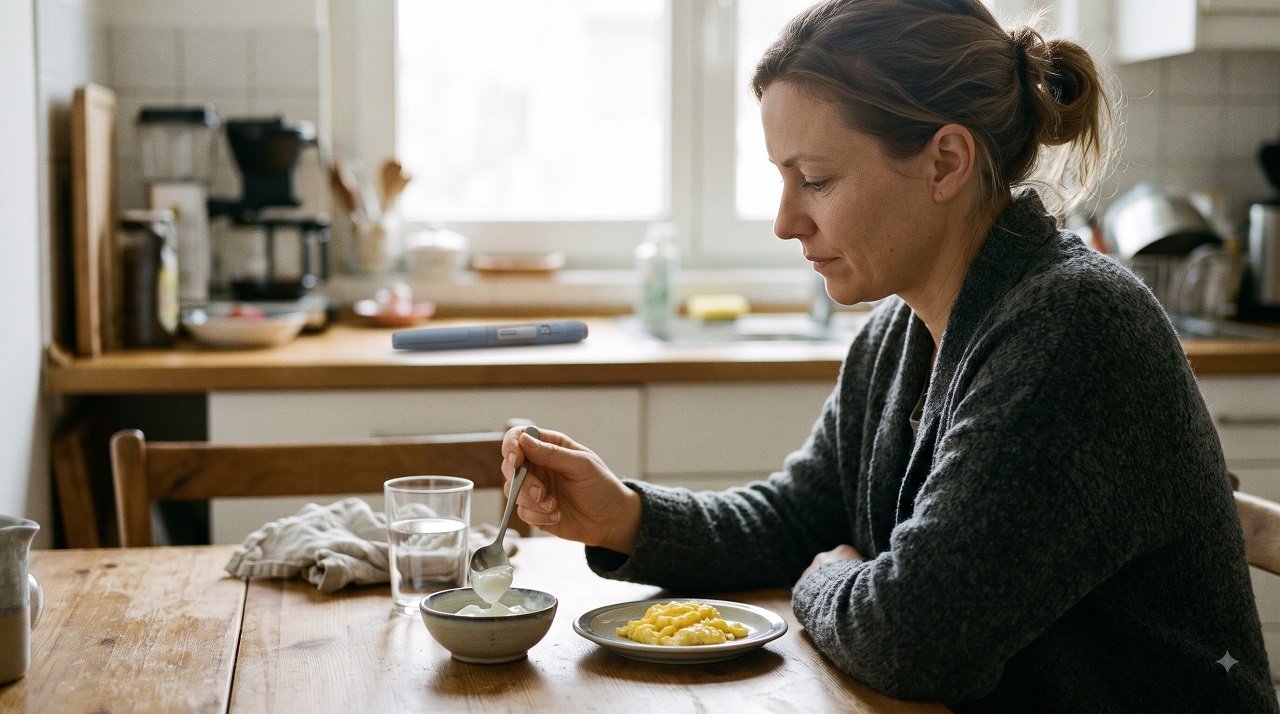
Disclaimer: This article is for informational and educational purposes only and is not a substitute for professional medical or nutrition advice. If you are experiencing severe nausea, vomiting, or cannot keep fluids down after a dose increase, contact your prescribing healthcare provider. Protein needs vary based on kidney function and medical history.
Dose increase day has a rhythm, and it is not a pleasant one.
You were stable on your current dose. You had figured out what you could eat, how much, and when. And then the titration schedule said it was time to go up—and suddenly the nausea is back, the fullness is back, and the thought of eating anything solid feels like a chore your stomach will refuse.
This is not a setback. It is a predictable pattern. Research confirms that gastrointestinal side effects are generally more likely to occur during GLP-1 initiation or dose escalation. The symptoms are usually mild to moderate and improve over time, but the first few days after a dose increase can feel like starting over.
The solution is not to force your normal meals. The solution is to shift temporarily to soft, bland, protein-dense foods that are easy to tolerate and gentle on a stomach that is adjusting to a higher dose.
Why Dose Increase Day Hits So Hard (The Mechanism)
GLP-1 medications slow gastric emptying—food stays in your stomach longer, and fullness arrives faster. When you increase the dose, you are increasing that effect.
The joint advisory from leading nutrition organizations explains that GI side effects are more likely during initiation or dose escalation, and recommends smaller, more frequent meals and avoiding fatty or high-fiber foods during the first few days of treatment. A comprehensive review on GI adverse effects confirms that initial management should focus on non-pharmacological interventions, including smaller and more frequent meals, avoidance of high-fat or spicy foods, cessation of eating upon early satiety, and adequate hydration.
The texture of your food matters as much as the content. Soft, moist, bland foods are easier for a slowed digestive system to handle than dry, fibrous, or heavily spiced foods.
Key Takeaways
- Dose increase day is not the day to force your normal meals. Shift temporarily to soft, bland, protein-dense foods.
- Smaller, more frequent meals are the foundation. Aim for 4–6 mini-meals of 15–25 g of protein rather than three large meals.
- Cold and bland often beat hot and rich. Aroma drives nausea, and cold foods have less aroma.
- Greek yogurt, cottage cheese, soft scrambled eggs, and protein shakes are the core soft protein foods. They are low-volume, high-protein, and easy to tolerate.
- Sip shakes slowly over 20–30 minutes. Do not chug them.
- Avoid high-fat, fried, spicy, and very fibrous foods for the first few days. They are the most likely to trigger symptoms.
- Hydration matters as much as protein. Dehydration can worsen nausea and fatigue.
- Most dose-increase symptoms peak within the first week and improve significantly within 2–4 weeks. If they do not, talk to your doctor.
1. The Core Soft Protein Foods: Your Dose-Increase Toolbox
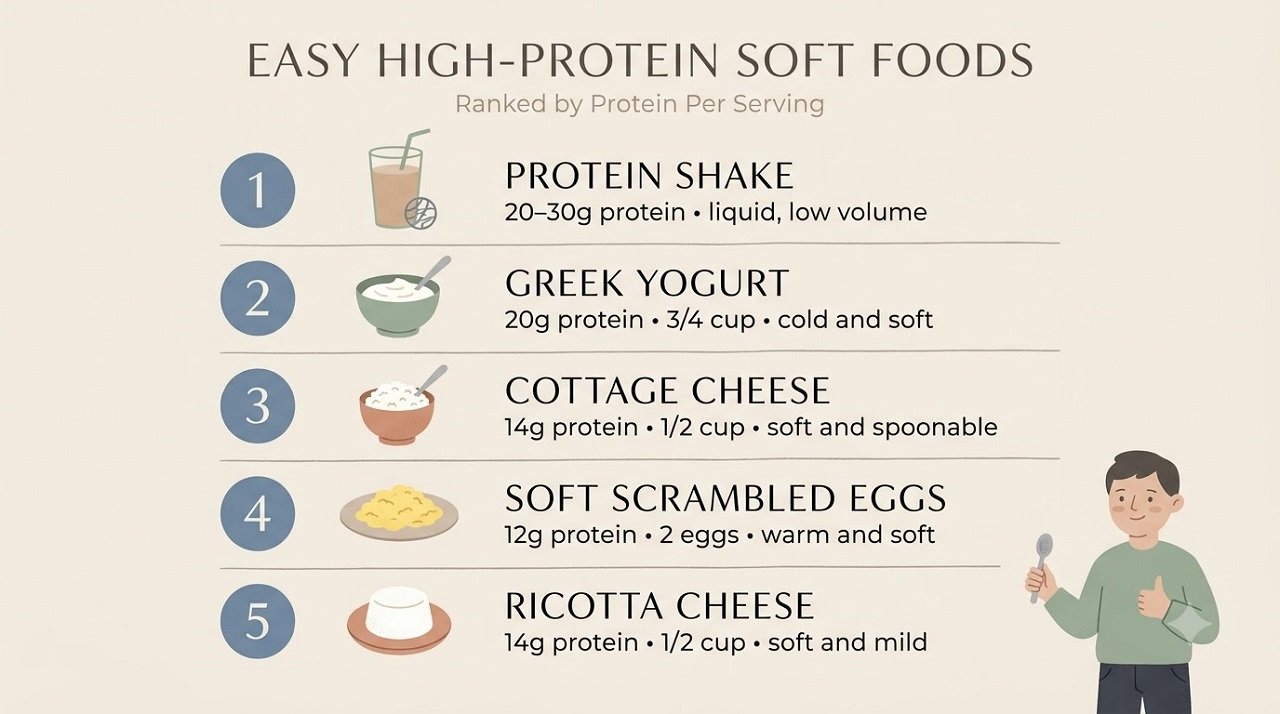
These are the foods to keep in your kitchen before dose-increase week begins. They are low in volume, high in protein, and soft enough to tolerate when your stomach is sensitive.
Tier 1: Liquid protein (the easiest to tolerate)
- Protein shakes: 20–30 g of protein in a small liquid volume. Choose a whey isolate or plant blend with under 5 g of sugar. Sip slowly over 20–30 minutes. Cold shakes have less aroma and may be easier to tolerate than warm or room-temperature options.
Tier 2: Soft, spoonable protein (cold or room temperature)
- Greek yogurt: Plain, unsweetened. About 20 g of protein per 3/4 cup. Cold, soft, and bland—ideal for a sensitive stomach.
- Cottage cheese: About 14 g of protein per 1/2 cup. Soft, spoonable, and mild.
- Ricotta cheese: About 14 g of protein per 1/2 cup. Soft and mild, with a slightly richer texture than cottage cheese.
Tier 3: Soft, warm protein (if you can tolerate warmth)
- Soft scrambled eggs: Two eggs deliver about 12 g of protein. Cook them low and slow, without butter or oil if fat triggers nausea. Keep them soft and moist, not dry.
- Soft steamed fish: A small portion of white fish (cod, tilapia) delivers 20–25 g of protein and is soft and bland.
- Soft tofu: A small portion of silken or soft tofu is plant-based, soft, and mild.
Tier 4: Soft carbohydrates (only after protein, and only if you have room)
- A few plain crackers.
- A small portion of white rice or soft oatmeal.
- A banana or a few spoonfuls of applesauce.
The order matters. Protein first, always. Carbohydrates come last, and only if your stomach is willing.
Hit Your Protein Target Without the Guesswork
Wondering what your exact daily protein number should be? Our complete guide on how much protein to eat on GLP-1 to prevent muscle loss breaks down the adjusted body weight formula and the research-backed range.
2. The Texture Principle: Why Soft and Bland Works
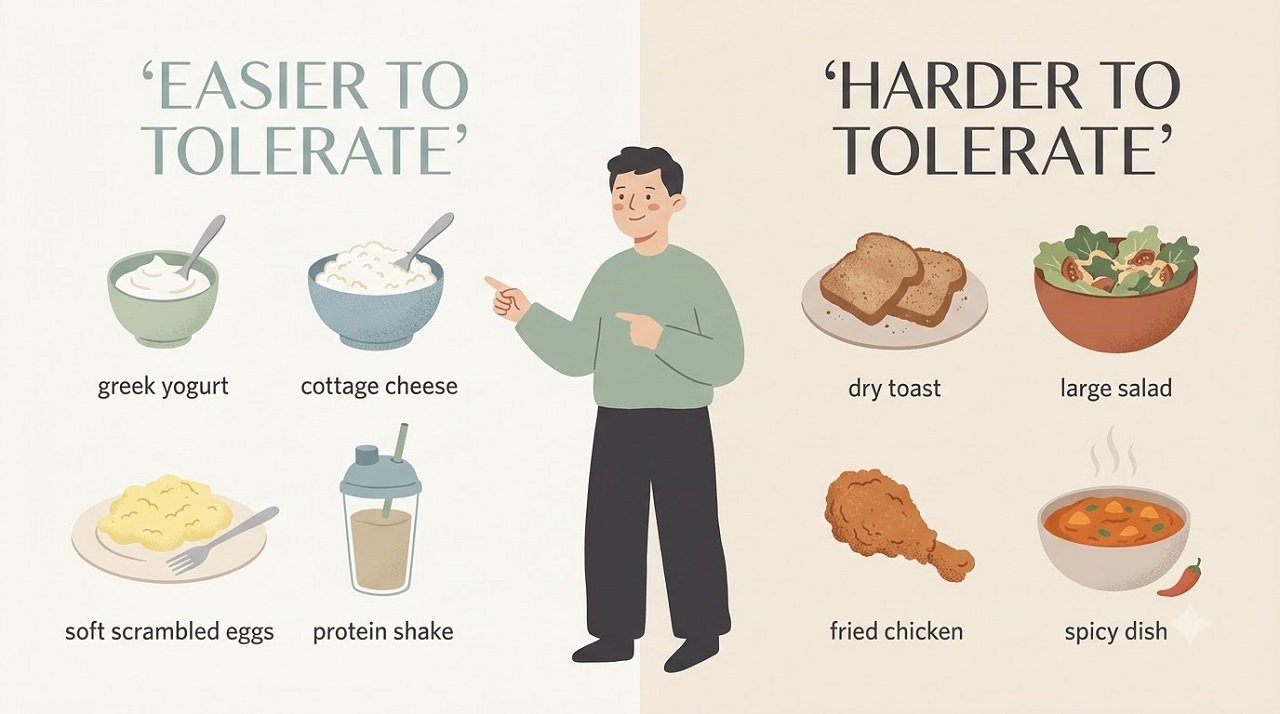
The texture of your food is not a minor detail on dose-increase day. It is a major factor in whether you can eat enough to protect your muscle.
A resource on food texture and GLP-1s explains that early in treatment or after dose increases, choosing smoother foods can prevent nausea and encourage better intake. Soft, moist foods—soups, smoothies, yogurt, porridge, scrambled eggs, steamed fish, mashed potato—are gentler on the stomach than dry, fibrous, or heavily textured foods. The same source notes that cold and bland foods often beat hot and rich foods because cold foods have less aroma, and aroma is a major trigger for nausea.
The practical rule for dose-increase days: If a food is dry, fibrous, greasy, or heavily spiced, save it for next week. If it is soft, moist, bland, and cold or gently warm, it belongs on your plate this week.
Want to Make Every Bite Count?
The order you eat your food matters. Our guide on meal sequencing for early satiety on GLP-1 explains why protein first changes everything and how to sequence your meals for maximum satiety.
3. The Dose-Increase Day Protocol: How to Eat When You Feel Sick
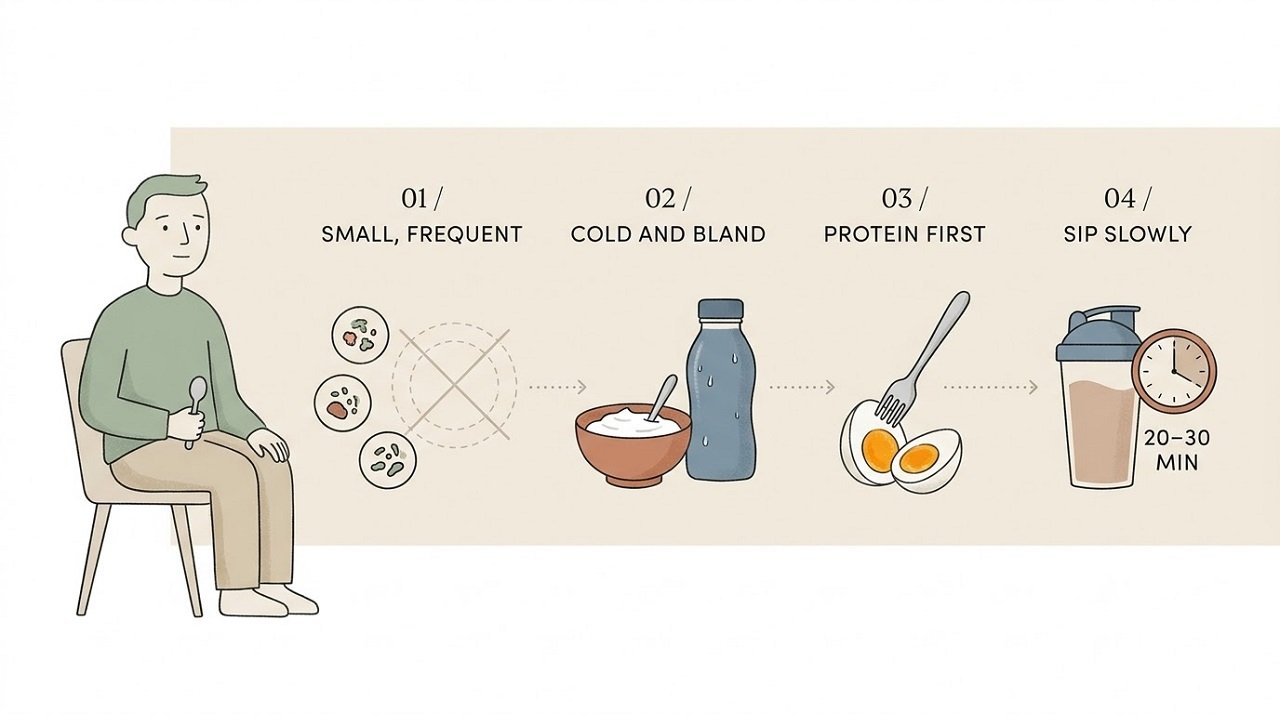
This is the practical, step-by-step approach for the first few days after a dose increase.
Step 1: Eat smaller, more frequent meals.
Aim for 4–6 mini-meals of 15–25 g of protein rather than three large meals. Your stomach is emptying more slowly, and a large meal will sit there and make you feel worse. Small, frequent meals give your digestive system time to process what it receives.
Step 2: Choose cold and bland over hot and rich.
Cold foods have less aroma, and aroma drives nausea. Greek yogurt, cottage cheese, chilled protein shakes, and hard-boiled eggs are often easier to tolerate than hot, aromatic meals.
Step 3: Protein first, always.
Even on a sensitive stomach, the first bites should be protein. Take a few spoonfuls of yogurt or a few sips of a shake before you touch any carbohydrate.
Step 4: Sip, do not chug.
A protein shake sipped slowly over 20–30 minutes is far more likely to stay down than the same shake chugged in five minutes.
Step 5: Stay hydrated.
The JAMA guidance recommends 2–3 liters of fluid daily, mainly water. Dehydration can worsen nausea and fatigue. Sip water throughout the day, and consider ginger or peppermint tea, which have reasonable evidence for mild nausea and count toward fluids.
Struggling Specifically in the Morning?
If your appetite shuts down at breakfast, don’t miss our step-by-step protocol on what to eat for breakfast on Ozempic when you can only eat 3 bites —including the 3-bite sequencing plan.
4. What to Avoid on Dose-Increase Day

The foods that cause the most trouble on dose-increase days are the ones that are hardest to digest.
The joint advisory specifically recommends avoiding fatty or high-fiber foods during the first few days of treatment. A review on GI side effects notes that high-fat and fried foods tend to exacerbate symptoms, and that lean proteins, vegetables, and easily digestible carbohydrates are typically better tolerated. The Mounjaro and Wegovy management guidance adds that rich meals, greasy foods, alcohol, and large portions are harder to tolerate than before.
Foods to de-prioritize on dose-increase day:
- Fried and high-fat foods (slowest to digest, and they sit in an already-slowed stomach).
- Very spicy foods (can irritate a sensitive stomach).
- Large raw salads and very fibrous vegetables (high volume, hard to digest).
- Very sugary foods and drinks (can worsen nausea and blood sugar swings).
- Alcohol and carbonated drinks (can worsen bloating and nausea).
If you are going to eat any of these foods, wait until the dose-increase symptoms have settled—usually within a week or two.
5. The First Few Days: What to Expect and When to Get Help

Dose-increase symptoms are uncomfortable, but they are usually temporary.
Clinical guidance on Wegovy dose increases notes that symptoms typically peak within 24–72 hours after the injection and gradually improve over the following week. More broadly, most GI symptoms peak within the first week of a new dose and improve significantly within 2–4 weeks. The joint advisory adds that side effects tend to decrease in frequency and severity with continuation of a stable dose.
When to contact your prescribing healthcare provider:
- You cannot keep fluids down for more than 24 hours.
- You have severe abdominal pain.
- You are experiencing persistent vomiting.
- You have signs of dehydration (dark urine, dizziness, confusion).
- Your symptoms are not improving after a few days, or they are worsening.
Your provider may recommend temporarily reducing the dose, slowing the titration schedule, or additional anti-nausea medication.
6. The Backup Plan: When Even Soft Protein Feels Impossible

Some dose-increase days, even Greek yogurt feels like too much. This is not a failure. It is a day to use the backup plan.
The emergency protocol:
- Do not force solid food. Forcing a meal when your body is signaling stop can worsen nausea and create a negative association with eating.
- Sip a protein shake slowly over 20–30 minutes. Even if you cannot finish it, 10–15 g of protein is better than zero.
- Try a clear protein drink instead of a creamy shake. Clear, juice-like protein drinks may be better tolerated than thick, creamy shakes, especially during the first months of treatment or after dose increases.
- Hydrate first if you cannot eat. Sip water, clear broth, or an electrolyte drink. Dehydration worsens nausea.
- Try ginger or peppermint tea. Both have reasonable evidence for mild nausea and count toward fluids.
- Do not skip protein entirely. Even a few spoonfuls of yogurt or half a shake is better than none.
The goal on the hardest days is damage control, not perfection.
Ready to Solve the 100g Protein Problem?
This is the deep-dive guide on Ozempic makes me full after 2 bites but I need 100g protein —covering liquid protein, the best powders, and a plan for the days you can barely eat.
Frequently Asked Questions
What to eat on Ozempic when nauseous?
Choose bland, low-fat, protein-forward foods: plain Greek yogurt, a small portion of cottage cheese, soft scrambled eggs, or a protein shake sipped slowly. Avoid high-fat, fried, and heavily spiced foods, which can worsen nausea. Cold foods often have less aroma and may be easier to tolerate than hot foods.
Why do I feel so sick after increasing my dose?
GLP-1 medications slow gastric emptying, and increasing the dose increases that effect. GI side effects are more likely during dose escalation. The nausea and early fullness are a predictable response to the higher dose, not a sign that something is wrong. Symptoms usually peak within the first week and improve within 2–4 weeks.
How long do GLP-1 side effects last after dose increase?
Most GI symptoms peak within the first week of a new dose and improve significantly within 2–4 weeks. Some people notice symptoms for a few days after each injection, and dose-increase symptoms usually improve over the following week. If symptoms persist or worsen, contact your doctor.
What are soft protein foods?
Soft protein foods are low-volume, high-protein foods that are moist, bland, and easy to tolerate: Greek yogurt, cottage cheese, ricotta, soft scrambled eggs, soft steamed fish, silken tofu, and protein shakes. They are ideal for dose-increase days when the stomach is sensitive.
Can I eat eggs on Ozempic?
Yes. Eggs are a good source of soft, bland protein. Soft scrambled eggs (cooked low and slow without butter or oil) are often easier to tolerate than fried or hard-boiled eggs. Two eggs deliver about 12 g of protein.
What if I cannot eat anything solid after a dose increase?
Sip a protein shake slowly over 20–30 minutes. If creamy shakes feel too heavy, try a clear protein drink. Hydrate with water, clear broth, or electrolyte drinks. Do not force solid food. If you cannot keep fluids down for more than 24 hours, contact your doctor.
Can I skip protein on a dose-increase day?
Do not skip protein entirely. Even a small amount—a few spoonfuls of Greek yogurt, half a protein shake—is better than zero. The goal is damage control, not perfection. Protein is especially important during weight loss to protect muscle.
Sources
- Cleveland Clinic. (2026, September 9). How To Manage the Digestive Side Effects of GLP-1 Medications. https://health.clevelandclinic.org/how-to-manage-glp-1-side-effects
- Gastrointestinal Adverse Effects of GLP-1 and Dual GLP-1/GIP Receptor Agonists: A Comprehensive Update in Diabetic and Obese Populations. (2026). Diabetes, Metabolic Syndrome and Obesity. https://www.tandfonline.com/doi/full/10.2147/DMSO.S584175
- Bacelis-Rivero, A., et al. (2025). Nutritional priorities to support GLP-1 therapy for obesity: a joint Advisory from the American College of Lifestyle Medicine, the American Society for Nutrition, the Obesity Medicine Association, and The Obesity Society. The American Journal of Clinical Nutrition. https://ajcn.nutrition.org/article/S0002-9165(25)00240-0/fulltext
- Patient.info. (2026, June 15). How to manage Mounjaro and Wegovy side effects. https://patient.info/features/treatment-and-medication/how-to-manage-mounjaro-and-wegovy-side-effects
- Diabetes In Control. (2026, February 17). Managing GLP-1 GI Side Effects Before Stopping Therapy. https://www.diabetesincontrol.com/glp-1-gi-side-effects-tips/
- Mochi Health. (2025, November 24). When to Increase Your GLP-1 Dose: Key Signs. https://joinmochi.com/blog/when-to-titrate-up-on-your-glp-1-dose-signs-you-re-ready-for-the-next-step
- Medicspot. (2025, December 16). Food Texture and GLP-1s: What Feels Comfortable and Why It Matters. https://www.medicspot.co.uk/weight-loss/nutrition/food-texture-on-glp1
- Protein Pal. (2026, July 29). What to Eat on Shot Day: A GLP-1 Injection Day Food Guide. https://www.proteinpalapp.com/articles/what-to-eat-on-shot-day-glp1
- Totiva Health. (2026, October 22). Wegovy 5-Day Meal Plan: What to Eat on Semaglutide. https://www.totiva.co.uk/blog/wegovy-5-day-diet-plan
- Ubie Doctor’s Note. (2026, September 14). Wegovy Dose Increase Side Effects: How Long Do They Last? https://ubiehealth.com/doctors-note/wegovy-side-effects-duration-after-dose-increase-791q3
- Embody.(by Gretchen Zimmermann, RD) (2026, September 24). I’m Taking a GLP-1. Is My Nausea Normal?. https://www.youembody.com/health-wellness/weight-loss/nausea-on-glp1-medication

Disclaimer: This article is for informational and educational purposes only and is not a substitute for professional medical or nutrition advice. If you have diabetes, chronic kidney disease, or other health conditions, consult your healthcare provider or a registered dietitian before making significant dietary changes.
You sit down to eat. You take two bites. Maybe three. And then a wall goes up—not nausea, not disgust, just a heavy, unshakable fullness that makes the rest of the plate feel impossible.
If this is you on a GLP-1, you are experiencing early satiety, one of the most common and least explained effects of these medications. And the solution is not to force more food. The solution is to change the order in which you eat it.
This is called meal sequencing, and the research on it is remarkably consistent: the sequence in which you consume protein, fiber, and carbohydrates can meaningfully influence satiety hormones, blood sugar response, and how full you feel after a meal. For GLP-1 users, it is not a gimmick. It is a practical strategy for making every bite count when your stomach will only accept a few.
Why Meal Sequencing Matters More on a GLP-1
GLP-1 medications slow gastric emptying and reduce gastric accommodation—food lingers in your stomach longer, and your stomach does not stretch to hold a large meal. The result is that fullness arrives after a handful of bites instead of a full plate.
Meal sequencing works with this physiology rather than against it. Research on the subject explains that consumption of protein and/or fat before carbohydrate promotes secretion of glucagon-like peptide-1 (GLP-1) from the gut and delays gastric emptying. In other words, the order of your food can amplify the very mechanism your medication is already activating.
A systematic review on macronutrient ordering found that a carbohydrate-last meal pattern was effective at lowering postprandial glucose excursions and showed some evidence of increasing GLP-1 and GIP levels. The PATTERN study, a randomized controlled crossover trial in healthy adults, found that a vegetable-first, meat-second, rice-last (V-M-R) sequence stimulated higher GLP-1 release than other meal sequences.
For a GLP-1 user, this means a simple, free, side-effect-free tool: eat your protein first, save your carbohydrates for last.
Key Takeaways
- Protein first, carbohydrates last. The order of your meal can boost natural GLP-1 secretion and extend satiety.
- Aim for 25–30 g of protein per meal. Research shows this range has a strong impact on satiety levels.
- Add fiber before carbohydrates. Vegetables or a small salad before the starch can further slow digestion and flatten blood sugar.
- The V-M-R sequence (vegetables → meat → rice) stimulates the highest GLP-1 release in randomized trials.
- Meal sequencing is a behavioral tool, not a calorie hack. It helps you feel fuller on less volume—it does not replace the need for adequate protein and resistance training.
- It is practical, free, and requires no supplements. You are simply changing the order of the food already on your plate.
- The research is promising but not definitive. A systematic review rated the certainty of evidence as low, so treat it as a helpful tool, not a guaranteed cure.
- Protein-first is especially critical on a GLP-1 because the medication already suppresses appetite—sequencing ensures the protein is not the food left behind.
1. The Science of Food Order: How Sequencing Works
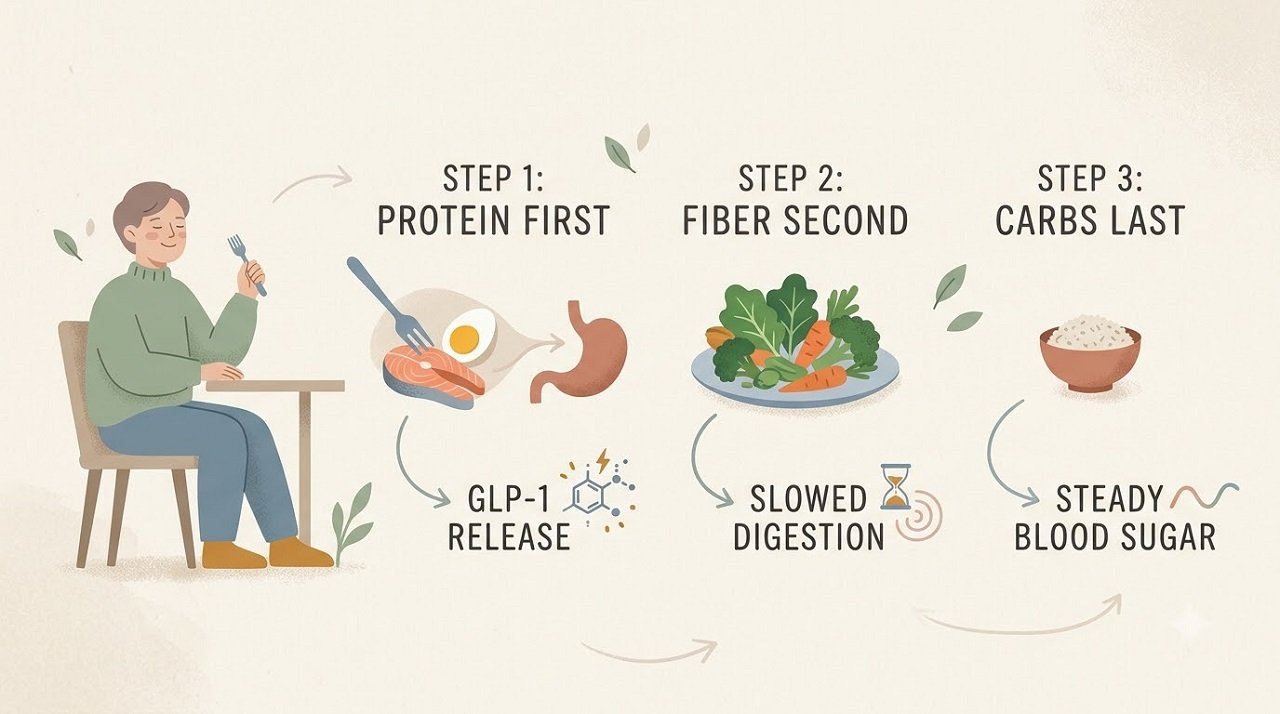
The mechanism behind meal sequencing is rooted in the incretin effect—the phenomenon where food in the gut triggers the release of hormones that regulate digestion, satiety, and blood sugar.
A review published in Nutrients explains the chain of events clearly: consumption of protein and/or fat before carbohydrate promotes secretion of GLP-1 from the gut, ameliorates secretions of insulin and glucagon, and delays gastric emptying—thereby improving postprandial glucose excursion. GLP-1 is known to suppress appetite by acting on the hypothalamus via the afferent vagus nerve.
In practical terms, this means that when you eat your protein first, you are giving your body a head start on the satiety signaling that would otherwise arrive later—or not at all, if you fill up on carbohydrates first.
A randomized controlled crossover trial in healthy adults found that the V-M-R sequence (vegetables, then meat, then rice) stimulated higher GLP-1 release than other meal sequences and attenuated the glycemic response without increasing demand for insulin. The researchers concluded that the sequence of food intake has “great potential as a novel and simple behavioral strategy”.
2. The Protein-First Protocol: What to Eat and In What Order
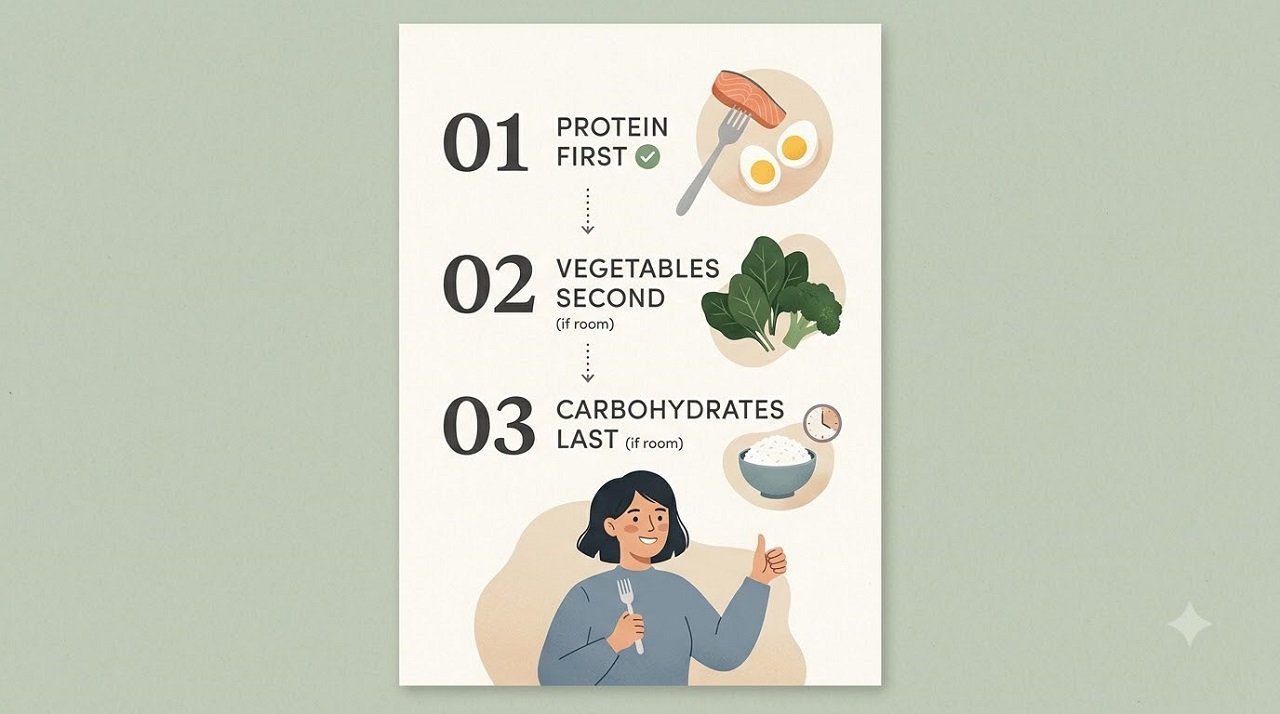
The research supports a specific order: protein first, fiber second, carbohydrates last.
Ohio State University’s registered dietitian guidance is explicit: eating protein and fiber before carbohydrates helps boost GLP-1 hormones, which signal more fullness. The recommended plate order is to start with vegetables, move on to protein and healthy fats, and finish with carbohydrates. The PATTERN study found that the V-M-R sequence (vegetables, meat, rice) produced the highest GLP-1 release. A systematic review in Diabetes/Metabolism Research and Reviews concluded that a carbohydrate-last meal pattern effectively reduces postprandial glucose excursions in individuals with diabetes and showed evidence of increasing GLP-1 levels.
The practical protocol for GLP-1 users:
- Take three deliberate bites of protein before touching anything else on the plate. This ensures that even if you are full after three bites, the protein is already in.
- Then move to vegetables or fiber (a small handful of spinach, a few cherry tomatoes) if you have room.
- Leave carbohydrates for last (rice, bread, pasta, potatoes)—and only if you are still hungry.
The goal is not to force a full plate. The goal is to prioritize the most satiety-boosting, muscle-preserving macronutrient in the smallest possible volume.
3. Why 25–30 Grams of Protein Per Meal Is the Target
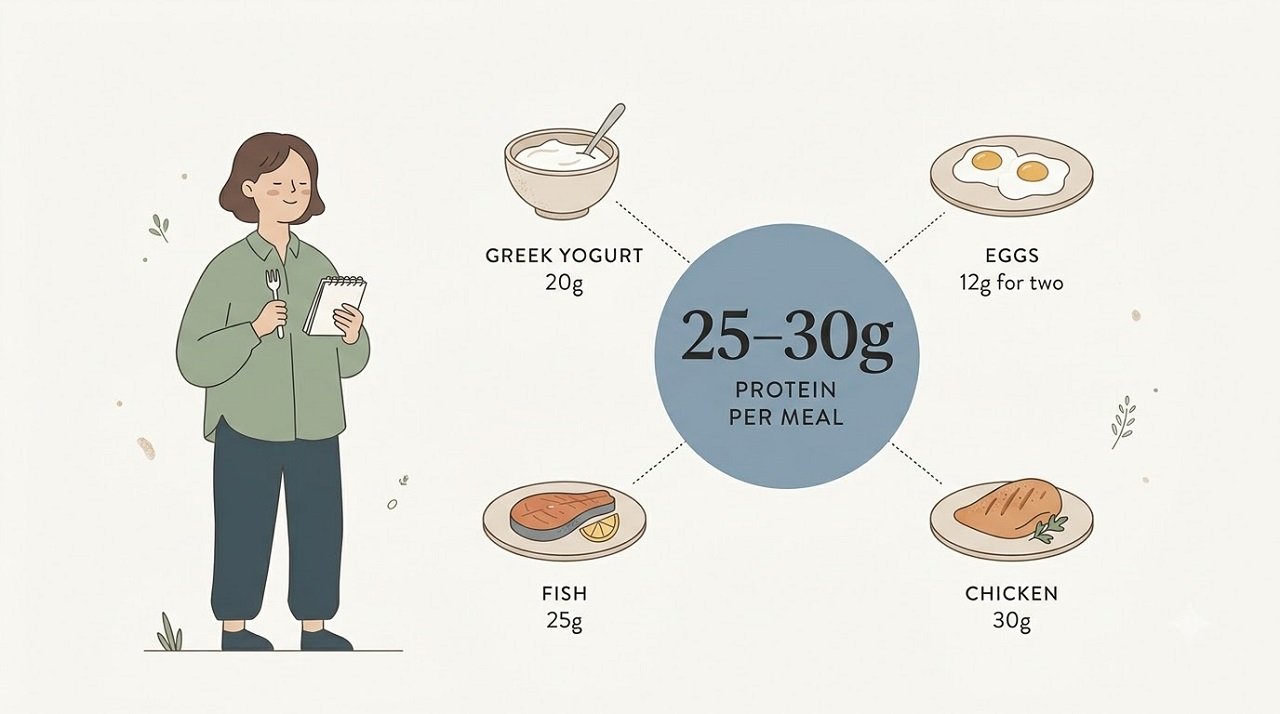
The research is consistent on the protein threshold for satiety. Ohio State University’s guidance states that at least 25–30 g of protein per meal has a strong impact on satiety levels. The UAE randomized crossover trial found that 25–30 g of protein per meal can increase satiety and reduce energy intake, noting that the 100 g of chicken breast used in the study contained approximately 30 g of protein.
For GLP-1 users, this is the number to anchor every meal around. If you can only eat a few bites, those bites should be protein-dense enough that even a small portion delivers a meaningful dose.
Practical translation:
- Greek yogurt: 3/4 cup delivers roughly 20 g.
- Eggs: Two large eggs deliver about 12 g.
- Canned fish: 3 oz of tuna or salmon delivers 20–25 g.
- Chicken or fish: A palm-sized portion delivers 25–30 g.
- Protein shake: One scoop of whey isolate delivers 20–30 g in a small liquid volume.
The goal is not to eat a large meal. The goal is to ensure that whatever you do eat clears the 25 g protein threshold before fullness shuts you down.
Hit Your Protein Target Without the Guesswork
Wondering what your exact daily protein number should be? Our complete guide on how much protein to eat on GLP-1 to prevent muscle loss breaks down the adjusted body weight formula and the research-backed range.
4. Meal Sequencing for Blood Sugar and Diabetes
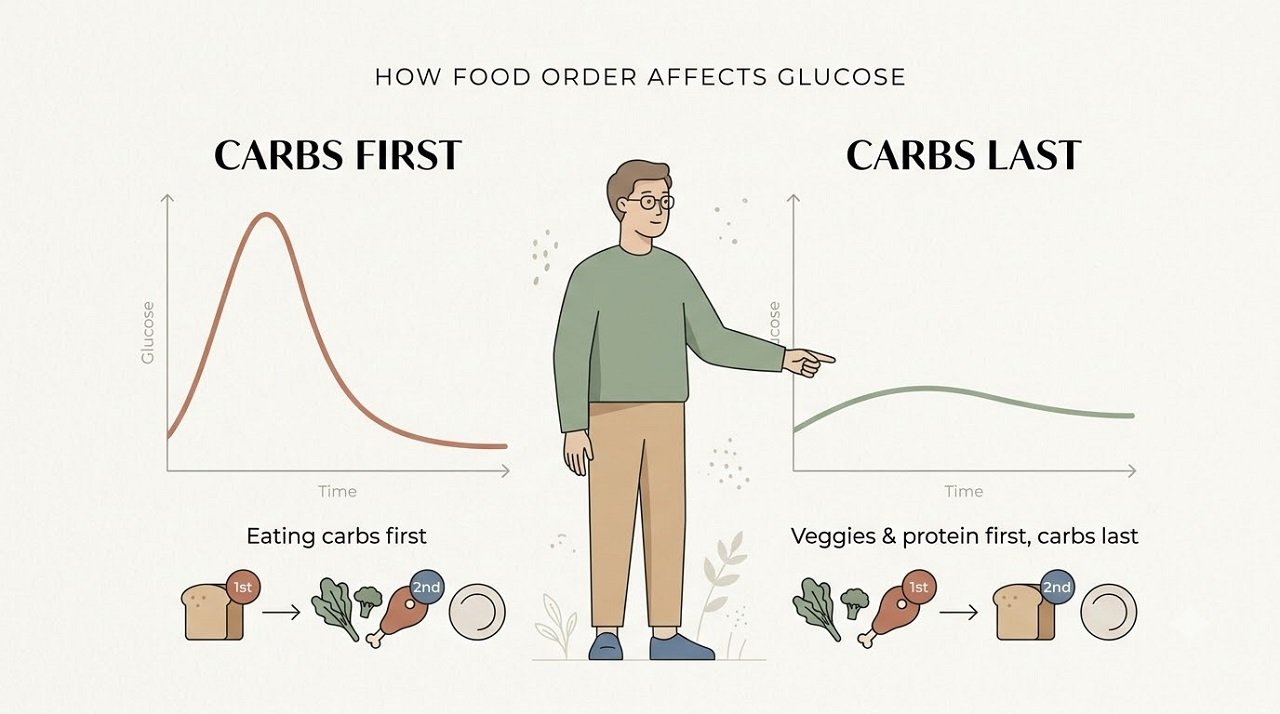
If you have diabetes or prediabetes alongside your GLP-1 therapy, meal sequencing has an additional evidence base.
Harvard Health reports that proponents of food sequencing say it may help manage blood sugar and control appetite, especially for people with diabetes, prediabetes, or gestational diabetes. A systematic review found that when carbohydrates are eaten last, blood sugar rises tend to be more moderate within 30 to 90 minutes after a meal.
The mechanism: when you eat vegetables and protein first, the fiber and protein slow the absorption of carbohydrates you eat later, meaning blood sugar rises more gradually rather than spiking sharply. A systematic review in Diabetes/Metabolism Research and Reviews concluded that carbohydrate-last meal patterns effectively reduce postprandial glucose excursions in individuals with diabetes and showed some evidence of lowering insulin levels and increasing GLP-1 and GIP levels. The PATTERN study found that the V-M-R sequence attenuated the glycemic response compared with rice-first sequences.
The practical translation: If you are managing blood sugar, the same sequence that helps with early satiety—protein first, carbs last—also helps with glucose control. The two goals are aligned.
5. Meal Sequencing for Weight Loss: What the Research Actually Says
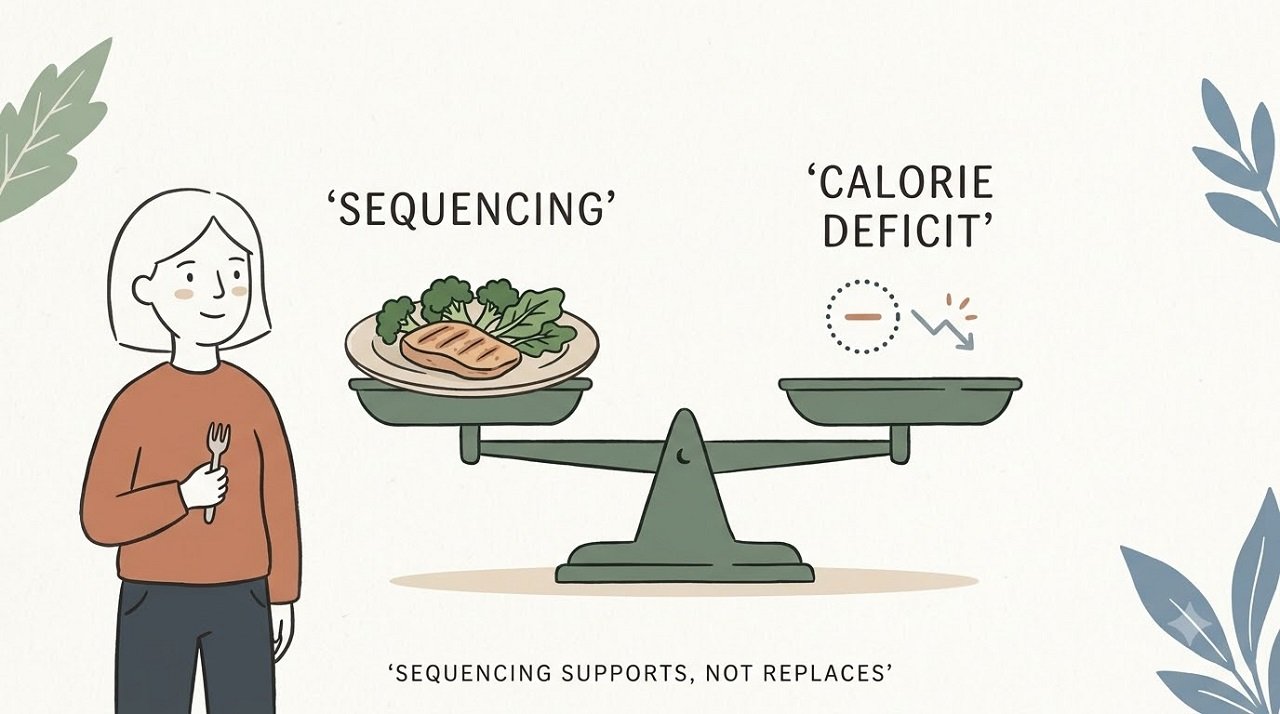
This is where honesty matters. Meal sequencing is not a magic bullet for weight loss, and the research reflects that.
A randomized controlled pilot study of the food order behavioral intervention in prediabetes found that the food-order group decreased body weight by 3.6 lbs and showed a trend toward lower HbA1c, with sensitivity analysis showing significant weight loss in pre-COVID participants.
A cluster-randomized trial in prediabetes found that the group receiving meal-sequence instructions exhibited greater reduction in body weight than the conventional guidance group. However, a systematic review rated the certainty of evidence as low, and a news analysis noted that “there is no strong, long-term evidence that meal sequencing alone leads to weight loss”.
The honest takeaway: Meal sequencing is a supporting behavioral tool, not a standalone weight-loss intervention. It helps you feel fuller on less volume, which can make a calorie deficit easier to sustain. It does not replace the need for adequate protein, resistance training, and overall energy balance.
For GLP-1 users, this is actually good news. The medication is already doing the heavy lifting on appetite suppression. Meal sequencing simply ensures that the food you can eat is optimized for satiety and muscle preservation.
6. Meal Sequencing Breakfast: The Most Important Meal to Sequence
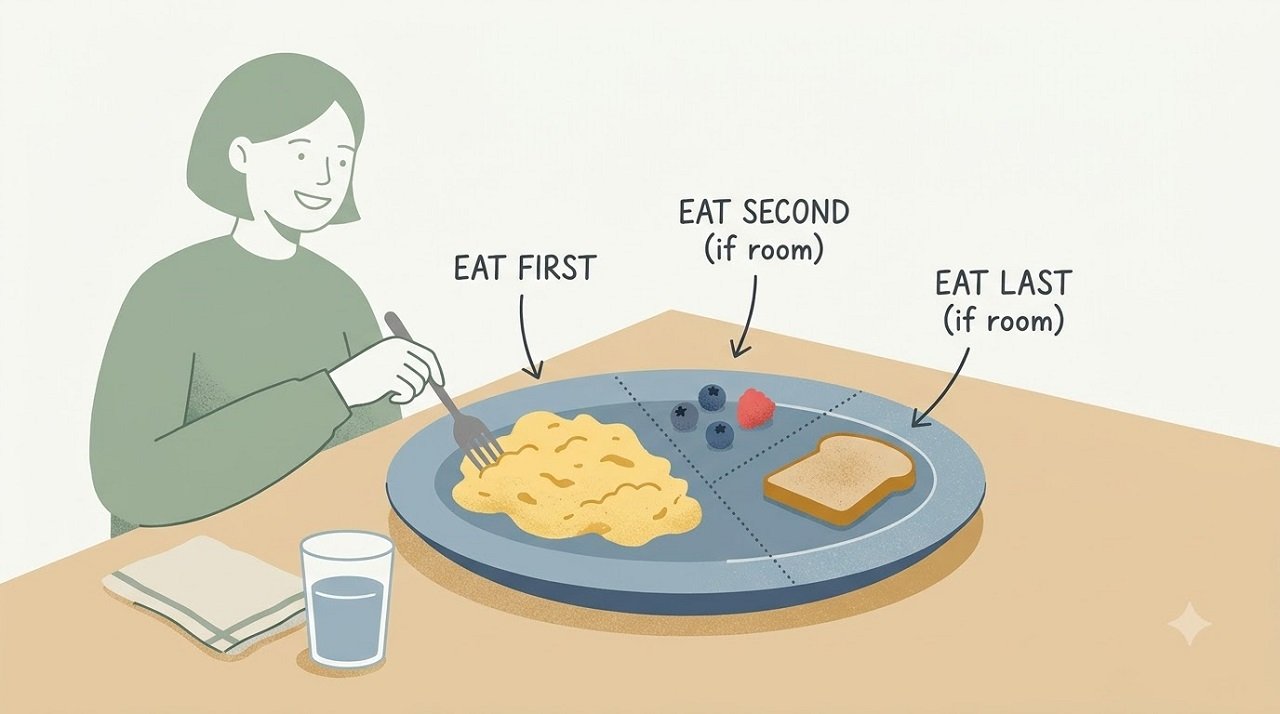
Breakfast is where meal sequencing matters most, because it is the meal where early satiety is often the most pronounced and where the temptation to reach for quick carbohydrates is the highest.
The Healthwise guidance for GLP-1 users is blunt: eat protein first at every meal, and the breakfast examples it provides are built around this principle—cottage cheese with blueberries, Greek yogurt, or scrambled eggs, each delivering 27–30 g of protein.
A protein-first breakfast sequence:
- Eggs, Greek yogurt, cottage cheese, or a protein shake first—before the toast, fruit, or cereal.
- A small portion of fruit or vegetables second, if there is room.
- Toast, cereal, or other carbohydrates last, and only if you are still hungry.
If you struggle specifically with breakfast, our guide on what to eat for breakfast on Ozempic when you can only eat 3 bites breaks down the morning protocol in more detail. For the deeper protein math, see our complete guide on how much protein to eat on GLP-1 to prevent muscle loss.
Struggling Specifically in the Morning?
If your appetite shuts down at breakfast, don’t miss our step-by-step protocol on what to eat for breakfast on Ozempic when you can only eat 3 bites —including the 3-bite sequencing plan.
7. The Limitations: When Sequencing Is Not Enough
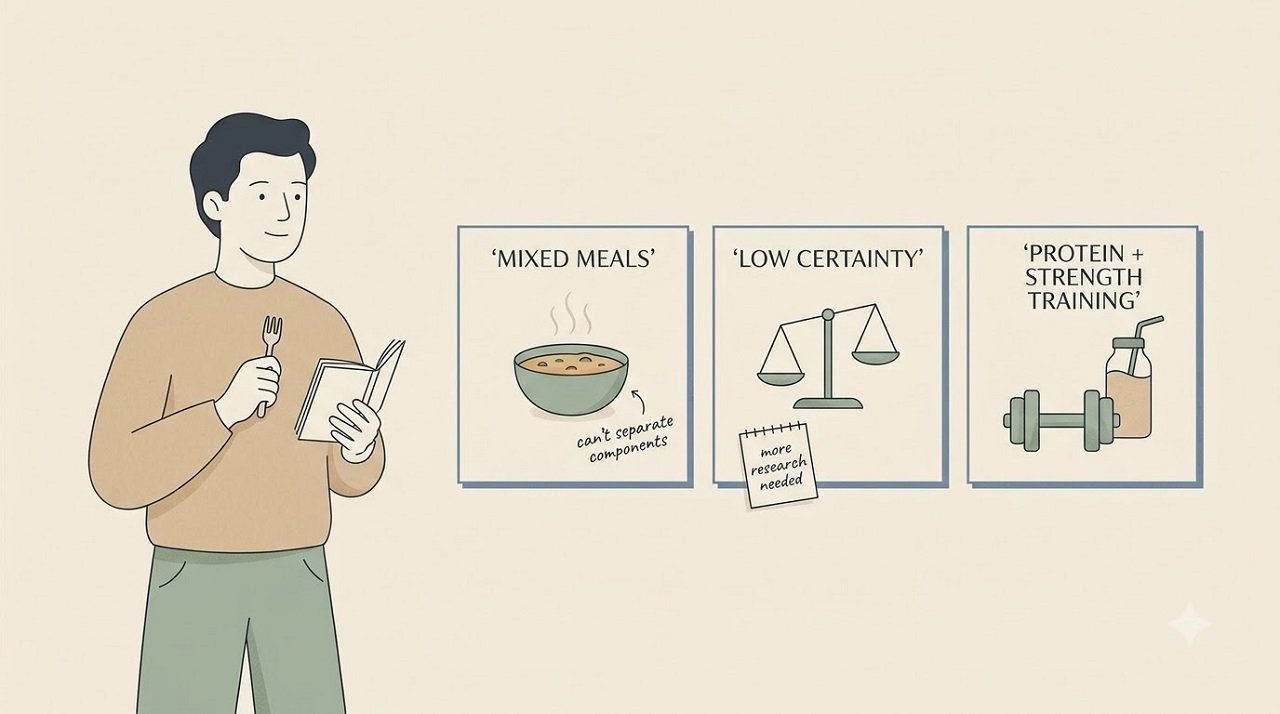
Meal sequencing is a useful tool, but it is not a universal solution. There are real-world limitations you should know about.
Mixed meals are hard to sequence. As the Providence registered dietitian notes, “when we eat combination foods, such as whole grains and starchy veggies (carb + fiber), beans and lentils (carb + fiber + protein), or even mixed meals like soups, casseroles, stir fries, we can’t always separate out the fiber from the protein and carbohydrates”. In those cases, the overall recommendation is to focus on balanced meals and hitting your fiber and protein goals rather than forcing a rigid sequence.
The evidence certainty is low. The systematic review on macronutrient ordering rated the certainty of evidence as low, with significant heterogeneity in study design limiting overall confidence in the findings.
Sequencing does not replace the fundamentals. Protein first is a strategy to ensure you hit your protein target when appetite is suppressed. It is not a substitute for adequate total protein intake or resistance training—both of which are required for muscle preservation on a GLP-1.
The bottom line: Use meal sequencing as a practical, free, low-risk tool. Do not treat it as a cure-all.
Ready to Solve the 100g Protein Problem?
This is the deep-dive guide on Ozempic makes me full after 2 bites but I need 100g protein —covering liquid protein, the best powders, and a plan for the days you can barely eat.
Frequently Asked Questions
Does meal sequencing help with weight loss?
It can support weight loss by increasing satiety and reducing the volume of food you need to feel full, but the evidence for sequencing alone as a weight-loss intervention is low-certainty. A pilot study in prediabetes found modest weight loss in the food-order group, but a systematic review rated the certainty of evidence as low. Treat it as a supporting tool, not a standalone solution.
What is the best food order for blood sugar?
Protein and fiber first, carbohydrates last. A systematic review found that carbohydrate-last meal patterns effectively reduce postprandial glucose excursions in individuals with diabetes and showed some evidence of increasing GLP-1 levels. Harvard Health notes that when carbohydrates are eaten last, blood sugar rises tend to be more moderate within 30 to 90 minutes after a meal.
Does eating protein first help you feel full?
Yes. Ohio State University guidance states that at least 25–30 g of protein per meal has a strong impact on satiety levels. Research shows that eating protein before carbohydrates helps boost GLP-1 hormones, which signal more fullness.
What is the meal sequencing strategy for GLP-1?
Protein first, fiber second, carbohydrates last. This sequence boosts natural GLP-1 secretion, slows gastric emptying, and extends satiety—which is especially valuable when medication-induced early satiety makes it difficult to eat a full meal. Aim for 25–30 g of protein per meal before touching carbohydrates.
Does meal sequencing work for diabetes?
Yes, the research is strongest in this area. A systematic review concluded that carbohydrate-last meal patterns effectively reduce postprandial glucose excursions in individuals with diabetes and showed some evidence of lowering insulin levels and increasing GLP-1. A randomized trial found that the V-M-R sequence (vegetables, meat, rice) attenuated the glycemic response without increasing insulin demand.
What is meal sequencing for breakfast?
Eat your protein first—eggs, Greek yogurt, cottage cheese, or a protein shake—before the toast, fruit, or cereal. Aim for 25–30 g of protein. Then have a small portion of fruit or vegetables if there is room, and save any carbohydrates for last.
Is meal sequencing worth trying on a GLP-1?
Yes, it is a free, low-risk, side-effect-free tool that aligns with the medication’s mechanism. It helps you prioritize protein when appetite is suppressed and may extend satiety. However, it is not a substitute for adequate protein intake, resistance training, or medical guidance.
What does Reddit say about food sequencing?
Community discussions on platforms like Reddit reflect strong anecdotal support for protein-first eating, with users reporting improved satiety and flatter glucose curves. However, these are anecdotal reports, not clinical evidence. The research evidence, while promising, is still rated as low-certainty.
Sources
- Iizuka, K. (2020). A Review of Recent Findings on Meal Sequence: An Attractive Dietary Approach to Prevention and Management of Type 2 Diabetes. Nutrients. https://pmc.ncbi.nlm.nih.gov/articles/PMC7551485/
- McKenzie, R., Sterling, C., O’Hara, H., & Woodside, J. (2026). The Impact of Macronutrient Ordering on Postprandial Glycaemic Control in Diabetes: A Systematic Review. Diabetes/Metabolism Research and Reviews. https://onlinelibrary.wiley.com/doi/full/10.1002/edm2.70228
- Sun, L., Goh, H. J., Govindharajulu, P., Leow, M. K., & Henry, C. J. (2020). Postprandial glucose, insulin and incretin responses differ by test meal macronutrient ingestion sequence (PATTERN study). Clinical Nutrition. https://oar.a-star.edu.sg/public/communities-collections/articles/16303
- Hernandez, J. (2025, December 8). Eat Smart to Help Feel Full Longer. Ohio State University. https://pfmx01.osumc.edu/news/eat-smart-help-feel-full-longer
- Providence Basecamp. (2025, August). Ask the RD. https://providencebasecamp.org/asktherd/august2025
- Hendley, J. (2026, April 16). Is food sequencing worth a try? Harvard Health. https://www.health.harvard.edu/diet-and-nutrition/is-food-sequencing-worth-a-try
- Postprandial Glucose and Insulin Response to Meal Sequence Among Healthy UAE Adults: A Randomized Controlled Crossover Trial. (2024). Diabetes, Metabolic Syndrome and Obesity. https://www.tandfonline.com/doi/full/10.2147/DMSO.S468628
- Eating and Lifestyle Tips While Taking GLP-1 Medications. (2026, March 12). Healthwise. https://www.healthwise.net/mystlukes/Content/StdDocument.aspx?DOCHWID=custom.cn17
- A Randomized Controlled Pilot Study of the Food Order Behavioral Intervention in Prediabetes. (2023). MDPI. https://www.mdpi.com/2072-6643/15/20/4452
PubMed.https://pubmed.ncbi.nlm.nih.gov/37892527/

Root Cause Answers

How to Stop Overthinking Before Bed: Evidence-Based Techniques That Actually Work

Health Tips for Night Shift Workers: The Long-Term Survival Guide

PEMF Webinar

The 4-7-8 Breathing Technique: Step-by-Step Guide and What the Research Actually Shows

HBOT ( Hyperbaric Oxygen Therapy ) Webinar
-
 Events2 weeks ago
PEMF Webinar
-
 Natural Sleep Remedies6 months ago
The 4-7-8 Breathing Technique: Step-by-Step Guide and What the Research Actually Shows
-
 Events2 months ago
HBOT ( Hyperbaric Oxygen Therapy ) Webinar
-

 Events6 months ago
Why You Can’t Trust Big Pharma
-
 Events6 months ago
The Anti-Cancer Body with Dr. Michael Karlfeldt
-

 Home Remedies6 months ago
Natural Home Remedies for Restless Legs at Night
-
 Events5 months ago
The Cancer Conversation Your Oncologist Cannot Have in 15 Minutes
-

 Events7 months ago
Beyond the Brain