
Health Tips
What to Do for Dry Eyes: Effective Home Remedies That Provide Relief

The content on this website – including articles, event announcements, personal experiences, and recommendations – is for informational and educational purposes only and is not medical advice. Always consult a qualified healthcare professional before making any changes to your diet, exercise, supplements, sleep habits, or wellness routines, especially if you are pregnant, nursing, on medication, or have any medical condition.

Important note: This article provides general educational information about managing dry eye symptoms and does not constitute medical advice, diagnosis, or treatment. Persistent dryness, pain, vision changes, or symptoms that don’t improve with home remedies should be evaluated by an eye care professional.
What to Do for Dry Eyes Home Remedies: Simple Solutions for Soothing Eye Discomfort
Ever wake up feeling like there’s sand in your eyes? Dry eyes can be a real pain, and if you’ve been there, you know it. While sometimes you might need a doctor’s help, there’s a bunch of stuff you can try at home first, including what to do for dry eyes home remedies. From changing up your diet to tweaking your daily habits, these simple home remedies might just do the trick.
Key Takeaways
- Dry eyes can often be managed with simple lifestyle changes and home remedies.
- Reducing screen time and staying hydrated are easy ways to help your eyes feel better.
- Foods rich in omega-3s and antioxidants can support eye health and moisture.
- Over-the-counter eye drops and warm compresses can provide quick relief.
- If home remedies don’t work, it’s important to see a doctor for further evaluation.
Understanding the Causes of Dry Eyes
Dry eyes can be a real nuisance, but understanding what’s causing them can help you tackle the problem more effectively. Let’s break down some of the common causes.
Common Medical Conditions Leading to Dry Eyes
Several medical conditions can lead to dry eyes. Sjogren’s syndrome, a disorder where the body’s immune system attacks its moisture-producing glands, is a well-known culprit. Other conditions like rheumatoid arthritis and lupus can also contribute to dry eyes. Additionally, as we age, our tear production naturally decreases, making older adults more prone to this condition.
Environmental Factors Contributing to Dryness
Our environment plays a big role in the health of our eyes. Exposure to wind, smoke, or dry air can quickly lead to dry eyes. If you spend a lot of time in air-conditioned or heated spaces, you might find your eyes feeling dry and irritated. It’s a good idea to consider how your surroundings might be affecting your eye health.
Medications That May Cause Dry Eyes
Certain medications can have side effects that include dry eyes. Antihistamines, decongestants, and some blood pressure medications are common culprits. If you suspect your medication is causing dry eyes, it’s worth discussing with your healthcare provider. They might be able to suggest alternatives or solutions to alleviate the dryness.
Understanding the root causes of dry eyes can help you take the right steps towards relief. Whether it’s adjusting your environment or consulting with a doctor about your medication, being informed is the first step to comfort.
Lifestyle Changes to Alleviate Dry Eyes
Reducing Screen Time and Digital Eye Strain
If you’re glued to screens all day, your eyes might be begging for a break. Spending hours staring at phones, computers, or TVs can make you blink less, which leads to dryness. Try following the 20-20-20 rule: every 20 minutes, look at something 20 feet away for 20 seconds. This simple habit can help reduce digital eye strain and keep your eyes moist. Don’t forget to blink more often—it’s one of the easiest natural treatments for dry eyes.
Improving Sleep Hygiene for Better Eye Health
Getting a good night’s sleep isn’t just about feeling rested; it’s crucial for your eye health too. Poor sleep can mess with your tear production, making your eyes dry and irritated. Stick to a consistent sleep schedule, avoid screens before bed, and create a relaxing bedtime routine. These small tweaks can work wonders in how to relieve dry eyes naturally.
Staying Hydrated to Support Tear Production
Water isn’t just for quenching thirst; it’s vital for eye moisture too. Dehydration can dry out your eyes, so make sure you’re drinking enough fluids throughout the day. Aim for at least 8 glasses of water daily. If plain water isn’t your thing, try herbal teas or infuse your water with fruits for a refreshing twist. Staying hydrated is one of the simplest home solutions for eye dryness.
Sometimes, the simplest changes in your daily routine can have the biggest impact on your eye comfort. Prioritizing hydration and rest can go a long way in keeping dry eyes at bay.
Dietary Adjustments for Eye Moisture
Incorporating Omega-3 Fatty Acids into Your Diet
Omega-3 fatty acids are a type of healthy fat that can help keep your eyes moist. They do this by supporting the glands in your eyes that make oil, which is a key part of your tears. You can find omega-3s in foods like:
- Fatty fish such as salmon, tuna, and mackerel
- Walnuts
- Flaxseeds
If you’re not a fan of fish, you might consider taking an omega-3 supplement. Always check with your doctor before starting any new supplements to make sure they’re safe for you.
The Role of Antioxidant-Rich Foods in Eye Health
Antioxidants are important for eye health because they help protect your eyes from damage. Some antioxidants, like lutein and zeaxanthin, are especially good for your eyes. You can boost your antioxidant intake by eating:
- Leafy greens like spinach and kale
- Colorful fruits and vegetables such as carrots and sweet potatoes
- Nuts and seeds
Antioxidants not only help your eyes but also benefit your overall health.
Limiting Alcohol and Caffeine Intake
Both alcohol and caffeine can dry out your eyes. Alcohol is known for its dehydrating effects, and caffeine can reduce your body’s ability to produce tears. To help keep your eyes moist, try to:
- Limit alcoholic drinks
- Cut back on coffee and other caffeinated beverages
- Drink plenty of water to stay hydrated
Staying hydrated is crucial for maintaining eye moisture. If you find it hard to drink plain water, try adding a slice of lemon or cucumber for flavor. Keeping a water bottle handy can also remind you to sip throughout the day.
What To Do for Dry Eyes Home Remedies for Immediate Relief

Using Over-the-Counter Lubricating Eye Drops
When your eyes feel dry and scratchy, reaching for over-the-counter lubricating eye drops can be a quick fix. These drops, often referred to as artificial tears, help to add moisture to the eyes, providing temporary relief. Choose preservative-free options if you plan on using them frequently, as they are gentler on the eyes. Remember, while these drops can soothe your symptoms, they don’t address the underlying cause of dry eyes.
Applying Warm Compresses to Soothe Eyes
A warm compress can be incredibly soothing when your eyes are feeling dry and irritated. The heat from the compress helps to unblock oil glands in the eyelids, which can improve the quality of your tears. Here’s how you can do it:
- Soak a clean cloth in warm water.
- Wring out the excess water.
- Place the cloth over your closed eyelids for about 5-10 minutes.
- Repeat as needed throughout the day.
This simple remedy can help increase moisture in your eyes and provide some much-needed relief.
Running a Humidifier to Add Moisture to the Air
Dry indoor air can exacerbate dry eye symptoms. Running a humidifier in your home, especially in the bedroom at night, can help maintain a comfortable level of humidity. This added moisture in the air can prevent your eyes from drying out, especially during the colder months when heating systems are in use.
Keeping your environment humidified is a simple yet effective way to support your eye health without much effort.
By incorporating these home remedies into your daily routine, you can manage dry eye symptoms more effectively and enhance your overall comfort.
Protective Measures to Prevent Dry Eyes
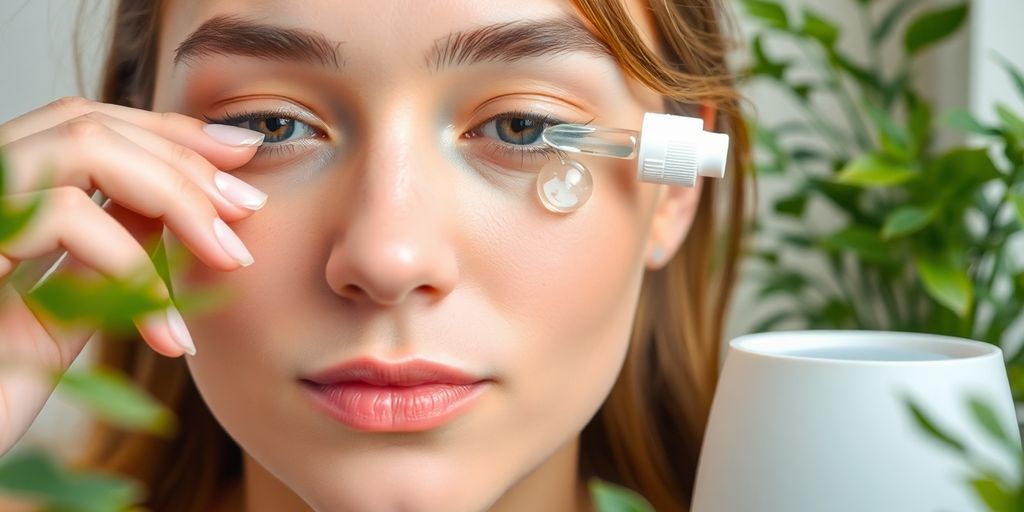
Wearing Wraparound Sunglasses Outdoors
When you’re outdoors, consider wearing wraparound sunglasses to shield your eyes from wind and dust. These sunglasses not only block harmful UV rays but also act as a barrier against environmental elements that can dry out your eyes. This simple step can significantly reduce tear evaporation, keeping your eyes more comfortable.
Adjusting Indoor Airflow to Avoid Direct Blasts
It’s important to be mindful of airflow in your home. If you often sit near fans or air conditioning vents, try to adjust your seating or the direction of the airflow. Direct blasts of air can dry out your eyes quickly. By making small changes, like using a humidifier or placing a bowl of water near a heat source, you can maintain a more balanced humidity level in your living space.
Practicing Good Eyelid Hygiene
Maintaining clean eyelids is crucial for healthy eyes. Regularly cleanse your eyelids with a gentle cleanser or baby shampoo. This can help remove debris and oil that might block the tear ducts. Good eyelid hygiene is one of the moisturizing eye care tips that can prevent irritation and promote better tear production.
Keeping your eyes moisturized doesn’t have to be complicated. By incorporating these simple protective measures, you can greatly reduce the discomfort of dry eyes and enhance your overall eye health.
Consider these practical and straightforward remedies for itchy eyes to help maintain comfort and prevent dryness.
When to Seek Professional Help for Dry Eyes
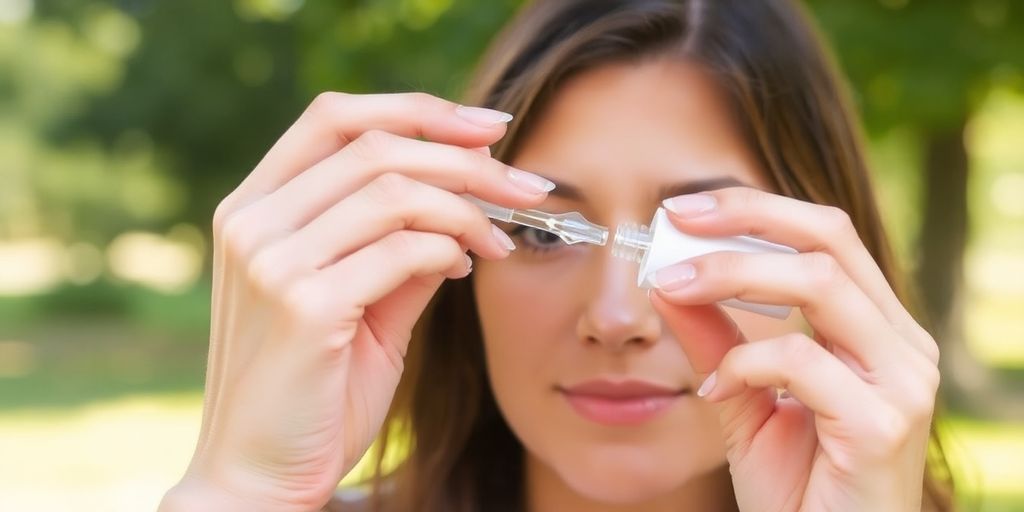
Recognizing Symptoms That Require Medical Attention
Dry eyes can often be managed with home remedies, but there are times when professional help is necessary. If your eyes feel persistently dry and gritty, or you experience significant discomfort, it’s time to see a doctor. Watch out for symptoms like redness, blurred vision, or sensitivity to light that don’t improve with over-the-counter treatments. These could indicate a more serious issue that needs medical intervention.
Understanding the Risks of Untreated Dry Eyes
Leaving dry eyes untreated can lead to more than just discomfort. It can cause damage to the surface of your eyes and even lead to infections. Persistent dryness can also result in inflammation, which might affect your vision in the long run. It’s crucial to address these symptoms early to avoid complications.
Exploring Medical Treatments for Chronic Dry Eye
When home remedies and lifestyle changes aren’t enough, medical treatments may be necessary. Options include prescription eye drops, punctal plugs, or even surgery in severe cases. An eye care professional can help determine the best course of action for your specific condition. If you’re experiencing ongoing symptoms that interfere with your daily activities, consider seeking a consultation with a specialist. This can ensure you receive the appropriate professional treatment to alleviate your symptoms and protect your eye health.
Conclusion
Dealing with dry eyes can be a real hassle, but thankfully, there are plenty of things you can try at home to find some relief. From using over-the-counter eye drops to adjusting your environment, these simple remedies might just do the trick. Remember, though, if your symptoms stick around or get worse, it’s a good idea to check in with your eye doctor. They can help figure out if there’s something more serious going on. So, give these home remedies for dry eyes a shot, and hopefully, you’ll be seeing clearer and feeling better in no time.
Frequently Asked Questions
What are some easy home remedies for dry eyes?
You can try using over-the-counter lubricating eye drops, applying warm compresses, or running a humidifier to add moisture to the air.
Can changing my diet help with dry eyes?
Yes, eating foods rich in omega-3 fatty acids and antioxidants can support eye moisture. Reducing alcohol and caffeine can also help.
How does screen time affect dry eyes?
Staring at screens for too long can strain your eyes and make them dry. Taking breaks and blinking often can help reduce this.
When should I see a doctor about dry eyes?
If your dry eyes don’t improve with home remedies or you experience severe symptoms like pain or vision changes, it’s time to see a doctor.
Why do my eyes feel dry indoors?
Indoor air can be dry due to heaters or air conditioning. Using a humidifier and avoiding direct airflow can help keep your eyes moist.
Are there any eye drops I should avoid for dry eyes?
Avoid eye drops with preservatives if you use them frequently, as they can irritate your eyes. Opt for preservative-free options instead.
Sources Referenced in This Article













Disclaimer: This article is for informational and educational purposes only and is not a substitute for professional medical or mental health advice. If you experience severe, persistent anxiety or panic attacks that interfere with daily functioning, please consult a licensed healthcare provider.
You have eight minutes until the meeting starts.
Your heart rate is up. Your mouth is dry. Your thoughts are looping: “What if I blank? What if they ask something I can’t answer? What if my voice shakes?”
The standard advice—“just relax” or “take a deep breath”—is useless in this moment. Your sympathetic nervous system is already activated. What you need are specific, rapid, physiology-based interventions that signal safety to your body and sharpen your cognition, not vague encouragement.
This guide is not about long-term anxiety management. It is about the final 5 to 15 minutes before a high-stakes meeting or presentation. Every tip below is backed by research, takes under 5 minutes, and requires nothing more than your own body, a glass of water, and a quiet corner.
Why Generic Pre-Meeting Advice Fails
Most advice for pre-presentation nerves assumes you have time to “practice self-care” or “reframe your thoughts.” You don’t. You have minutes, and your prefrontal cortex—the part of your brain responsible for rational thinking—is being partially offline because your amygdala has hijacked the show.
Research on acute stress confirms that psychological stress triggers a sympathetic “fight or flight” response, increasing heart rate, respiratory rate, and metabolic activity. In this state, generic relaxation advice is too slow. What works is bottom-up regulation: changing your body’s physiological state first, so your brain can follow.2
The evidence points toward a different approach: targeted physiological resets that work within the window of anticipatory anxiety. Not calm. Control.
Key Takeaways
- Your body leads, your brain follows. Change your physiology first (posture, breathing, temperature) to shift your psychological state.
- Power posing may buffer stress physiology. Brief expansive postures have been shown to decrease cortisol and increase feelings of power in some studies.
- Box breathing attenuates acute stress reactivity. A randomized controlled trial found that both box breathing and prolonged exhalation reduced physiological markers of stress.
- Caffeine timing matters. Cognitive performance is time-of-day dependent, and caffeine is most effective when alertness is at its lowest.
- Even mild dehydration impairs cognition. Water supplementation has been shown to improve processing speed, working memory, and mood.
- Cold water on the face can rapidly increase vigilance. Cold stimuli applied to the face and neck region can provoke significant changes in markers of cognitive brain function.
- Brief mindfulness before a presentation can reduce anxiety. A single short intervention immediately before a presentation task may be beneficial.
- Upright posture reduces fatigue and improves affect. Slumped posture is associated with lower mood; upright posture can increase positive affect.
- Standing and stretching for 5 minutes is an effective microbreak. It can keep muscles in a recovery state for 30–45 minutes.
- You do not need to eliminate nerves. You need to perform with them. These tips help you do that.
1. Strike a Power Pose (Yes, Really—With Caveats)
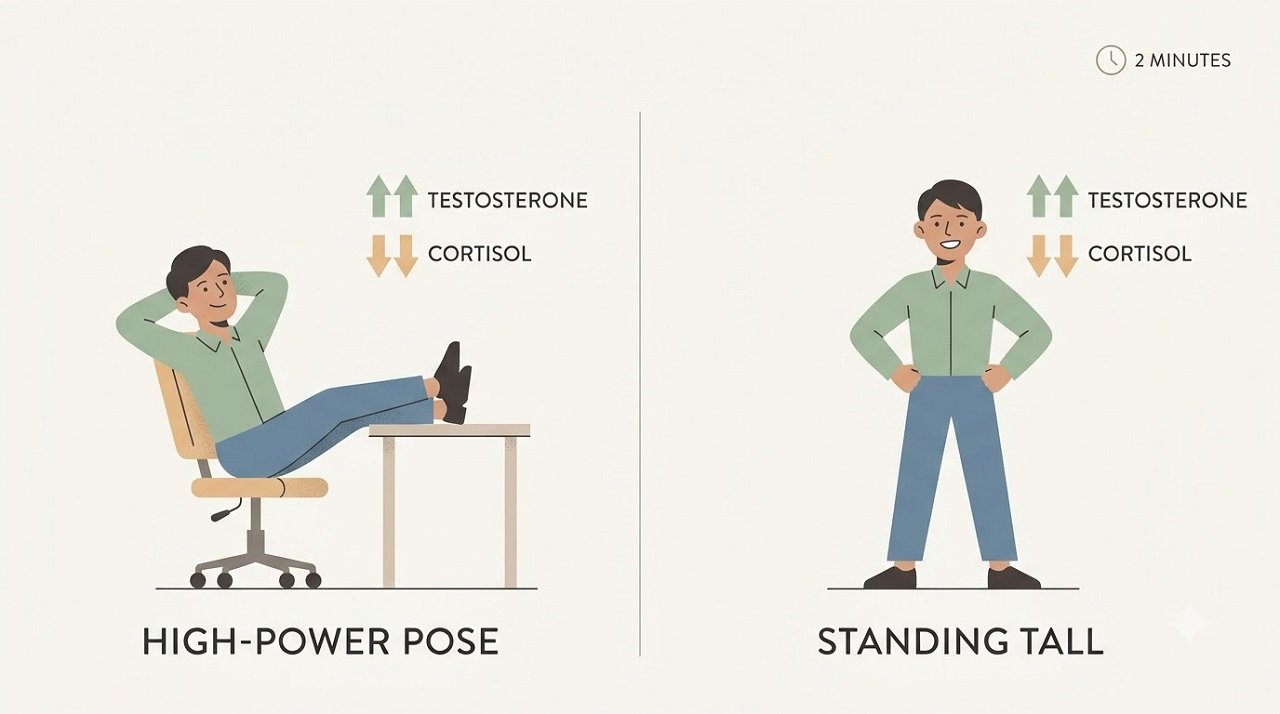
The research on “power posing” is more nuanced than social media suggests, but there is credible evidence that adopting an expansive posture before a stressful situation can influence how you feel and perform.
The original study, published in Psychological Science, found that high-power posers experienced elevations in testosterone, decreases in cortisol, and increased feelings of power and tolerance for risk compared to low-power posers. The researchers noted that adopting powerful postures allowed subjects to “prepare for stressful situations” on a neuroendocrine level.1
Later research has been mixed—some studies found no effect on cortisol during actual public speaking exposure—but the practical takeaway remains useful: if a 2-minute posture change makes you feel more confident, it is a low-risk, zero-cost intervention. Stand tall, open your chest, put your hands on your hips or behind your head. You are not faking it until you make it; you are giving your body a signal of readiness.
2. Use Box Breathing to Attenuate the Stress Response
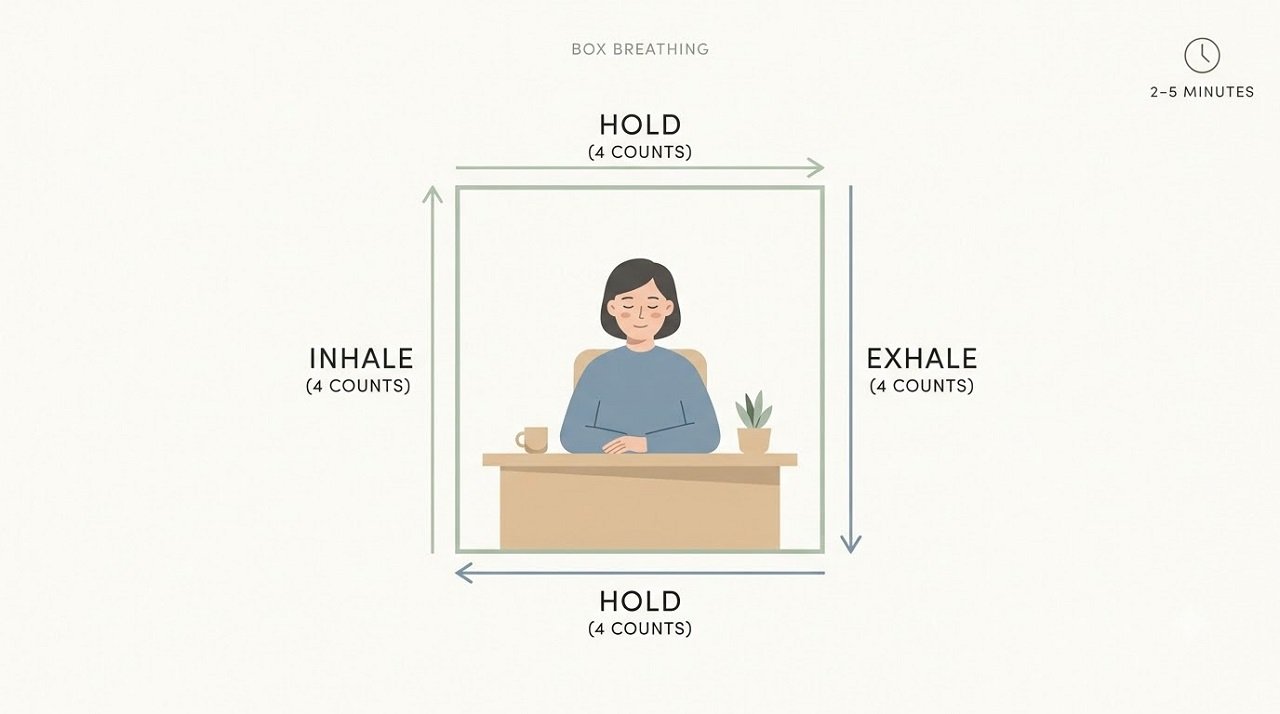
This is one of the most robustly supported rapid interventions in the pre-stress literature.
A 2026 randomized controlled trial published in Comprehensive Psychoneuroendocrinology found that both box breathing and prolonged exhalation significantly attenuated physiological stress reactivity in response to a virtual Trier Social Stress Test—a laboratory paradigm designed to induce acute social stress. The researchers concluded that “brief breathing practice can buffer acute physiological stress responses”.2
The protocol: Inhale for 4 counts, hold for 4, exhale for 4, hold for 4. Repeat for 2–5 minutes. You can do this in a bathroom stall, an empty hallway, or with your eyes closed at your desk. It is invisible, silent, and physiologically potent.
3. Drink Water Before You Drink Coffee
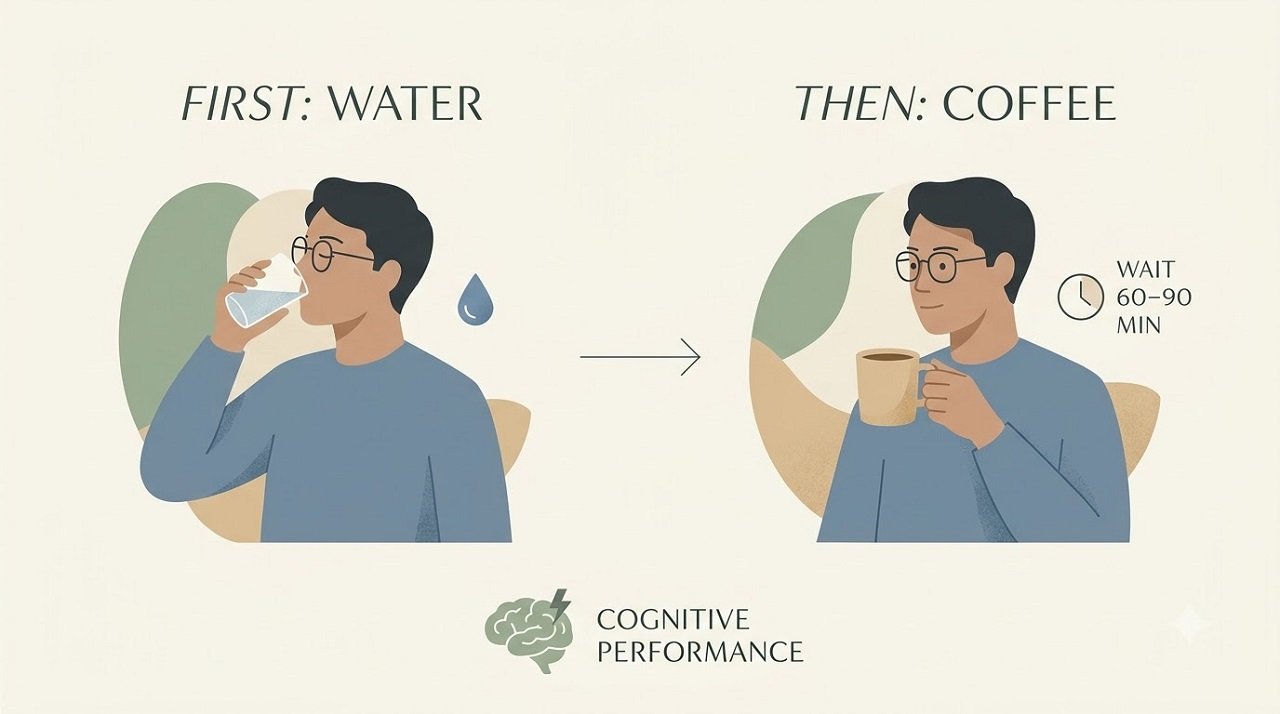
Mild dehydration does not just make you thirsty. It makes you foggy.
A randomized controlled trial on water restriction and supplementation in young adults found that water supplementation improved processing speed, working memory, and mood, with 1000 mL identified as the optimum volume. Another study on hydration and brain functioning concluded that dehydration has significant negative effects on mental performance.
The pre-meeting sequence: Drink a glass of water 15–20 minutes before the meeting starts. Then, if you use caffeine, time it strategically. Research on caffeine and cognitive performance shows that cognitive performance is time-of-day dependent, and caffeine is an effective ergogenic aid especially when alertness is at its lowest. If your meeting is in the early morning or mid-afternoon dip, a small coffee 30–60 minutes prior may sharpen reaction time and attention. If you are already anxious, skip the extra caffeine—it can amplify the physical sensations of anxiety.3
4. Splash Cold Water on Your Face (or Use a Cold Pack)
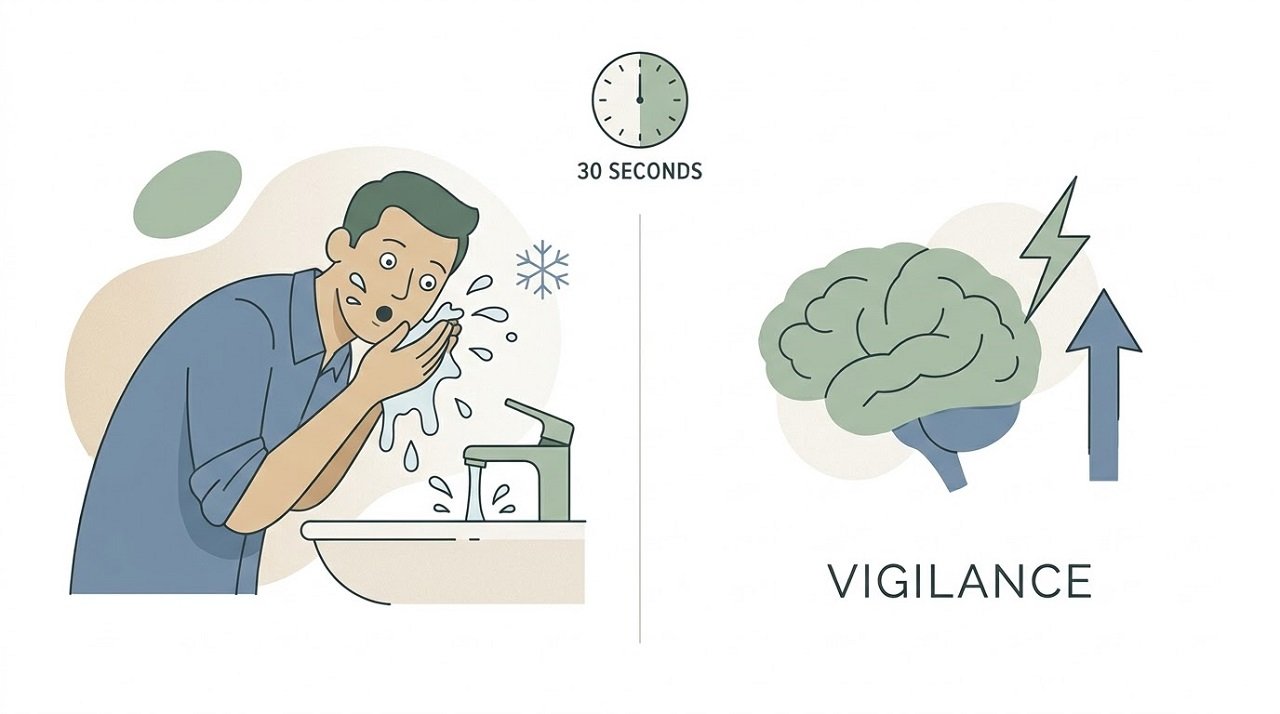
This is a rapid, physiology-based reset that can shift your state in under a minute.
Research on cold water stimuli applied to the face and neck region has found that it can provoke significant changes in electroencephalographic markers of cognitive brain function, including increased critical flicker frequency and decreased P-300 latency—both indicators of enhanced vigilance and cognitive processing. In simpler terms: cold water on your face can wake up your brain.
The execution: If you have access to a sink, splash cold water on your face for 20–30 seconds. If not, hold a cold water bottle or an ice pack against your cheeks and forehead for 30 seconds. The goal is not discomfort—it is a brief, sharp sensory signal that shifts your autonomic state.
5. Do a 16-Minute Brief Mindfulness Induction (If You Have Time)
If your meeting is further out—say, 20 minutes away—a brief mindfulness intervention may help reduce anticipatory anxiety.
A 2026 randomized controlled trial compared a brief mindfulness induction to another technique and found that a single session yielded rapid improvements in self-reported anxiety. Earlier research on one-time mindfulness interventions immediately before a presentation task has also explored the potential to reduce public speaking anxiety.9
The practical version: You do not need a formal meditation practice. A 16-minute guided audio (available on most meditation apps) or a simple 5-minute practice of noticing your breath and bodily sensations without judgment can be enough to shift your state. If you have less time, the box breathing from Tip #2 is your best option.
6. Adopt an Upright Posture (Even If You Don’t Feel Like It)
Slumped posture is not just a bad habit. It is a physiological signal that can worsen fatigue and mood.
A study published in the Journal of Behavior Therapy and Experimental Psychiatry found that upright posture can reduce fatigue and increase high-arousal positive affect in people with mild-to-moderate depressive symptoms, and the researchers suggested that adopting an upright posture may increase positive affect, reduce fatigue, and decrease self-focus.
The pre-meeting execution: Before you walk into the room, stand up. Roll your shoulders back. Lift your chest. Lengthen your spine. You are not aiming for a military stance—just an open, vertical posture that signals to your nervous system that you are alert and ready, not collapsed and defeated.
7. Take a 5-Minute Standing Stretch Break
If you have been sitting in the same position for hours before the meeting, your muscles are likely stiff and your energy is likely low.
Research on break types during prolonged sitting found that standing and stretching for 5 minutes was the most effective break type, keeping muscles in a recovery state for 30–45 minutes. Stretching exercises have also been shown to improve muscle activity and reduce fatigue in some trunk muscles during seated tasks.
A quick pre-meeting stretch sequence:
- Neck rolls (30 seconds each direction)
- Shoulder rolls (30 seconds)
- Standing forward fold (30 seconds)
- Side bends (30 seconds each side)
- Calf raises (30 seconds)
The goal is not flexibility. It is to interrupt the sedentary state and restore blood flow before you need to perform.
8. Review Your Key Talking Points (Not Your Entire Script)
This is a cognitive tip, not a physiological one, but it matters. Pre-meeting anxiety often spikes because your working memory is overloaded with everything you might need to say.
Write down—by hand, if possible—the three most important points you want to make. Not a script. Not a full outline. Three bullet points. Research on cognitive load suggests that externalizing information reduces the burden on working memory, freeing up mental resources for the actual conversation.
Keep the card or note in front of you. Knowing that your core message is captured somewhere other than your anxious brain can reduce the pressure to “remember everything” and create space for presence.
9. Use a Physiological Sigh (The Fastest Reset)
If you have time for only one thing before you walk in, make it a physiological sigh.
This is a breathing pattern where you take a normal inhale through the nose, add a second short inhale on top of it to fully expand the lungs, and then exhale slowly and completely through the mouth. It is one of the fastest known ways to activate the parasympathetic nervous system.
While research on cyclic sighing specifically is still emerging, studies on slow-breathing techniques consistently show that prolonged exhalation reduces physiological stress reactivity. The physiological sigh is a portable, invisible way to trigger that same response in 30 seconds.2
Do one or two sighs before you open the door. You do not need to make a production of it. Just a quiet, full exhale that signals to your body that the threat is manageable.
10. Accept the Nerves (They Are Not the Enemy)
This is the final and most important tip, and it is counterintuitive.
Trying to force yourself to calm down often backfires because it adds a layer of self-judgment (“Why am I still anxious? I should be calm”). Research on stress and coping suggests that acceptance-based approaches can be more effective than suppression for acute anxiety.
Your increased heart rate and alertness are not signs that something is wrong. They are signs that your body is mobilizing energy for a challenge. The goal is not to eliminate arousal. It is to channel it. A slightly elevated heart rate and sharpened attention are performance-enhancing states, not pathologies.
Walk in with the nerves. They are part of the energy you need.
The Bottom Line: Physiology First, Then Presence
The minutes before a big meeting are not the time for grand lifestyle changes. They are the time for targeted, rapid, bottom-up interventions that shift your physiological state so your cognitive and social faculties can operate.
Stand tall. Breathe out slowly. Drink water. Splash your face if you need a jolt. Stretch if you have been sitting. And then walk in with the three points you actually need to make, trusting that your body is ready even if your mind is still catching up.
You do not need to feel perfect. You need to be present. These tips help you get there.
Frequently Asked Questions
How can I calm my nerves quickly before a meeting?
The fastest evidence-based methods are physiological: box breathing (4-4-4-4) for 2–5 minutes, a cold water splash on the face for 30 seconds, or a power pose for 2 minutes. These interventions work on the autonomic nervous system directly, rather than relying on cognitive reframing, which is slower under acute stress.
What should I do 5 minutes before a presentation?
Drink a glass of water, do one or two physiological sighs (double inhale, long exhale), stand up and roll your shoulders back into an upright posture, and review your three key talking points. If you have access to a private space, 2 minutes of box breathing will further buffer the stress response.
Does power posing actually work?
The research is mixed. Some studies show that expansive postures decrease cortisol and increase feelings of power; others find no effect on physiological stress during actual performance. The practical consensus is this: if a 2-minute posture change makes you feel more confident, it is a low-risk, zero-cost intervention. It will not harm you, and it may help.
How do you reduce anxiety before public speaking?
A combination of physiological regulation and cognitive focus. Box breathing attenuates the stress response. Upright posture reduces fatigue and improves affect. Brief mindfulness can reduce anticipatory anxiety. And reviewing three key points—rather than a full script—reduces working memory load so you can stay present.
Is caffeine good or bad before a meeting?
It depends on your baseline anxiety and the time of day. Caffeine can improve reaction time and attention, especially when alertness is naturally low. But if you are already anxious, it can amplify the physical sensations of anxiety. Drink water first. If you use caffeine, keep the dose small and time it 30–60 minutes before the meeting.
What if I have a panic attack before a meeting?
If you experience a full panic attack, physiological sighs and cold water can help shorten the duration, but the priority is to remove yourself from the immediate environment if possible, breathe slowly, and allow the wave to pass. If panic attacks are recurrent and interfere with your work or daily life, please speak with a healthcare provider. This article is not a substitute for professional care.
Sources
- Carney, D. R., Cuddy, A. J. C., & Yap, A. J. (2010). Power Posing: Brief Nonverbal Displays Affect Neuroendocrine Levels and Risk Tolerance. Psychological Science. https://www.psychologicalscience.org/news/releases/powerful-posturing.html
- Box breathing and prolonged exhalation reduces markers of physiological stress reactivity in response to a virtual Trier Social Stress Test. (2026). Comprehensive Psychoneuroendocrinology. https://pmc.ncbi.nlm.nih.gov/articles/PMC13321280/
- Souissi, Y., et al. (2019). Effects of caffeine ingestion on the diurnal variation of cognitive and repeated high-intensity performances. Pharmacology Biochemistry and Behavior. https://pubmed.ncbi.nlm.nih.gov/30611752/
- Effects of Water Restriction and Supplementation on Cognitive Performances and Mood among Young Adults in Baoding, China: A Randomized Controlled Trial. (2021). Nutrients. https://pubmed.ncbi.nlm.nih.gov/34684650/
- It is Time to Have Rest: How do Break Types Affect Muscular Activity and Perceived Discomfort During Prolonged Sitting Work. (2020). Safety and Health at Work. https://www.sciencedirect.com/science/article/pii/S2093791119307875
- Cold water stimuli engender improvements related to vigilance and cognition. (2008). https://www.sciencedirect.com/science/article/abs/pii/S1876382008000693
- The Impact of BWM-T Versus Brief Mindfulness Induction on Stress, Anxiety and Self-Efficacy in University Students: Immediate and Short-Term Outcomes of RCT. (2026). https://onlinelibrary.wiley.com/doi/10.1002/brb3.71471
- Wilkes, C., Kydd, R., Sagar, M., & Broadbent, E. (2017). Upright posture improves affect and fatigue in people with depressive symptoms. https://pubmed.ncbi.nlm.nih.gov/27494342/
- Can a One-Time Mindfulness Intervention Reduce Presentation Anxiety in College Students? (2024). APS Annual Convention. https://www.psychologicalscience.org/conventions/archive/2024annual/paper/48656/

⚠️ MEDICAL DISCLAIMER: This article is written for general informational and educational purposes only. It is not a substitute for professional medical advice, diagnosis, or treatment. All health claims in this article are based on peer-reviewed research and reputable medical institutions cited at the end. Night shift workers experiencing persistent health issues should consult a licensed healthcare provider. Do not ignore professional medical advice because of something you have read here.
If you work night shifts, here are the most important health tips you need: protect your sleep first, eat your main meal before your shift, move your body regularly, and get annual cardiometabolic screenings — these four habits are the foundation of long-term health for night workers. The research is clear: night shift work has been linked to sleep disturbances, fatigue, reduced cognitive function, and higher long-term health risks, especially when sleep and recovery are not managed consistently. But the risks are not inevitable — and this guide shows you exactly what to do about them.
Whether you are a nurse, a factory worker, a security guard, a truck driver, or a call centre worker — this is your practical, plain-language guide to protecting your body for the long run. No fluff. No generic advice. Just what the research actually says, translated into real steps you can take today.
🗝️ Key Takeaways
- One in five night shift workers develops shift work sleep disorder, and more than half suffer from disordered sleep.
- A 2024 cohort-based meta-analysis found that night shift workers had a 30% higher diabetes incidence compared to day workers.
- Night-shift work, especially over extended periods, may be associated with accelerated brain aging, as indicated by higher BAI and alterations in sleep architecture.
- “When internal rhythms are dysregulated, you have this enduring stress in your system that we believe has long-term health consequences.”
- The risks are real — but they are not inevitable. The right daily habits make a measurable difference, and this guide tells you exactly what those habits are.
Moving Beyond Generic Health Advice
Type “health tips for night shift workers” into Google right now and you will find hundreds of articles giving you the same five tips — drink water, get blackout curtains, exercise sometimes, eat well, and try to sleep.
That is not wrong. But it is not enough.
What most articles never tell you is what actually happens inside your body after five, ten, or twenty years of working against your natural circadian rhythm. They skip the biology. They skip the real data. And they skip the specifics of why each tip works at a molecular level — which is exactly what motivates you to actually do them.
This article gives you all of that.
The Sleep Crisis Night Shift Workers Are Not Being Told About

Sleep is the single most powerful recovery tool for night workers. Think of sleep not as “what is left over,” but as a scheduled appointment with your health.
That is advice from a physician who spent over a decade working night shifts. And it is backed by some alarming numbers. Aim for 7–9 hours per 24-hour period. Most night workers fall significantly short. The Journal of Biological Rhythms found night workers average just 5.7 hours of sleep after night shifts. 58.2% of shift workers are dissatisfied with their sleep quality. One in five develops shift work sleep disorder, losing 1–4 hours of sleep per night.
The situation is even harder for rotating shift workers. Research across eight European countries found that the shortest sleep duration and the poorest sleep quality were reported between night shifts — with 29.3% of night workers rating their sleep as “poor” or “very poor.” Workers reported that night shifts result in fragmented and split sleep patterns with difficulties in re-adjusting to normal sleep patterns when not working nights. Most workers reported feeling exhausted for several days after night shifts, including during annual leave. Circadian rhythm misalignment and sleep deprivation result in excessive fatigue, with workers describing it as feeling “completely wiped out,” “permanent grogginess,” and “brain fog” to the extent of short-term memory loss.
This is not ordinary tiredness. This is chronic sleep debt accumulating over years — and it has measurable consequences for your brain, heart, metabolism, and mood.
✅ Sleep Health Tips for Night Shift Workers — That Actually Work
1. Treat sleep like a non-negotiable appointment
Do not run errands, do laundry, or scroll social media after your shift ends. Go home and sleep first. Everything else can wait.
2. Build a sleep environment that works at any hour
Use blackout curtains and an eye mask. Night shift workers should find a dark room away from high-traffic areas of the living space to get their best sleep. Limiting caffeine and blue light around sleep time helps you fall asleep faster and more soundly.
3. Use light strategically to reset your biological clock
There is strong evidence that modulating exposure to light helps shift workers adapt. Wearing blue-light blocking glasses or sunglasses on your commute home after a night shift helps signal to your brain that it is time to wind down — not wake up. This reduces melatonin suppression caused by morning daylight exposure.
4. Understand that split sleep is not failure — it is strategy
If you cannot achieve a full 7–9 hours in one block, a 4-hour main sleep followed by a 90-minute nap before your next shift is significantly better than one broken 5-hour attempt.
5. Keep your schedule consistent on rest days
The Sleep Foundation recommends maintaining the same sleep and wake times even on days off for permanent night shift workers. Wildly switching your schedule on weekends undoes any circadian adaptation you have built.
6. Avoid caffeine 5–6 hours before sleep
Caffeine’s half-life can keep your nervous system activated long after you feel tired. A coffee at 7am is still 50% active in your system at 1pm when you are trying to sleep.
What Happens to Your Body After 10 Years of Night Shifts?

This is the section most health websites skip entirely.
They talk about fatigue. They rarely tell you what a decade of circadian disruption actually does inside your body — organ by organ, system by system. Research from Washington State University and the Pacific Northwest National Laboratory found that night shifts may throw off the natural rhythms that regulate our blood sugar, metabolism and inflammation, increasing our risk of serious metabolic disease. There is strong evidence in existing literature of a link between shift and night work to negative health outcomes including cardiovascular, gastrointestinal and metabolic disorders such as diabetes and metabolic syndrome.
Let us break it down by body system.
🧠 Your Brain After Long-Term Night Shift Work
The effects on your brain are not just about feeling foggy after a long shift. The damage runs deeper and builds over time — and a 2024 study gave us the most specific evidence yet. Shift work disrupts circadian rhythms and alters sleep patterns, resulting in various health problems. Researchers evaluated the brain age index (BAI) derived from sleep EEG results in night-shift workers and compared it with that in daytime workers.
Extended periods of night-shift work were associated with accelerated brain aging. Night-shift workers exhibited significantly higher BAI, and a longer duration of night-shift work was correlated with increased BAI, particularly in older shift workers.
In plain English? A 2024 Sleep Medicine study found evidence of accelerated brain aging in long-term night shift workers, particularly in deep sleep quality. The longer you work nights without managing your health, the older your brain functions relative to your actual age.
❤️ Your Heart
With around 15 to 20% of the workforce engaging in night shift work in modern society, the consequences of night work on cardiovascular risks are substantial. Compared to day workers, there are reported higher risks of cardiovascular diseases (estimated at 40%) and of metabolic syndrome (1.5 times) in shift workers.
The dose–response relationship of night shift duration was most pronounced with Type 2 diabetes, consistent with a meta-analysis of 28 independent reports including 244,266 participants, showing a 7% increase in diabetes risk for every 5 years of night shift work. Night shift workers had higher rates of hypertension, antihypertensive medication use, and elevated cholesterol compared to their day-working counterparts.
✅ Heart Health Tips:
- Get a cardiovascular check at least every 6 months — blood pressure, cholesterol, and resting heart rate
- Avoid smoking — it multiplies the cardiovascular risk of circadian disruption
- Eat a balanced meal before the shift begins — eating heavy meals at 2–3am puts additional metabolic stress on an already-compromised system
- Do at least 20–30 minutes of moderate movement on your rest days — even walking counts
🩸 Diabetes, Metabolism and Metabolic Syndrome
Scientists at Washington State University and the Pacific Northwest National Laboratory found new clues as to why night shift workers are more prone to diabetes, obesity, and other metabolic disorders. Looking more closely at proteins involved in glucose regulation, researchers observed a nearly complete reversal of glucose rhythms in night shift participants.
They also found that processes involved in insulin production and sensitivity, which normally work together to keep glucose levels within a healthy range, were no longer synchronized in night shift participants.
Research found that night shift work or rotating shift work was linked with elevated glucose levels and diabetes (or insulin resistance), elevated blood pressure and overall metabolic syndrome. Night-shift workers showed significantly higher rates of elevated blood pressure (+3.2%), triglycerides (+5.7%), and BMI over the overweight threshold (+3.6%) compared to non-night-shift workers.
✅ Diabetes and Metabolic Health Tips:
- Avoid eating heavy carbohydrates between midnight and 5am
- The CDC recommends not eating between midnight and 6am to maintain typical eating patterns.
- Get your HbA1c (blood sugar) tested once a year
- Stay physically active on rest days — even a 30-minute walk measurably improves insulin sensitivity
- Adjusting meal times or trying to only eat during the day may help regulate blood sugar better.
🎗️ Cancer Risk
Scientific evidence has established the effects of night work on health both in the short term — insomnia, excessive sleepiness, difficulty concentrating or lack of energy — and in the long term, including a moderately high risk of developing cardiovascular disease, type 2 diabetes, depression, and cancer. In light of the scientific evidence, the IARC (International Agency for Research on Cancer) has listed night work as a probable human carcinogen (Group 2).
This does not mean night shift work will cause cancer. It means the circadian disruption and melatonin suppression associated with long-term night work are recognised mechanisms that elevate risk. The key is not to panic — it is to attend all recommended screenings and not skip annual health checks.
The Right Diet for Night Shift Workers

Food is one of the most powerful tools night shift workers have — and one of the most underused. Research shows that night workers who eat their largest meal before their shift and have small regular snacks during work report better energy levels and fewer digestive problems. When night shift workers eat could be as crucial for heart health as what they eat — a fact that most nutrition articles written for general audiences completely ignore. Insulin sensitivity drops at night — meaning that the same meal you eat at noon has a significantly different metabolic effect when eaten at 2am. Your body is simply not designed to process large amounts of food during your biological night.
✅ Night Shift Nutrition Plan — Timing Is Everything
| Time | What To Do |
|---|---|
| Before shift starts | Eat your main balanced meal — protein, complex carbs, vegetables |
| During shift (midnight–3am) | Small snack only — nuts, fruit, yoghurt, or boiled egg |
| Late shift (3am–end) | Water or herbal tea only if possible — avoid heavy food |
| After shift (before sleeping) | Nothing heavy for at least 1 hour before sleep |
| On rest days | Align eating with daylight hours as much as possible |
Additional Nutrition Tips:
- Prioritise whole foods over processed ones. Night shift workers are at higher risk for metabolic syndrome and obesity.
- Eat fibre-rich foods — fruits, vegetables, and whole grains — to support digestive health during your shift
- Avoid heavy, greasy meals during your shift, as they cause discomfort when digestion is naturally slow.
- Stay hydrated consistently — dehydration worsens brain fog, fatigue, and cognitive performance
- Most night shift workers benefit from 1,000 to 4,000 IU of vitamin D3 daily since they rarely get natural sunlight exposure
How to Exercise When You Work Nights

You do not need a 90-minute gym session. In fact, the wrong exercise at the wrong time can actually make things worse. Exercise helps regulate circadian rhythms, improves mood, and supports metabolic health. You do not need intense workouts after a long shift. Research found that people on shift work schedules burn fewer total daily calories, and a 2025 Medicine meta-analysis found night shift workers have a 3.6% higher rate of obesity.
Regular movement directly counteracts this — but timing and intensity matter.
✅ Exercise Plan for Night Shift Workers — Realistic and Simple
After your shift (before sleeping): A 15–20 minute slow walk is ideal. It lowers cortisol, helps your body begin its cool-down process, and improves mood without spiking your core temperature enough to delay sleep.
On rest days: Moderate cardio 3–4 times per week is the evidence-based recommendation — 30–45 minutes of whatever you enjoy: walking, cycling, swimming, or gym work.
During your shift: Stand and stretch for 2–3 minutes every hour. Take a 5-minute walk during your break instead of sitting. Do shoulder rolls and neck stretches at your workstation. When you are off shift, try to spend some time outdoors to counter the psychological effects of working the night shift. The fresh air and vitamin D from sunshine will do wonders for your physical and mental health.
Avoid: Intense workouts within 2–3 hours of your sleep time. They raise your core body temperature and delay sleep onset — the exact opposite of what you need.
Night Shift and Mental Health: The Hidden Struggle

Let’s not rush past this section. Night shift work takes a toll on your mental health that most people do not talk about — and the data is striking. Studies show a statistically significant association between night shift work and depression among nurses, with an odds ratio of 1.49 (95% CI: 1.26, 1.76). This demonstrates that nurses who work night shifts are at risk of developing depression.
A survey of 9,789 female nurses in South Korea showed that night shift nurses faced a 1.52-fold higher risk of depressive symptoms compared to non-night shift nurses. Psychological health and social relationships were better among day shift than night shift workers.
There was a pronounced correlation between night shifts and heightened levels of anxiety, stress, and depression. The prevalence rates for moderate to severe clinical insomnia, fatigue, and moderate to severe depression among shift workers were 42%, 48%, and 32% respectively.
The mechanism behind this is well understood: disrupted circadian rhythm and insufficient sleep quality and quantity have been recognised as two of the most significant factors in the long-term impacts of night shift work on mental health.
Social isolation compounds the problem. Extended working hours and demanding tasks at night readily contribute to psychological stress and fatigue, further compounding physical and mental strain.
✅ Mental Health Tips for Night Shift Workers
- Connect with other night workers who understand your lifestyle. Shared experience with people on the same schedule is one of the most effective mood protectors
- Build relationships with other shift workers, keep a few regular social commitments that fit your schedule, and clearly communicate your needs to family and friends to support long-term sustainability.
- Get 10–15 minutes of natural daylight when you wake up — even afternoon sunlight helps reset your mood hormones and serotonin levels
- Eat at least one meal with your family daily. Schedule time weekly to catch up with friends, either in person or by video chat.
- Comprehensive, multi-target interventions should be implemented to lower depression risk and safeguard mental health — if you notice persistent low mood or inability to enjoy daily activities, speak to your GP. It may be Shift Work Sleep Disorder (SWSD), which is diagnosable and treatable.
Annual Health Screenings Every Night Shift Worker Needs

Do not wait until something feels wrong. By the time symptoms appear, the problem has often been building for years. Shift and night workers should have the opportunity to be screened for disorders linked with their work — and yet many never are. Because night shift work can increase long-term risk, prevention is key. Early awareness allows early intervention, and empowers shift workers to stay ahead of potential problems.
✅ Your Annual Night Shift Worker Health Checklist
| Screening Test | Frequency | Why It Matters |
|---|---|---|
| Blood pressure | Every 6 months | Elevated cardiovascular risk in night workers |
| HbA1c (blood sugar) | Yearly | Metabolic syndrome and T2D risk is higher |
| Cholesterol panel | Yearly | Dyslipidaemia and elevated triglycerides are common |
| Vitamin D levels | Yearly | Night workers rarely get adequate sunlight exposure |
| Mental health screening | Yearly | Depression and anxiety risk is significantly elevated |
| Cancer screenings (age-appropriate) | As recommended | IARC lists night work as probable carcinogen Group 2 |
| Sleep disorder screening | Yearly | 926.5% of shift workers have Shift Work Disorder |
People Also Ask — Night Shift Health Questions Answered
❓ Is night shift work bad for your health long term?
Working night shift does increase certain health risks, but it is not automatically “bad” for your health if you manage it intentionally. Research links long-term night work to higher rates of sleep disorders, metabolic issues like diabetes, heart disease, mood problems, and some cancers. The key word is *intentionally.*
❓ What are the health effects of working night shift?
Shift work, especially night shifts, disrupts the circadian rhythm, causes sleep disturbances, and alters hormonal and metabolic function. These disturbances are associated with an increased risk of metabolic syndrome, type 2 diabetes, cardiovascular diseases, and mental health disorders.
❓ How many hours of sleep do night shift workers get?
The recommended target is 7–9 hours per 24-hour period. Most night workers fall significantly short. The Journal of Biological Rhythms found night workers average just 5.7 hours of sleep after night shifts.
❓ What happens to your body after 10 years of night shifts?
Cardiovascular disease risk increases approximately 7% for each 5-year increment of night shift exposure. Diabetes risk is higher in those working more than 10 years of nights versus fewer years. Brain aging accelerates, metabolic disorders deepen, and mental health risks compound with cumulative exposure.
❓ Can night shift work cause permanent damage?
Future research should focus on broader demographics and longitudinal designs to elucidate the long-term effects. Night shift work, particularly with cumulative and long-term exposure, is associated with sleep disruption, reduced well-being, and early cardiometabolic alterations. Early lifestyle intervention significantly reduces the risk of permanent damage.
❓ What is the best diet for night shift workers?
Research shows that night workers who eat their largest meal before their shift and have small regular snacks during work report better energy levels and fewer digestive problems. Avoid heavy meals between midnight and 5am, and align eating with daylight hours on rest days as much as possible.
❓ Does exercise help night shift workers?
Absolutely. Exercise helps regulate circadian rhythms, improves mood, and supports metabolic health. Even 20–30 minutes of moderate movement three times per week is enough to measurably reduce cardiovascular and metabolic risk.
❓ How long does it take for night shift to affect your health?
Research from WSU found measurable changes in blood glucose rhythms after just three days of a night shift schedule. Cardiovascular and cancer health risks build over years of chronic exposure, with most studies finding significant effects after 5 or more years of regular night shift work.
Final Word: You Keep the World Running. These Habits Help Keep You Running.
Night shift work is not going away. Hospitals, emergency services, logistics, manufacturing, and security all depend on people who work while others sleep.
But that does not mean your body has to pay the full price.Night shift work is essential, but it requires intentional self-leadership. Night shift workers are not “broken daytime people.” They are a unique population with unique physiology, and when supported properly, they can thrive.
Sleep better. Eat smarter. Move regularly. Get your screenings done. Stay connected.
You chose a schedule that keeps the world running. These habits are how you make sure you keep running too.
⚠️ END DISCLAIMER: This article is intended for general informational purposes only and does not substitute professional medical advice. If you work night shifts and are experiencing persistent health issues — including sleep problems, fatigue, low mood, or cardiovascular symptoms — please consult a licensed healthcare provider. All statistics and health claims in this article are sourced from peer-reviewed research and medical institutions referenced below.
📚 Sources — Referenced Research & Medical Institutions
NightOwling.com — How to Work Night Shift and Stay Healthy: A Complete Guide (2026) https://nightowling.com/blog/stay-healthy-night-shift/
KevinMD — Night Shift Health Tips: How to Protect Your Circadian Rhythm https://kevinmd.com/2026/03/night-shift-health-tips-how-to-protect-your-circadian-rhythm.html
UCLA Health — 5 Long-Term Health Effects of Shift Work https://www.uclahealth.org/news/article/5-long-term-health-effects-shift-work
BetterNurse.org — Tips for Night Shift Nurses: Stay Healthy Working Nights https://betternurse.org/night-shift-nursing-health-tips/
PubMed / PMC — The 1001 Nights Cohort: Night Work, Circadian Disruption, Sleep and Health (2025) https://www.ncbi.nlm.nih.gov/pmc/articles/PMC12137381/
Washington State University — Study Shows How Night Shift Work Can Raise Risk of Diabetes, Obesity (2024) https://news.wsu.edu/press-release/2024/05/09/study-shows-how-night-shift-work-can-raise-risk-of-diabetes-obesity/
PubMed — Long-Term Night-Shift Work Is Associated With Accelerated Brain Aging and Worsens N3 Sleep in Female Nurses — Sleep Medicine (2024) https://pubmed.ncbi.nlm.nih.gov/38936046
ScienceDirect — Long-Term Night-Shift Work and Brain Aging in Female Nurses (2024) https://www.sciencedirect.com/science/article/abs/pii/S138994572400296X
TUC — The Health and Safety Impacts of Night Working (October 2024) https://www.tuc.org.uk/research-analysis/reports/report-summary-health-and-safety-effect-night-work
ClinicalTrials.gov — Cardiovascular Risk Prevention Among Night Workers https://clinicaltrials.gov/study/NCT02899442
ClinicalTrials.gov — Impact of Circulating Lipids on Vascular Function in Chronic Night Shift Workers (2024) https://clinicaltrials.gov/study/NCT06550115
ScienceDaily / Washington State University — How Night Shift Work Can Raise Risk of Diabetes, Obesity (2024) https://sciencedaily.com/releases/2024/05/240509110908.htm
MDPI Journal of Clinical Medicine — The Impact of Night Work on the Sleep and Health of Medical Staff: A Review of the Latest Scientific Reports (2024) https://doi.org/10.3390/jcm13154505
Oxford Academic / European Journal of Preventive Cardiology — Night Shift Work and Risk of Cardiovascular-Kidney-Metabolic Diseases in the UK Biobank (2025) https://academic.oup.com/eurjpc/advance-article/doi/10.1093/eurjpc/zwaf774/8383749
ResearchGate / PLOS ONE — Impact of Shift Work on Circadian Rhythm and the Risk of Chronic Diseases https://www.researchgate.net/publication/401573830_IMPACT_OF_SHIFT_WORK_ON_CIRCADIAN_RHYTHM_AND_THE_RISK_OF_CHRONIC_DISEASES
PMC — Night-Shift Work and Its Association With Metabolic Syndrome (2025) https://pmc.ncbi.nlm.nih.gov/articles/PMC12324026/
NightOwling.com — Is Night Shift Bad for Your Health? What the Research Actually Says (2026) https://nightowling.com/blog/is-night-shift-bad-for-health/
ShiftFlow — Working Night Shift in 2026: Health Impacts and Survival Guide https://www.shiftflow.app/blog/working-night-shift
PMC — The Relationship Between Working Night Shifts and Depression Among Nurses: A Systematic Review and Meta-Analysis https://www.ncbi.nlm.nih.gov/pmc/articles/PMC10094007/
PMC — The Impact of Night Shift Workload on Nurses’ Depressive Symptoms: A Chain Mediation Analysis (2025) https://pmc.ncbi.nlm.nih.gov/articles/PMC12753973/
PMC — Screening for Psychoaffective Disorders in Night-Shift Nurses: A Cross-Sectional Study (2025) https://www.ncbi.nlm.nih.gov/pmc/articles/PMC12437799/
ScienceDirect — The Effect of Cumulative Night Shift Duties on Insomnia, Fatigue, and Mental Health in Intensive Care Unit Workers https://www.sciencedirect.com/science/article/pii/S240584402407097X
Nature / Scientific Reports — Decoding the Impact of Night/Day Shift Work on Well-Being Among Healthcare Workers (2024) https://www.nature.com/articles/s41598-024-60882-1
ClinicalTrials.gov — Night-Shift Work and Breast Cancer (2025) https://clinicaltrials.gov/study/NCT06786949
Newsweek — Just a Few Days on Night Shift Has Long-Term Consequences https://www.newsweek.com/few-days-night-shift-long-term-consequences-1899281
Health Tips
Soft Protein Foods for GLP-1 Dose Increase Day: What to Eat When Your Stomach Is Sensitive

Disclaimer: This article is for informational and educational purposes only and is not a substitute for professional medical or nutrition advice. If you are experiencing severe nausea, vomiting, or cannot keep fluids down after a dose increase, contact your prescribing healthcare provider. Protein needs vary based on kidney function and medical history.
Dose increase day has a rhythm, and it is not a pleasant one.
You were stable on your current dose. You had figured out what you could eat, how much, and when. And then the titration schedule said it was time to go up—and suddenly the nausea is back, the fullness is back, and the thought of eating anything solid feels like a chore your stomach will refuse.
This is not a setback. It is a predictable pattern. Research confirms that gastrointestinal side effects are generally more likely to occur during GLP-1 initiation or dose escalation. The symptoms are usually mild to moderate and improve over time, but the first few days after a dose increase can feel like starting over.
The solution is not to force your normal meals. The solution is to shift temporarily to soft, bland, protein-dense foods that are easy to tolerate and gentle on a stomach that is adjusting to a higher dose.
Why Dose Increase Day Hits So Hard (The Mechanism)
GLP-1 medications slow gastric emptying—food stays in your stomach longer, and fullness arrives faster. When you increase the dose, you are increasing that effect.
The joint advisory from leading nutrition organizations explains that GI side effects are more likely during initiation or dose escalation, and recommends smaller, more frequent meals and avoiding fatty or high-fiber foods during the first few days of treatment. A comprehensive review on GI adverse effects confirms that initial management should focus on non-pharmacological interventions, including smaller and more frequent meals, avoidance of high-fat or spicy foods, cessation of eating upon early satiety, and adequate hydration.
The texture of your food matters as much as the content. Soft, moist, bland foods are easier for a slowed digestive system to handle than dry, fibrous, or heavily spiced foods.
Key Takeaways
- Dose increase day is not the day to force your normal meals. Shift temporarily to soft, bland, protein-dense foods.
- Smaller, more frequent meals are the foundation. Aim for 4–6 mini-meals of 15–25 g of protein rather than three large meals.
- Cold and bland often beat hot and rich. Aroma drives nausea, and cold foods have less aroma.
- Greek yogurt, cottage cheese, soft scrambled eggs, and protein shakes are the core soft protein foods. They are low-volume, high-protein, and easy to tolerate.
- Sip shakes slowly over 20–30 minutes. Do not chug them.
- Avoid high-fat, fried, spicy, and very fibrous foods for the first few days. They are the most likely to trigger symptoms.
- Hydration matters as much as protein. Dehydration can worsen nausea and fatigue.
- Most dose-increase symptoms peak within the first week and improve significantly within 2–4 weeks. If they do not, talk to your doctor.
1. The Core Soft Protein Foods: Your Dose-Increase Toolbox
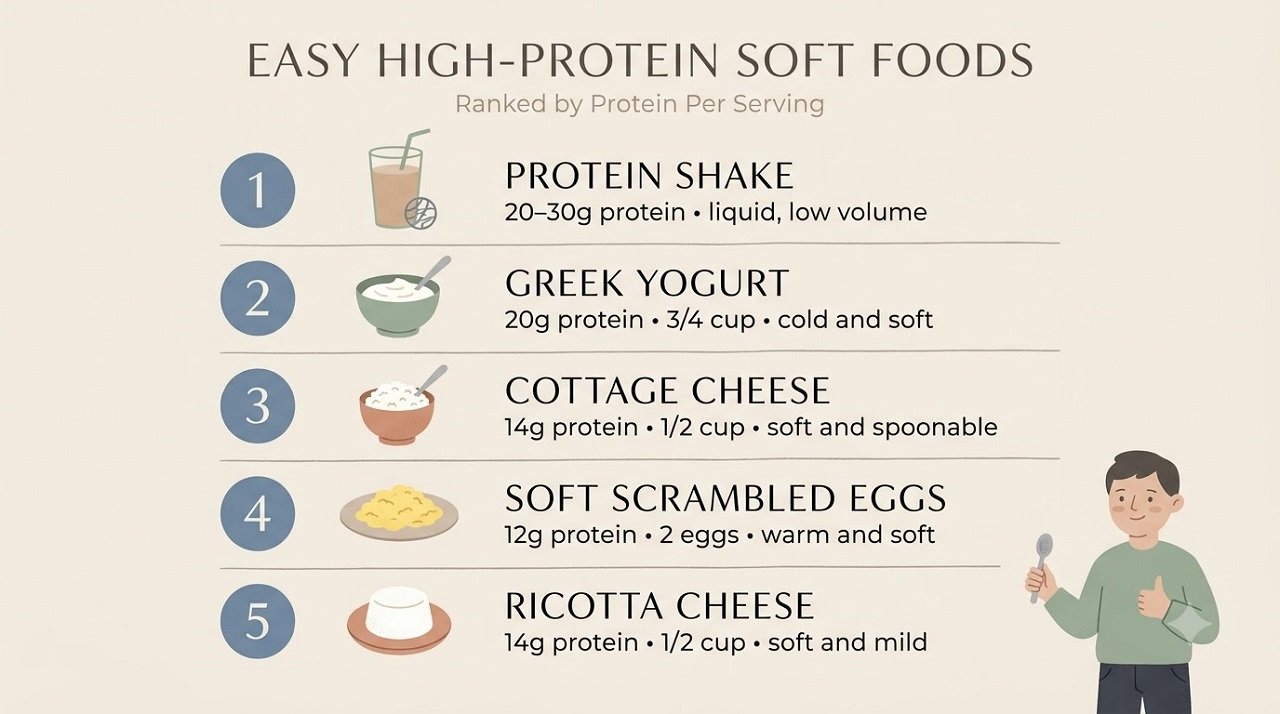
These are the foods to keep in your kitchen before dose-increase week begins. They are low in volume, high in protein, and soft enough to tolerate when your stomach is sensitive.
Tier 1: Liquid protein (the easiest to tolerate)
- Protein shakes: 20–30 g of protein in a small liquid volume. Choose a whey isolate or plant blend with under 5 g of sugar. Sip slowly over 20–30 minutes. Cold shakes have less aroma and may be easier to tolerate than warm or room-temperature options.
Tier 2: Soft, spoonable protein (cold or room temperature)
- Greek yogurt: Plain, unsweetened. About 20 g of protein per 3/4 cup. Cold, soft, and bland—ideal for a sensitive stomach.
- Cottage cheese: About 14 g of protein per 1/2 cup. Soft, spoonable, and mild.
- Ricotta cheese: About 14 g of protein per 1/2 cup. Soft and mild, with a slightly richer texture than cottage cheese.
Tier 3: Soft, warm protein (if you can tolerate warmth)
- Soft scrambled eggs: Two eggs deliver about 12 g of protein. Cook them low and slow, without butter or oil if fat triggers nausea. Keep them soft and moist, not dry.
- Soft steamed fish: A small portion of white fish (cod, tilapia) delivers 20–25 g of protein and is soft and bland.
- Soft tofu: A small portion of silken or soft tofu is plant-based, soft, and mild.
Tier 4: Soft carbohydrates (only after protein, and only if you have room)
- A few plain crackers.
- A small portion of white rice or soft oatmeal.
- A banana or a few spoonfuls of applesauce.
The order matters. Protein first, always. Carbohydrates come last, and only if your stomach is willing.
Hit Your Protein Target Without the Guesswork
Wondering what your exact daily protein number should be? Our complete guide on how much protein to eat on GLP-1 to prevent muscle loss breaks down the adjusted body weight formula and the research-backed range.
2. The Texture Principle: Why Soft and Bland Works
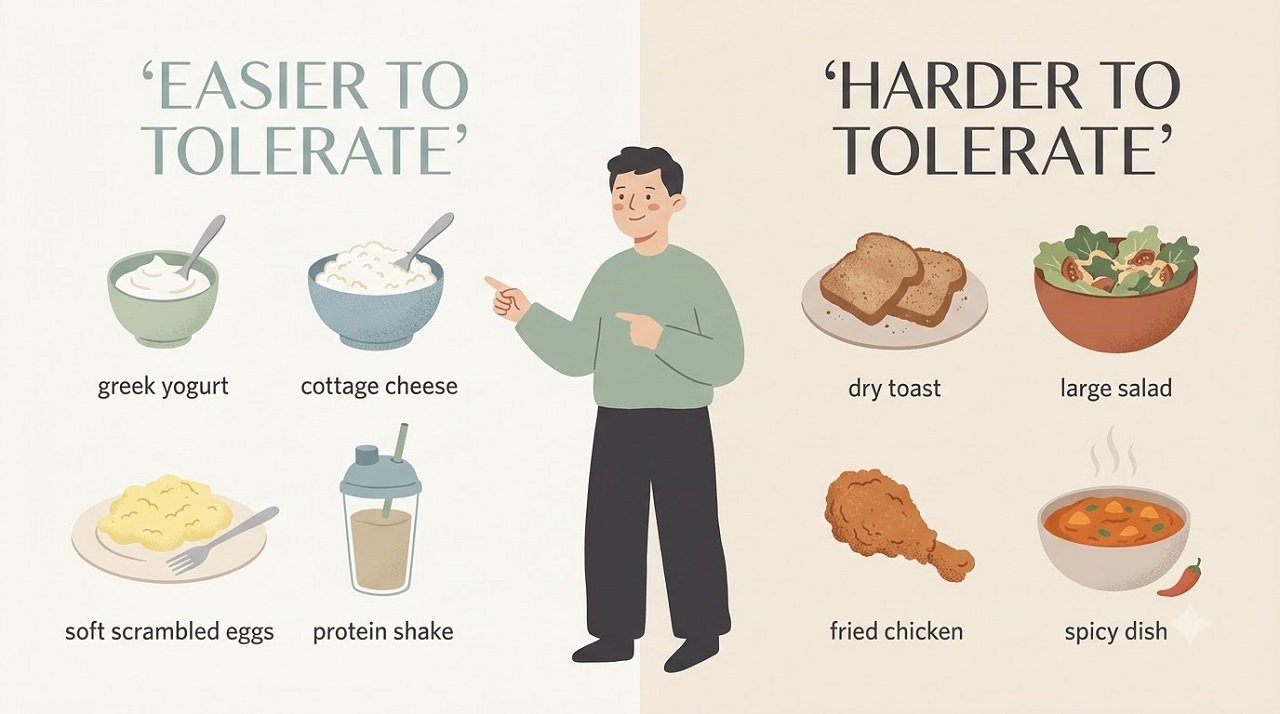
The texture of your food is not a minor detail on dose-increase day. It is a major factor in whether you can eat enough to protect your muscle.
A resource on food texture and GLP-1s explains that early in treatment or after dose increases, choosing smoother foods can prevent nausea and encourage better intake. Soft, moist foods—soups, smoothies, yogurt, porridge, scrambled eggs, steamed fish, mashed potato—are gentler on the stomach than dry, fibrous, or heavily textured foods. The same source notes that cold and bland foods often beat hot and rich foods because cold foods have less aroma, and aroma is a major trigger for nausea.
The practical rule for dose-increase days: If a food is dry, fibrous, greasy, or heavily spiced, save it for next week. If it is soft, moist, bland, and cold or gently warm, it belongs on your plate this week.
Want to Make Every Bite Count?
The order you eat your food matters. Our guide on meal sequencing for early satiety on GLP-1 explains why protein first changes everything and how to sequence your meals for maximum satiety.
3. The Dose-Increase Day Protocol: How to Eat When You Feel Sick
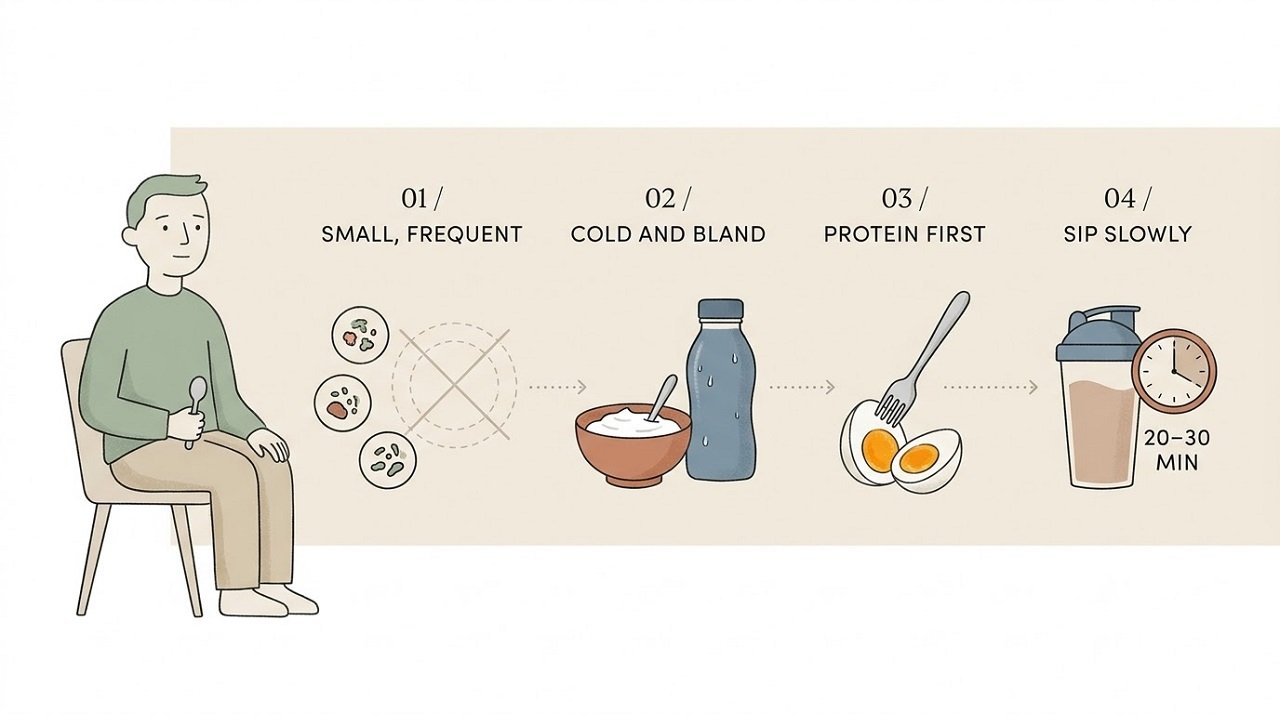
This is the practical, step-by-step approach for the first few days after a dose increase.
Step 1: Eat smaller, more frequent meals.
Aim for 4–6 mini-meals of 15–25 g of protein rather than three large meals. Your stomach is emptying more slowly, and a large meal will sit there and make you feel worse. Small, frequent meals give your digestive system time to process what it receives.
Step 2: Choose cold and bland over hot and rich.
Cold foods have less aroma, and aroma drives nausea. Greek yogurt, cottage cheese, chilled protein shakes, and hard-boiled eggs are often easier to tolerate than hot, aromatic meals.
Step 3: Protein first, always.
Even on a sensitive stomach, the first bites should be protein. Take a few spoonfuls of yogurt or a few sips of a shake before you touch any carbohydrate.
Step 4: Sip, do not chug.
A protein shake sipped slowly over 20–30 minutes is far more likely to stay down than the same shake chugged in five minutes.
Step 5: Stay hydrated.
The JAMA guidance recommends 2–3 liters of fluid daily, mainly water. Dehydration can worsen nausea and fatigue. Sip water throughout the day, and consider ginger or peppermint tea, which have reasonable evidence for mild nausea and count toward fluids.
Struggling Specifically in the Morning?
If your appetite shuts down at breakfast, don’t miss our step-by-step protocol on what to eat for breakfast on Ozempic when you can only eat 3 bites —including the 3-bite sequencing plan.
4. What to Avoid on Dose-Increase Day

The foods that cause the most trouble on dose-increase days are the ones that are hardest to digest.
The joint advisory specifically recommends avoiding fatty or high-fiber foods during the first few days of treatment. A review on GI side effects notes that high-fat and fried foods tend to exacerbate symptoms, and that lean proteins, vegetables, and easily digestible carbohydrates are typically better tolerated. The Mounjaro and Wegovy management guidance adds that rich meals, greasy foods, alcohol, and large portions are harder to tolerate than before.
Foods to de-prioritize on dose-increase day:
- Fried and high-fat foods (slowest to digest, and they sit in an already-slowed stomach).
- Very spicy foods (can irritate a sensitive stomach).
- Large raw salads and very fibrous vegetables (high volume, hard to digest).
- Very sugary foods and drinks (can worsen nausea and blood sugar swings).
- Alcohol and carbonated drinks (can worsen bloating and nausea).
If you are going to eat any of these foods, wait until the dose-increase symptoms have settled—usually within a week or two.
5. The First Few Days: What to Expect and When to Get Help

Dose-increase symptoms are uncomfortable, but they are usually temporary.
Clinical guidance on Wegovy dose increases notes that symptoms typically peak within 24–72 hours after the injection and gradually improve over the following week. More broadly, most GI symptoms peak within the first week of a new dose and improve significantly within 2–4 weeks. The joint advisory adds that side effects tend to decrease in frequency and severity with continuation of a stable dose.
When to contact your prescribing healthcare provider:
- You cannot keep fluids down for more than 24 hours.
- You have severe abdominal pain.
- You are experiencing persistent vomiting.
- You have signs of dehydration (dark urine, dizziness, confusion).
- Your symptoms are not improving after a few days, or they are worsening.
Your provider may recommend temporarily reducing the dose, slowing the titration schedule, or additional anti-nausea medication.
6. The Backup Plan: When Even Soft Protein Feels Impossible

Some dose-increase days, even Greek yogurt feels like too much. This is not a failure. It is a day to use the backup plan.
The emergency protocol:
- Do not force solid food. Forcing a meal when your body is signaling stop can worsen nausea and create a negative association with eating.
- Sip a protein shake slowly over 20–30 minutes. Even if you cannot finish it, 10–15 g of protein is better than zero.
- Try a clear protein drink instead of a creamy shake. Clear, juice-like protein drinks may be better tolerated than thick, creamy shakes, especially during the first months of treatment or after dose increases.
- Hydrate first if you cannot eat. Sip water, clear broth, or an electrolyte drink. Dehydration worsens nausea.
- Try ginger or peppermint tea. Both have reasonable evidence for mild nausea and count toward fluids.
- Do not skip protein entirely. Even a few spoonfuls of yogurt or half a shake is better than none.
The goal on the hardest days is damage control, not perfection.
Ready to Solve the 100g Protein Problem?
This is the deep-dive guide on Ozempic makes me full after 2 bites but I need 100g protein —covering liquid protein, the best powders, and a plan for the days you can barely eat.
Frequently Asked Questions
What to eat on Ozempic when nauseous?
Choose bland, low-fat, protein-forward foods: plain Greek yogurt, a small portion of cottage cheese, soft scrambled eggs, or a protein shake sipped slowly. Avoid high-fat, fried, and heavily spiced foods, which can worsen nausea. Cold foods often have less aroma and may be easier to tolerate than hot foods.
Why do I feel so sick after increasing my dose?
GLP-1 medications slow gastric emptying, and increasing the dose increases that effect. GI side effects are more likely during dose escalation. The nausea and early fullness are a predictable response to the higher dose, not a sign that something is wrong. Symptoms usually peak within the first week and improve within 2–4 weeks.
How long do GLP-1 side effects last after dose increase?
Most GI symptoms peak within the first week of a new dose and improve significantly within 2–4 weeks. Some people notice symptoms for a few days after each injection, and dose-increase symptoms usually improve over the following week. If symptoms persist or worsen, contact your doctor.
What are soft protein foods?
Soft protein foods are low-volume, high-protein foods that are moist, bland, and easy to tolerate: Greek yogurt, cottage cheese, ricotta, soft scrambled eggs, soft steamed fish, silken tofu, and protein shakes. They are ideal for dose-increase days when the stomach is sensitive.
Can I eat eggs on Ozempic?
Yes. Eggs are a good source of soft, bland protein. Soft scrambled eggs (cooked low and slow without butter or oil) are often easier to tolerate than fried or hard-boiled eggs. Two eggs deliver about 12 g of protein.
What if I cannot eat anything solid after a dose increase?
Sip a protein shake slowly over 20–30 minutes. If creamy shakes feel too heavy, try a clear protein drink. Hydrate with water, clear broth, or electrolyte drinks. Do not force solid food. If you cannot keep fluids down for more than 24 hours, contact your doctor.
Can I skip protein on a dose-increase day?
Do not skip protein entirely. Even a small amount—a few spoonfuls of Greek yogurt, half a protein shake—is better than zero. The goal is damage control, not perfection. Protein is especially important during weight loss to protect muscle.
Sources
- Cleveland Clinic. (2026, September 9). How To Manage the Digestive Side Effects of GLP-1 Medications. https://health.clevelandclinic.org/how-to-manage-glp-1-side-effects
- Gastrointestinal Adverse Effects of GLP-1 and Dual GLP-1/GIP Receptor Agonists: A Comprehensive Update in Diabetic and Obese Populations. (2026). Diabetes, Metabolic Syndrome and Obesity. https://www.tandfonline.com/doi/full/10.2147/DMSO.S584175
- Bacelis-Rivero, A., et al. (2025). Nutritional priorities to support GLP-1 therapy for obesity: a joint Advisory from the American College of Lifestyle Medicine, the American Society for Nutrition, the Obesity Medicine Association, and The Obesity Society. The American Journal of Clinical Nutrition. https://ajcn.nutrition.org/article/S0002-9165(25)00240-0/fulltext
- Patient.info. (2026, June 15). How to manage Mounjaro and Wegovy side effects. https://patient.info/features/treatment-and-medication/how-to-manage-mounjaro-and-wegovy-side-effects
- Diabetes In Control. (2026, February 17). Managing GLP-1 GI Side Effects Before Stopping Therapy. https://www.diabetesincontrol.com/glp-1-gi-side-effects-tips/
- Mochi Health. (2025, November 24). When to Increase Your GLP-1 Dose: Key Signs. https://joinmochi.com/blog/when-to-titrate-up-on-your-glp-1-dose-signs-you-re-ready-for-the-next-step
- Medicspot. (2025, December 16). Food Texture and GLP-1s: What Feels Comfortable and Why It Matters. https://www.medicspot.co.uk/weight-loss/nutrition/food-texture-on-glp1
- Protein Pal. (2026, July 29). What to Eat on Shot Day: A GLP-1 Injection Day Food Guide. https://www.proteinpalapp.com/articles/what-to-eat-on-shot-day-glp1
- Totiva Health. (2026, October 22). Wegovy 5-Day Meal Plan: What to Eat on Semaglutide. https://www.totiva.co.uk/blog/wegovy-5-day-diet-plan
- Ubie Doctor’s Note. (2026, September 14). Wegovy Dose Increase Side Effects: How Long Do They Last? https://ubiehealth.com/doctors-note/wegovy-side-effects-duration-after-dose-increase-791q3
- Embody.(by Gretchen Zimmermann, RD) (2026, September 24). I’m Taking a GLP-1. Is My Nausea Normal?. https://www.youembody.com/health-wellness/weight-loss/nausea-on-glp1-medication

10 Quick Health Tips Before a Big Meeting (Backed by Research)

Root Cause Answers

How to Stop Overthinking Before Bed: Evidence-Based Techniques That Actually Work

PEMF Webinar

The 4-7-8 Breathing Technique: Step-by-Step Guide and What the Research Actually Shows

Why You Can’t Trust Big Pharma
-
 Events2 weeks ago
PEMF Webinar
-
 Natural Sleep Remedies6 months ago
The 4-7-8 Breathing Technique: Step-by-Step Guide and What the Research Actually Shows
-

 Events2 months ago
HBOT ( Hyperbaric Oxygen Therapy ) Webinar
-
 Events6 months ago
Why You Can’t Trust Big Pharma
-

 Events6 months ago
The Anti-Cancer Body with Dr. Michael Karlfeldt
-

 Home Remedies6 months ago
Natural Home Remedies for Restless Legs at Night
-
 Events5 months ago
The Cancer Conversation Your Oncologist Cannot Have in 15 Minutes
-

 Events7 months ago
Beyond the Brain