
Mental Health
How to Know If You Have Social Anxiety or Just Shy: The Difference That Actually Matters

The content on this website – including articles, event announcements, personal experiences, and recommendations – is for informational and educational purposes only and is not medical advice. Always consult a qualified healthcare professional before making any changes to your diet, exercise, supplements, sleep habits, or wellness routines, especially if you are pregnant, nursing, on medication, or have any medical condition.

Informational purposes only — not a substitute for medical advice
Disclaimer: This article is for informational and educational purposes only. It does not constitute medical advice, diagnosis, or treatment. Only a qualified mental health professional can diagnose social anxiety disorder. If you recognise yourself in this article, use it as a starting point for a professional conversation, not a conclusion.
Most people have felt nervous in a social situation. Job interviews, first dates, speaking in front of a group — that discomfort is common, normal, and not what this article is about.
The question this article is about is a more persistent one: Is what I feel in social situations a personality trait I was born with — or is it a clinical condition that is quietly limiting my life?
The answer changes everything about what you should do next. Shyness doesn’t require treatment. Social anxiety disorder does — and it responds well to treatment that most people with it never seek, often because they’ve spent years telling themselves they’re just shy.
Here is how to tell the difference.
What Shyness Actually Is

Shyness is a personality trait — a normal variation in temperament, not a clinical condition. According to established personality research, shyness is categorised as a stable personality characteristic involving consistent patterns of behaviour, thought, and emotion across various social contexts. Psychological research distinguishes between two types: state shyness, a temporary response to an unfamiliar situation, and trait shyness, a long-term and stable personality characteristic.
Key features of shyness as a personality trait:
- It fades with familiarity. Shy people typically feel most uncomfortable in new or unfamiliar social situations and warm up as the situation becomes familiar. The nervousness is situationally bound and time-limited within that situation.
- It doesn’t necessarily involve fear. Shyness is characterised more by inhibition and hesitation than by intense fear. Many shy people enjoy social interactions once they feel comfortable; they are simply slower to get there.
- It doesn’t prevent functioning. A shy person may avoid going first, may hang back at parties, may take time to open up — but shyness does not typically prevent them from attending, from performing when required, or from maintaining meaningful relationships.
- It can improve naturally with experience. Research cited by UNSW notes that shyness may improve with age and accumulated social experience, without any clinical intervention.
Importantly, shyness is not a prerequisite for social anxiety disorder. According to the Social Anxiety Institute, only about half of people diagnosed with social anxiety disorder report having been shy. Social anxiety is about fear of judgment — it is not a personality type, and it is not exclusively the domain of introverts or quiet people. Outgoing, extroverted individuals can and do have social anxiety disorder.
What Social Anxiety Disorder Actually Is
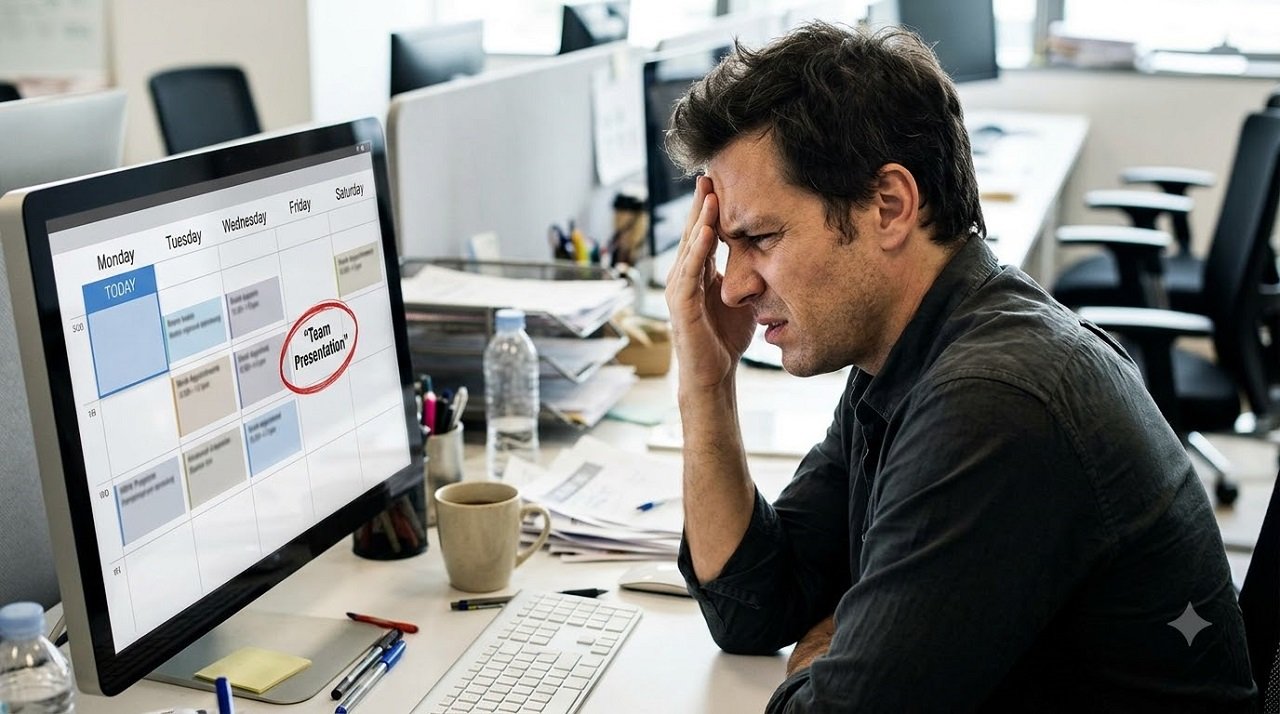
Social anxiety disorder (SAD), also known as social phobia, is a diagnosable mental health condition listed in the DSM-5 under code 300.23. It is one of the most common anxiety disorders.
According to the DSM-5-TR, social anxiety disorder is defined as a marked fear or anxiety about one or more social situations in which the individual is exposed to possible scrutiny by others. The individual fears that they will act in a way, or show anxiety symptoms, that will be negatively evaluated — that they will be judged, humiliated, rejected, or embarrassed.
The DSM-5 diagnostic criteria require all of the following to be present:
- Marked, persistent fear or anxiety about social situations involving scrutiny
- The social situations almost always provoke fear or anxiety
- The fear or anxiety is disproportionate to the actual threat posed
- Social situations are avoided or endured with intense fear or anxiety
- The fear, anxiety, or avoidance causes clinically significant distress or impairment in social, occupational, or other important areas of functioning
- The fear, anxiety, or avoidance is persistent, typically lasting six months or more
According to NIMH data from the National Comorbidity Survey Replication, social anxiety disorder affects approximately 7% of US adults in any given year, with a lifetime prevalence of 12.1%. Women are more affected than men — the past-year prevalence is 8.0% for females versus 6.1% for males. Among adolescents, NIMH reports a lifetime prevalence of 9.1%, with females (11.2%) significantly more affected than males (7.0%).
The Merck Manual Professional Edition notes that the median age of onset is 13, with 75% of cases presenting between ages 8 and 15 — which means many adults with social anxiety disorder have been living with it since childhood, often without a diagnosis.
The Five Questions That Tell Them Apart
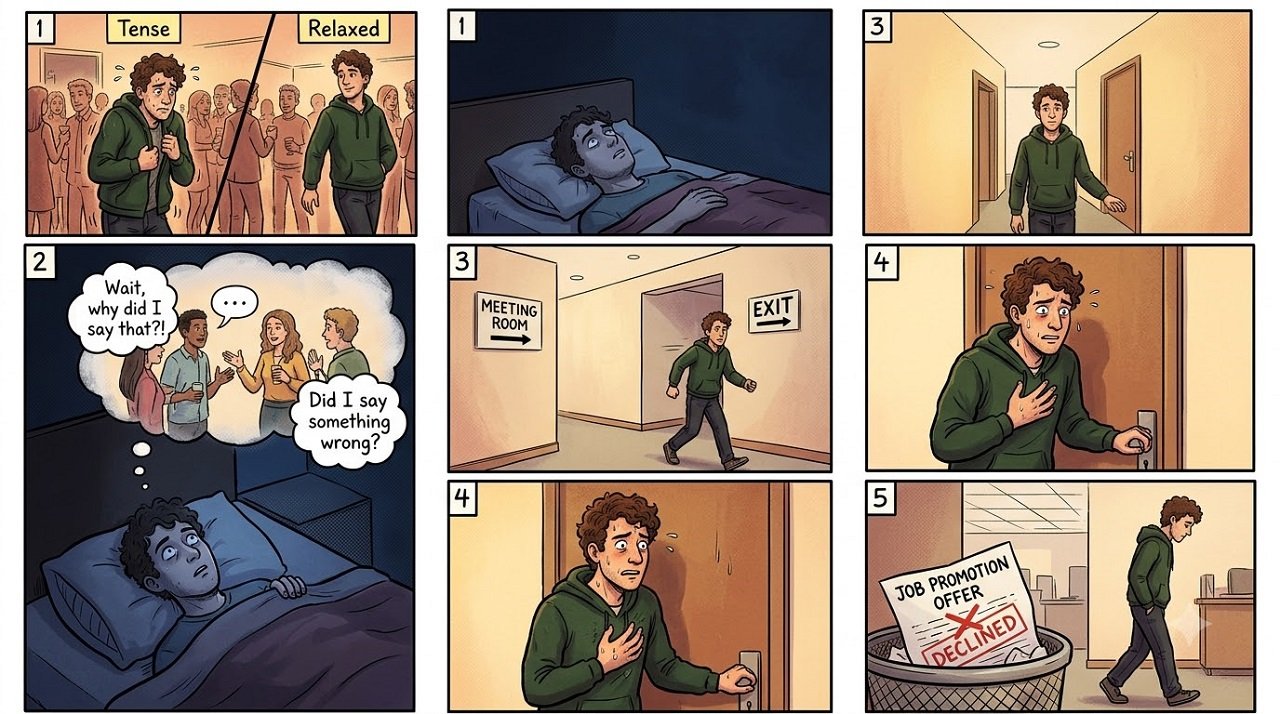
The distinction between shyness and social anxiety disorder, when distilled to its clinical core, comes down to five questions. Clinicians assessing for SAD are essentially asking these five things.
1. How intense is the fear, and does it arrive before the situation even starts?
Shyness: mild to moderate discomfort that tends to arrive in the moment and fade as you settle in.
Social anxiety: fear that begins well before the event. A meeting scheduled for Friday may generate significant dread from Monday onward. The anticipatory anxiety can be as debilitating as the event itself — and sometimes more so. People with social anxiety often spend weeks or even months dreading an event before it happens.
2. How long does the discomfort last after the situation ends?
Shyness: the discomfort ends when the situation does. Once you’ve left the party or the meeting, you move on.
Social anxiety: the discomfort continues afterward in the form of post-event processing — replaying the interaction in detail, cataloguing what you said that might have come across wrong, what your face did, how your voice sounded, what people must be thinking now. This rumination loop — anticipatory anxiety before, hypervigilance during, and post-event analysis after — is a defining cognitive pattern of SAD that is entirely absent from typical shyness.
3. Does the discomfort lead you to avoid situations you’d otherwise want or need to be part of?
Shyness: shy people may participate reluctantly or with some effort, but they generally participate.
Social anxiety: avoidance is one of the DSM-5 diagnostic criteria. People with SAD often turn down opportunities — professionally, socially, romantically — to avoid the feared situation. The avoidance provides temporary relief and sustains the anxiety long-term, because the feared situation is never encountered in a way that could update the fear. Each avoided situation makes the next one feel more threatening.
4. Are there physical symptoms — and do they arrive in anticipation rather than only in the moment?
Shyness: some mild physical discomfort is possible, but it is generally not intense or disabling.
Social anxiety: physical symptoms are a core clinical feature. According to research on prevalence and severity of SAD, physiological symptoms during anxiety in social situations include restlessness, stomach aches, blushing, palpitations, muscle tension, and sweating. These can appear before the situation begins — in the hallway on the way to a meeting, in the car on the way to an event — in a pattern that is closer to a full anxiety response than to ordinary social discomfort. Our article on what an anxiety attack feels like physically covers how the body activates under that kind of threat-perceived stress in detail.
5. Is the discomfort significantly affecting your functioning — your career, your relationships, your daily life?
This is the clinically decisive question. The DSM-5 requires clinically significant distress or impairment in social, occupational, or other important areas of functioning for a diagnosis of SAD. Without this criterion, the symptoms alone do not reach the diagnostic threshold.
Shyness: does not significantly interfere with functioning. A shy person may prefer smaller gatherings and take longer to open up, but their career advancement, relationship maintenance, and daily life are not substantially impaired by the discomfort.
Social anxiety: the impairment is measurable. It may show up as passing on a deserved promotion because it involves presenting, avoiding romantic relationships because the initial anxiety is unbearable, losing friendships through gradual withdrawal, underperforming academically because the classroom feels like a stage. According to Cleveland Clinic, social anxiety disorder generally doesn’t go away on its own — unlike shyness, it typically worsens without treatment.
The Rumination Loop: What Social Anxiety Looks Like From the Inside
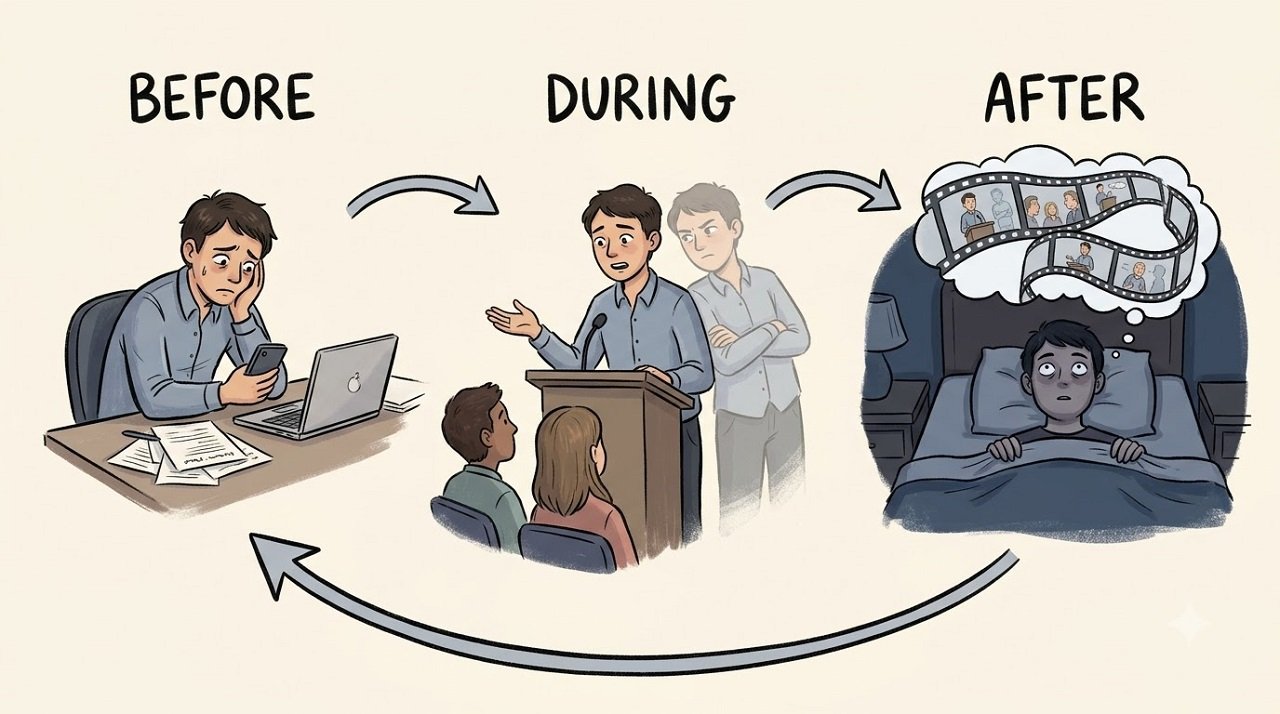
The three-phase cognitive cycle of social anxiety — anticipatory anxiety, in-situation hypervigilance, and post-event processing — is the feature most people with SAD recognise most viscerally but find hardest to name. Understanding it is one of the most useful things you can do with this information, because it distinguishes SAD clearly from anything that shyness produces.
Before: You know a social situation is coming. Rather than ordinary mild anticipation, you experience sustained dread — imagining everything that could go wrong, rehearsing what you’ll say, catastrophising about how you’ll be perceived. This can begin days or weeks in advance for significant events.
During: You are present in the situation but operating on two levels simultaneously. One part of you is participating; another part is monitoring continuously — watching yourself from the outside, assessing how you’re coming across, detecting signs that others are judging you, adjusting your behaviour in real time to manage the perceived impression. This dual processing is exhausting and interferes directly with the quality of your social interaction.
After: The situation has ended. For most people, so has the social discomfort. For someone with SAD, a new phase begins: replaying the interaction, often in detail, identifying the moments that felt wrong, inferring what people thought, feeling shame or embarrassment about things that happened or might have been perceived a certain way. This post-event processing can last hours, days, or longer.
This three-phase pattern is absent from shyness. It is a cognitive signature of social anxiety disorder, and it is one of the primary targets of CBT treatment.
You Don’t Have to Be Shy to Have Social Anxiety
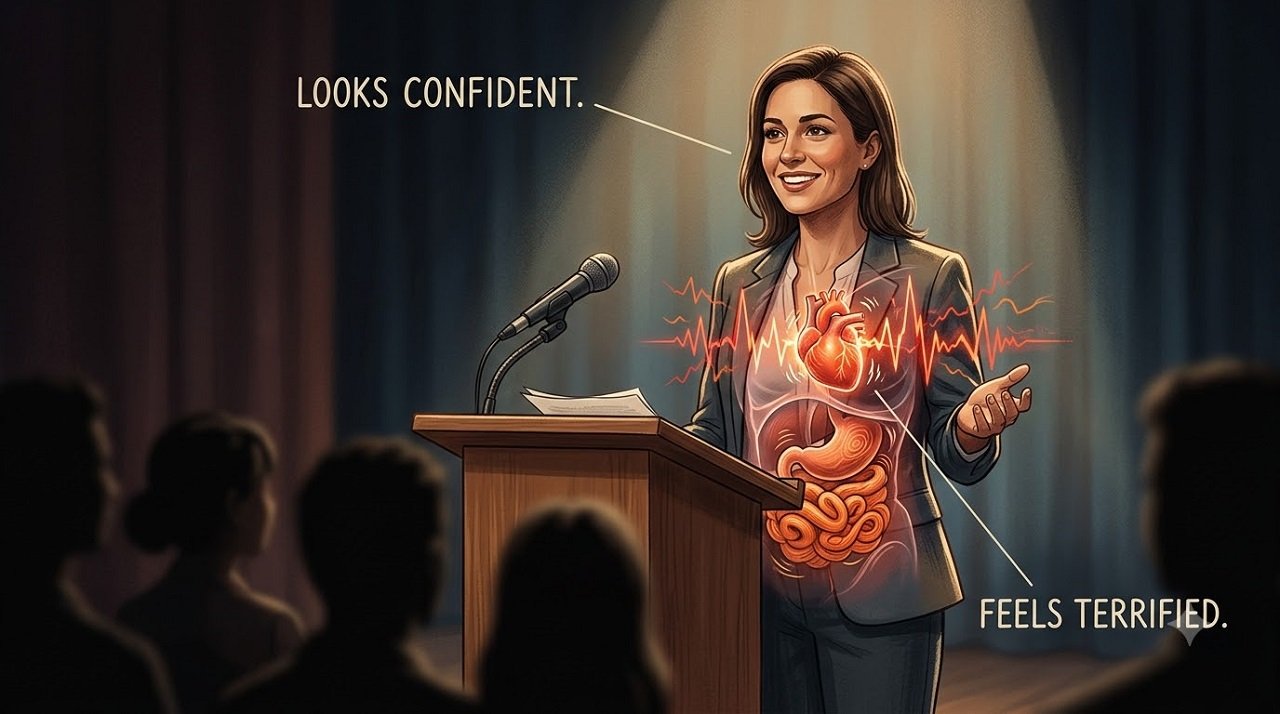
This is the content gap most articles on this keyword miss entirely, and it matters enough to warrant its own section.
It is widely assumed that social anxiety is simply extreme shyness, and that quiet, introverted, or reserved people are the ones who have it. The clinical picture is more nuanced.
According to the Social Anxiety Institute, only about half of those diagnosed with social anxiety disorder report having been shy. Approximately half were not particularly shy — they were simply afraid of specific social situations in a way that was disproportionate, persistent, and impairing.
People with social anxiety disorder desire social contact and want to participate in social situations — their anxiety can become unbearable, but the desire to connect is there. This is fundamentally different from introversion (a preference for less social stimulation) or shyness (hesitation and inhibition in social situations). Outgoing people can have social anxiety. Extroverts can have social anxiety. People who appear confident can have social anxiety — particularly in the performance-only specifier.
The DSM-5 performance-only specifier is worth understanding here. Social anxiety disorder can be limited specifically to performance situations — public speaking, presentations, performing in front of an audience — without generalising to other social situations. A person who is comfortable at parties, in one-on-one conversations, and in daily social interactions but experiences debilitating fear specifically when performing or presenting may meet criteria for SAD with the performance-only specifier. This presentation is frequently missed because it doesn’t fit the stereotype of the shy, withdrawn person.
Side-By-Side Comparison
| Feature | Shyness | Social Anxiety Disorder |
|---|---|---|
| Clinical status | Personality trait — not a disorder | DSM-5 diagnosable condition (300.23) |
| Core experience | Hesitation, inhibition, discomfort | Intense fear of negative evaluation and judgment |
| Timing | Discomfort in the moment | Before, during, and after social situations |
| Physical symptoms | Mild | Often significant — palpitations, sweating, trembling, nausea |
| Avoidance | Minimal | Characteristic and progressive |
| Post-event | Ends with the situation | Rumination and post-event analysis |
| Impact on functioning | Minimal | Clinically significant distress or impairment |
| Duration | Situational | Persistent — 6 months or more by DSM-5 criteria |
| Trajectory without intervention | May improve with experience | Typically worsens |
| Requires clinical treatment | No | Yes — and responds well to it |
Does Social Anxiety Disorder Overlap With Other Conditions?
Yes, significantly — and this is one reason it stays undiagnosed. According to a PMC narrative review on SAD’s associated conditions and therapeutic approaches, social anxiety disorder commonly co-occurs with depression, other anxiety disorders, and in some cases high-functioning depression, where the social withdrawal driven by SAD can compound persistent low mood to the point where both conditions are present and interacting.
The relationship between social anxiety and trauma responses is also worth noting. The hypervigilance of the fawn response — the constant monitoring of others’ emotional states and reactions — can closely resemble the in-situation monitoring phase of social anxiety. They are distinct in origin and mechanism, but they can coexist and reinforce each other.
What Treatment Looks Like for Social Anxiety Disorder

Social anxiety disorder is highly treatable. The evidence base is stronger and more consistent than for most anxiety conditions.
A 2024 systematic review and Bayesian network meta-analysis comparing six psychotherapies across 92 studies and 90 randomised controlled trials found that cognitive behavioural therapy (CBT) is the most effective psychological intervention for SAD, recommended as first-line treatment in clinical guidelines internationally. The pooled between-group effect size for CBT was large at post-treatment.
Importantly, treatment gains from CBT for social anxiety continue to improve after therapy ends. According to Cleveland Clinic, one study found CBT for SAD reduces symptoms for 12 months or longer after therapy concludes. Research drawing on longitudinal data found that 48% of people no longer met diagnostic criteria for SAD five years after completing internet-based CBT.
A 2026 network meta-analysis published in Frontiers in Psychology comparing non-pharmacological interventions found that CBT ranked highest in effectiveness with an SUCRA value of 86.4%, ahead of combination therapy (71.7%) and psychotherapy generally (70.7%). The same review found virtual reality exposure therapy and attention training also showing beneficial effects.
Medication — primarily SSRIs and SNRIs — is used alongside CBT when symptoms are severe or when therapy alone produces partial improvement. The combination of CBT and medication generally produces better outcomes than either alone in moderate to severe presentations.
The fact that social anxiety disorder responds well to structured treatment is one of the most important pieces of information for people who have been labelling their experience as shyness for years. The discomfort isn’t a personality defect to push through. It is a clinical condition that can be substantially reduced with the right intervention.
Frequently Asked Questions
What is the key difference between being shy and having social anxiety?
Shyness is a personality trait characterised by hesitation and discomfort in social situations that fades with familiarity. Social anxiety disorder is a DSM-5 diagnosable clinical condition characterised by persistent, intense fear of negative evaluation in social situations, avoidance behaviours, physical symptoms, and clinically significant impairment in daily functioning. The critical clinical distinction is functional impairment: shyness does not significantly impair daily life; social anxiety disorder, by definition, does.
Can you have social anxiety without being shy?
Yes. According to the Social Anxiety Institute, approximately half of people diagnosed with social anxiety disorder were not particularly shy. Social anxiety is about fear of judgment and negative evaluation — it is not a personality type. Extroverted and outgoing individuals can have social anxiety disorder, particularly in the performance-only specifier.
At what age does social anxiety disorder usually start?
According to the DSM-5, the median age of onset is 13, with 75% of cases beginning between ages 8 and 15. Many adults with social anxiety disorder have been living with it since adolescence without a diagnosis, often because they attributed their experience to shyness or introversion.
Does social anxiety go away on its own?
Unlike shyness, which may improve with experience and familiarity, social anxiety disorder typically worsens without treatment. The avoidance behaviour that provides short-term relief sustains and strengthens the anxiety long-term. Cleveland Clinic states clearly that social anxiety disorder generally doesn’t go away on its own — but it does respond well to evidence-based treatment, particularly CBT.
Is social anxiety the same as introversion?
No. Introversion is a preference for less social stimulation — introverts find large amounts of social interaction draining rather than energising. It is a temperament, not a disorder, and it does not involve fear. Social anxiety disorder involves fear of negative evaluation and judgment, not a preference for solitude. An introvert can be entirely comfortable in social situations they choose to be in. A person with social anxiety disorder experiences fear in social situations regardless of whether they’ve chosen to be there.
Sources & References
- American Psychiatric Association. Diagnostic and Statistical Manual of Mental Disorders, 5th Edition, Text Revision (DSM-5-TR). APA Publishing, 2022. psychiatry.org
- National Institute of Mental Health (NIMH). “Social Anxiety Disorder: Statistics.” U.S. Department of Health and Human Services. nimh.nih.gov
- Merck Manual Professional Edition. “Social Anxiety Disorder.” Reviewed 2024. merckmanuals.com
- Cleveland Clinic. “Social Anxiety Disorder: Symptoms and Treatment.” Reviewed 2024. my.clevelandclinic.org
- Social Anxiety Institute. “Shyness or Social Anxiety Disorder?” socialanxietyinstitute.org
- Talkiatry. “Shyness vs Social Anxiety: Are They the Same?” March 2024. talkiatry.com
- UNSW Sydney. “What’s the Difference Between Shyness and Social Anxiety?” 2024. unsw.edu.au
- Prevalence and Severity of Social Anxiety Symptoms. PMC, 2024. doi:10.3389/fpsyg.2024. pmc.ncbi.nlm.nih.gov/articles/PMC10909235
- Iimori M, et al. “Comparative effectiveness of non-pharmacological interventions for social anxiety disorder in adults: a systematic review and meta-analysis.” Frontiers in Psychology, 2026. doi:10.3389/fpsyg.2026.1787151. frontiersin.org
- Nordmo M, et al. “Cognitive behaviour therapy for social anxiety disorder: a systematic review and meta-analysis investigating different treatment formats.” Australian Psychologist, 2024. doi:10.1080/00050067.2024.2356804. tandfonline.com
- Bayesian Network Meta-Analysis on psychotherapies for SAD. Journal of Affective Disorders, 2024. sciencedirect.com
- Social Anxiety Disorder: Associated Conditions and Therapeutic Approaches. PMC, 2023. doi:10.3390/ijerph20010036. ncbi.nlm.nih.gov/pmc/articles/PMC9847330
- Wikipedia. “Shyness.” en.wikipedia.org/wiki/Shyness
This article is for informational and educational purposes only. It does not constitute medical advice and should not be used to self-diagnose or replace consultation with a qualified mental health or medical professional. If social anxiety is significantly affecting your daily life, speaking with a GP or mental health professional is the most effective next step.













Informational purposes only — not a substitute for medical advice
Disclaimer: This article is for informational and educational purposes only. It does not constitute medical advice, diagnosis, or treatment. Paternal postpartum depression is a clinical condition that requires professional assessment. If you recognise yourself or a loved one in this article, use it as a starting point for a conversation with a qualified healthcare professional — not as a conclusion.
When people talk about postpartum depression, the image that typically comes to mind is a new mother — tearful, overwhelmed, struggling to bond with her baby. What that picture leaves out entirely is the father sitting next to her who has barely spoken in three weeks, who snaps at the smallest inconvenience, and who wonders why he feels nothing when he holds his newborn.
Paternal postpartum depression is real, it is common, and it looks almost nothing like the maternal version most of us learned to recognize.
Research published in JAMA — a landmark meta-analysis by James Paulson and Sharnail Bazemore reviewing data from nearly 28,000 fathers — found that roughly 1 in 10 new fathers experiences significant depression in the first year after their baby is born. That rate is approximately twice the background depression rate for men in the general population. Among fathers whose partners are also experiencing postpartum depression, the number climbs to roughly 1 in 4.
Those are not small numbers. They represent millions of men every year who are struggling in silence — and whose struggles rarely get named, screened for, or treated.
Key Takeaways
- 1 in 10 new fathers develops postpartum depression in the first year after birth — roughly twice the background depression rate for men in the general population (Paulson & Bazemore, JAMA).
- If your partner has PPD, your risk rises to roughly 1 in 4. A partner’s postpartum depression is the single strongest predictor of paternal PPD.
- Paternal PPD does not look like maternal PPD. Fathers are more likely to show externalising symptoms — irritability, anger, emotional withdrawal, increased alcohol use, throwing themselves into work — rather than the sadness and tearfulness most people associate with depression.
- It is not a separate DSM-5 diagnosis. Clinically, it maps onto Major Depressive Disorder (MDD) or adjustment disorder — the same categories used for depression in any other context.
- Hormones play a role. Testosterone decreases in actively involved fathers, and some research links a sharper testosterone drop to greater depression risk.
- It almost always goes unrecognised. There are no universal screening guidelines for new fathers, the most common screening tool (the EPDS) was designed for women, and cultural expectations push men to stay silent.
- The impact extends to children. Untreated paternal PPD is independently associated with behavioural difficulties, language delays, and emotional dysregulation in early childhood.
- It is treatable. CBT, interpersonal therapy, and antidepressant medication all show effectiveness — the same approaches that work for other forms of depression work here too.
- Only 3.2% of new fathers with depression actually seek help. If you recognise these signs in yourself or your partner, naming it is the first step.
What Is Paternal Postpartum Depression?
Paternal postpartum depression (sometimes abbreviated PPPD) is not a separate, distinct diagnosis in the DSM-5-TR. Clinically, it maps onto Major Depressive Disorder (MDD) or, in milder cases, adjustment disorder — the same diagnostic categories used for anyone experiencing a significant depressive episode.
The “postpartum” part simply reflects timing: symptoms that emerge during a partner’s pregnancy or in the months following birth, tied to the enormous physical, emotional, relational, and financial disruption that becoming a parent creates.
That lack of a standalone DSM-5 category has real-world consequences. It means there are no universal screening guidelines for fathers at postnatal or pediatric visits, no standard protocol that asks new dads how they are actually doing, and no clinical consensus on exactly which assessment tool to use. Most existing screening instruments — including the widely used Edinburgh Postnatal Depression Scale (EPDS) — were originally designed and validated for mothers, and adapted versions for fathers are still making their way into routine practice.
Why It Looks Different in Dads
This is the piece most online articles miss entirely, and it is the most important thing to understand.
Depression in men and women frequently presents differently — and nowhere is that gap wider than in the postpartum period. Maternal postpartum depression tends toward internalizing symptoms: sadness, tearfulness, hopelessness, difficulty bonding, withdrawal into quietness. It fits the cultural image of depression well enough that it gets recognized.
Paternal postpartum depression tends toward externalizing symptoms: irritability, anger, restlessness, throwing oneself into work, increased alcohol or substance use, emotional detachment, and risky behaviors. These don’t look like depression to most people — including to the fathers experiencing them. They look like stress, like personality, like being a workaholic, like “that’s just how he handles things.”
According to research published in Frontiers in Psychology (2024), men may also underreport or mask depressive symptoms on standard self-report measures — meaning even when screened, paternal depression is likely being undercounted.
The clinical language for this distinction is useful: fathers are more likely to show externalizing presentations while mothers more commonly show internalizing presentations. Both are depression. Only one gets recognized as such.
Signs of Postpartum Depression in New Dads
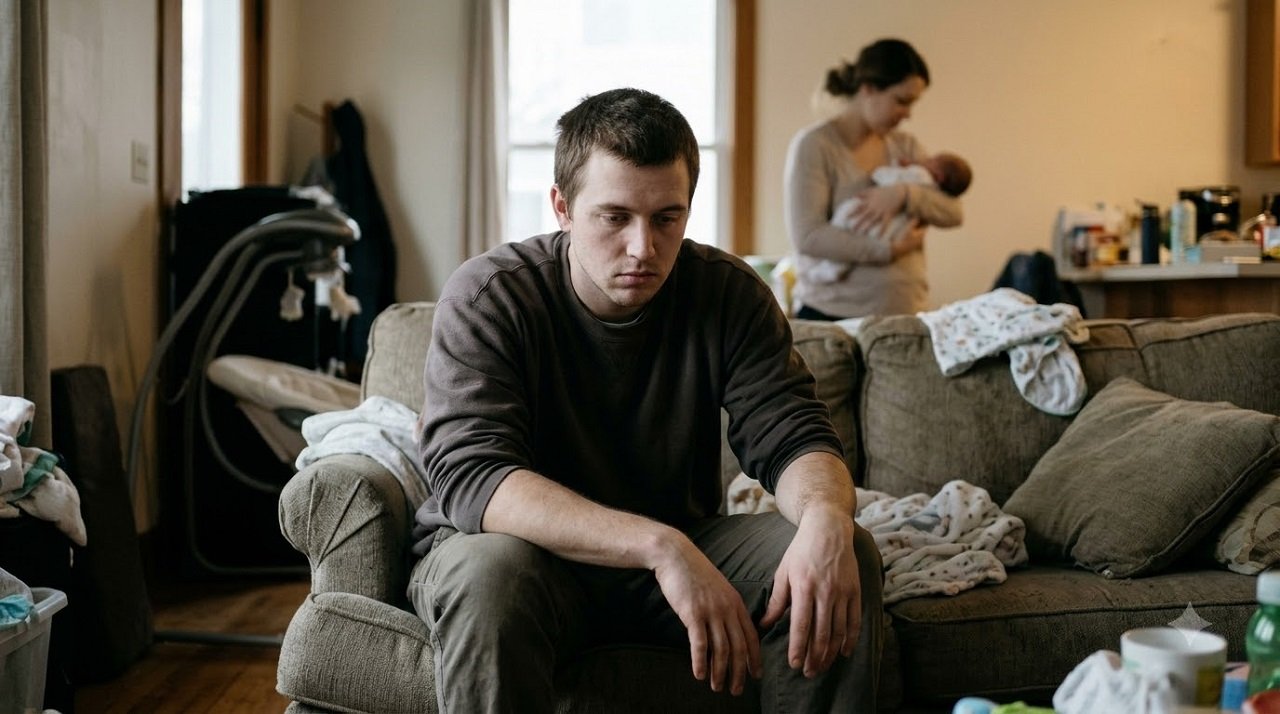
The following signs, particularly when they cluster together or represent a clear change from the father’s usual baseline, warrant attention.
Irritability and Anger Out of Proportion
One of the most consistently reported signs. The baby crying becomes intolerable. A minor household disagreement escalates. A partner’s casual comment lands like a criticism. This isn’t a temper problem — it’s an emotional regulation problem driven by an underlying depressive state. In men, irritability is frequently the surface expression of the sadness that goes unreported.
Emotional Numbness or Detachment from the Baby
Many fathers with postpartum depression describe feeling “nothing” when they hold their newborn — no surge of love, no fierce protectiveness, no joy. They expected to feel overwhelmed with warmth. Instead, they feel like they are holding a stranger. This absence of expected feeling is deeply distressing and rarely talked about because admitting it feels like a confession of bad fatherhood.
This kind of detachment is not a reflection of character or love. It is a symptom, and it responds to treatment.
Withdrawing from the Family
Spending longer hours at work. More time in front of screens. Disappearing into hobbies, the garage, the gym — anywhere that isn’t the shared domestic space where the pressure concentrates. This withdrawal can look like avoidance of responsibility, but it often reflects an inability to tolerate the emotional overwhelm of the home environment when the nervous system is already at its limit.
Increased Alcohol or Substance Use
Self-medication is a common but often invisible coping strategy. A few beers each evening that gradually became six. Smoking more. Relying on cannabis to feel calm. These patterns frequently emerge in the postpartum period among fathers and rarely get connected to the depression driving them.
Physical Complaints Without a Clear Cause
Depression in men frequently manifests somatically. New fathers with PPPD commonly report persistent fatigue (beyond ordinary sleep deprivation), headaches, digestive problems, back and muscle tension, and a general physical flatness. When a man visits a doctor about these symptoms, the underlying depression may not come up at all.
Loss of Interest in Things That Used to Matter
The sport he followed obsessively, the music he played, the friends he kept up with — all of it feels distant and hollow. This anhedonia (the clinical term for loss of pleasure in previously enjoyable activities) is one of the core diagnostic criteria for MDD, and it’s just as present in paternal depression as in any other form.
Sleep Problems Unrelated to Infant Waking
Sleep deprivation with a newborn is universal. But fathers with PPPD often describe an inability to sleep even when the baby is not waking them — lying awake with looping, anxious thoughts, or waking hours too early with a sense of dread. This goes beyond ordinary new-parent exhaustion and reflects a disrupted sleep architecture characteristic of clinical depression.
Anxiety, Hypervigilance, or Obsessive Worry
Some fathers experience the postpartum period primarily through anxiety: constant catastrophizing about the baby’s health, obsessive checking behaviors, terror about something going wrong, or a vague, unshakeable sense of impending disaster. This anxious presentation often co-occurs with depression and is frequently missed because it reads as “concerned parenting” rather than a clinical anxiety-depression picture.
Relationship Conflict and Emotional Distance from Partner
PPPD consistently correlates with increased marital stress. The father pulls away emotionally. Arguments become more frequent or more intense. Intimacy disappears — not just physically but in the small moments of connection that hold relationships together. Partners often describe feeling like they are parenting alone even when he is physically present.
The Hormonal Piece
Postpartum hormonal shifts are not only a maternal story. Research shows that testosterone levels decrease in actively involved fathers, particularly those who take on hands-on caregiving. While this hormonal shift appears to support pair bonding and parental investment, some studies — including work published in Frontiers in Psychology — suggest that men who experience a sharper testosterone drop may be more vulnerable to depressive symptoms.
Oxytocin, the bonding hormone, also changes in new fathers, and how those changes unfold appears to interact with depression risk. The hormonal picture in paternal postpartum depression is still being mapped — but the idea that fathers are biologically unaffected by the arrival of a new baby is simply wrong.
Risk Factors: Who Is Most Vulnerable
No single risk factor predicts paternal postpartum depression, but several raise the probability significantly.
Partner’s postpartum depression is the strongest predictor in the research literature. A father whose partner is experiencing PPD has roughly a 50% chance of developing depression himself — more than twice the baseline risk. This bidirectional relationship means that failing to identify and treat PPPD in either parent puts both at greater risk.
Other well-established risk factors include:
- Prior history of depression or anxiety — the strongest individual-level predictor
- Sleep deprivation — not just from infant care but disrupted, non-restorative sleep
- Financial stress — the economic pressure of a growing family, particularly if income has changed
- Relationship conflict — poor partner communication before or during the postpartum period
- Feeling excluded from the infant-mother bond — a specific and underacknowledged source of distress for fathers
- Lack of social support — social isolation amplifies all other risk factors
- Unplanned or complicated pregnancy — additional stressors during the perinatal period
- Limited involvement in infant care — counterintuitively, fathers with less hands-on engagement may lose a key buffer against depression
Why It Goes Unrecognized
The gap between how many fathers experience postpartum depression and how few receive help is striking. Research cited in Psychology Today found that only about 3.2% of new fathers actually use mental health services in the postpartum period — a number that reflects systemic failures, not a low prevalence.
Several forces converge to keep paternal PPD invisible:
Cultural scripts about fatherhood and masculinity. Men are expected to be steady, functional, and supportive — the strong one when the mother is struggling. Admitting depression can feel like a betrayal of that role. Many fathers describe feeling they have “no right” to their distress when it is the mother who just went through pregnancy and birth.
Symptom mismatch. The cultural image of depression — sadness, crying, visible suffering — does not match the irritability, numbness, and withdrawal that characterize PPPD. Many fathers genuinely do not recognize their experience as depression.
No formal screening. Mothers receive Edinburgh Postnatal Depression Scale screening at obstetric and pediatric visits. Fathers are rarely in those rooms, and when they are, the screening almost never extends to them.
The baby’s needs absorb all attention. In the blur of early parenthood, everyone — including the father himself — tends to focus on the infant and the mother. A father who is quietly struggling often remains invisible until the family is in crisis.
The Impact on Children
Paternal postpartum depression is not only a father’s problem. Research consistently shows that PPPD affects children’s outcomes independently of maternal PPD. Fathers with untreated depression show less warm, responsive, and engaged parenting — and early paternal engagement is a significant predictor of cognitive and emotional development. Children whose fathers experienced postpartum depression show elevated rates of behavioral problems, language delays, and emotional dysregulation in early childhood.
This is not about blame. It is about the stakes — and about why identifying and treating PPPD matters for the whole family.
When to Seek Help

If you recognize several of these signs in yourself — or in your partner — treat it the same way you would treat any other medical concern: with directness, without waiting for a crisis.
If symptoms have persisted for two weeks or more, if they are getting in the way of work, relationships, or daily function, or if you are having thoughts of harming yourself or someone else, those are clear signals to reach out now. A GP or primary care physician is a reasonable first contact; they can screen formally, rule out any physical contributors (thyroid function, for instance), and make a referral to a mental health professional.
Paternal postpartum depression responds well to the same treatments that work for other forms of depression: cognitive behavioral therapy (CBT), interpersonal therapy (IPT), and in some cases antidepressant medication. Peer support groups — including those specifically for new fathers — also show promising outcomes, particularly because they work around the barrier of one-to-one clinical settings that many men avoid.
A father who recognizes himself in any of the signs above and finds himself wondering if this is more than ordinary stress might find it useful to read about high-functioning depression — the form of depression that allows a person to appear fully operational while privately struggling — because that masked quality is precisely how paternal PPD often presents.
If the picture feels more acute — if it has crossed from persistent low mood into something that feels like a breaking point — the post on signs of a nervous breakdown covers the specific threshold markers that should prompt immediate professional contact.
And if the dominant experience is less about mood and more about total depletion — running on nothing, unable to recover no matter how much you sleep — it may be worth reading about emotional exhaustion vs. burnout to understand whether what you’re experiencing is burnout layered on top of depression, which is common in the postpartum period.
Frequently Asked Questions
How long does paternal postpartum depression last?
Without treatment, paternal postpartum depression can persist for months or even years. Research suggests symptoms often peak between three and six months after birth, but untreated depression does not reliably resolve on its own. With appropriate treatment — therapy, medication, or a combination — most men see significant improvement within weeks to months.
Can fathers get postpartum depression even if they weren’t present at the birth?
Yes. Paternal postpartum depression is driven by the cumulative stress, sleep deprivation, relational disruption, hormonal changes, and identity upheaval of new parenthood — not by the birth experience itself. Fathers who were absent at birth, adoptive fathers, and fathers in same-sex partnerships where no partner was pregnant have all been documented to experience postpartum depression.
What is the difference between paternal postpartum depression and baby blues in dads?
Baby blues — a brief period of tearfulness, emotional reactivity, and mood fluctuation in the first week or two after birth — are common in both mothers and fathers and typically resolve on their own within two weeks. Paternal postpartum depression is distinguished by duration (two weeks or more), functional impairment, and the cluster of clinical symptoms described above. If the low mood, irritability, or withdrawal persists past the two-week mark and is affecting daily life, that is no longer baby blues.
Is there a screening test for paternal postpartum depression?
The Edinburgh Postnatal Depression Scale (EPDS), originally designed for mothers, is the most widely used tool and has adapted versions validated for use with fathers. Some researchers advocate for the Paternal Postnatal Depression Questionnaire (PPDQ) or the Beck Depression Inventory (BDI-II) as complementary tools. However, no universal, standardized screening protocol currently exists for fathers in most clinical settings — which is one of the main reasons PPPD goes undetected.
Does paternal postpartum depression affect the baby?
Research consistently shows that untreated paternal postpartum depression affects children’s development independently of maternal PPD. Children of depressed fathers show elevated rates of behavioral difficulties, language delays, and emotional regulation problems in early childhood. Early identification and treatment of PPPD protects not only the father’s wellbeing but the long-term outcomes of the whole family.
The Bottom Line
Postpartum depression does not check whether you are the parent who gave birth. It affects roughly 1 in 10 new fathers — showing up not as the sadness and crying that most people picture, but as irritability, emotional numbness, withdrawal, and a quiet inability to feel the joy that everyone else seems to be expecting.
The silence around paternal postpartum depression costs families enormously. It costs fathers their wellbeing, partners their support, and children a present, engaged dad during a period of development that shapes them for life.
If this sounds like something you — or someone you know — might be going through, the most useful next step is also the simplest one: name it, without minimizing it, and talk to someone. The same clinical tools that treat depression in every other context work here too. You don’t have to wait until it gets worse.
Sources:
- Paulson JF, Bazemore SD. Prenatal and postpartum depression in fathers and its association with maternal depression: a meta-analysis. JAMA. 2010;303(19):1961–1969. https://jamanetwork.com/journals/jama/fullarticle/185844
- Kotov A, Corpuz M. Paternal postpartum depression: risk factors and relationship to maternal postpartum depression. Frontiers in Psychology. 2024;15:1348031. https://www.frontiersin.org/journals/psychology/articles/10.3389/fpsyg.2024.1348031/full
- National Institutes of Health / PMC. Paternal perinatal depression — PMC11453120. https://pmc.ncbi.nlm.nih.gov/articles/PMC11453120/
- Anderson S. Can Fathers Suffer From Postpartum Depression? Psychology Today. April 2024. https://www.psychologytoday.com/ca/blog/preparing-for-parenthood/202404/can-fathers-suffer-from-postpartum-depression
- American Psychological Association. Paternal postpartum depression. https://www.apa.org/monitor/2019/07-08/paternal-depression
- National Institute of Mental Health (NIMH). Depression. https://www.nimh.nih.gov/health/topics/depression
- Postpartum Depression. org. Depression in New Fathers. https://www.postpartumdepression.org/postpartum-depression/depression-in-fathers/
Informational purposes only — not a substitute for medical advice
Disclaimer: This article is for informational and educational purposes only. It does not constitute medical advice, diagnosis, or treatment. If you are experiencing unexplained or severe physical symptoms, please consult a qualified healthcare professional to rule out other conditions.
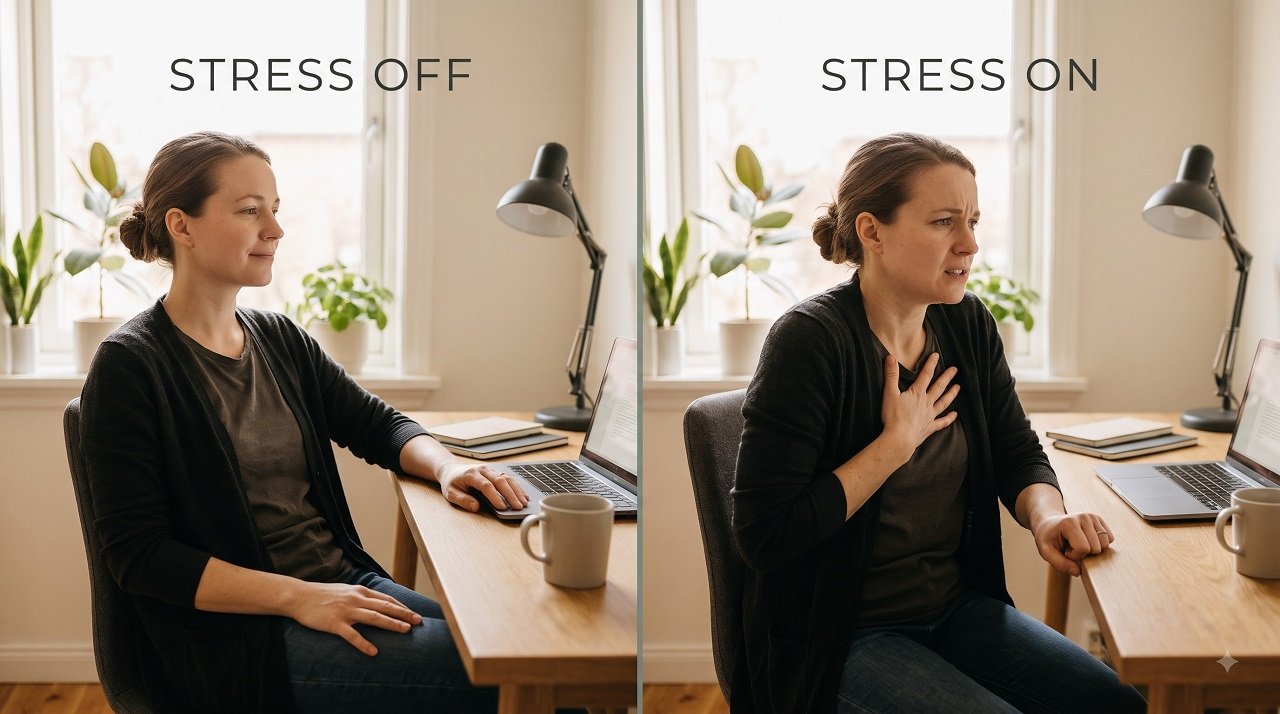
The headache that won’t lift. The knot in your stomach before a difficult conversation. The way your heart races when your inbox fills up. These aren’t coincidences — and they’re not weakness. They are the predictable, well-documented result of biological systems doing exactly what they were designed to do, just in a context those systems weren’t designed for.
According to the American Psychological Association’s research on stress and the body, stress affects every major organ system — cardiovascular, respiratory, musculoskeletal, gastrointestinal, endocrine, reproductive, and immune. The APA reports that approximately 75% of Americans experience physical or emotional symptoms they associate with stress. Gallup’s 2023 Global Emotions Report puts daily significant stress at around 49% of US adults.
These are not trivial numbers. And the symptoms they produce are not trivial either.
This article covers what stress and anxiety actually do to your body, system by system, with the physiological mechanisms explained — because understanding why something is happening is often the first step toward addressing it.
The Two-System Response: What’s Actually Happening
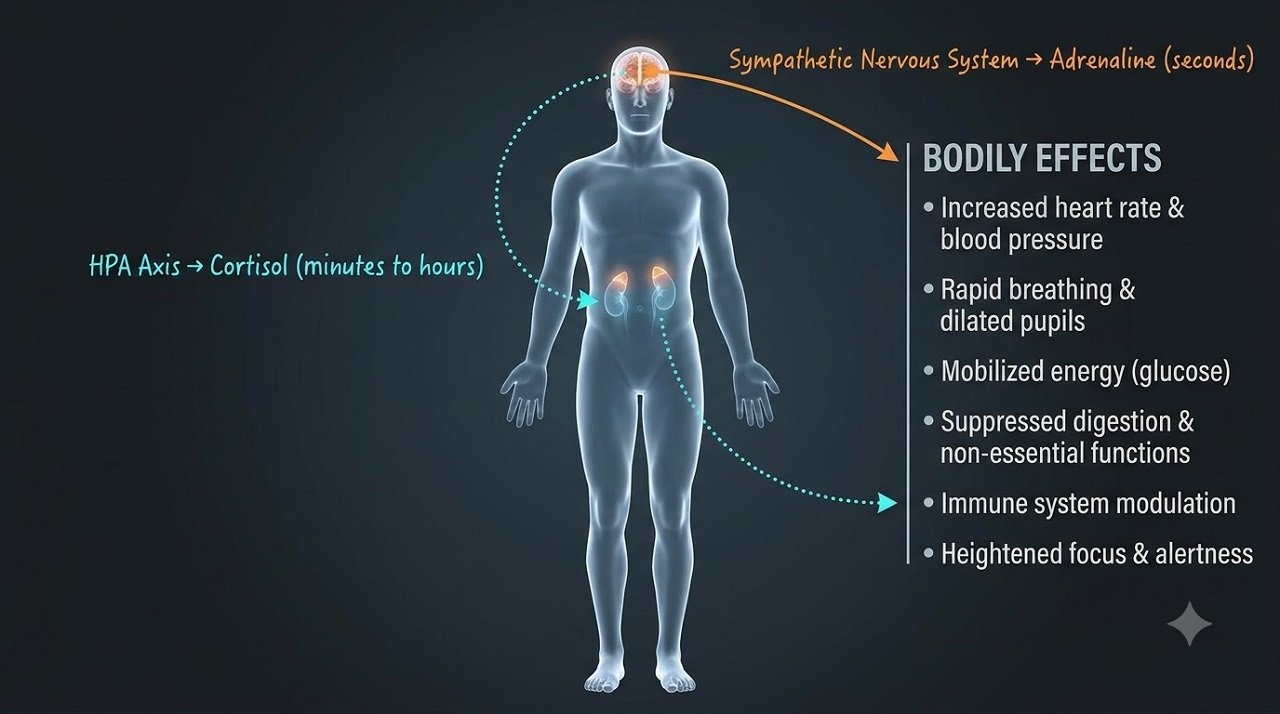
Before diving into symptoms by body system, it helps to understand the two biological systems driving them.
The sympathetic nervous system (SNS) — the fast response. When you perceive a threat — a deadline, a confrontation, a frightening piece of news — your brain’s amygdala fires an alarm signal. Your hypothalamus activates the sympathetic nervous system within milliseconds, flooding your body with adrenaline (epinephrine) and noradrenaline. Heart rate accelerates. Blood is diverted away from non-essential systems (digestion, reproduction, immune activity) toward the muscles and lungs. Your pupils dilate. Your liver dumps glucose into your bloodstream. This is the fight-or-flight response, and it is fast, powerful, and non-discriminating — it cannot tell the difference between a tiger and an unread email.
The HPA axis — the sustained response. Seconds later, the hypothalamic-pituitary-adrenal (HPA) axis activates. Your hypothalamus signals the pituitary gland, which signals the adrenal glands to release cortisol — the primary stress hormone. Unlike adrenaline, which spikes and fades, cortisol lingers. Its job is to sustain the stress response and mobilise energy over a longer period. According to the APA, cortisol normally drops once the stressor resolves. In chronic stress, it does not — and this sustained cortisol elevation is where most of the long-term physical damage originates.
Anxiety operates through the same systems. The difference is that anxiety is often triggered by perceived or anticipated threats rather than immediate ones — which means the stress response can fire repeatedly in the absence of a concrete danger, and the body pays the same physiological price regardless.
Cardiovascular System: Heart, Blood Pressure, Circulation
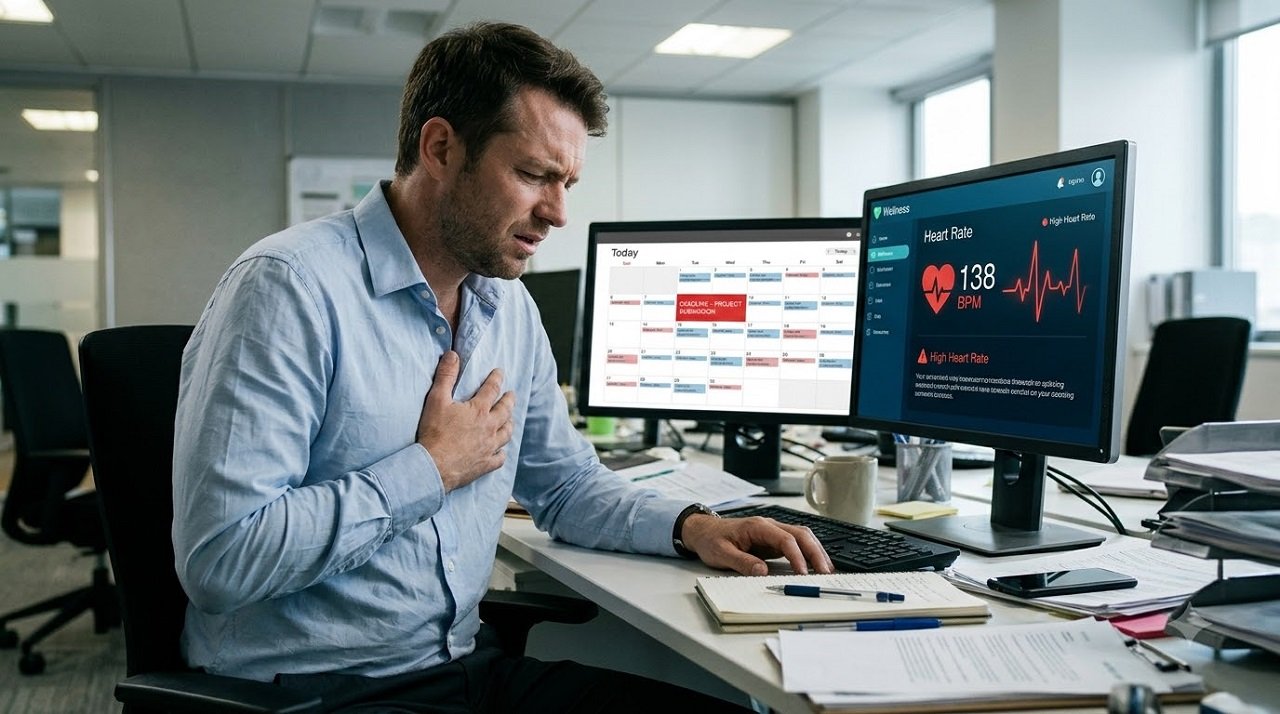
Acute response: During the immediate stress response, your heart beats faster and harder. Blood pressure rises. Blood is redirected to large muscles to support physical action.
Chronic impact: When the stress response activates frequently and stays activated, the cardiovascular system bears a disproportionate share of the cost. According to the APA, chronic stress is associated with higher risk of hypertension, inflammation in the coronary arteries, heart attack, and stroke. The mechanism involves sustained SNS activation increasing arterial pressure, while elevated cortisol promotes inflammatory processes that can contribute to arterial plaque.
Anxiety adds another layer. The palpitations, racing heart, and chest tightness that accompany acute anxiety — which are covered in detail in our article on what an anxiety attack feels like physically — activate the same cardiovascular pathways. When anxiety is persistent, those pathways stay activated.
What you may notice:
- Racing or irregular heartbeat (palpitations)
- Chest tightness or pressure
- A pounding sensation in the chest, neck, or temples
- Elevated resting heart rate
- Cold hands and feet (blood diverted from extremities)
- Elevated blood pressure readings
Musculoskeletal System: Tension, Pain, Headaches
Muscle tension is one of the most immediate and universal physical responses to stress. According to the APA, the body’s protective reflex under threat is to tighten muscles — a preparation for impact or physical action. In a genuinely physical emergency, this makes sense. Sustained under chronic stress, it produces a state of near-constant guarding that most people don’t consciously register until it produces pain.
The APA notes that job-related stress in particular is linked to tension-type headaches and low back and upper limb pain. The pathway is direct: sustained contraction of the neck, scalp, and shoulder muscles restricts blood flow and irritates surrounding tissue, producing the characteristic band-like pressure of a tension headache. Jaw clenching and teeth grinding (bruxism) — often occurring unconsciously during sleep — are closely associated with chronic stress and anxiety and can cause jaw pain, dental damage, and morning headaches.
What you may notice:
- Tension headaches — a band of pressure across the forehead or around the skull
- Neck and shoulder stiffness or aching
- Jaw soreness, especially in the morning
- Upper or lower back pain without a clear physical cause
- A general feeling of physical heaviness or fatigue
Respiratory System: Breathing, Chest, Asthma
Stress and anxiety constrict the airways. According to the APA, this constriction can cause shortness of breath and rapid breathing, and can trigger or worsen asthma and COPD in people who have those conditions.
For people with anxiety specifically, respiratory symptoms are a core physical feature — and they operate in a loop. Rapid shallow breathing (hyperventilation) reduces carbon dioxide levels in the blood, which produces tingling, dizziness, and a sense of unreality. This heightened bodily awareness then feeds back into anxiety, intensifying the breath-focused symptoms. The APA notes that stress-driven hyperventilation can trigger panic attacks in people who are prone to them.
What you may notice:
- Shortness of breath at rest or with mild exertion
- A feeling of not being able to get a full breath
- Rapid, shallow breathing
- Chest tightness
- Sighing frequently
- Dizziness or light-headedness
- Tingling in the hands, feet, or face
Gastrointestinal System: The Gut-Brain Axis

This is the body system where stress and anxiety produce the broadest range of symptoms — and the one where the physiological mechanism is most underappreciated.
The gut contains more nerve endings than the spinal cord and is sometimes called the “second brain” because of its dense neural network (the enteric nervous system). The gut and brain are in continuous, bidirectional communication via the vagus nerve — a direct highway connecting the two. This connection is why anxiety produces stomach symptoms before a presentation, and why gastrointestinal disease often worsens mental health.
According to the APA, stress can intensify pain, bloating, and nausea; change appetite; worsen heartburn and acid reflux; cause diarrhoea or constipation; produce bowel spasms; and weaken the intestinal barrier. The APA explicitly notes that stress does not cause stomach ulcers — those are caused by bacterial infection — but it can make ulcers more painful and harder to heal.
Irritable bowel syndrome (IBS) is particularly closely linked to stress and anxiety. Research in Nutrients and multiple PMC reviews confirms that the HPA axis dysregulation seen in chronic stress directly disrupts gut motility, alters the gut microbiome, and increases intestinal permeability — all of which can trigger or worsen IBS symptoms. The University of Michigan’s Digestive Health program notes that the gut-brain connection is bidirectional: stress worsens gut symptoms, and gut symptoms in turn worsen stress and anxiety.
What you may notice:
- Nausea or stomach cramps before or during stressful events
- Appetite changes — eating much more or much less than usual
- Constipation, diarrhoea, or alternating patterns
- Heartburn or acid reflux flares
- Bloating or gas
- IBS flares with no obvious dietary trigger
Immune System: Illness, Inflammation, Slow Healing
Cortisol is both an anti-inflammatory and an immune suppressant. In the short term, this is adaptive — it prevents the immune system from over-responding to the immediate stressor. Over the long term, chronically elevated cortisol impairs the immune system’s ability to respond normally to threats.
According to the APA, impaired HPA axis communication — a hallmark of chronic stress — has been linked to more frequent illness, chronic fatigue, metabolic disorders including diabetes and obesity, and immune disorders. Research published in JAMA Psychiatry found that prolonged high stress doubled the likelihood of developing metabolic syndrome. The cumulative biological cost of chronic stress on the body’s regulatory systems is sometimes described as allostatic load — a concept developed by neuroscientist Bruce McEwen at Rockefeller University to quantify the wear and tear chronic stress places on the body’s regulatory systems.
Wound healing is also impaired under stress. The PMC review published in 2026 on stress and skin conditions found that stress reduces collagen production and delays tissue repair, and that preoperative fear and anxiety are associated with impaired wound recovery.
What you may notice:
- Getting sick more often — colds, infections, minor illnesses
- Taking longer to recover from illness
- Feeling run-down even when not actively unwell
- Slow healing of minor cuts or skin irritation
- Chronic low-grade inflammation
Skin: The Visible Signal of Internal Stress
Skin is one of the most responsive organs to stress, because it has its own local HPA-like system that mirrors the systemic stress response. The 2026 PMC narrative review on psychological stress and skin conditions confirms that the HPA axis elevation seen under stress increases cortisol at both systemic and local levels, which reduces skin hydration, impairs the skin barrier, promotes inflammatory skin responses, and raises ACTH — which increases melanin production and can cause hyperpigmentation.
Specific dermatological conditions strongly linked to stress include psoriasis, atopic dermatitis (eczema), acne, alopecia areata (patchy hair loss), urticaria (hives), and seborrheic dermatitis. The review also documents a separate mechanism — catecholamines and neuropeptides released by nerve fibres near the skin triggering mast cell activation and neurogenic inflammation, which drives itch, redness, and barrier changes.
Telogen effluvium — diffuse hair shedding typically occurring two to three months after an acute stressor — is also well documented. It is caused by the stress response prematurely pushing hair follicles from the growth phase into the resting phase.
What you may notice:
- Acne flares not obviously linked to diet or hormones
- Eczema or psoriasis worsening during stressful periods
- Hives or unexplained skin redness
- Increased skin sensitivity
- Hair thinning or shedding two to three months after an intense stressor
- Slow healing of skin conditions
Sleep: Cortisol’s Most Disruptive Effect
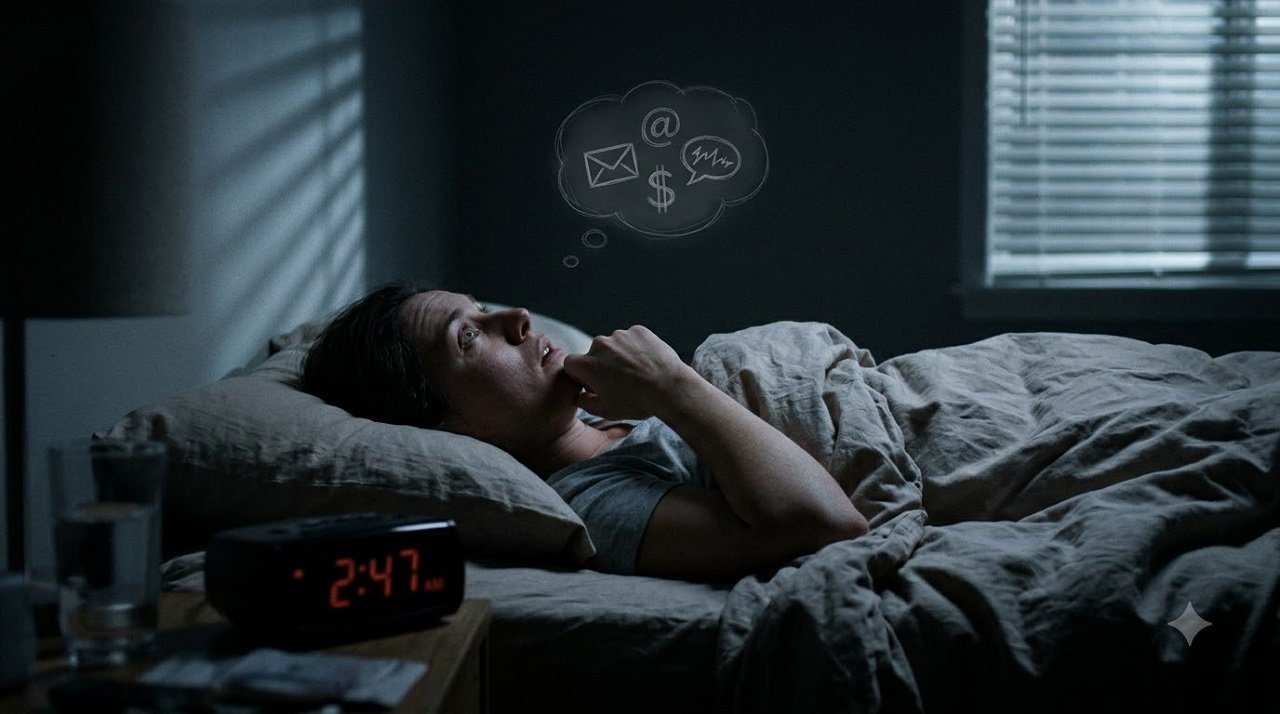
Cortisol and sleep are on opposite schedules in a healthy system. Cortisol peaks in the morning to prepare you for the day and falls through the evening to allow sleep to occur. Chronic stress disrupts this rhythm — keeping cortisol elevated into the evening, which delays sleep onset, reduces deep sleep, and can cause early-morning waking (the body’s misread attempt to mobilise for a day that hasn’t started).
According to Henry Ford Health’s 2026 overview of stress and the body, trouble sleeping is one of the most common chronic stress symptoms, alongside headaches, digestive problems, high blood pressure, and hives.
Anxiety adds its own sleep disruption: racing thoughts, physical tension, and hypervigilance around sleep itself (the anxious monitoring of whether sleep is coming) can create a feedback loop where anxiety causes poor sleep, and poor sleep worsens anxiety.
What you may notice:
- Difficulty falling asleep despite feeling tired
- Waking in the early hours and being unable to return to sleep
- Unrefreshing sleep — waking more tired than when you went to bed
- Vivid or disturbing dreams
- Racing thoughts at bedtime
Endocrine and Metabolic System: The Long-Term Cost
The HPA axis is the body’s central stress management system, but it does not operate in isolation. Prolonged HPA activation disrupts blood sugar regulation (cortisol raises blood glucose to fuel the fight-or-flight response), thyroid function, and the balance of reproductive hormones.
The APA notes that chronic HPA dysregulation has been linked to metabolic disorders including type 2 diabetes and obesity — consistent with the JAMA Psychiatry finding that prolonged high stress doubled the likelihood of metabolic syndrome. The mechanism involves sustained cortisol elevation promoting insulin resistance and visceral fat accumulation over time.
Reproductive System
In men: According to the APA, chronic stress can reduce testosterone production, lowering libido and potentially causing erectile dysfunction. One cited study found that men who experienced two or more stressful life events in the past year had lower sperm motility and a lower percentage of normal-morphology sperm than men who had not.
In women: The APA reports that stress may cause absent or irregular menstrual cycles, more painful periods, and changes in cycle length. It can reduce sexual desire, affect fertility, and worsen premenstrual symptoms and menopausal hot flashes. Conditions such as PCOS may also be worsened by chronic stress-related hormonal dysregulation.
The Anxiety Symptom Loop
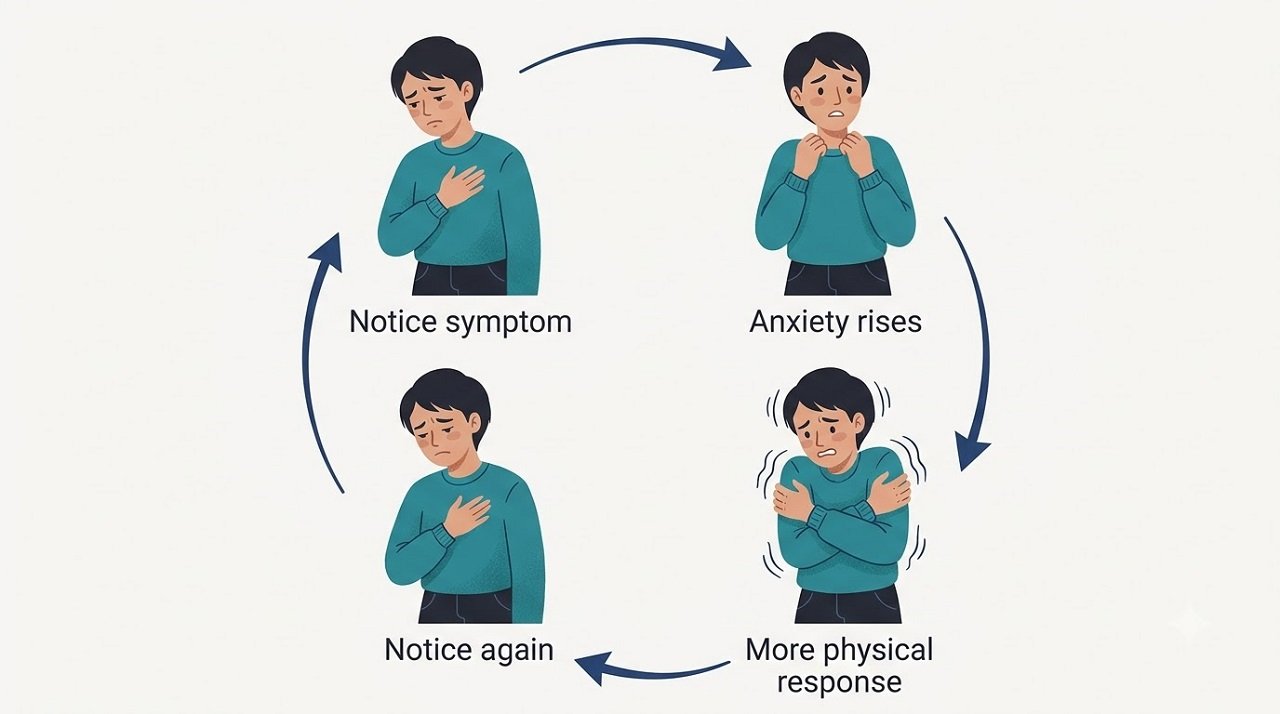
One feature of anxiety-related physical symptoms that sets them apart from stress symptoms is a feedback mechanism — sometimes called interoceptive amplification — where the physical symptom itself becomes a new source of anxiety.
You notice your heart beating harder. That noticing activates the threat-detection system, which increases the heart rate further. You notice the increased heart rate, which increases anxiety, which increases heart rate. The same loop can run with breathing, with dizziness, with gut symptoms. This is why anxiety physical symptoms can feel as though they escalate from nowhere — because the body’s own monitoring of its symptoms becomes the stressor.
Understanding this loop is important because it changes the intervention. Trying to suppress the symptom directly often makes the loop worse. Evidence-based approaches to anxiety — particularly CBT and exposure-based therapy — work in part by reducing the threat value of the bodily sensation rather than eliminating the sensation itself.
This connection between physical stress symptoms and trauma responses is also worth understanding. The fight/flight/freeze physiology that underlies trauma responses uses the same HPA and ANS pathways, and the physical symptoms can be nearly identical.
When Physical Stress Symptoms Become Chronic: Allostatic Load
Most stress responses are designed to be temporary. The body activates, the stressor resolves, and the system returns to baseline. The problem in modern life is that many stressors — work pressure, financial strain, relationship conflict, ongoing health concerns — do not resolve quickly. The stress response activates repeatedly, and the recovery periods become shorter.
This accumulation of physiological wear is what neuroscientist Bruce McEwen called allostatic load — the cumulative cost on the body’s regulatory systems from repeated or chronic stress. High allostatic load is associated with earlier onset of cardiovascular disease, metabolic disorders, immune dysfunction, and cognitive decline.
Our article on what emotional exhaustion and burnout actually are covers how this chronic activation plays out in the context of sustained life demands — it is worth reading alongside this one.
When to See a Doctor

Most physical symptoms of stress and anxiety are real — not imagined, not invented, not “just in your head” — and many resolve or significantly improve when the underlying stress is addressed. However, because stress and anxiety symptoms overlap with symptoms of conditions that need medical attention, certain presentations warrant a medical evaluation:
- Chest pain, particularly with shortness of breath, pain radiating to the arm or jaw, or sweating — these require urgent evaluation to rule out cardiac causes
- Heart palpitations that are irregular, sustained, or accompanied by dizziness or fainting
- Unexplained weight loss alongside other symptoms
- GI symptoms that are new, persistent, include blood, or cause significant weight loss
- Skin changes that don’t improve or appear to be worsening
- Severe or new headache unlike previous headaches
- Neurological symptoms — persistent numbness, vision changes, weakness in a limb
A GP or healthcare provider can assess whether symptoms are stress-related or require further investigation, and can also refer to mental health support if appropriate.
Frequently Asked Questions
Can stress and anxiety cause real physical symptoms?
Yes — completely. Physical symptoms of stress and anxiety have well-documented physiological mechanisms. They are produced by the same nervous system and hormonal pathways (HPA axis, sympathetic nervous system, cortisol) that evolved to handle physical threats. According to the APA, stress affects every major organ system in the body — cardiovascular, respiratory, gastrointestinal, musculoskeletal, endocrine, immune, and reproductive.
What are the most common physical symptoms of stress?
According to the APA and clinical literature, the most commonly reported physical symptoms of stress include headaches (particularly tension headaches), muscle tension (especially neck and shoulders), fatigue, GI problems (nausea, stomach aches, changes in bowel habits), sleep disturbance, and cardiovascular symptoms including elevated heart rate and blood pressure. Skin conditions including acne and eczema flares are also well documented.
Why does stress cause stomach problems?
The gut and brain are connected by the vagus nerve through the gut-brain axis. The gut contains its own dense neural network (the enteric nervous system), and stress activates the HPA axis, which directly disrupts gut motility, alters the intestinal barrier, and changes gut microbiome composition. The result is GI symptoms including nausea, cramping, bloating, diarrhoea, or constipation — even without any gastrointestinal disease present.
Can stress cause hair loss?
Yes. Telogen effluvium — diffuse hair shedding — is a well-documented response to significant acute stress. It occurs because stress hormones push hair follicles prematurely from the growth (anagen) phase into the resting (telogen) phase. The shedding typically appears two to three months after the stressful event, which is why the connection is often not made. In most cases, once the stressor resolves and is managed, hair regrowth follows.
How do I know if my physical symptoms are from stress or something else?
Physical symptoms that appear or worsen during stressful periods and improve when stress reduces are likely stress-related. However, because stress symptoms overlap with symptoms of several conditions requiring medical attention (heart disease, thyroid disorders, GI conditions, etc.), symptoms that are new, severe, persistent, or accompanied by red flags like chest pain with shortness of breath, unexplained weight loss, or blood in stool warrant medical evaluation. A GP can help determine the cause and, if appropriate, refer to mental health support alongside any medical treatment.
Sources & References
- American Psychological Association. “Stress Effects on the Body.” APA Help Center. apa.org/topics/stress/body
- Henry Ford Health. “How Stress Shows Up in the Body.” July 2026. henryford.com/blog/2026/07/how-stress-shows-up-in-the-body
- American Institute of Stress / Gallup. “What the Latest Reports Say About Stress in America.” Stress.org. stress.org/news/what-the-latest-reports-say-about-stress-in-america
- Gallup. 2023 Global Emotions Report. gallup.com/analytics/349280/gallup-global-emotions-report.aspx
- JAMA Psychiatry. “Prolonged High Stress and Metabolic Syndrome Risk.” 2022. jamanetwork.com/journals/jamapsychiatry
- Teo JX, et al. “Psychological Stress and Skin Conditions: A Comprehensive Narrative Review.” PMC, 2026. pmc.ncbi.nlm.nih.gov/articles/PMC12681996
- University of Michigan Digestive Health. “Gut-Brain Axis and IBS.” med.umich.edu/pdf/digestive/Gut-Brain-Axis-and-IBS.pdf
- National Institute of Mental Health (NIMH). “I’m So Stressed Out! Fact Sheet.” nimh.nih.gov/health/publications/so-stressed-out-fact-sheet
- McEwen BS. “Allostasis and Allostatic Load: Implications for Neuropsychopharmacology.” Neuropsychopharmacology, 2000. Rockefeller University. doi.org/10.1016/S0893-133X(99)00129-3
- Orlando Health. “Five Health Risks of Stress.” orlandohealth.com/content-hub/five-health-risks-of-stress
This article is for informational and educational purposes only. It does not constitute medical advice and should not be used to replace consultation with a qualified healthcare or mental health professional. If you are experiencing physical symptoms that concern you, please speak with a doctor.

Informational purposes only — not a substitute for medical advice
Disclaimer: This article is for informational and educational purposes only. It does not constitute medical advice, diagnosis, or treatment. If you or someone you know is experiencing a mental health crisis, please contact a qualified healthcare professional or a crisis helpline immediately.
“Nervous breakdown” is one of the most searched mental health terms on the internet — and one of the least clearly defined. Women search it more than men, at a rate consistent with the fact that women are significantly more vulnerable to the conditions it describes. But what most search results offer in response is a symptom list without a clinical anchor. That isn’t enough — because the right response to what people call a nervous breakdown depends entirely on what is actually happening underneath.
This post provides both: a clear explanation of what a nervous breakdown actually is clinically, and a detailed, research-grounded account of how it presents specifically in women — including the hormonal, social, and biological factors that make women disproportionately vulnerable to reaching the point of crisis.
What Is a Nervous Breakdown? The Clinical Reality
A nervous breakdown is not a clinical diagnosis. It does not appear in the DSM-5, the APA’s Diagnostic and Statistical Manual of Mental Disorders, or in the ICD-11, the WHO’s International Classification of Diseases. There is no diagnostic code for it, no formal clinical criteria, and no agreed medical definition.
What the term describes — colloquially but accurately — is a point at which a person’s psychological resources have been depleted to the degree that they can no longer function normally. They stop being able to manage daily responsibilities: work, parenting, relationships, basic self-care. The internal experience feels like a total collapse.
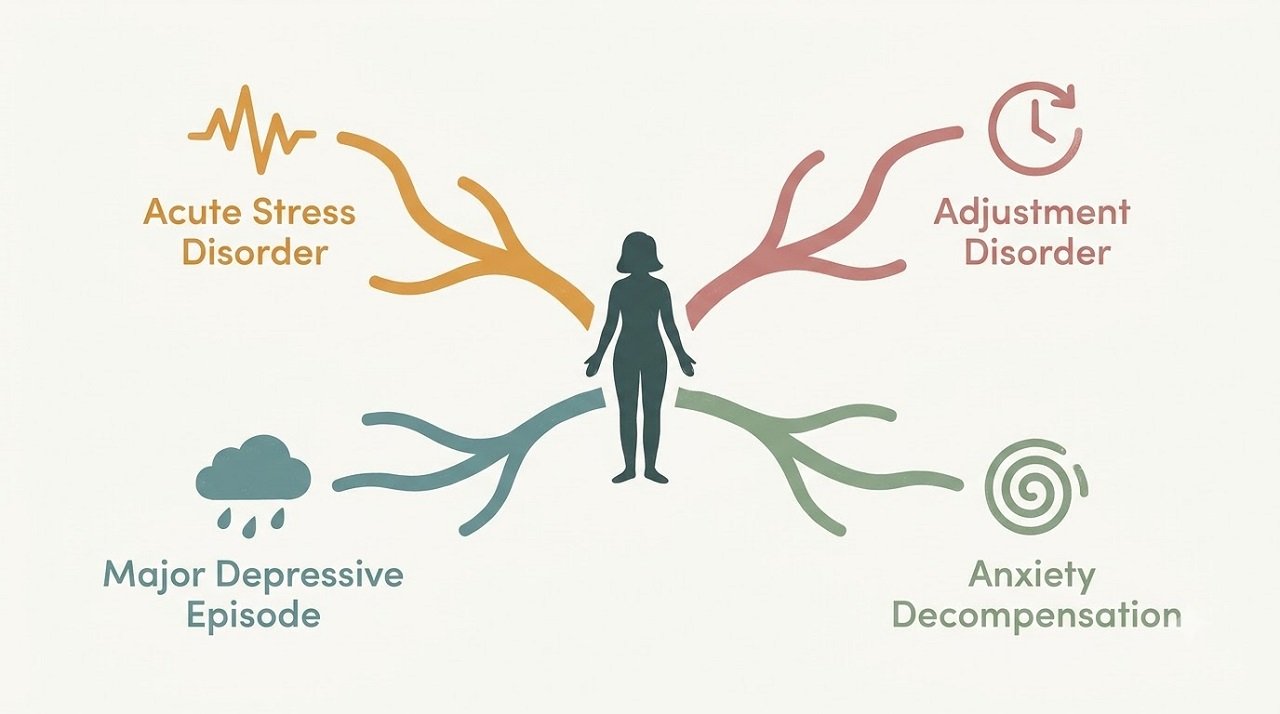
Clinically, what people are describing when they use this term maps onto one or more of the following formal diagnoses, depending on the presentation:
Acute Stress Disorder (DSM-5 code 308.3): A cluster of symptoms — re-experiencing, avoidance, dissociation, hyperarousal — occurring three days to one month after a traumatic event. According to ScienceDirect’s clinical overview, acute stress disorder was added to DSM-4 in 1994 and continued in DSM-5. If symptoms persist beyond one month, the diagnosis transitions to PTSD.
Adjustment Disorder (DSM-5 code 309.x): Also called stress response syndrome, adjustment disorder is characterized by emotional or behavioral symptoms developing within three months of an identifiable stressor, with the response exceeding what would typically be expected. According to Cleveland Clinic, adjustment disorder is the closest formal diagnosis to what most people mean by a nervous breakdown — a reaction to life stress that goes beyond normal coping and impairs functioning.
Major Depressive Episode with functional collapse: Some people reaching breaking point are experiencing a full major depressive episode in which the severity has progressed to the point where daily functioning is no longer possible. This is distinct from chronic depression — it represents an acute, severe deterioration.
Panic disorder or severe anxiety with acute decompensation: When anxiety has been building for weeks or months without adequate intervention, the nervous system can reach a point of acute decompensation — a sudden loss of the compensatory mechanisms that were keeping the person functional.
Understanding which of these is actually happening matters enormously, because the recovery path for each is different. A colloquial label is useful for describing the experience. A clinical assessment is necessary for addressing it.
Why Women Are Disproportionately Vulnerable
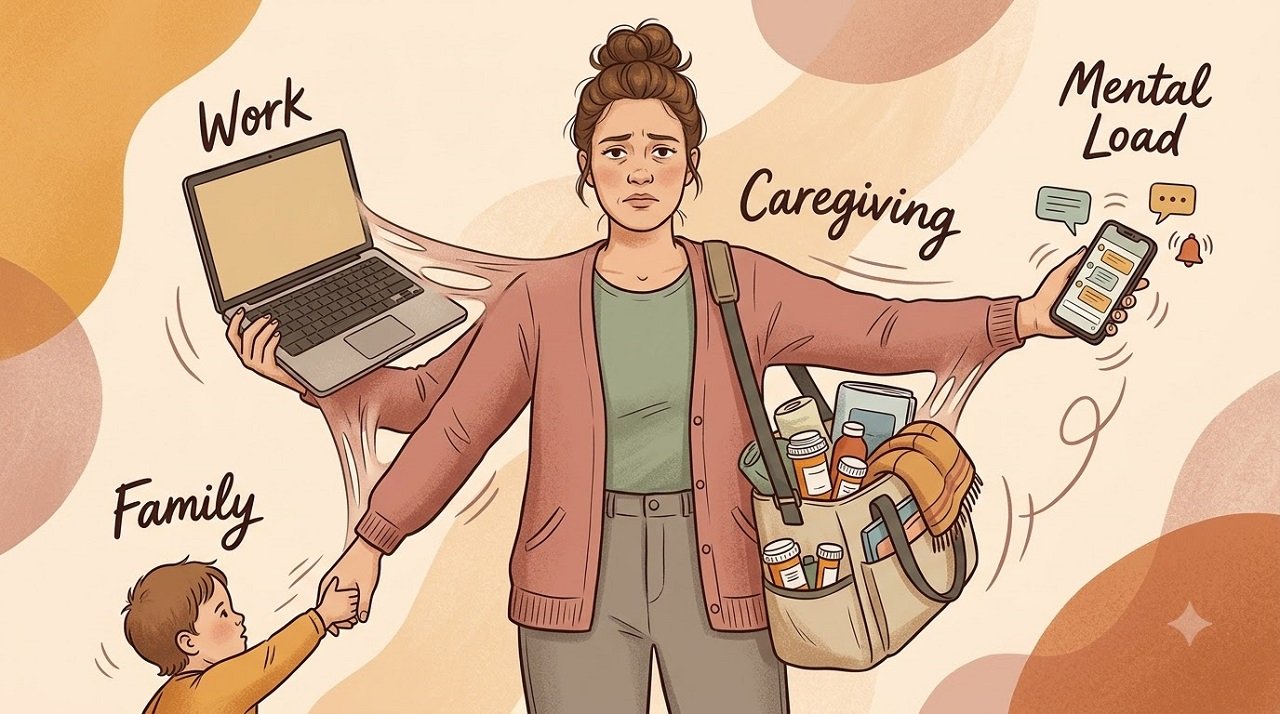
Before examining the signs, it’s important to understand the landscape. Women don’t simply experience nervous breakdowns at higher rates by coincidence. The disparity is structural, biological, and social simultaneously.
According to a 2025 review published in European Psychiatry by Thibaut, women are twice as likely as men to suffer from depression, generalized anxiety disorder, and PTSD — and the reasons are multifactorial. The review identifies societal expectations, gender stereotypes, work-life imbalance, and structural inequalities as drivers alongside biological factors.
According to the American Psychiatric Association’s Mental Health Facts for Women, each year, one in five women in the United States experiences a mental health problem such as depression, PTSD, or an anxiety disorder. According to NIMH data cited by mhstats.org (2026), 24.5% of adult women had an anxiety disorder in the past year — representing approximately 31.2 million women.
Women working full-time are almost twice as likely to face mental health problems as men, according to 2024 data from South Denver Therapy’s review of epidemiological statistics. Women also accounted for 71% of all mental health-related workplace absences in early 2024.
The reasons are not simply biological. Research consistently identifies the invisible mental load — the cognitive and emotional labour of managing households, relationships, and caregiving responsibilities that continues alongside formal employment — as a significant structural risk factor. Women are more likely to live in poverty, more likely to take time off for caregiving, more likely to work in lower-paying industries, and more likely to carry the emotional management of their family system. This is the context in which nervous breakdowns in women most commonly occur: not a sudden dramatic event, but the accumulated weight of sustained demands that have finally exceeded the system’s capacity to hold them.
The Hormone Factor: Why Timing Matters
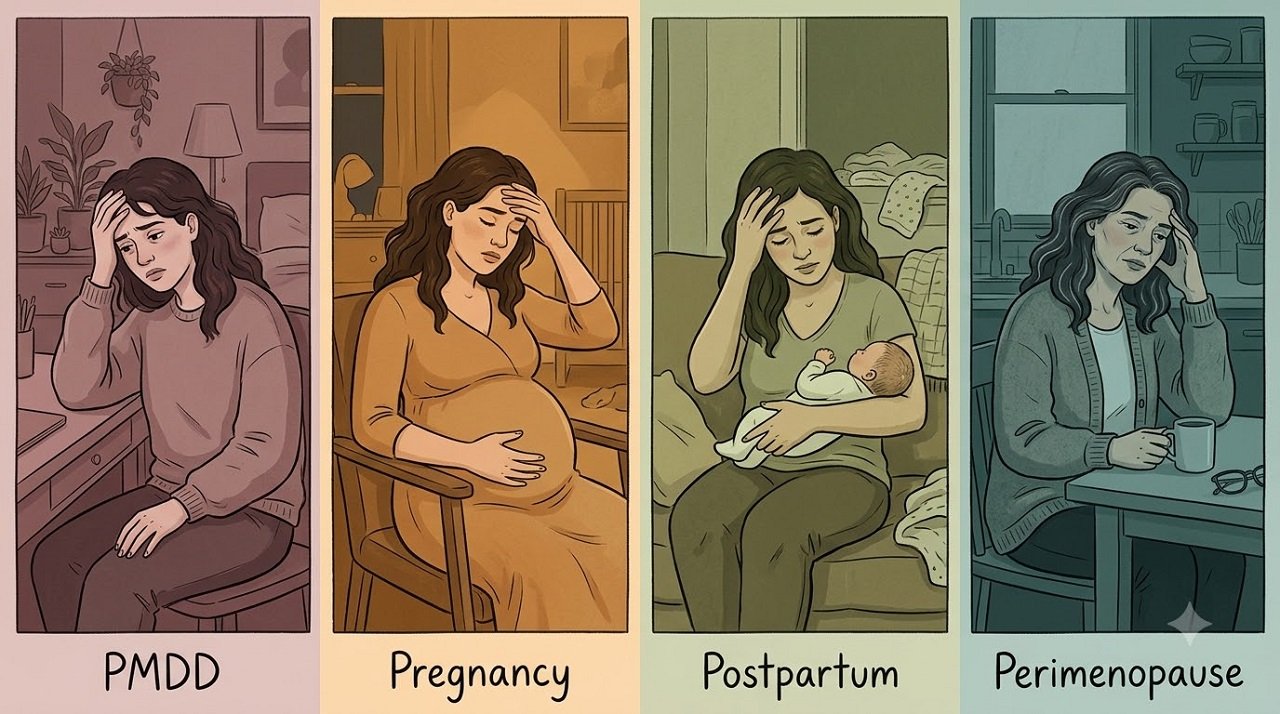
This is the dimension of nervous breakdowns in women that most content on this keyword omits entirely — and it is essential for understanding why certain life stages represent specific vulnerability windows.
Premenstrual Dysphoric Disorder (PMDD) and the menstrual cycle: Women with PMDD have a clinically documented exaggerated response to normal hormonal fluctuations across the menstrual cycle. Research cited by Mission Connection Healthcare notes that PMDD involves an abnormal sensitivity to the hormonal shifts of the luteal phase (the week or two before menstruation), producing mood instability, anxiety, and depressive symptoms intense enough to mimic major depressive disorder in some cases. For women already under sustained stress, this monthly hormonal disruption can repeatedly push the nervous system past its regulatory capacity.
Pregnancy and postpartum: According to a 2025 editorial published in Frontiers in Psychiatry by Reisel and colleagues, postpartum depression affects up to 17% of women, and severe mental illness carries approximately a 24% chance of major relapse during pregnancy, often linked to medication discontinuation. The early postpartum period — marked by sleep deprivation, hormonal upheaval, identity shifts, and social isolation — represents one of the highest-risk windows for acute mental health crisis in women.
Perimenopause: This is perhaps the most underrecognised trigger. According to a 2024 study published in the British Journal of Psychiatry Open by Reisel, Crockett, Glynne, Kamal, and Newson involving 978 women, the five most prevalent symptoms during perimenopause and menopause were: feeling tired or lacking in energy (96%), memory problems (93%), difficulty concentrating (91%), irritability (90%), and feeling tense or nervous (90%). The same study noted that these psychological symptoms are frequently unrecognised as hormone-related, leading to misdiagnosis with anxiety or depression and prescription of antidepressants rather than hormone replacement therapy.
According to Harvard Medical School’s HMS Magazine, prevalence estimates for perimenopausal depression alone are as high as 40%, with approximately two million US women beginning perimenopause each year. Yet the mood and cognitive symptoms of perimenopause are so frequently attributed to stress or life circumstances that many women are never told their nervous system is operating in a period of profound hormonal instability — one that creates a specific and measurable vulnerability to mental health crisis.
Signs of a Nervous Breakdown in Women: What to Actually Look For
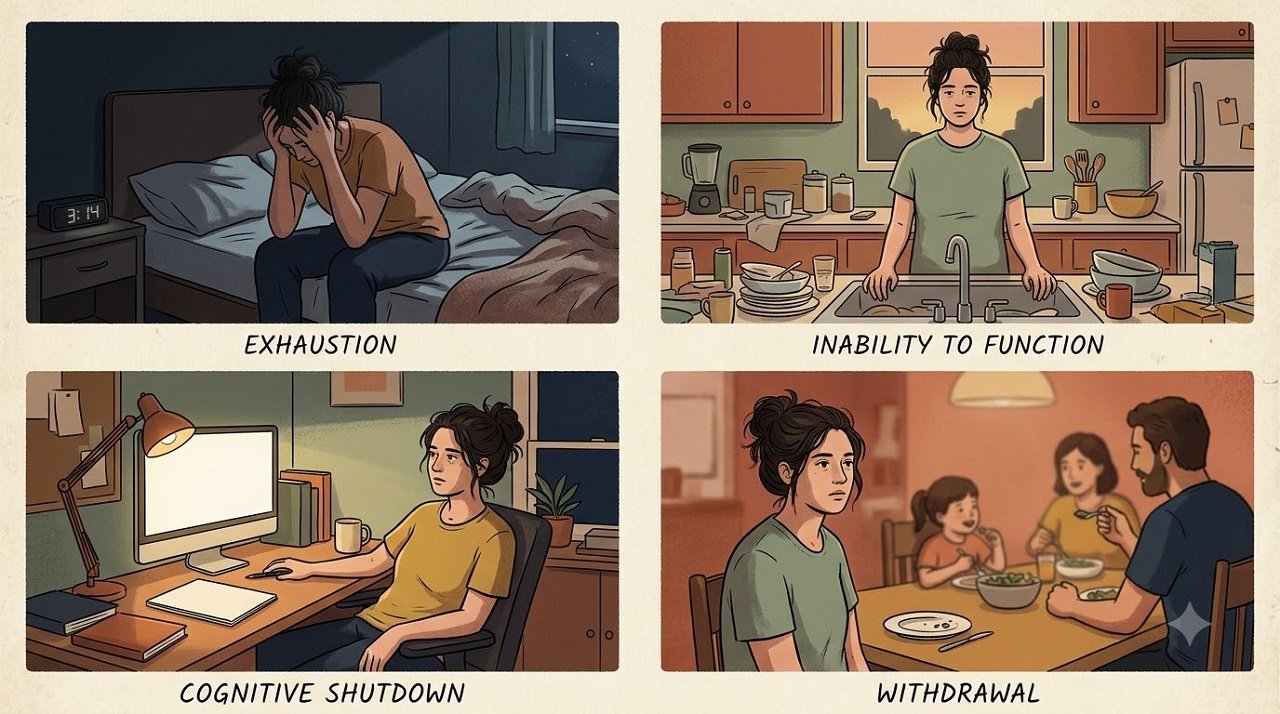
Because “nervous breakdown” covers several clinical presentations, the signs below span the full range of what women experience across those presentations. They are organised by domain rather than by diagnosis, because in the lived experience, symptoms don’t arrive in neatly labelled categories.
Emotional Signs:
You feel overwhelmed in a way that is qualitatively different from ordinary stress — as if the floor of your coping capacity has given way rather than just feeling stretched. Crying unexpectedly, often, or without being able to stop. Swinging between emotional extremes — intense anxiety or panic in one moment, complete emotional numbness in the next. A pervasive sense of dread with no specific object, or a constant state of low-grade panic. Anger or irritability that feels uncharacteristic and disproportionate — directed at people you love over things that wouldn’t normally register. Feeling like you are a burden to the people around you, or that they would be better off without you managing things.
Cognitive Signs:
Difficulty concentrating on even simple tasks that were previously automatic. A sense that your thinking has slowed, fragmented, or become unreliable — what is sometimes described as “brain fog” but with a quality of genuine cognitive impairment rather than tiredness. Difficulty making decisions — even small, everyday ones feel paralysing. Intrusive thoughts that arrive without invitation and are difficult to dismiss. Forgetting appointments, commitments, or conversations you would normally retain easily.
Physical Signs:
Profound exhaustion that sleep does not repair. Physical symptoms with no clear organic cause — headaches, chest tightness, gastrointestinal disturbance, muscle aches, or a persistent sensation of physical unease. According to Mission Connection Healthcare’s clinical coverage of mental breakdowns in women, over 50% of women undergoing mental health crises report disrupted sleep patterns. Changes in appetite — eating significantly less, more, or with a complete absence of genuine hunger or satisfaction. Uncontrollable episodes of shaking, breathlessness, or physical symptoms that resemble — and may be — panic attacks.
Behavioural Signs:
Withdrawal from relationships and social contact — not as a preference but as an inability to manage the additional demand of being around other people. Neglecting responsibilities that you have previously managed reliably: work, household tasks, personal hygiene, commitments to others. Increased reliance on alcohol, food, or other substances as a way of blunting the internal experience. An inability to complete a normal day — not a difficult day, but an ordinary one — without reaching a point of complete inability to continue.
Signs Specific to the Context of Women’s Lives:
Feeling as though you have been holding everything together for everyone else for so long that there is nothing left for yourself — and that acknowledging this feels like failure. A growing resentment toward the people whose needs you have been managing, accompanied by guilt about the resentment. The sense that the role you occupy — as mother, partner, caregiver, employee — has consumed the person you are underneath it. An inability to ask for help that goes beyond preference: the help-seeking itself requires resources you no longer have.
The Breakdown Nobody Sees Coming: The High-Functioning Path
Many women who experience nervous breakdowns were, in the weeks or months preceding it, the person everyone else would have described as the most capable person in the room. They were managing multiple demands, meeting all their obligations, appearing composed under pressure.
This is not coincidental. The same mechanisms described in our post on how to tell if you have high-functioning depression — the productivity-as-coping pattern, the masking of internal distress, the sense of identity tied to capability — are also present in women approaching a breakdown. The breakdown doesn’t happen because they stopped coping. It happens because the coping systems that were running at full capacity for months or years have finally depleted.
The warning signs in the weeks before a crisis often include: increasing difficulty sleeping despite exhaustion, a noticeable reduction in the ability to tolerate small frustrations, withdrawal from social activities that were previously maintained, and a growing internal monologue of dread or hopelessness that the person is working hard to not show externally.
How a Nervous Breakdown Differs From Burnout and Depression
These three experiences share significant symptom overlap and are frequently confused. The distinctions below reflect clinical literature rather than rigid categories, because in practice they often coexist.
Burnout is context-specific and occupational by clinical definition (ICD-11 QD85). Its defining features — cynicism and reduced sense of efficacy — are tethered to the work context. Burnout can be a pathway toward a nervous breakdown if the occupational depletion is sustained long enough, but it is not the same state. As discussed in our post on what is emotional exhaustion vs burnout, burnout improves when the occupational stressor is removed.
Depression — specifically major depressive disorder or persistent depressive disorder — is a clinical condition with its own diagnostic criteria and treatment protocol. A nervous breakdown may include a depressive episode, may trigger one, or may be the presentation of an untreated one that has reached functional collapse. They are not the same thing, but they can overlap.
A nervous breakdown is specifically characterised by acute functional collapse — the person stops being able to manage the basic demands of their daily life. It has a more sudden quality than depression (which typically builds gradually) and a more total quality than burnout (which is context-specific). It represents a system that has not merely been strained, but has given way.
What to Do If You Recognise These Signs
If the signs are present but function is still intact: This is the window in which intervention is most effective and recovery is fastest. Speak with a GP or mental health professional. Reduce nonessential demands immediately. Communicate to the people closest to you that you are not managing — this is not weakness; it is necessary information for the people who can help.
If function has already collapsed: This is a mental health crisis. Contact a GP, a mental health crisis line, or go to an emergency department if you or someone you know is in immediate danger. This is not something to wait out or manage alone.
Specific to the hormonal dimension: If the timing of your symptoms aligns with your menstrual cycle, perimenopause, the postpartum period, or another hormonal transition, bring this specifically to your clinician’s attention. As the research from Reisel et al. (2024) demonstrates, hormonal contributors are consistently underrecognised and frequently misattributed to stress or life circumstances. A clinician who is not explicitly asked about the hormonal dimension may not assess it.
Trauma responses: For women whose breakdown is connected to a history of trauma or prolonged stress, the trauma responses post on this site provides context for understanding the nervous system patterns that may be active in the background.
Frequently Asked Questions
What is a nervous breakdown, exactly?
A nervous breakdown is not a formal medical or psychiatric diagnosis. It is a colloquial term describing a point at which psychological resources have been depleted to the degree that a person can no longer function normally in daily life. Clinically, what people describe as a nervous breakdown typically corresponds to acute stress disorder, adjustment disorder, a severe major depressive episode, or acute anxiety decompensation — depending on the specific presentation and precipitating factors.
Are the signs of a nervous breakdown different in women than in men?
The core symptom profile — exhaustion, inability to function, emotional dysregulation, social withdrawal, physical symptoms — is similar across sexes. What differs in women are the specific precipitating factors: hormonal transitions (perimenopause, postpartum, PMDD), the disproportionate weight of caregiving and invisible mental load, and the higher baseline rates of depression, anxiety, and PTSD that mean women are operating with less systemic reserve before they reach crisis. According to a 2025 review published in European Psychiatry, women are twice as likely as men to experience depression, generalised anxiety disorder, and PTSD.
How long does a nervous breakdown last?
Duration varies widely depending on the underlying clinical condition, the severity of the breakdown, and whether and when appropriate support is sought. Adjustment disorder, one of the closest clinical equivalents, is defined as resolving within six months when the stressor is removed. Acute stress disorder resolves within one month by definition. A breakdown underpinned by a major depressive episode or untreated anxiety disorder requires treatment and follows the course of those conditions. Early intervention substantially shortens recovery time.
Can a nervous breakdown happen without an obvious cause or triggering event?
Yes. While acute stress disorder and adjustment disorder are triggered by identifiable stressors, a breakdown underpinned by accumulated chronic stress — the kind that builds over months or years of sustained demand — may not have a single identifiable trigger. It may feel to the person as though nothing “big” happened. The depletion was gradual; the collapse just became apparent suddenly.
Is it possible to prevent a nervous breakdown?
Early recognition of the warning signs — sustained sleep disruption, progressive difficulty tolerating ordinary stress, intrusive thoughts, withdrawal from relationships — and intervention before functional collapse is the most reliable prevention pathway. For women in high-risk hormonal windows (perimenopause, postpartum), proactive engagement with mental health support reduces risk. The research is consistent that untreated stress accumulation and unaddressed underlying conditions are the primary pathways toward crisis.
Sources & References
- Thibaut F. “Recent progress in women’s mental health research and future priorities.” European Psychiatry, 2025. doi:10.1192/j.eurpsy.2025.146. pmc.ncbi.nlm.nih.gov/articles/PMC12437347
- American Psychiatric Association. “Mental Health Facts for Women.” APA. psychiatry.org/getmedia/aa325a61/Mental-Health-Facts-for-Women.pdf
- National Institute of Mental Health (NIMH). “Any Anxiety Disorder: Women.” U.S. Department of Health and Human Services. nimh.nih.gov/health/statistics/any-anxiety-disorder
- American Psychiatric Association. Diagnostic and Statistical Manual of Mental Disorders, 5th Edition, Text Revision (DSM-5-TR). APA Publishing, 2022. psychiatry.org
- Cleveland Clinic. “Adjustment Disorders: What They Are, Symptoms and Treatment.” Reviewed 2024. my.clevelandclinic.org/health/diseases/21760-adjustment-disorder
- Reisel D, Crockett C, Glynne S, Kamal A, Newson L. “Prevalence of Cognitive and Mood-Related Symptoms in a Large Cohort of Perimenopausal and Menopausal Women.” BJPsych Open, 2024. doi:10.1192/bjo.2024.497. ncbi.nlm.nih.gov/pmc/articles/PMC11738833
- Harvard Medical School HMS Magazine. “The Mental Health Aspects of Menopause.” magazine.hms.harvard.edu/articles/mental-health-aspects-menopause
- Frontiers in Psychiatry Editorial. “Women with neuropsychiatric disorders: understanding and personalising needs.” 2025. doi:10.3389/fpsyt.2025.1719997. ncbi.nlm.nih.gov/pmc/articles/PMC12704316
- ScienceDirect Topics. “Acute Stress Disorder — clinical overview.” sciencedirect.com/topics/neuroscience/acute-stress-disorder
- Mission Connection Healthcare. “Triggers and Signs of a Mental Breakdown in Women.” missionconnectionhealthcare.com/mental-health/nervous-breakdown/women
- Sleep Disturbance and Perimenopause Narrative Review. MDPI Healthcare, 2025. doi:10.3390/healthcare. ncbi.nlm.nih.gov/pmc/articles/PMC11901009
- mhstats.org. “Anxiety in Women 2026.” Based on NIMH 2024 data. mhstats.org/women/anxiety
This article is for informational and educational purposes only. It does not constitute medical advice and should not be used to self-diagnose or replace consultation with a qualified mental health or medical professional. If you are in crisis or experiencing thoughts of self-harm, please contact a mental health crisis helpline or your local emergency services immediately.

How to Know If You Have Social Anxiety or Just Shy: The Difference That Actually Matters

PEMF Webinar

Decode Your Digestion Workshop
PEMF Webinar

HBOT ( Hyperbaric Oxygen Therapy ) Webinar

The 4-7-8 Breathing Technique: Step-by-Step Guide and What the Research Actually Shows
-
 Events17 hours ago
PEMF Webinar
-
 Events1 month ago
HBOT ( Hyperbaric Oxygen Therapy ) Webinar
-
 Natural Sleep Remedies6 months ago
The 4-7-8 Breathing Technique: Step-by-Step Guide and What the Research Actually Shows
-
 Events6 months ago
The Anti-Cancer Body with Dr. Michael Karlfeldt
-

 Events5 months ago
Why You Can’t Trust Big Pharma
-

 Home Remedies6 months ago
Natural Home Remedies for Restless Legs at Night
-
 Events5 months ago
The Cancer Conversation Your Oncologist Cannot Have in 15 Minutes
-

 Events6 months ago
Beyond the Brain