
Gut Health
Chia Seed Pudding for Constipation Relief: How Much to Use and How to Make It Safely

The content on this website – including articles, event announcements, personal experiences, and recommendations – is for informational and educational purposes only and is not medical advice. Always consult a qualified healthcare professional before making any changes to your diet, exercise, supplements, sleep habits, or wellness routines, especially if you are pregnant, nursing, on medication, or have any medical condition.
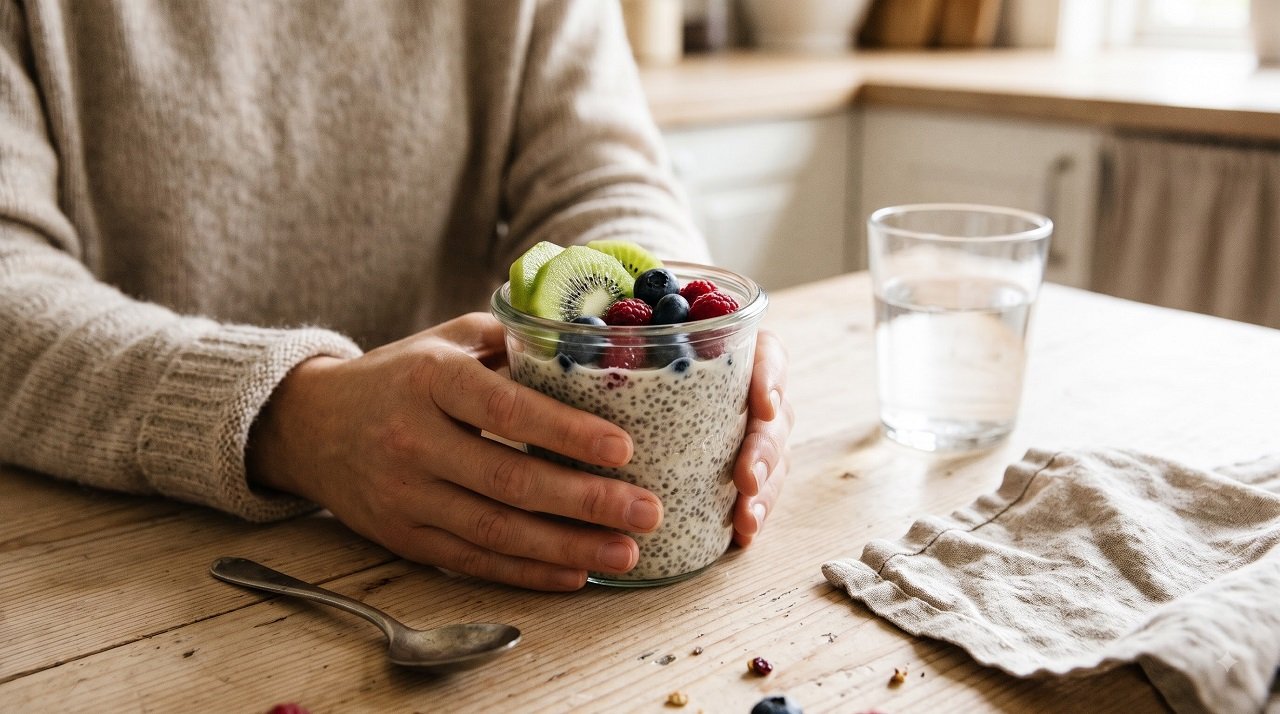
Disclaimer: This article provides general educational information and is not a substitute for medical advice. Do not eat chia seeds dry. If you have trouble swallowing, a narrowed esophagus, inflammatory bowel disease, diverticulitis or ongoing constipation, check with a doctor before adding more fiber. See a doctor for constipation that lasts more than a few weeks.
Chia seed pudding can help with mild constipation because chia is a rich source of fiber (about 10 g in two tablespoons) and the soaked seeds hold a lot of water. Start with just 1 tablespoon per serving, soak it fully, and drink plenty of fluids. The usual internet advice, “more chia, faster relief,” can backfire. Here’s how to do it properly.
Why Chia Pudding May Help

Chia seeds can absorb 12 to 15 times their weight in water, forming the gel that gives pudding its texture. The idea is that this adds bulk and moisture to stool, which makes it easier to pass. Two tablespoons provide roughly 9 to 10 grams of fiber, and most of it is insoluble fiber, the kind that adds bulk. Commonly cited daily targets are about 25 grams for women and 38 grams for men, and most people don’t reach them.
An honest caveat: this is a reasonable theory based on chia’s fiber content, not proven by chia-specific studies. We found no clinical trial showing chia pudding relieves constipation. Other fiber-rich foods, such as legumes, prunes, kiwi fruit and whole-grain bread, are also recommended for constipation.
The Mistake That Can Make Constipation Worse
Adding a lot of fiber suddenly, without extra fluids, can make stool harder, not softer, and cause gas and bloating. Nebraska Medicine dietitian Jenna Wuebker advises against regularly consuming large amounts of chia, such as the viral “internal shower” drink, and suggests easier ways to get fiber. That’s why the recipe below starts small.
The Recipe: Gentle Chia Pudding (1 serving to start)

Ingredients
- 1 tablespoon chia seeds
- 1/3 cup (about 80 ml) milk or plant milk, plus a little extra to loosen if needed
- 1/4 teaspoon vanilla (optional)
- Toppings: chopped kiwi, berries, or a few chopped prunes
Method
- Stir the chia into the milk (and vanilla) in a jar. Stir again after 5 minutes so the seeds don’t clump.
- Cover and refrigerate for at least 2 hours, ideally overnight, until it’s a thick gel with no dry seeds.
- Top with fruit and eat with a full glass of water on the side.
Scale up slowly. Nebraska Medicine suggests starting with half a teaspoon to a teaspoon in foods and working up to about 1 tablespoon a day. If you tolerate 1 tablespoon well for a week or two, you can try 2.
Safety: Never Eat Chia Dry
Chia swells into a gel. In a 2014 case presented at the American College of Gastroenterology’s annual meeting, a 39-year-old man got a chia blockage in his esophagus after eating about a tablespoon of dry seeds and drinking water. He needed several hours of treatment under anesthesia and recovered fully. The doctor who reported it advised against eating chia dry and recommended letting seeds expand fully in liquid first, particularly for anyone with a narrowed esophagus or a feeling of food getting stuck. The same applies to a large “chia water” drink: it’s safest to soak seeds fully before swallowing.
Who Should Be Careful
Check with a doctor first if you have trouble swallowing, a narrowed esophagus, inflammatory bowel disease (Crohn’s disease or ulcerative colitis, especially during a flare), or diverticulitis.
Other Habits That Matter as Much
Chia pudding is one tool. Drinking enough water, getting a mix of fiber from fruit, vegetables, beans and whole grains, and staying active all support regularity. Don’t ignore the basics for a single food.
When to See a Doctor
See a doctor if constipation lasts more than a few weeks, you see blood in your stool, you have severe pain, unexplained weight loss or vomiting, or you have constipation that alternates with diarrhea. These need proper evaluation, not more fiber.
Frequently Asked Questions
Does chia pudding help with constipation?
It may, since chia is high in fiber and soaked seeds hold water, adding bulk and moisture to stool. There’s no chia-specific clinical trial proving it, so treat it as a helpful food, not a treatment.
How much chia should I eat a day?
Start with about 1 tablespoon a day, or less, and build up gradually. Two tablespoons give around 10 g of fiber, which is a lot for someone new to high fiber.
How long should chia soak?
At least 2 hours, ideally overnight, until it’s a thick gel with no dry seeds.
Can chia seeds make constipation worse?
Yes, if you add too much fiber too fast or don’t drink enough fluid, stool can become harder, and you may get gas or bloating.
Is the chia “internal shower” drink safe?
Nebraska Medicine’s dietitian advises against regularly drinking large amounts, and it has been linked to reports of blockages. A small, fully soaked pudding is a safer way to eat chia.
Sources Referenced in This Article
- Nebraska Medicine: Does the “internal shower drink” help you poop? The benefits and downsides of chia seeds
- WBUR: Chia Seed Alert: Superfood, Yes, But They Landed One Man in the ER (2014)
- Newshub / The Conversation (Clare Collins): Does TikTok’s chia-lemon “internal shower” really beat constipation?












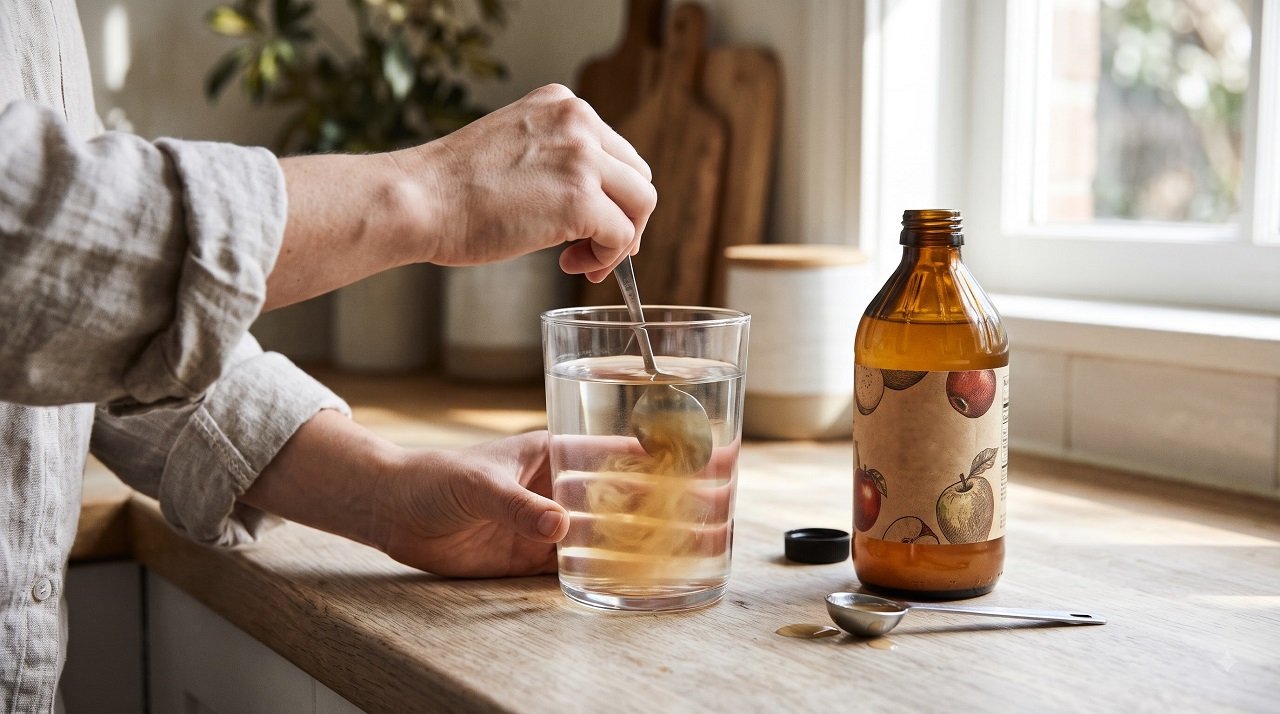
Disclaimer: This article provides general educational information and is not a substitute for medical advice. Apple cider vinegar can interact with insulin, diuretics and some other medications, and is not suitable for everyone. Check with your doctor or pharmacist first if you take regular medication, have diabetes, reflux, a slow-emptying stomach or low potassium, or are pregnant.
The best way to take apple cider vinegar for gut health is diluted: about 1 teaspoon to 1 tablespoon in a full glass of water, with or around a meal, never straight, and not at all if you have a slow-emptying stomach or reflux it aggravates.
Search “how to take apple cider vinegar for gut health” and almost every result gives you the same instructions: a tablespoon or two in water, before meals, ideally “with the mother.” Almost none tell you the awkward part. The main thing apple cider vinegar has been shown to do in the gut is slow down how fast your stomach empties. For some people that’s the point. For others, it’s exactly the wrong thing.
So here’s the honest version: what the evidence supports, how to take it if you decide to, and who should leave it in the cupboard.
What the Evidence Actually Shows
Short answer: less than the wellness internet suggests.
- Digestive and gut-flora claims are mostly unproven. Cleveland Clinic notes that raw ACV is said to contain natural bacteria and yeasts in the cloudy sediment called “the mother,” but cites no human studies showing it improves gut health, and describes the overall research on ACV as limited, with mostly small studies. On reflux specifically, its gastroenterologist source says “we don’t really know” whether it helps.
- The best-studied effect is on blood sugar after a meal. A small randomized crossover trial of 12 healthy young adults found that 25 g of liquid ACV (5% acidity) before a 64 g carbohydrate meal cut the one-hour glucose rise by about 31% compared with water. Cleveland Clinic’s dietitian puts the real-world impact modestly: it “might lower your glucose a little, but not enough” to replace diet, exercise or medication.
- The likely mechanism is slower stomach emptying. That’s useful for blunting a glucose spike. It’s also why the next section matters.
Nothing here makes ACV a bad idea for a healthy adult. It just means it’s a small tool, not a gut-healing protocol.
The Catch: It Slows Your Stomach Down
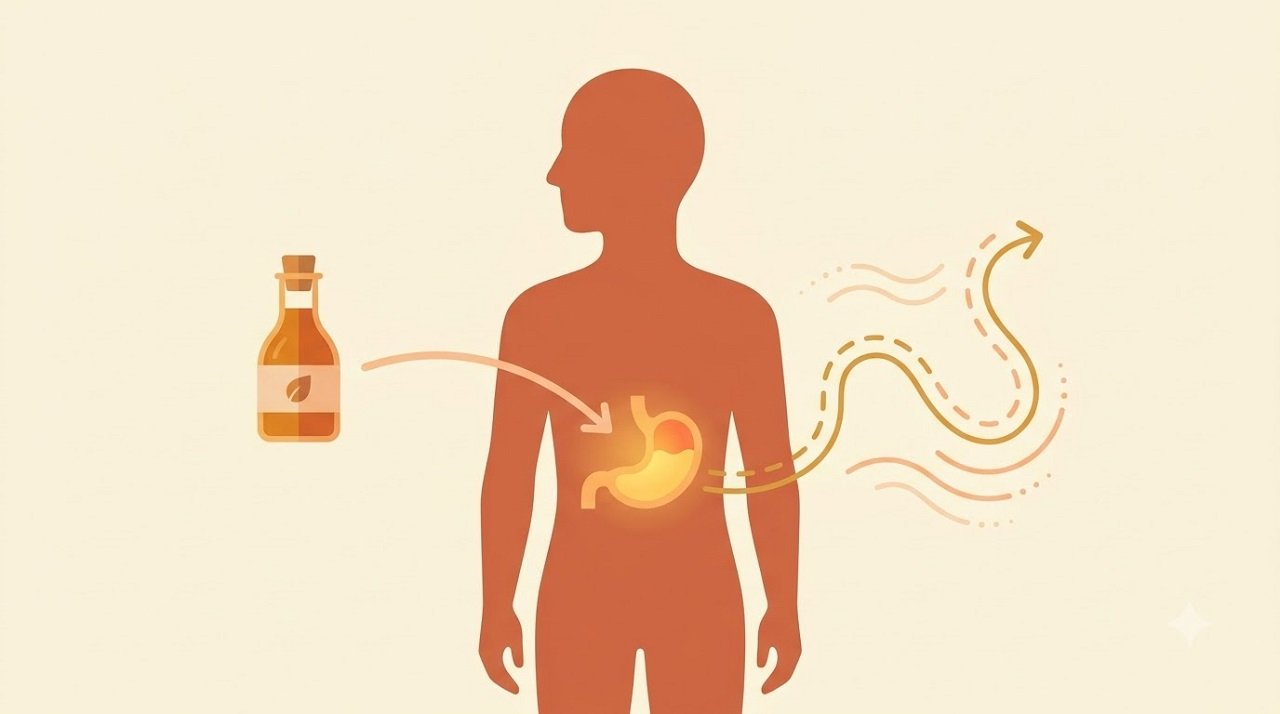
In a small 2007 pilot study of 10 people with type 1 diabetes and gastroparesis (a condition where the stomach empties too slowly), taking 30 ml of apple cider vinegar in 200 ml of water before breakfast for two weeks reduced gastric emptying. The median emptying rate dropped from 27% with water to 17% with vinegar. The authors cautioned that this could affect blood sugar control and mealtime insulin timing, and called for larger trials.
It’s a small, non-randomized, unblinded study, so treat it as a warning flag, not proof. But it’s the reason Cleveland Clinic advises people with gastroparesis to be cautious. If you already feel full quickly, bloated for hours after meals, or nauseated after eating, ACV may add to the problem rather than fix it.
Who Should Skip It or Ask a Doctor First
- Gastroparesis or very slow digestion: see above.
- Acid reflux or GERD: it’s highly acidic and could make heartburn worse. If you do take it, avoid it close to bedtime. Harvard Health suggests keeping acidic foods and drinks away for 30 to 60 minutes before lying down.
- Low potassium (hypokalemia): Cleveland Clinic says to avoid ACV if you already have this.
- Insulin, diuretics, laxatives or some blood pressure medications: ACV may interact, so check first.
- Children: keep undiluted vinegar away from kids.
- Anyone who feels sick after taking it: nausea is a common reaction. Stop.
How to Take It If You Decide To

There is no official dose. These are cautious, commonly recommended habits:
- Always dilute. Start with 1 teaspoon in a mug of warm or cool water, working up to no more than 1 tablespoon. Cleveland Clinic suggests an upper limit of about two tablespoons a day across everything you use. More isn’t better.
- Never drink it straight. Undiluted vinegar erodes tooth enamel and can burn the throat and esophagus.
- Protect your teeth. Drink it through a straw if you like, then rinse your mouth with plain water. Wait before brushing, since enamel is softened right after acid contact.
- Time it with a meal. Before or alongside a carbohydrate-rich meal is the timing tied to the glucose findings. Either before or after eating is considered fine by Cleveland Clinic, so pick whichever your stomach tolerates.
- Start small and watch. If you notice burning, nausea or more bloating, stop or cut back.
- Consider food instead. A splash in salad dressing, with the same acid, is gentler and Harvard Health lists it as a safer way to consume it.
Liquid vs. Tablets vs. Gummies
Don’t assume a pill does what the liquid does. In a 12-person trial, whole vinegar tablets did not reduce the post-meal glucose rise the way liquid vinegar did, while crushed tablets fell somewhere in between. It’s a small study of healthy young adults and the tablet’s acetic acid content came from the label, not lab testing, but it suggests tablets are not a like-for-like swap. Cleveland Clinic also notes the FDA doesn’t regulate ACV pills or gummies, so what’s inside can vary.
“With the Mother”: Does It Matter?
The cloudy strands are a natural by-product of fermentation. They’re why many people choose raw, unfiltered ACV, and there’s no evidence of harm from them. But there are no solid human trials showing the mother delivers probiotic benefits. If you want proven gut bacteria, fermented foods like yogurt, kefir, sauerkraut and kimchi have far more research behind them.
When to See a Doctor
ACV won’t treat a gut condition. See a doctor if you have persistent bloating, reflux more than twice a week, trouble swallowing, unintended weight loss, blood in your stool, or pain that doesn’t settle.
Frequently Asked Questions
Does apple cider vinegar actually help your gut?
There’s no good human evidence that it improves gut flora or heals the digestive tract. The best-supported effect is a modest reduction in the blood sugar rise after a carbohydrate-heavy meal, likely because it slows stomach emptying.
Should I drink apple cider vinegar before or after eating?
Before or with a meal is the timing linked to the glucose findings, but Cleveland Clinic says before or after is fine. Choose whichever causes you less discomfort, and avoid it right before lying down if you get reflux.
How much apple cider vinegar is safe per day?
There’s no official dose. Start with 1 teaspoon diluted in water, stay at or below 1 tablespoon per serving, and keep the daily total to about 2 tablespoons at most.
Is “the mother” a probiotic?
It’s a fermentation by-product containing bacteria and yeast cultures, but there are no solid human studies showing it works as a probiotic.
Who should not take apple cider vinegar?
People with gastroparesis, low potassium, or reflux that it aggravates, people on insulin, diuretics, laxatives or some blood pressure medications (talk to a doctor first), and children.
Sources Referenced in This Article
- Hlebowicz J, et al. Effect of apple cider vinegar on delayed gastric emptying in patients with type 1 diabetes mellitus: a pilot study. BMC Gastroenterology, 2007
- Commercial Vinegar Tablets Do Not Display the Same Physiological Benefits for Managing Postprandial Glucose Concentrations as Liquid Vinegar (PMC)
- Cleveland Clinic: What Apple Cider Vinegar Can (and Can’t) Do for You
- Cleveland Clinic: Apple Cider Vinegar for Acid Reflux: Does It Work?
- Harvard Health: Can apple cider vinegar curb appetite?
Disclaimer: This article provides general educational information and is not a substitute for medical advice. Probiotic foods can cause temporary gas and bloating, and people with a weakened immune system, a serious illness or a milk allergy should check with a doctor before adding them. See a doctor for ongoing digestive symptoms.
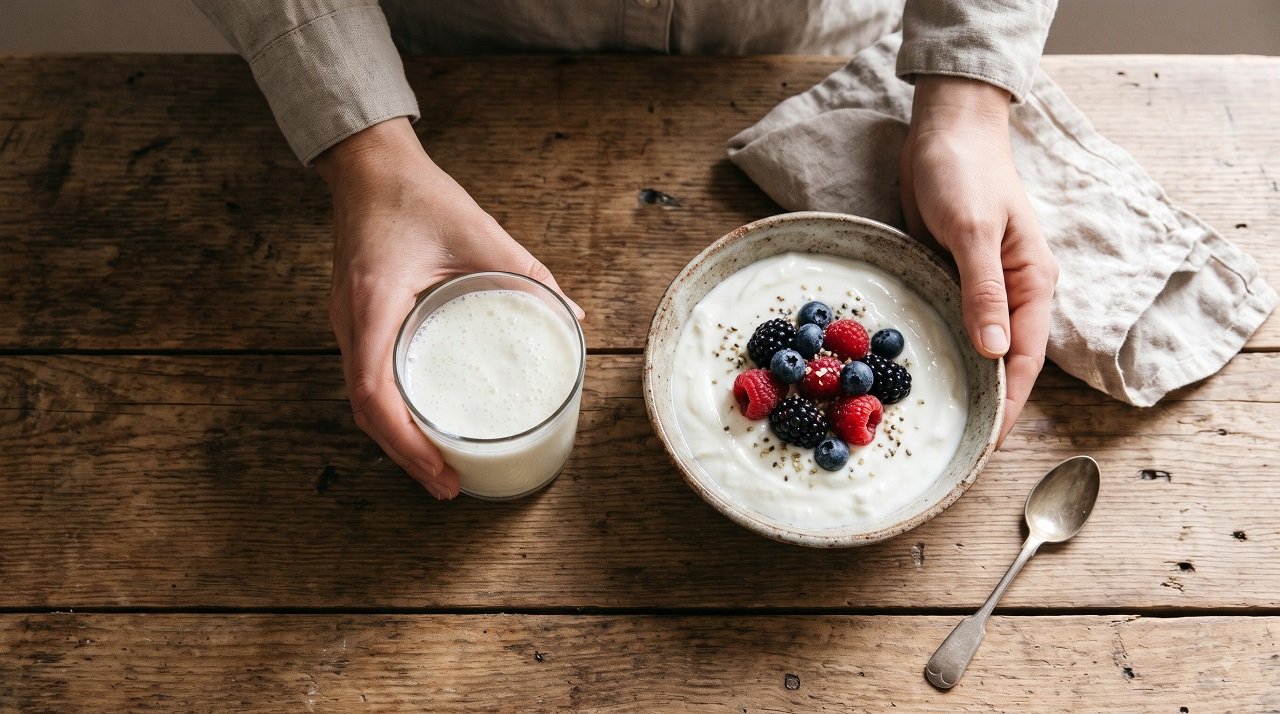
For gut flora, kefir usually brings more variety of microbes, but a plain yogurt with live cultures is a perfectly good choice, and the better one for you depends on your tolerance, taste and sugar intake. No study we found compares them head to head in people, so the honest answer is “it depends.” Here’s how to decide.
What’s Actually Different?

Both are fermented milk. The difference is what does the fermenting.
- Yogurt is made by two bacteria, Lactobacillus bulgaricus and Streptococcus thermophilus. Some brands add other lactobacilli or bifidobacteria. According to Harvard’s Nutrition Source, a yogurt carrying the “Live and Active Cultures” seal has at least 1,000,000 colony-forming units (CFU) per gram.
- Kefir is fermented with kefir grains, a mix of bacteria and yeasts. Cleveland Clinic describes it as having more strains of probiotics plus beneficial yeast, and cites about 12 active strains. It’s tangier and thinner, so it’s usually drunk.
So the common claim is true as far as it goes: kefir typically has more kinds of microbes. What nobody has shown is that more strains in the bowl means better gut health in your body.
What the Research Really Shows
- Fermented foods as a group do seem to help. In a Stanford trial of 36 healthy adults, those who ate a fermented-food diet for 10 weeks (yogurt, kefir, fermented cottage cheese, kimchi, other fermented vegetables, brine drinks and kombucha) showed increased gut microbiome diversity and lower levels of 19 inflammatory proteins. A high-fiber group didn’t show the same changes. Larger servings had stronger effects.
- That trial didn’t pit kefir against yogurt. It tested a mix of foods, so it can’t tell you which was responsible.
- Yogurt’s evidence is mostly observational. Harvard notes that evidence on specific health effects is still limited, and that the amount and type of probiotic needed for a benefit vary between people and aren’t well researched.
- Kefir’s evidence is still growing. Cleveland Clinic’s dietitian says studies are ongoing, and some kefir findings come from lab work or small studies.
Takeaway: the most reliable finding is that regularly eating fermented foods may support microbial diversity. Choosing between kefir and yogurt matters less than choosing one you’ll actually eat, plain and often.
Which Is Better for You?
| If you… | Lean toward |
|---|---|
| Are lactose intolerant | Kefir. The microbes break down much of the milk sugar, and many people with lactose intolerance tolerate it. Cleveland Clinic says it’s very low in lactose |
| Want the widest mix of microbes | Kefir |
| Want something thick, spoonable and higher in protein | Plain yogurt, especially Greek-style |
| Dislike a tangy, fizzy taste | Yogurt |
| Want the gentlest start | A small serving of either and build up slowly |
How to Read the Label (This Matters More Than the Choice)

- Pick plain. Harvard notes some yogurts carry up to 20 to 25 g of sugar in a 5 oz container, mostly added. Cleveland Clinic says flavored kefir can be high in sugar too, which cancels out its benefits. Sweeten with fresh fruit instead.
- Look for “live and active cultures.” Heat-treated products after fermentation may no longer contain live bacteria.
- Check non-dairy versions. Harvard points out that some plant-based yogurts aren’t fermented and may have no live bacteria. They can also be lower in protein and calcium unless fortified.
- Check the ingredients. Sugar in the first four ingredients is a sign to choose another one.
How to Start
Cleveland Clinic notes that people starting probiotic-rich foods may get gas or bloating at first. Start with about half a cup of either, a few times a week, and build up. If symptoms persist, cut back. You can eat both: there’s no need to choose permanently.
When to See a Doctor
Fermented foods won’t fix a gut problem. See a doctor if you have persistent bloating, diarrhea or constipation, blood in your stool, unintended weight loss or ongoing abdominal pain.
Frequently Asked Questions
Is kefir better for your gut than yogurt?
Kefir generally contains a wider variety of microbes, including yeasts, but no head-to-head human study shows it’s better for your gut. Both are good fermented foods when plain and unsweetened.
Can you eat kefir and yogurt together?
Yes. There’s no reason you can’t have both. Studies on fermented foods used a variety of them, not a single one.
Is kefir okay if you’re lactose intolerant?
Often yes. Kefir’s fermentation breaks down much of the lactose, and many people with lactose intolerance tolerate it. Start with a small amount, and avoid it if you have a milk allergy.
How much kefir should you drink a day?
There’s no official amount. Start with about half a cup and increase gradually if you feel fine.
Does all yogurt have probiotics?
No. Look for the “Live and Active Cultures” seal, and note that some plant-based yogurts aren’t fermented at all.
Sources Referenced in This Article
- Cleveland Clinic: 7 Benefits That Prove Kefir Is Good for You
- Harvard T.H. Chan School of Public Health, The Nutrition Source: Yogurt
- Wastyk HC, et al. Gut-microbiota-targeted diets modulate human immune status. Cell, 2021 (summary via FoodNavigator)

Disclaimer: This article provides general educational information and is not a substitute for medical advice. “Leaky gut” (increased intestinal permeability) is not a diagnosis you can treat with a recipe. If you have ongoing digestive symptoms, see a doctor. Check with a healthcare professional before using bone broth regularly if you are pregnant, have a kidney condition, are on a sodium-restricted diet, have histamine sensitivity, or are feeding it to a child.
A good bone broth recipe for leaky gut is a gentle, long-simmered broth made from bones, water and mild vegetables, with no onion or garlic if those upset you. It’s a nourishing food that may support your gut, but there’s no proof it “heals” leaky gut. Here is the recipe, and the honest version of the evidence that most recipe posts skip.
First, What “Leaky Gut” Actually Means
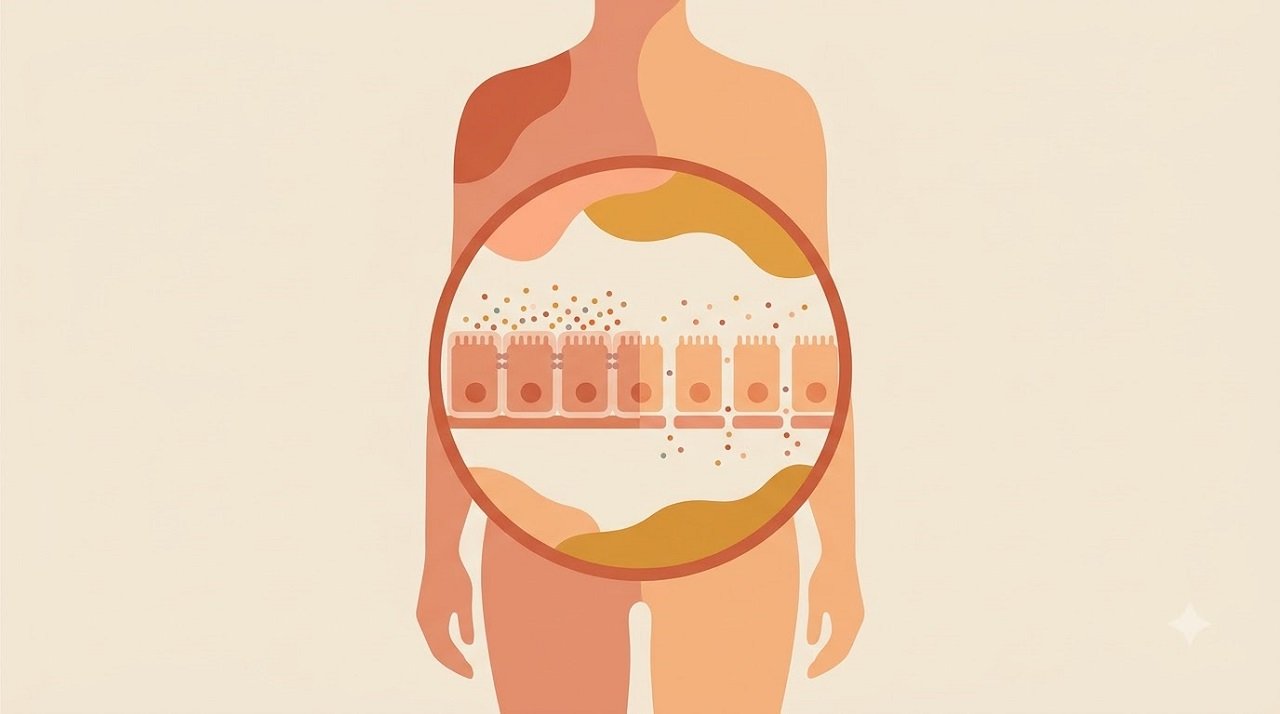
Your intestinal lining is a barrier. It lets nutrients through and keeps bacteria and larger particles out. “Increased intestinal permeability,” the scientific term for leaky gut, means that barrier is less tight than it should be. Researchers can measure it, and it shows up alongside several conditions.
What it is not is a standalone medical diagnosis with a proven home treatment. That’s why a recipe can’t “cure” it, and why any post promising a bone broth fix deserves some skepticism.
What the Evidence Says About Bone Broth
Here is where things stand:
- Why people believe it works: bone broth contains amino acids, especially glutamine and glycine, plus minerals. A 2025 review in Digestive Diseases and Sciences concluded that these components may support the gut barrier, reduce inflammation in the intestinal lining and help nutrient absorption, with particular interest in inflammatory bowel disease. The authors used careful wording (“may,” “possibly”) and called for more research.
- What’s missing: that review looked at animal and human work on these nutrients. It doesn’t show that drinking homemade broth heals leaky gut in people. Registered dietitian Kate Scarlata told Today’s Dietitian, “I have not seen any research to support the use of bone broth for gut health.”
- Nutrition varies a lot: there’s no standard USDA entry for bone broth. Homemade chicken stock was listed at about 6 g of protein per cup and a commercial chicken bone broth at about 9 g per cup. Your pot won’t match anyone else’s.
Bottom line: bone broth is a warm, easy-to-digest, protein-containing food that many people tolerate well when their gut is irritated. Treat it as a supportive food, not a treatment.
The Recipe: Simple Gut-Friendly Bone Broth

Makes: about 2.5 to 3 litres (10 to 12 cups) | Active time: 15 minutes
Ingredients
- 1 to 1.5 kg (2 to 3 lb) bones: chicken carcasses, wings or feet, or beef and marrow bones
- 3 to 4 litres (12 to 16 cups) cold water, enough to cover
- 2 carrots, roughly chopped
- 2 celery stalks, roughly chopped
- A thumb of fresh ginger, sliced (optional, for a soothing note)
- A few sprigs of parsley and 1 bay leaf
- 1 teaspoon salt, to taste at the end instead if you’re watching sodium
- Skip onion and garlic if you’re sensitive to them: both are high in fermentable carbohydrates (FODMAPs) that can trigger bloating in some people
Method
- Optional roast: for deeper flavour, roast the bones at 200°C (400°F) for 30 minutes. Skip this for a lighter, more neutral broth.
- Start cold: put the bones in a large pot, cover with cold water and bring slowly to a gentle boil.
- Skim: remove the foam that rises in the first 20 minutes.
- Simmer low: add the vegetables, ginger and herbs. Keep it at a gentle simmer, not a hard boil. Chicken bones need roughly 6 to 12 hours, beef bones 12 to 24 hours. A slow cooker on low works, and a pressure cooker can do it in about 2 hours.
- Strain: pour through a fine sieve and discard the solids.
- Cool fast: divide into shallow containers so it cools quickly, then refrigerate. It should set to a jelly when cold, which is normal and a sign of gelatin.
- Skim the fat from the top once it’s chilled.
Storage: refrigerate within 2 hours of cooking and use within 3 to 4 days, or freeze in portions for several months. Reheat until steaming hot.
How Much, and How to Start
There’s no official dose. A cup (about 240 ml) a day is a sensible starting point for most healthy adults. Scarlata also cautions that drinking it several times a day is probably unnecessary and “may be risky, especially in kids.” Start with half a cup and see how you feel.
Things Most Recipes Don’t Mention
- Lead: a 2013 Medical Hypotheses study noted that bones can absorb heavy metals, so bone broth may carry a risk of lead contamination. The authors advise caution, especially for children. Using bones from well-sourced animals and not drinking large amounts daily are sensible precautions.
- Sodium: commercial broths vary widely, and even homemade stock carries some salt. Choose low-sodium products and salt your own at the end.
- Histamine: long-simmered broths may be high in histamine, which can bother people with histamine sensitivity. If you get flushing, headaches or hives after broth, a shorter simmer or skipping it is worth trying.
- Not a replacement for care: broth does not replace treatment for IBD, celiac disease or other gut conditions.
When to See a Doctor
See a doctor if you have persistent diarrhea or constipation, bloating that doesn’t settle, blood in your stool, unintended weight loss, ongoing abdominal pain, or symptoms that interrupt daily life. These can have causes that need proper testing, not home remedies.
Frequently Asked Questions
Does bone broth heal leaky gut?
There is no solid human evidence that it does. Bone broth contains amino acids like glutamine and glycine that are being studied for gut barrier support, but researchers say more studies are needed.
How long should bone broth simmer?
Roughly 6 to 12 hours for chicken bones and 12 to 24 hours for beef bones on the stovetop. A pressure cooker can do it in about 2 hours.
How much bone broth should I drink a day?
There’s no official dose. Around one cup a day is a reasonable starting point for most healthy adults; start with half a cup and avoid large daily amounts, especially for children.
Is bone broth safe for everyone?
Not necessarily. Be cautious if you’re pregnant, have kidney disease, follow a low-sodium diet, are sensitive to histamine, or are giving it to a child. Check with your doctor first.
Can bone broth make bloating worse?
It can, particularly if you add onion or garlic (high-FODMAP) or if you’re sensitive to histamine. Try a plain version with just carrots, celery, ginger and herbs.
Sources Referenced in This Article
- Bone Broth Benefits: How Its Nutrients Fortify Gut Barrier in Health and Disease. Digestive Diseases and Sciences, 2025 (PubMed)
- Today’s Dietitian: Ask the Expert: What’s the Deal With Bone Broth?
- The Leaky Gut: Mechanisms, Measurement and Clinical Implications in Humans (PMC)
- Leaky Gut Syndrome: Myths and Management (PMC)

Chia Seed Pudding for Constipation Relief: How Much to Use and How to Make It Safely

How Much Protein to Eat on GLP-1 to Prevent Muscle Loss

Train Your Immune System: An Exclusive Masterclass Premiere with Dr. Ryan Lazarus

PEMF Webinar

The 4-7-8 Breathing Technique: Step-by-Step Guide and What the Research Actually Shows

HBOT ( Hyperbaric Oxygen Therapy ) Webinar
-
 Events1 month ago
PEMF Webinar
-
 Natural Sleep Remedies5 months ago
The 4-7-8 Breathing Technique: Step-by-Step Guide and What the Research Actually Shows
-
 Events1 month ago
HBOT ( Hyperbaric Oxygen Therapy ) Webinar
-

 Events5 months ago
The Anti-Cancer Body with Dr. Michael Karlfeldt
-

 Events5 months ago
Why You Can’t Trust Big Pharma
-

 Home Remedies5 months ago
Natural Home Remedies for Restless Legs at Night
-

 Events4 months ago
The Cancer Conversation Your Oncologist Cannot Have in 15 Minutes
-

 Events6 months ago
Beyond the Brain