
Natural Sleep Remedies
11 Best Teas for Sleep, Ranked by the Research Behind Them

The content on this website – including articles, event announcements, personal experiences, and recommendations – is for informational and educational purposes only and is not medical advice. Always consult a qualified healthcare professional before making any changes to your diet, exercise, supplements, sleep habits, or wellness routines, especially if you are pregnant, nursing, on medication, or have any medical condition.

⚠️ Disclaimer: This article is for informational purposes only and is not medical advice. Herbal teas can interact with medications, including blood thinners and sedatives — check with your doctor or pharmacist before regular use, especially if pregnant, nursing, or on medication.
A quick, honest note on how this list was built: this is a research-based ranking, compiled from published clinical studies and meta-analyses — not a personal 6-month taste test. If you’ve seen this topic covered elsewhere with claims like “I tracked 47 teas with my Oura ring,” treat those specific numbers skeptically; precise night-by-night biometric claims like that aren’t something a blog post can typically verify, and this piece won’t make them.
What you can trust here: each tea below is ranked by the actual strength and consistency of the clinical research behind it, with real dosages pulled from those same studies, not invented ones.
How These Rankings Work
Rather than an arbitrary 100-point personal score, teas here are grouped by strength of evidence:
Preliminary evidence: Small trials, animal studies, or traditional use with limited human clinical data
Strong evidence: Multiple randomized controlled trials or a systematic review/meta-analysis with consistent, positive findings
Moderate evidence: At least one solid RCT, but fewer replications or mixed effect sizes
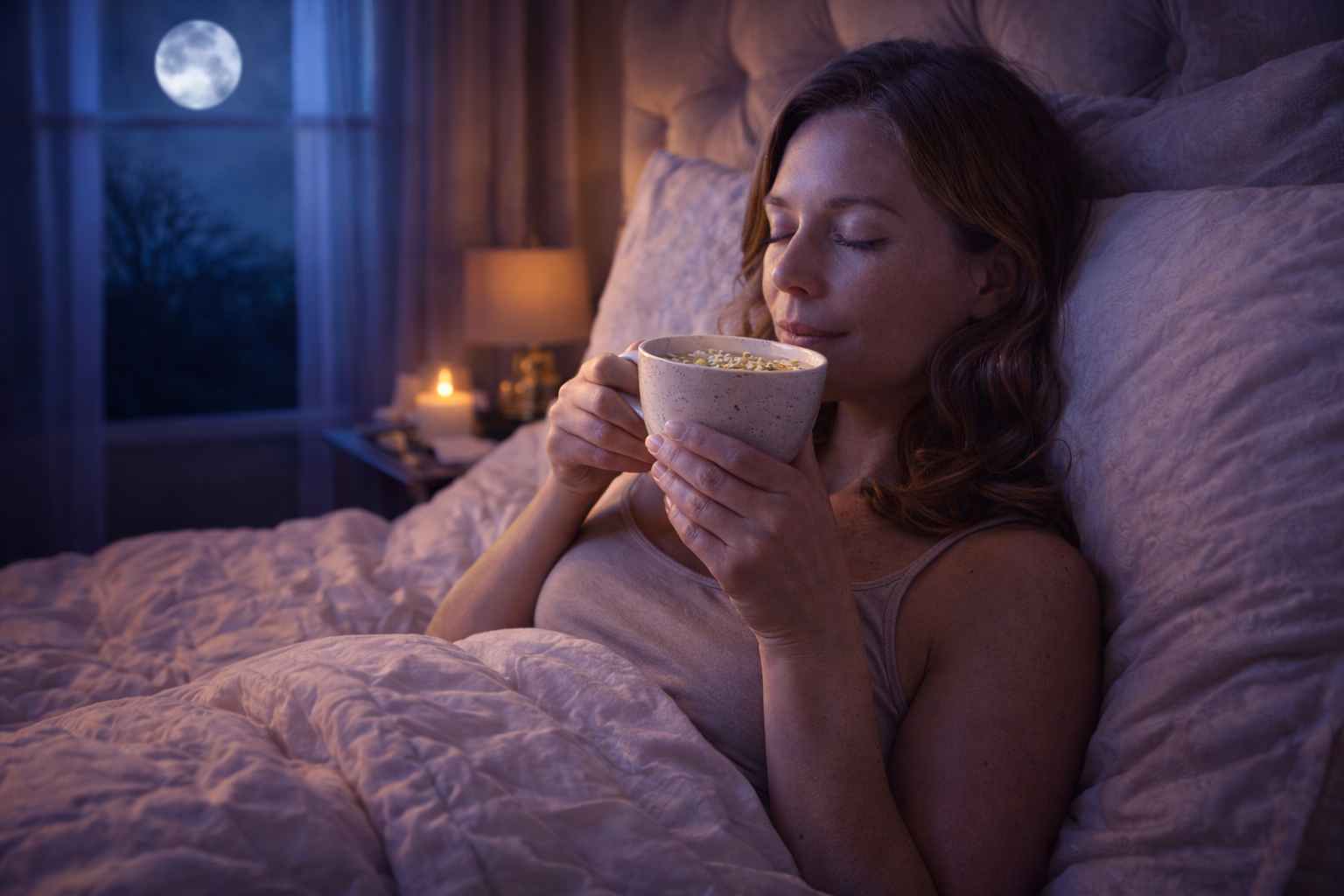
The Top Sleep Teas, Ranked by Evidence Strength
1. Chamomile — Strong Evidence
A 2024 meta-analysis of 10 clinical trials (772 participants) found chamomile significantly reduced Pittsburgh Sleep Quality Index scores, particularly reducing nighttime awakenings — though it didn’t significantly improve total sleep duration in the pooled data. Chamomile’s calming effect is linked to apigenin, a compound that binds to the same GABA-A receptors targeted by some prescription sedatives, without the same dependence risk.
Typical studied dose: 1-2g dried flowers steeped 5-10 minutes, or a standardized extract equivalent. Worth knowing: Some trials found chamomile may not be advisable during pregnancy — check with your doctor first if pregnant or nursing.
2. Valerian Root — Moderate to Strong Evidence
Valerian has one of the longer research histories among sleep herbs, with multiple RCTs showing improved sleep quality, though individual study results vary more than chamomile’s. It’s believed to work partly through GABA modulation, similar to chamomile.
Typical studied dose: 400-900mg extract, or 2-3g dried root steeped 10 minutes. Worth knowing: Valerian has a distinct, strong smell some people find unpleasant — many studies use capsules rather than tea specifically for this reason.
3. Passionflower — Moderate Evidence
A 2019 double-blind, randomized, placebo-controlled polysomnography study (110 participants) found passionflower extract improved total sleep time compared to placebo. A separate systematic review of nine clinical trials found passionflower generally supportive for sleep and anxiety, though study quality and duration varied significantly across the reviewed trials.
Typical studied dose: 1 tsp dried herb steeped 5-10 minutes, or roughly 500mg-1g extract equivalent.
4. Lemon Balm — Moderate Evidence
Often studied in combination with valerian rather than alone, lemon balm has research supporting a calming, mild anxiolytic effect linked to GABA modulation. Combination formulas (lemon balm + valerian) have more research support than lemon balm used alone.
Typical studied dose: 1 tsp dried leaf steeped 8-10 minutes; often combined with valerian or lavender.
5. Lavender — Moderate Evidence (Stronger for Aromatherapy Than Tea Specifically)
Most of lavender’s strongest sleep research is on aromatherapy (inhaled) rather than tea specifically — a meaningful distinction, since the studies most often cited for lavender’s sleep benefits used diffusers or pillow sprays, not oral tea. Lavender tea itself has less direct research, though it’s traditionally used and generally considered safe.
Typical studied dose (aromatherapy, not tea): A few drops in a diffuser 30-60 minutes before bed. For tea specifically: 1-2g dried buds steeped 5 minutes.
6. Magnolia Bark — Preliminary to Moderate Evidence
Magnolia bark contains honokiol, a compound studied for its effects on non-REM sleep in preclinical and early human research. It’s a newer entrant to mainstream sleep-tea content, and the evidence base is genuinely thinner than chamomile or valerian’s.
Typical studied dose: Varies significantly by extract concentration — follow product-specific labeling rather than a generic dose, since standardization varies.
7. Tart Cherry — Moderate Evidence (as Juice, Less Studied as Tea)
Tart cherry’s sleep research is almost entirely on juice, not tea, and centers on its natural melatonin content. If you’re drawn to tart cherry for sleep specifically, the juice form has more direct research behind it than a tea/hibiscus blend does.
Typical studied form: 8oz tart cherry juice, timing varies by study (often twice daily).
8. Ashwagandha — Moderate Evidence (More for Stress Than Direct Sleep Induction)
Ashwagandha’s research base is stronger for reducing cortisol and stress markers than for directly inducing sleep — it’s better understood as supporting the conditions for better sleep (lower stress) than as a direct sedative the way valerian or chamomile are studied.
Typical studied dose: 300-600mg standardized root extract.
9. Hops — Preliminary Evidence (Mostly Studied in Combination)
Hops research for sleep is almost always in combination with valerian, not alone — making it hard to isolate hops’ individual contribution. Traditional use is long-standing, but solo clinical evidence is thin.
10. Skullcap — Preliminary Evidence
Skullcap has traditional use as a calming herb and some early anxiolytic research, but direct, high-quality human sleep trials are limited compared to the herbs above it on this list.
11. Peppermint — Preliminary Evidence for Sleep Specifically
Peppermint is well-studied for digestive comfort, which can indirectly support sleep if digestive discomfort is what’s keeping you up — but it doesn’t have strong direct sedative research the way chamomile or valerian do. Worth including for a “wind-down” routine rather than as a primary sleep aid.
Free 30-Day Sleep Tea Challenge – Full Printable PDF
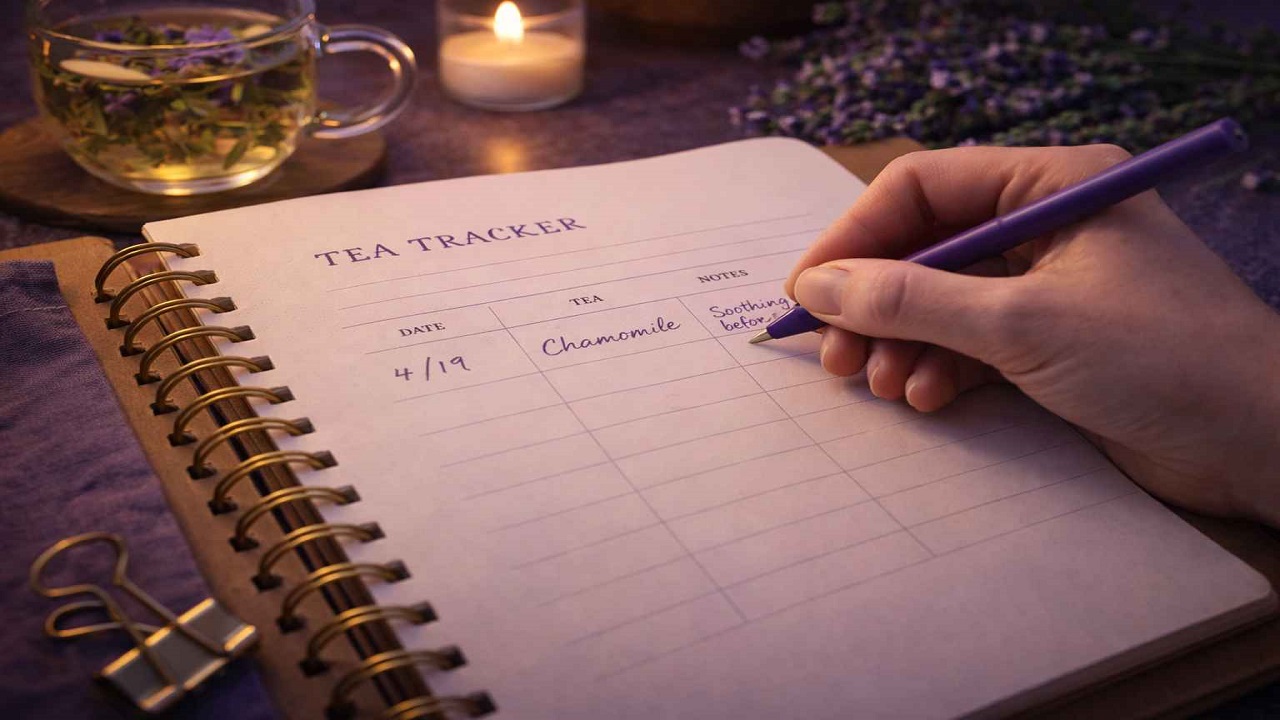
Track your brews, sleep wins, and tweaks.
Download here (100% free, no email required):
📥 Download Your Free 30-Day Sleep Tea Challenge PDF
A Practical Note on Timing
General guidance across most of these studies suggests drinking tea 30-90 minutes before bed, allowing time for both the calming ritual and any active compounds to take effect — though exact timing wasn’t rigorously tested as its own variable in most of the trials above, so treat this as a reasonable practice rather than a precisely studied protocol.
Frequently Asked Questions
What is the strongest tea for sleep, based on evidence?
Chamomile currently has the largest and most consistent body of clinical research among teas specifically (as opposed to supplements or aromatherapy). Valerian is a close second.
When should I drink sleep tea?
Most commonly studied timing is 30-90 minutes before bed, though this varies by herb and wasn’t always tested as an isolated variable.
Can I drink herbal sleep tea every night?
Most of the herbs above are generally considered safe for regular use in the doses studied, but “generally safe” isn’t the same as “safe for everyone” — check with your doctor if you’re on medication (especially sedatives, blood thinners, or medications metabolized by the liver), pregnant, or nursing.
Sources Referenced in This Article
- Kazemi, A., et al. “Effects of chamomile (Matricaria chamomilla L.) on sleep: A systematic review and meta-analysis of clinical trials.” Complementary Therapies in Medicine, 2024. sciencedirect.com
- Lee, J., et al. “Effects of Passiflora incarnata Linnaeus on polysomnographic sleep parameters in subjects with insomnia disorder.” International Clinical Psychopharmacology, 2019 (published in the 2020 issue). pubmed.ncbi.nlm.nih.gov/31714321
- “Standardized Extract of Valeriana officinalis Improves Overall Sleep Quality in Human Subjects with Sleep Complaints.” Advances in Therapy, 2024. pubmed.ncbi.nlm.nih.gov/37899385
- Qu, W-M., et al. “Honokiol promotes non-rapid eye movement sleep via the benzodiazepine site of the GABAA receptor in mice.” British Journal of Pharmacology, 2012. pmc.ncbi.nlm.nih.gov/articles/PMC3449263
- Mathews, I.M., et al. “Clinical Efficacy and Tolerability of Lemon Balm (Melissa officinalis L.) in Psychological Well-Being: A Review.” Nutrients, 2024. [PMID: 39458539]
- Xu, K., et al. “Effects of aromatherapy on sleep quality in older adults: A meta-analysis.” Medicine, 2024. pmc.ncbi.nlm.nih.gov/articles/PMC11630975
- Albalawi, A.A. “Dual impact of Ashwagandha: Significant cortisol reduction but no effects on perceived stress.” Nutrition and Health, 2025. [PMID: 40746175]
- Zick, S.M., et al. “Preliminary examination of the efficacy and safety of a standardized chamomile extract for chronic primary insomnia.” BMC Complementary and Alternative Medicine, 2011. pmc.ncbi.nlm.nih.gov/articles/PMC3198755










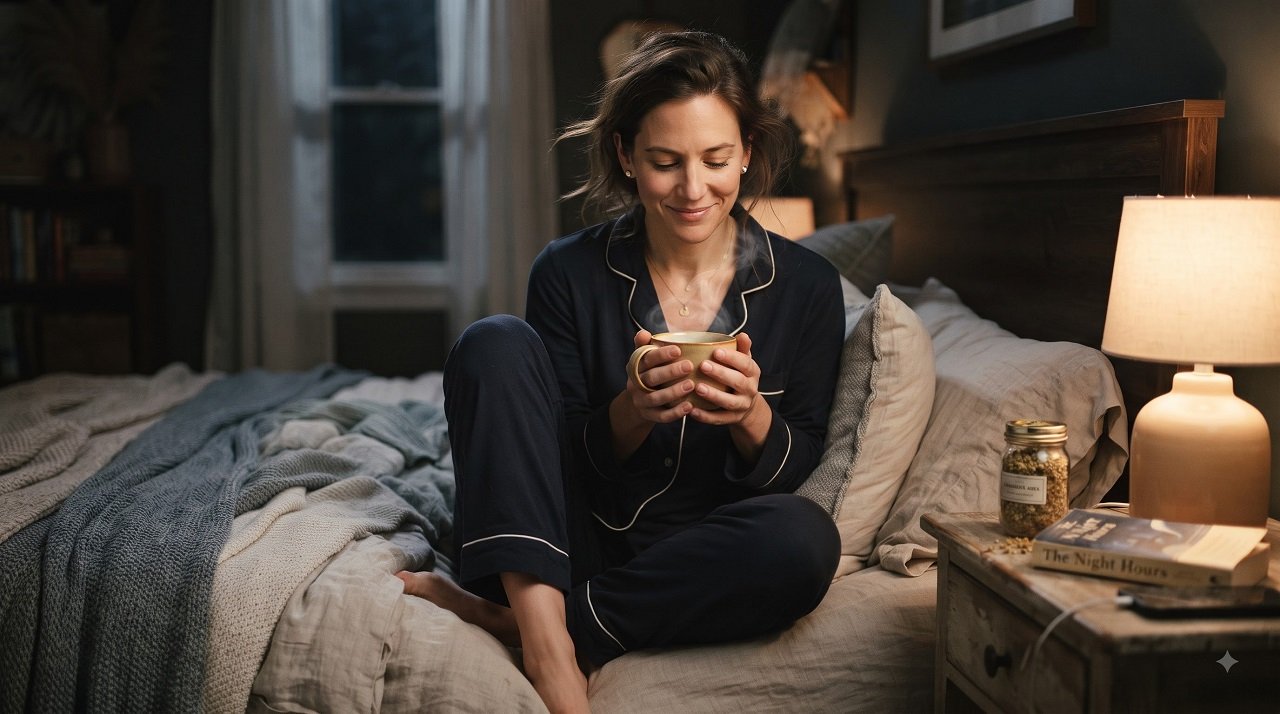
Disclaimer: This article is for informational purposes only and is not a substitute for professional medical advice. Chamomile tea is not a treatment for sleep disorders — always consult your doctor before adding it to your routine, especially if you are pregnant, breastfeeding, taking medication, or managing a chronic health condition.
Quick answer: One cup of chamomile tea — brewed with 1 to 2 teaspoons of dried flowers (or one tea bag) steeped for 5 to 10 minutes, covered — drunk 30 to 45 minutes before bed, is the amount most sleep research is actually based on. Drinking three or four cups doesn’t add extra sleep benefit; it mostly adds nighttime bathroom trips. The calming effect comes from apigenin, a compound in chamomile that binds to GABA receptors in the brain, and research shows it modestly improves sleep quality and reduces nighttime awakenings, though it doesn’t appear to significantly increase total sleep time.
That’s the short version. Below is the complete guide: the science behind why chamomile tea works, the exact brewing method that affects how much of the active compound ends up in your cup, the best timing window, how tea compares to chamomile extract and capsules on dosage, and who should be cautious before making it a nightly habit.
Key Takeaways
- Chamomile’s calming effect comes from apigenin, a flavonoid that binds to GABA-A receptors in the brain — the same receptor family targeted by anti-anxiety medications, just far more mildly
- One cup (1–2 teaspoons of dried flowers, steeped covered for 5–10 minutes) is the amount used in most of the clinical research, not multiple cups
- Drinking chamomile tea 30 to 45 minutes before bed gives the compound enough time to absorb before you lie down
- People with ragweed, daisy, or related plant allergies, those on blood thinners or sedatives, and anyone pregnant or breastfeeding should check with a doctor before regular use
- Chamomile tea supports better sleep quality and fewer nighttime awakenings — it’s a gentle nudge, not a substitute for care if you have ongoing insomnia
Understanding How Chamomile Tea Affects Sleep
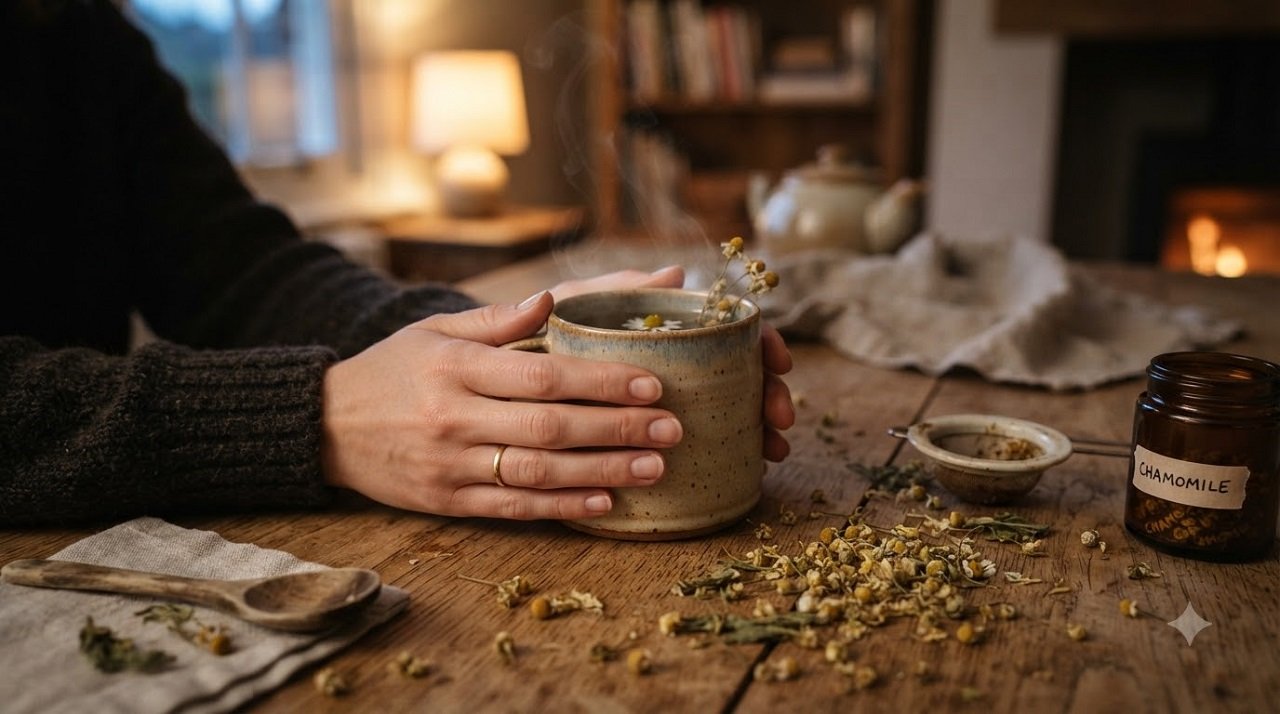
Chamomile tea comes from the dried flowers of Matricaria chamomilla (German chamomile), one of the most widely consumed herbal teas in the world. Its reputation as a bedtime drink isn’t just tradition — there’s an identifiable compound behind it.
Apigenin and the Brain’s GABA Receptors
Chamomile flowers contain apigenin, a flavonoid that binds to GABA-A receptors in the brain. GABA (gamma-aminobutyric acid) is the nervous system’s main calming signal — it slows down neural activity. Apigenin attaching to these receptors produces a mild version of that effect, similar in mechanism, though far gentler in strength, to how prescription anti-anxiety medications work on the same receptor family.
This is also why chamomile tea feels relaxing rather than knock-you-out sedating. A single cup delivers a small, diffuse dose of apigenin — roughly 3 to 5 mg — not a concentrated one.
What the Research Actually Shows
“There are theoretical reasons to suspect that chamomile might interact with other drugs as well, such as sedatives.” — reflecting the National Center for Complementary and Integrative Health’s review of herb-drug interactions
A 2024 systematic review and meta-analysis of clinical trials, published in Complementary Therapies in Medicine, found that chamomile was associated with fewer nighttime awakenings and modestly better perceived sleep quality — but it did not meaningfully increase total sleep duration. Importantly, most of the strongest results in that review came from concentrated chamomile extract, not tea, so the effect of a cup of tea specifically is likely smaller and gentler than headlines about chamomile “curing insomnia” might suggest.
A separate randomized controlled trial in the Journal of Advanced Nursing tested chamomile tea itself — not extract — in 80 postpartum women with poor sleep. The group drinking one cup daily for two weeks had measurably better sleep scores than the control group, though the benefit faded once they stopped drinking it.
What this means for you: chamomile tea is a real, evidence-supported nudge toward better sleep, not a dramatic fix. It works best as a consistent habit, not a one-off remedy for a single bad night.
How Much Chamomile Tea Should You Drink for Sleep?
There’s no officially standardized “chamomile dose” the way there is for a supplement like melatonin, since chamomile is a whole herb and potency varies with freshness, brand, and brewing method. But the amount used across most of the human research is consistent and worth following closely.
| Amount | Effect |
|---|---|
| Less than 1 teaspoon of dried flowers | Weak, watery brew — too little apigenin to matter much |
| 1–2 teaspoons dried flowers (or 1 tea bag) per cup — the researched amount | Delivers roughly 3–5 mg of apigenin, the dose reflected in most sleep studies |
| 3–4 cups daily (general safe upper range) | Generally considered safe for most healthy adults, but offers no added sleep benefit and increases the chance of nighttime waking to urinate |
| 4–5+ concentrated cups daily, long-term | Associated with a documented case of a serious bleeding event in a patient on blood thinners — an extreme example, but a real one |
If you want a stronger cup without drinking more liquid, increase the amount of dried flowers per cup rather than brewing a second cup.
How to Brew Chamomile Tea for Sleep
How you brew chamomile directly affects how much apigenin ends up in your cup — this step is where most articles skip real detail.
Brewing Steps
- Use 1–2 teaspoons of dried chamomile flowers (or one quality tea bag) per 8 oz (240 ml) of water. Loose dried flowers generally produce a stronger, fresher brew than pre-packaged bags.
- Heat water just below boiling, around 200°F (93°C) — water that’s too hot can degrade some of the delicate compounds.
- Steep for 5 to 10 minutes, covered. Chamomile needs longer than black or green tea to release its active compounds fully, and covering the cup keeps the volatile oils from escaping with the steam.
- Strain and drink it warm. The warmth itself supports relaxation as part of the wind-down ritual, separate from the herb’s chemistry.
Common Brewing Mistakes to Avoid
- Steeping for less than 5 minutes, which under-extracts apigenin and leaves you with a weak, mostly flavorless cup
- Leaving the cup uncovered while it steeps, which lets the volatile calming compounds escape with the steam
- Using boiling water straight off the heat rather than letting it cool slightly first
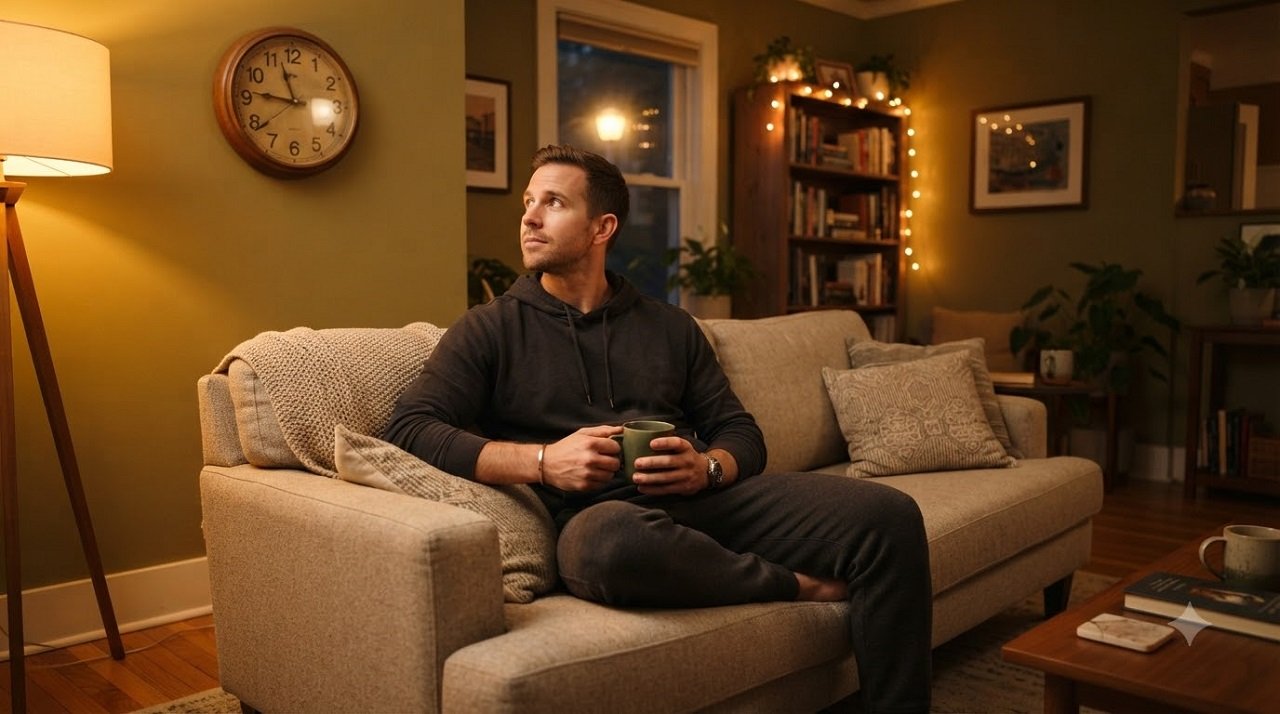
Best Time to Drink Chamomile Tea Before Bed
| Timing | What Happens |
|---|---|
| Right before lying down | Not enough time for apigenin to absorb — you’ll be settling in before it takes effect |
| 30–45 minutes before bed (ideal window) | Gives your body time to absorb and use apigenin as you’re winding down |
| 60+ minutes before bed | Still effective, but you may feel the calming effect before you’re actually ready to sleep |
| Right after a heavy dinner | Absorption may be slower and less predictable |
The 30-to-45-minute window reflects roughly how long it takes apigenin to be absorbed through the gut lining, enter the bloodstream, and reach the brain in most adults.
Chamomile Tea vs. Extract vs. Capsules: Comparing the Doses
This is the part most “how much chamomile” articles never explain, and it matters if you’re deciding between a nightly cup and a supplement-aisle product.
| Form | Typical Dose for Sleep | Apigenin Delivered | Best For |
|---|---|---|---|
| Chamomile tea | 1 cup (1–2 tsp dried flowers), nightly | ~3–5 mg per cup | Gentle, routine-based support; lower cost |
| Chamomile extract (liquid or capsule) | 400–560 mg daily, often split into two doses | Higher, more concentrated | People wanting a stronger, more consistent dose |
| Standardized apigenin supplement | 50–200 mg daily — based mostly on theoretical and animal data, not strong human trials | Isolated compound | Not well-studied in humans yet; approach cautiously |
If you’ve tried a nightly cup of tea for a few weeks with no noticeable difference, this potency gap is often why — not that chamomile “doesn’t work” for you personally.
How Many Cups Is Too Much?
For most healthy adults, up to 3–4 cups a day is considered safe overall. But for sleep specifically, more isn’t better, and higher intake carries some real downsides worth knowing:
- Frequent nighttime urination, which can undo any sleep benefit by waking you up anyway
- Higher chance of an allergic reaction, particularly for people sensitive to the daisy plant family
- A documented, though rare, bleeding-risk case: a 70-year-old woman on the blood thinner warfarin developed a serious bleeding event after drinking 4–5 cups of strong chamomile tea daily alongside a chamomile-based lotion — an extreme, high-dose example, but a useful reminder that “natural” doesn’t mean “unlimited”
Who Should Be Careful With Chamomile Tea
| Generally Fine With Regular Use | Check With a Doctor First |
|---|---|
| Healthy adults with no known plant allergies | Anyone with a ragweed, daisy, marigold, or chrysanthemum allergy |
| People not currently on blood-thinning medication | Anyone taking warfarin or other anticoagulants |
| People not combining it with sedating medications | Anyone on prescription sedatives, sleep medication, or anti-anxiety medication |
| Adults with a scheduled routine, one cup nightly | Anyone pregnant, breastfeeding, or scheduled for upcoming surgery |
Chamomile belongs to the Asteraceae (daisy) plant family, so cross-reactive allergic reactions are possible in people already sensitive to ragweed or related plants. Because chamomile contains coumarin-related compounds, it has also been linked to a small number of bleeding-risk case reports in people on blood thinners — generally rated as a minor-to-moderate interaction, but worth mentioning to a doctor or pharmacist if you drink it regularly rather than occasionally.
A Simple Bedtime Routine That Uses Chamomile Tea Well
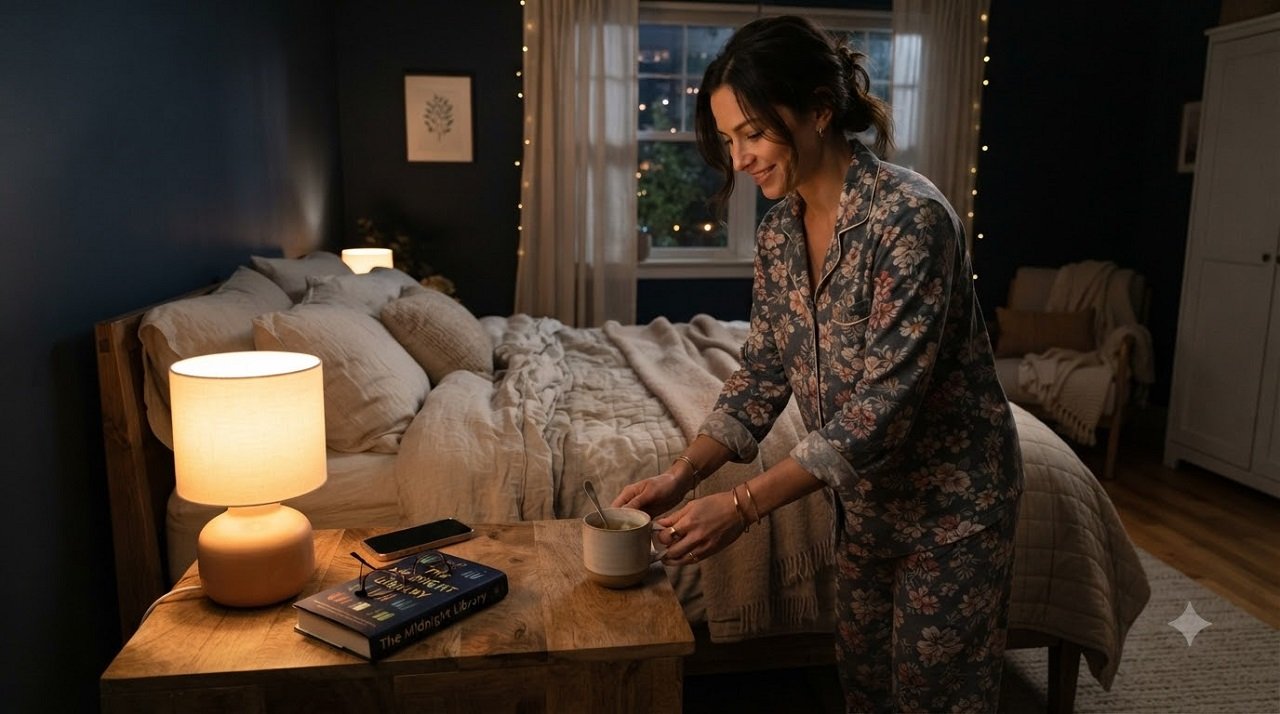
Chamomile tea works best as one piece of a wind-down routine, not a standalone fix:
- 90 minutes before bed: dim the lights around your home — bright light delays your body’s natural melatonin release
- 60 minutes before bed: step away from screens, or switch them to night mode
- 45 minutes before bed: brew your chamomile tea slowly — the ritual itself signals to your nervous system that the day is ending
- 30–45 minutes before bed: drink it somewhere quiet, away from screens, ideally while reading, journaling, or simply sitting still
“Drinking chamomile tea about 45 to 60 minutes before bedtime may help you relax as part of your nighttime routine.” — reflecting guidance published by the Sleep Foundation
The tea helps. The consistency of the routine around it does a lot of the real work.
When Chamomile Tea Isn’t Enough
Chamomile tea is a mild, supportive tool — not a treatment for a diagnosed sleep disorder. Reach out to a doctor if:
- You’ve struggled to fall or stay asleep for more than three weeks
- Poor sleep is affecting your mood, memory, or ability to function during the day
- You suspect sleep apnea — loud snoring, gasping, or choking during sleep
- You’re relying on any sleep aid, natural or otherwise, every single night just to get by
Conclusion
Getting the most out of chamomile tea for sleep comes down to a few simple, specific things: one properly brewed cup (not several), steeped covered for a full 5 to 10 minutes, drunk 30 to 45 minutes before bed.
The evidence behind it is real but modest — fewer nighttime awakenings and better perceived sleep quality, not a dramatic increase in total sleep time — and it works best folded into a consistent wind-down routine rather than used as an occasional emergency fix.
For most healthy adults, that makes it a low-risk, genuinely useful addition to a bedtime routine — as long as you know the handful of situations, like blood-thinner use or a ragweed allergy, where it’s worth checking with a doctor first.
Frequently Asked Questions
Is it okay to drink chamomile tea every night for sleep?
For most healthy adults, one cup nightly is considered safe for regular use. If you have allergies to ragweed or related plants, take blood thinners, or are pregnant or breastfeeding, check with your doctor first.
How many cups of chamomile tea should I drink before bed?
One cup, brewed with 1–2 teaspoons of dried chamomile flowers and steeped covered for 5–10 minutes, is the amount most research is based on. Drinking more doesn’t appear to improve the sleep benefit.
Does chamomile tea actually help you sleep, or is it just a placebo?
Research suggests a real, modest effect — mainly fewer nighttime awakenings and improved perceived sleep quality — rather than a dramatic increase in total sleep time. The strongest evidence comes from chamomile extract rather than tea specifically.
What is the best time to drink chamomile tea for sleep?
Around 30 to 45 minutes before bed, giving apigenin enough time to absorb before you lie down.
Can you drink too much chamomile tea?
Yes. Beyond 3–4 cups a day, you’re more likely to deal with frequent nighttime urination, a higher chance of allergic reaction if you’re sensitive to the daisy family, and, in rare high-dose cases, interactions with blood-thinning medication.
People Also Ask
Is chamomile tea or chamomile extract better for sleep?
Extract delivers a higher, more concentrated dose of apigenin and has slightly stronger research support, but tea is gentler, lower-cost, and easier to build into a nightly routine. Many people find tea is enough for mild sleep support.
Does chamomile tea make you sleepy right away?
No — the effect is gradual, not sedating. Most people feel a mild sense of calm within 30 to 45 minutes rather than sudden drowsiness.
Can chamomile tea help with anxiety-related sleep trouble specifically?
Some research suggests chamomile may modestly ease mild anxiety symptoms, which can indirectly support sleep for people whose insomnia is anxiety-driven — though it isn’t a substitute for treating an anxiety disorder directly.
Is it safe to give chamomile tea to children for sleep?
This wasn’t covered in the dosing research referenced here and should be discussed directly with a pediatrician, since dosing and safety data in children differ from adults.
Scientific References
- Kazemi A, Shojaei-Zarghani S, Eskandarzadeh P, Hashempur MH. Effects of chamomile (Matricaria chamomilla L.) on sleep: A systematic review and meta-analysis of clinical trials. Complementary Therapies in Medicine. 2024;84:103071. https://doi.org/10.1016/j.ctim.2024.103071
- Chang SM, Chen CH. Effects of an intervention with drinking chamomile tea on sleep quality and depression in sleep disturbed postnatal women: a randomized controlled trial. Journal of Advanced Nursing. 2016;72(2):306-315. https://pubmed.ncbi.nlm.nih.gov/26483209/
- Sah A, Naseef PP, Kuruniyan MS, Jain GK, Zakir F, Aggarwal G. A Comprehensive Study of Therapeutic Applications of Chamomile. Pharmaceuticals. 2022;15(10):1284. https://pubmed.ncbi.nlm.nih.gov/36297396/
- National Center for Complementary and Integrative Health (NCCIH). Herb-Drug Interactions: What the Science Says. https://www.nccih.nih.gov/health/providers/digest/herb-drug-interactions-science
- Segal R, Pilote L. Warfarin interaction with Matricaria chamomilla. CMAJ. 2006;174(9):1281-1282. https://pubmed.ncbi.nlm.nih.gov/16636327/
- Hieu TH, et al. Therapeutic efficacy and safety of chamomile for state anxiety, generalized anxiety disorder, insomnia, and sleep quality: A systematic review and meta-analysis. Phytotherapy Research. 2019;33(6):1604-1615. https://pubmed.ncbi.nlm.nih.gov/31006899/
This article is for informational purposes only and is not a substitute for professional medical advice. Chamomile tea is not a treatment for sleep disorders — always consult your doctor before adding it to your routine, especially if you are pregnant, breastfeeding, taking medication, or managing a chronic health condition.
Natural Sleep Remedies
The Science of Sleep Hygiene: Evidence-Based Strategies for Improving Sleep Quality Without Medication
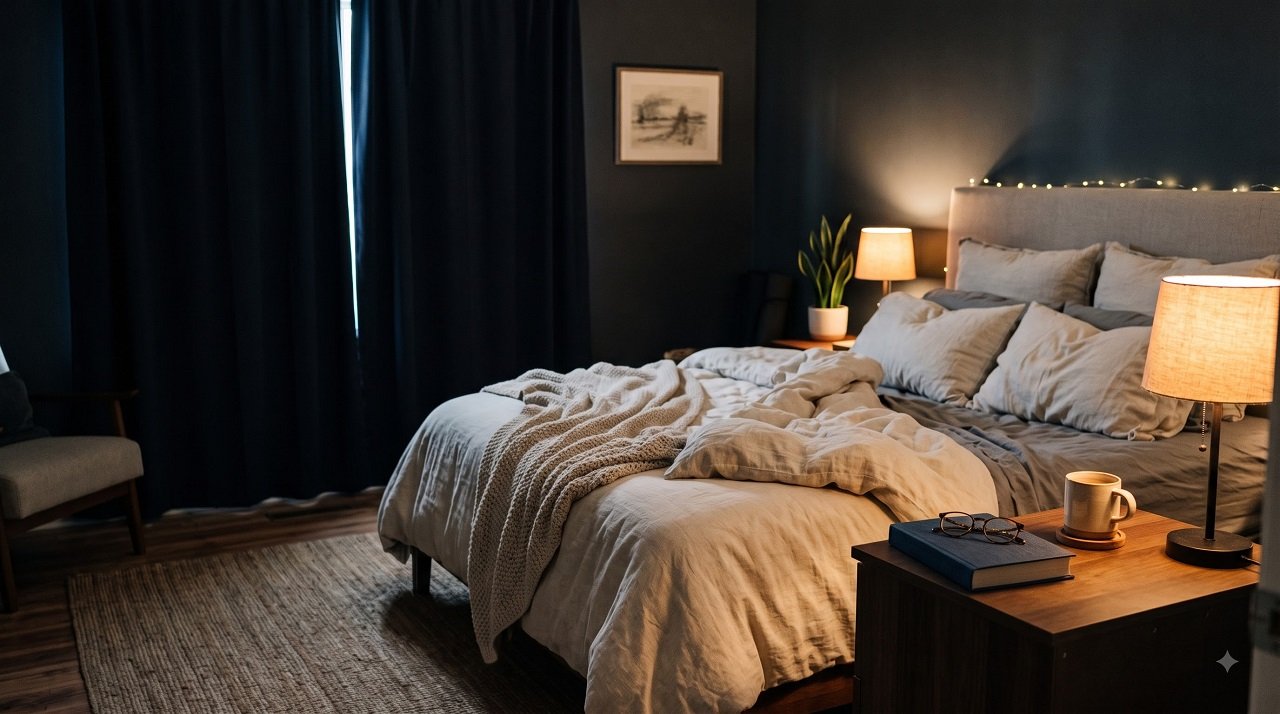
Disclaimer: This article is for educational purposes and does not replace professional medical advice for chronic insomnia or sleep disorders. If sleep problems persist despite consistent habit changes, talk to your doctor or a sleep specialist.
Almost everyone deals with a rough patch of sleep occasionally — a stressful week, jet lag, a late night that throws off the next few. “Sleep hygiene” sounds clinical, but it’s really just a combination of environmental and behavioral habits that make good sleep more likely, not a rigid checklist you either pass or fail. Here’s what the actual research supports, without the miracle-cure framing that shows up so often in sleep content.
Understanding Your Circadian Rhythm (The Body’s Internal Clock)

Your circadian rhythm is a roughly 24-hour internal cycle that regulates when you feel alert and when you feel sleepy, driven largely by light exposure and a hormone called melatonin. Melatonin production naturally rises in the evening as light decreases, signaling to your body that sleep is approaching, and falls in the morning as light increases.
Harvard Medical School’s sleep research specifically points to consistent wake-up times — not bedtimes — as the stronger anchor for this rhythm. Your body adjusts more reliably to a fixed wake time than a fixed bedtime, since natural light exposure shortly after waking is one of the primary cues your circadian system uses to calibrate the rest of your day.
The Real Impact of Blue Light and Screen Time
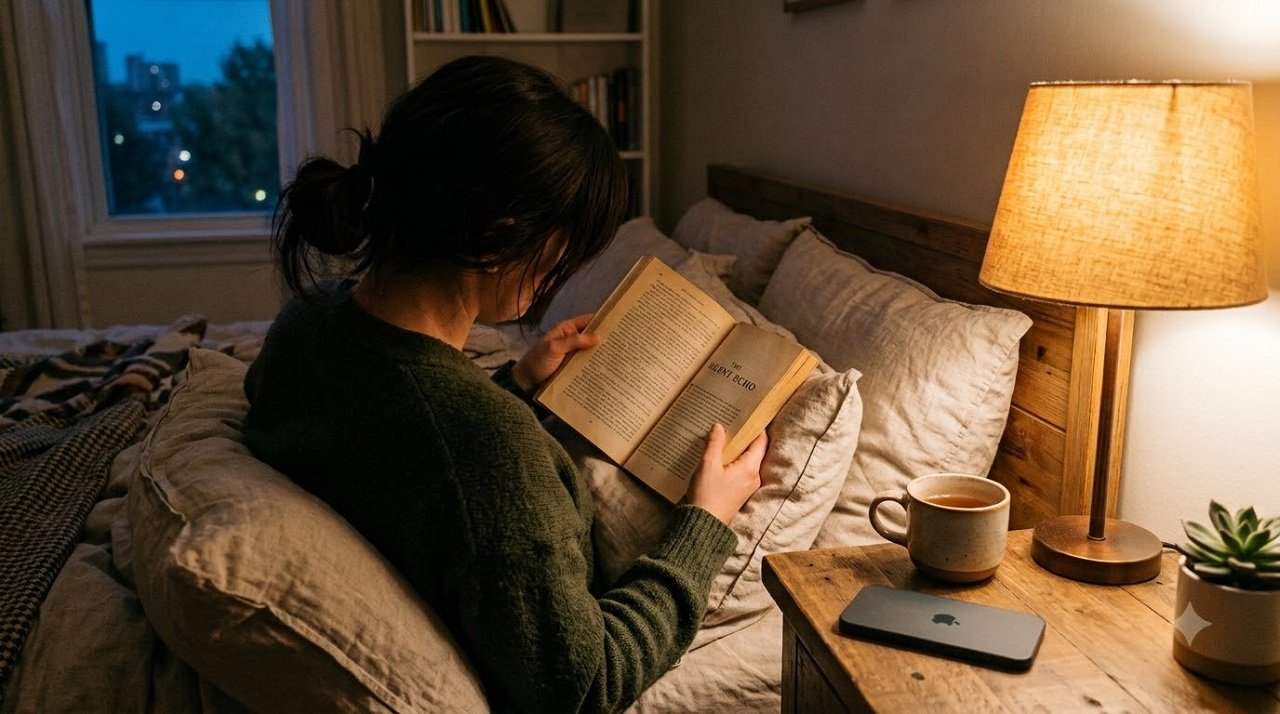
Blue light — the wavelength emitted heavily by phone, tablet, and computer screens — suppresses melatonin production more than other light wavelengths, which is why scrolling on your phone right before bed can genuinely delay your body’s natural signal that it’s time to sleep.
Practical, evidence-based alternatives that don’t require giving up your evening entirely:
- Use your device’s built-in night mode or blue-light filter starting a couple of hours before bed
- Read a physical book instead of a screen for the last 30-60 minutes before sleep
- Dim overhead lights 1-2 hours before bed rather than keeping full brightness until the moment you turn in
None of these require eliminating screens completely — the goal is reducing the specific signal that delays melatonin, not treating evening technology as inherently harmful.
Environmental Tweaks Backed by Research
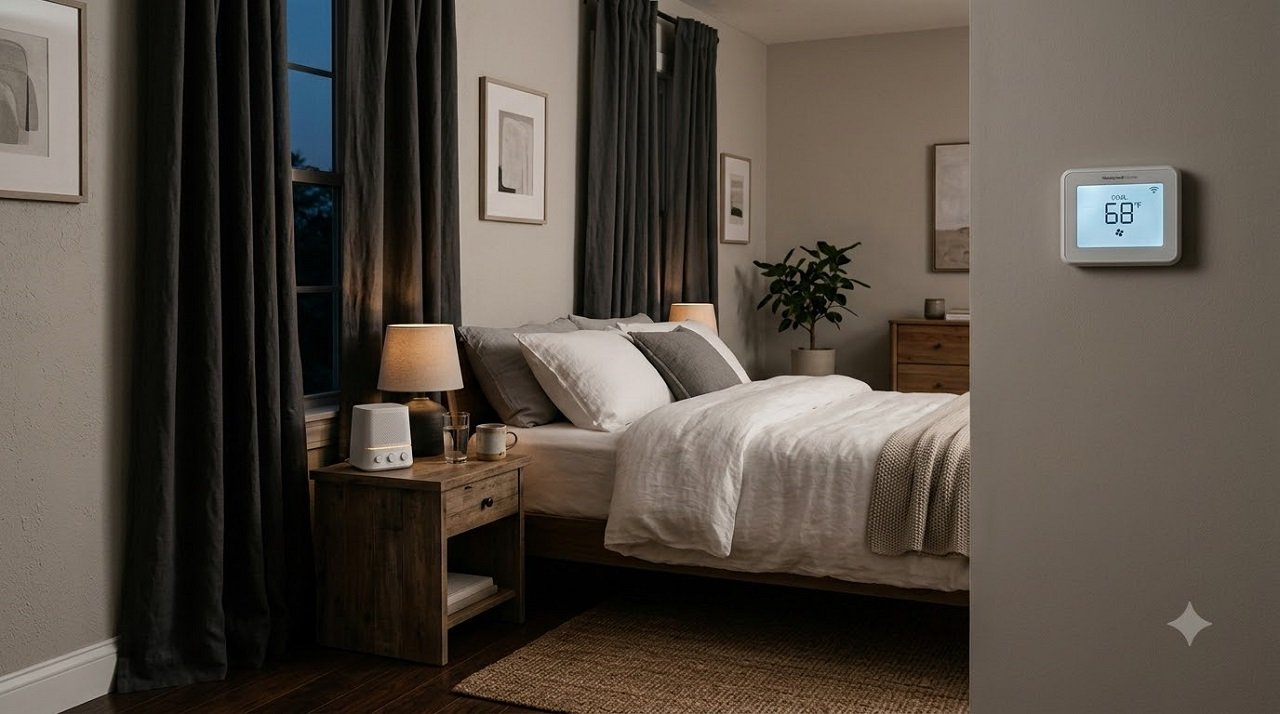
Temperature: A cooler room — commonly cited around 65°F (18°C) — supports the natural drop in core body temperature your body needs to initiate and maintain deep sleep. Research on nighttime ambient temperature has found sleep efficiency drops as rooms get warmer, particularly above the mid-70s°F, which is part of why “sleep cooler than feels obviously necessary” is fairly consistent advice across sleep research.
Light and noise: Blackout curtains address a genuinely disruptive factor — even small amounts of light exposure during the night can interfere with sleep continuity. White noise machines can help mask inconsistent household or outdoor noise, which is more disruptive to sleep than a constant, low-level sound.
Behavioral Strategies: A Glimpse into CBT-I Principles
Here’s something worth knowing if you’ve mainly heard about supplements or melatonin pills for sleep: the American College of Physicians’ 2016 clinical practice guideline recommends Cognitive Behavioral Therapy for Insomnia (CBT-I) — not medication — as the first-line treatment for chronic insomnia in adults. The guideline notes that while there isn’t strong head-to-head evidence proving CBT-I outperforms medication in every measure, it’s likely to have fewer harms, and sleep medications carry real risks of adverse effects.
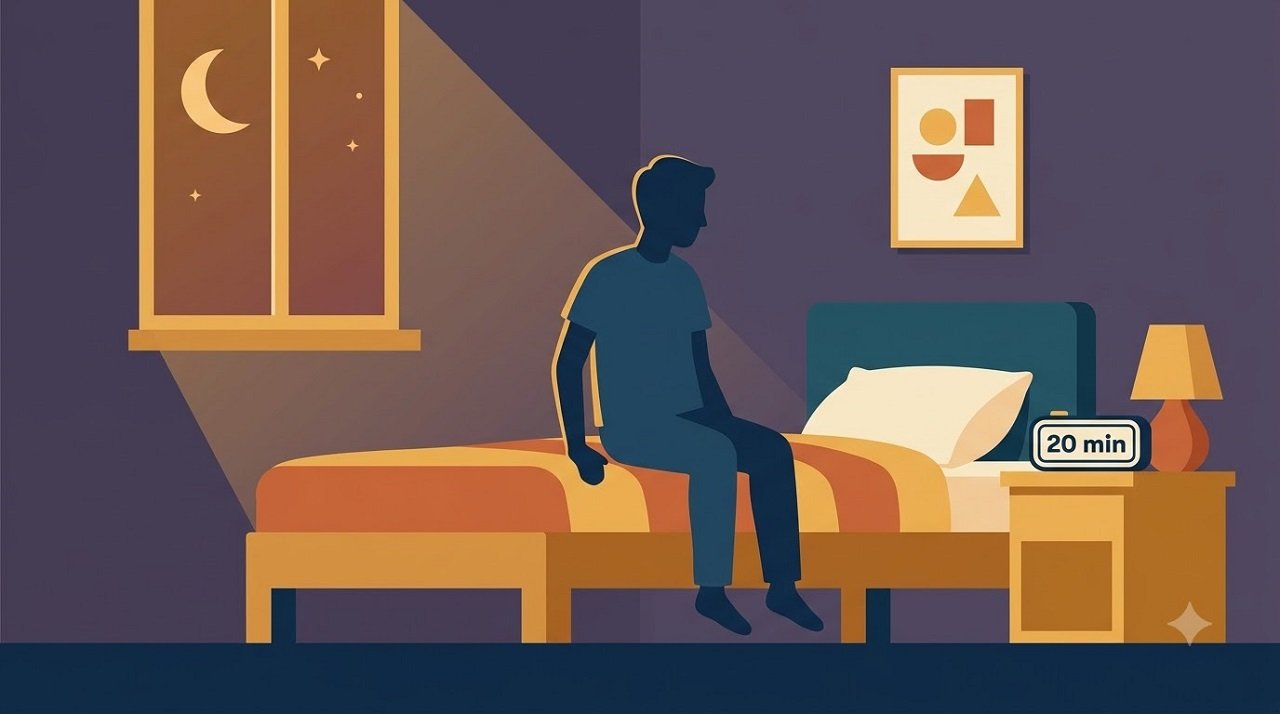
CBT-I is a structured, multi-part approach generally delivered by a trained therapist, combining cognitive techniques, behavioral interventions, and sleep education. One general concept worth understanding — as education, not a DIY prescription — is stimulus control: using your bed only for sleep (not scrolling, working, or watching TV in bed), and if you can’t fall asleep within about 20 minutes, getting up and doing something calm in low light until you feel sleepy again, rather than lying there growing frustrated. The idea is to strengthen your brain’s association between your bed and sleep specifically, rather than bed and wakeful frustration.
If sleep difficulty is a persistent, ongoing pattern rather than an occasional rough night, a full CBT-I program with a trained provider — not just these general concepts — is the evidence-based next step.
When to Seek Professional Help
There’s a real difference between occasional poor sleep (a stressful week, travel, a late night) and chronic insomnia, which involves difficulty falling or staying asleep at least three nights a week for three months or more. Loud snoring, gasping for air during sleep, or excessive daytime sleepiness despite adequate time in bed can also indicate sleep apnea, a distinct condition that needs medical evaluation rather than sleep hygiene adjustments alone.
If sleep problems persist despite consistent habit changes, talk to your doctor or a sleep specialist — chronic insomnia and sleep apnea both have effective, evidence-based treatments that go beyond what home strategies alone can address.
Conclusion
Good sleep is built on consistent, unglamorous habits — a steady wake time, less blue light in the evening, a cooler room, and understanding that behavioral approaches like CBT-I are the actual gold standard for chronic issues, not just a supplement or gadget. None of this requires a dramatic overhaul overnight.
Which of these habits are you going to try tonight?
Frequently Asked Questions
What is sleep hygiene?
A combination of environmental and behavioral habits — consistent wake times, reduced evening light exposure, appropriate bedroom temperature — that support your body’s natural sleep processes, rather than a rigid set of rules.
Is CBT-I better than sleep medication?
The American College of Physicians recommends CBT-I as the first-line treatment for chronic insomnia specifically because it’s likely to carry fewer risks than medication, though direct head-to-head comparisons are limited. It’s generally delivered by a trained therapist for full effectiveness.
Does blue light really affect sleep?
Yes — blue light from screens suppresses melatonin production more than other light wavelengths, which can delay your body’s natural signal that it’s time to sleep.
What temperature is best for sleeping?
Research points to roughly 65°F (18°C) as a commonly supported target, since a cooler room supports the natural drop in core body temperature involved in initiating and maintaining deep sleep.
Sources Referenced in This Article
- Harvard Medical School / Harvard Health — consistent wake times and circadian rhythm
- Qaseem, A., et al. “Management of Chronic Insomnia Disorder in Adults: A Clinical Practice Guideline From the American College of Physicians.” Annals of Internal Medicine, 2016.
- ACP Newsroom — ACP Recommends Cognitive Behavioral Therapy as Initial Treatment for Chronic Insomnia
- Sleep Foundation — The Best Temperature for Sleep
- Sleep Foundation — Is Your Bedroom Too Warm? It Could Be Affecting Your Sleep

⚠️ Important Disclaimer: Always consult a qualified healthcare professional before making any changes to your diet, supplements, or sleep routine, especially if you are pregnant, nursing, on medication, or have any medical condition. Supplements can interact with medications — check with your doctor or pharmacist before regular use.
Each item below is evaluated by the actual strength of the research behind it, with real study sizes and real findings — not rounded-up or inflated numbers.
The Five We’ve Already Covered in Depth
Five of these have their own full, dedicated deep-dives with complete sourcing — rather than repeat their evidence here, here’s where to go for the full detail on each:
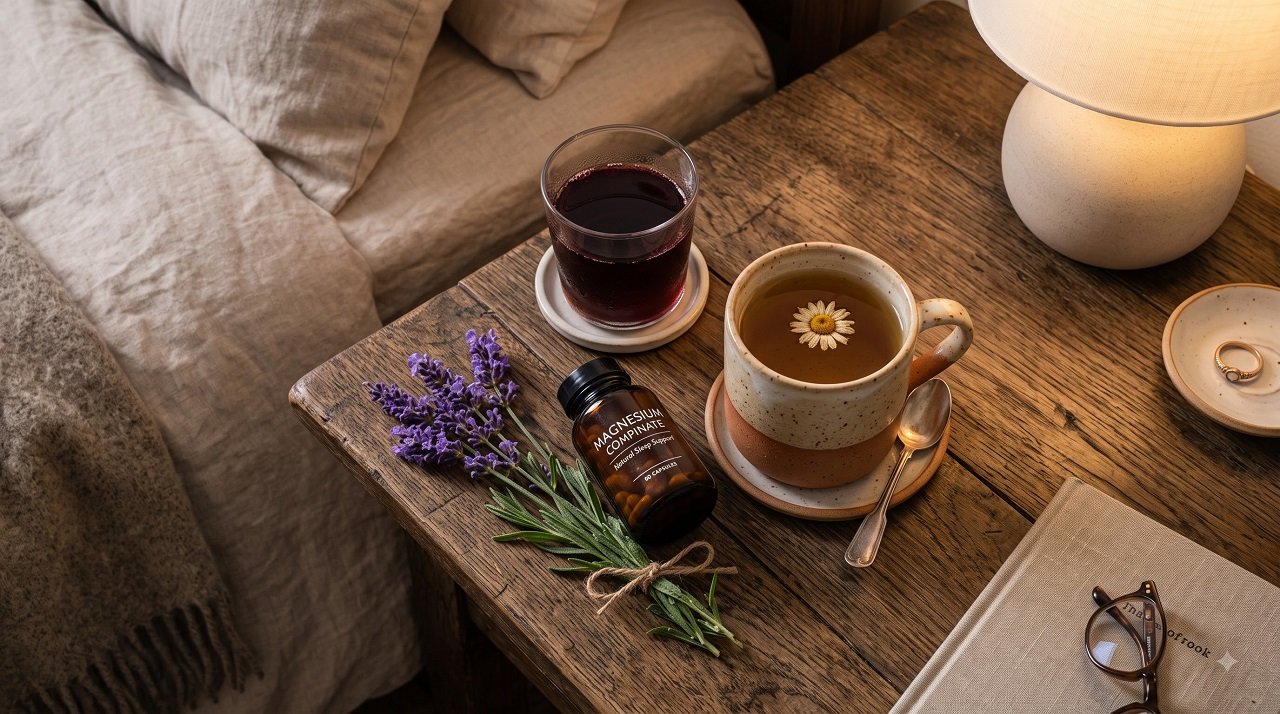
- Chamomile, valerian, passionflower, and 8 other sleep teas, ranked by evidence strength
- Tart cherry juice and its research-backed sleep effect
- Why you wake at 3 AM, and the physiological mechanisms behind it
- The 4-7-8 breathing technique, step by step
- Lavender for sleep — aromatherapy vs. tea vs. pillow spray, evidence-ranked
- Best bedroom temperature for sleep
The Rest, Evaluated Honestly
Magnesium (Glycinate)
The real study behind magnesium’s sleep-onset claim is a 2021 meta-analysis (with a 2024 correction notice for wording, not new data) covering 3 trials and 151 older adults. The reduction in time-to-fall-asleep — 17 minutes — is real and statistically significant; a separate improvement in total sleep time (16 minutes) was not statistically significant.
The study’s own authors rated the evidence quality as “low to very low” and said it was “substandard for physicians to make well-informed recommendations on usage.” That’s a meaningfully more cautious conclusion than magnesium is usually given credit for. A newer, differently-formulated option (magnesium L-threonate) has one promising placebo-controlled study behind it, though the overall evidence base for that form is also still early-stage.
Glycine
Some research suggests glycine (roughly 3g before bed) may improve subjective sleep quality and next-day alertness. The evidence base is smaller than for magnesium or melatonin, and much of the foundational research comes from a limited number of Japanese studies — promising, but not yet extensively replicated.
L-Theanine
L-theanine is associated with increased alpha brain wave activity, linked to a relaxed-but-alert state. Evidence for it as a standalone sleep aid (versus a general relaxation aid) is more limited than commonly presented; it’s most often studied in combination with other compounds rather than alone.
Valerian Root
Valerian has one of the longer research histories among sleep herbs. Evidence is genuinely mixed across studies — some show benefit, others don’t — which is a more accurate summary than claiming a uniform “reduces sleep latency” effect across “60 studies.” Individual response varies more with valerian than with better-evidenced options like chamomile.
Ashwagandha (KSM-66)
Ashwagandha’s research base is stronger for reducing cortisol and stress markers than for directly inducing sleep. Specific claimed percentages for “sleep efficiency improvement” vary significantly by study and population — treat it as a stress-support supplement with sleep as a secondary benefit, not a direct sedative.
Lemon Balm
Most commonly studied in combination with valerian, not alone — this makes it hard to isolate lemon balm’s individual contribution to any reported sleep benefit. Reasonable to include as part of a combination product; less established as a standalone remedy.
Apigenin (from Chamomile Extract)
Apigenin is the compound believed responsible for much of chamomile’s calming effect, with research suggesting it interacts with GABA-A receptors. Concentrated extract studies are more limited than tea-based chamomile research — see our full chamomile evidence breakdown for the tea-specific research.
Reishi Mushroom
Some research, including studies from Korea, has explored reishi for sleep in stressed adults. This is an earlier-stage evidence base than most other items on this list — promising but not yet extensively confirmed.
Weighted Blanket (10–15% of body weight)
Research on weighted blankets and insomnia severity shows genuine promise, though claimed effect sizes vary considerably by study population (general insomnia vs. specific conditions like anxiety or autism spectrum-related sleep issues) — a blanket “50% reduction” figure oversimplifies a more variable evidence picture.
Kiwi Fruit
The original kiwi-and-sleep research is a small 2011 New Zealand study — a real, specific, often-cited finding, but a single small study rather than a broad, repeated confirmation. Two kiwis before bed is a low-risk, food-based option worth trying, with appropriately modest expectations given the limited research base.
GABA
Research on GABA supplementation for sleep shows genuinely mixed results — some studies show benefit, others don’t, and there’s ongoing scientific debate about how much orally-supplemented GABA actually crosses the blood-brain barrier to have a direct effect. Reasonable to try, but don’t expect it to work reliably for everyone.
Passionflower
Passionflower has real research behind it, including a placebo-controlled polysomnography study — see the full passionflower evidence writeup in our tea rankings for the specific study details and dosing.
30-Day Natural Sleep Reset Challenge – FREE Downloadable PDF
I made a printable tracker with daily checkboxes, dosage reminders, and a sleep diary.
Download here (100% free, no email required):
📥 Download Your Free 30-Day Sleep Challenge PDF
Which of These Are Safe to Combine

If you’re considering more than one of these at once, a few pairings have reasonable support and a few are worth avoiding:
Generally fine together: Magnesium and L-theanine work through different mechanisms (physical relaxation vs. calming brain activity) with no known interaction concern. Low-dose melatonin and glycine is another commonly paired combination, since they address different parts of the sleep process (circadian timing vs. core body temperature drop).
Use caution combining: Valerian with other sedating supplements (kava, high-dose melatonin, prescription sedatives) can cause excessive next-day grogginess — these have additive sedative effects rather than complementary ones. If you’re trying valerian, introduce it on its own first before adding anything else, so you know what’s actually responsible if you notice side effects.
Always check with your doctor before combining supplements if: you take prescription medication (magnesium can affect absorption of some antibiotics and osteoporosis drugs; melatonin can interact with blood pressure and diabetes medications), you’re over 40 (natural melatonin production declines with age, making supplemental doses relatively more potent), or you’re stacking more than two or three of these at once.
Frequently Asked Questions
What is the strongest natural sleep aid, based on evidence?
Chamomile and magnesium both have genuine research support, though even magnesium’s evidence base is smaller and lower-quality than commonly presented. No single option has overwhelming, high-quality evidence — most are modest, real effects, not guaranteed fixes.
Are natural sleep aids safe long term?
Most have reasonable short-term safety profiles in the studies available, but “generally safe” isn’t the same as “studied long-term” — many trials run weeks, not years. Check with your doctor, especially if you’re combining multiple supplements or take other medications.
What drinks help you sleep?
Tart cherry juice and chamomile tea both have real, specific research behind them — see our dedicated posts linked above for the details on each.
How can I fall asleep faster naturally?
A combination of consistent sleep timing, a cool bedroom (see our temperature guide), and one or two well-evidenced options from this list (chamomile, magnesium) tends to work better than stacking many unproven supplements at once.
Sources Referenced in This Article
- Mah, J., Pitre, T. “Oral magnesium supplementation for insomnia in older adults: a Systematic Review & Meta-Analysis.” BMC Complementary Medicine and Therapies, 2021 (correction published 2024). ncbi.nlm.nih.gov/pmc/articles/PMC8053283
- Arab, A., et al. “The Role of Magnesium in Sleep Health: a Systematic Review of Available Literature.” Biological Trace Element Research, 2023. pubmed.ncbi.nlm.nih.gov/35184264
- Chan, V., Lo, K. “Efficacy of dietary supplements on improving sleep quality: a systematic review and meta-analysis.” Postgraduate Medical Journal, 2022. pubmed.ncbi.nlm.nih.gov/33441476
- Hausenblas, H.A., et al. “Magnesium-L-threonate improves sleep quality and daytime functioning in adults with self-reported sleep problems: A randomized controlled trial.” Sleep Medicine: X, 2024.
- Ubie Health — “Stop! Is Your Sleep Stack Safe? Mixing Risks You Must Know.” ubiehealth.com
- Performance Lab — “Magnesium and Melatonin: Can You Take Them Together?” performancelab.com
- Links to our own dedicated, fully-sourced posts on tea/chamomile/valerian/passionflower, tart cherry juice, 3 AM wake-ups, 4-7-8 breathing, lavender, and bedroom temperature (see above)


From Leaky Gut to Resilience: The Beta Glucan Breakthrough

Chamomile Tea for Sleep: How Much to Drink (And When)

Instant Relief for Trapped Gas Pain: Why Direction Matters More Than the Pose

PEMF Webinar

Why You Can’t Trust Big Pharma

The Anti-Cancer Body with Dr. Michael Karlfeldt
-
 Events2 months ago
PEMF Webinar
-
 Events3 months ago
Why You Can’t Trust Big Pharma
-
 Events4 months ago
The Anti-Cancer Body with Dr. Michael Karlfeldt
-

 Events3 months ago
The Cancer Conversation Your Oncologist Cannot Have in 15 Minutes
-

 Natural Sleep Remedies4 months ago
The 4-7-8 Breathing Technique: Step-by-Step Guide and What the Research Actually Shows
-

 Events5 months ago
Beyond the Brain
-

 Events4 weeks ago
HBOT ( Hyperbaric Oxygen Therapy ) Webinar
-

 Gut Health3 months ago
Unlock Incredible Gut Health Hacks and Transform Your Well-being Today!