
Health Tips
12 Daily Health Tips for Remote Workers: Beat the “WFH Slump” for Good

The content on this website – including articles, event announcements, personal experiences, and recommendations – is for informational and educational purposes only and is not medical advice. Always consult a qualified healthcare professional before making any changes to your diet, exercise, supplements, sleep habits, or wellness routines, especially if you are pregnant, nursing, on medication, or have any medical condition.
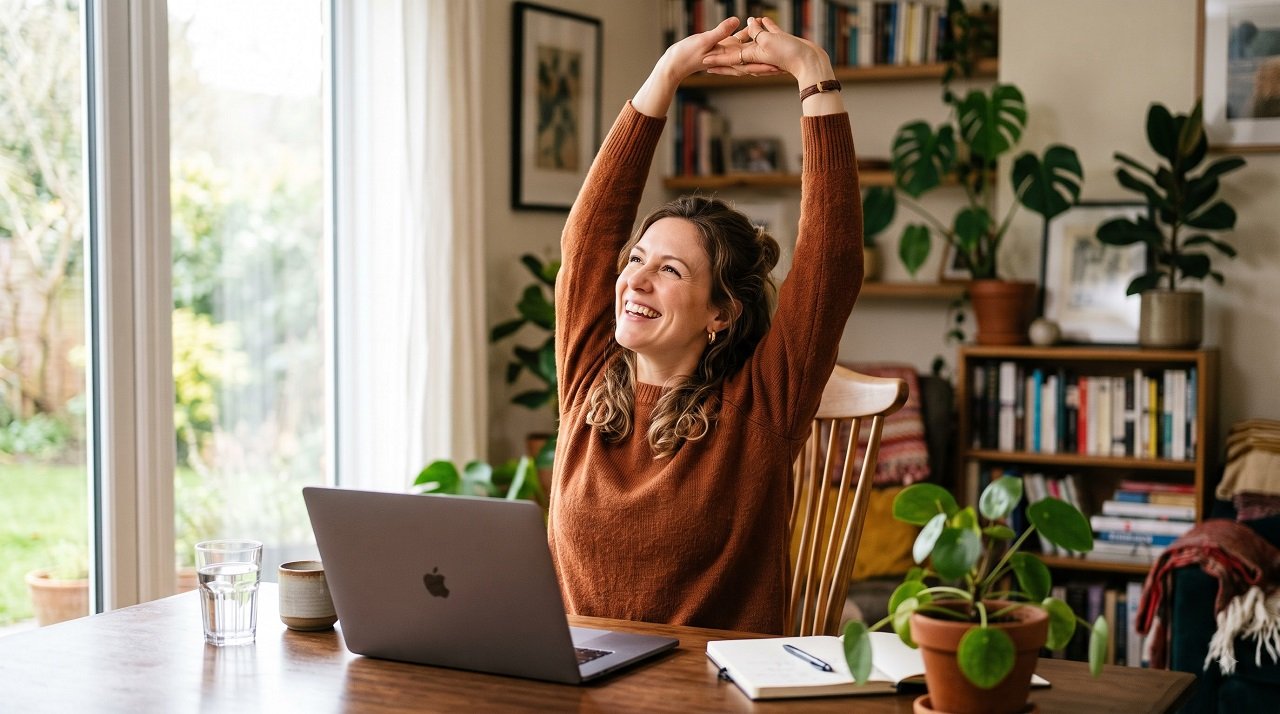
Wellness disclaimer: This article offers general wellness information for healthy adults and is not a substitute for individualized medical, ergonomic, or mental health advice. If you have chronic pain, a diagnosed condition, or ongoing symptoms like persistent eye strain, back pain, or low mood, please consult your doctor, an occupational therapist, or another qualified professional.
Working from home sounded like a dream — no commute, more flexibility, lunch in your own kitchen. But a few months in, a lot of remote workers notice something else creeping in: a stiff back, tired eyes by 3 p.m., snacking on autopilot, and a strange feeling of never quite “leaving work,” even though you never left the house.
This isn’t just in your head. Remote work removes a lot of the built-in movement and structure that an office naturally provides — the walk to a colleague’s desk, the commute that bookends your day, the walls between “work mode” and “home mode.” The good news is that most of these problems have simple, practical fixes. Here are 12 daily habits, organized by time of day, to help you actually feel better while working from home.
Why WFH Health Struggles Are So Common (The Data Behind the Slump)

Before the tips, it helps to understand what you’re actually up against. Remote work tends to reduce incidental daily movement — the walking you’d otherwise do getting to and from a building, between meetings, or to a shared lunch spot — while making snacking and screen time easier to fall into by default. Many remote workers also report blurrier boundaries between work and personal time, since there’s no physical commute to signal “the workday is over.” Recognizing these as structural challenges, not personal failures, makes it easier to build habits that specifically counter them rather than just relying on willpower.
Your Morning Routine: Set the Tone
Tip 1: Don’t Start Work in Your Pajamas
This sounds trivial, but it matters more than people expect. Getting dressed — even into comfortable clothes — signals a mental shift from “home mode” to “work mode,” which can help you feel more focused and present once you sit down.
Tip 2: Hydrate Before You Caffeinate
You go several hours without water overnight. Drinking a glass of water before your first coffee supports alertness and digestion, and it’s an easy win before the day gets busy.
Tip 3: Get a Few Minutes of Morning Light
Natural light exposure early in the day helps regulate your circadian rhythm — the internal clock that affects your sleep quality and energy levels. A CDC occupational health resource confirms that the body’s circadian pacemaker is most sensitive to light in the morning, where bright light causes a “phase advance” (falling asleep and waking up earlier) [1], and a 2024 daily-diary study of over 100 adults found that morning sunlight exposure specifically predicted better sleep quality the following night [2]. Even five minutes on a balcony, porch, or by an open window can help.
Your Workspace: Engineer It for Health
Tip 4: Use the 20-20-20 Rule for Your Eyes
Every 20 minutes, look at something roughly 20 feet away for 20 seconds. This is a widely recommended practice — endorsed by both the American Academy of Ophthalmology and the American Optometric Association — for reducing digital eye strain from continuous close-up screen focus [3]. One honest caveat most WFH articles leave out: a 2023 controlled study found limited evidence that the specific “20-20-20” timing outperforms other break intervals, suggesting the core benefit may come from taking any regular break from near-focus work, not the exact numbers [4]. Either way, building in regular eye breaks is worth doing.
Tip 5: Set Up a Basic Ergonomic “Command Station”
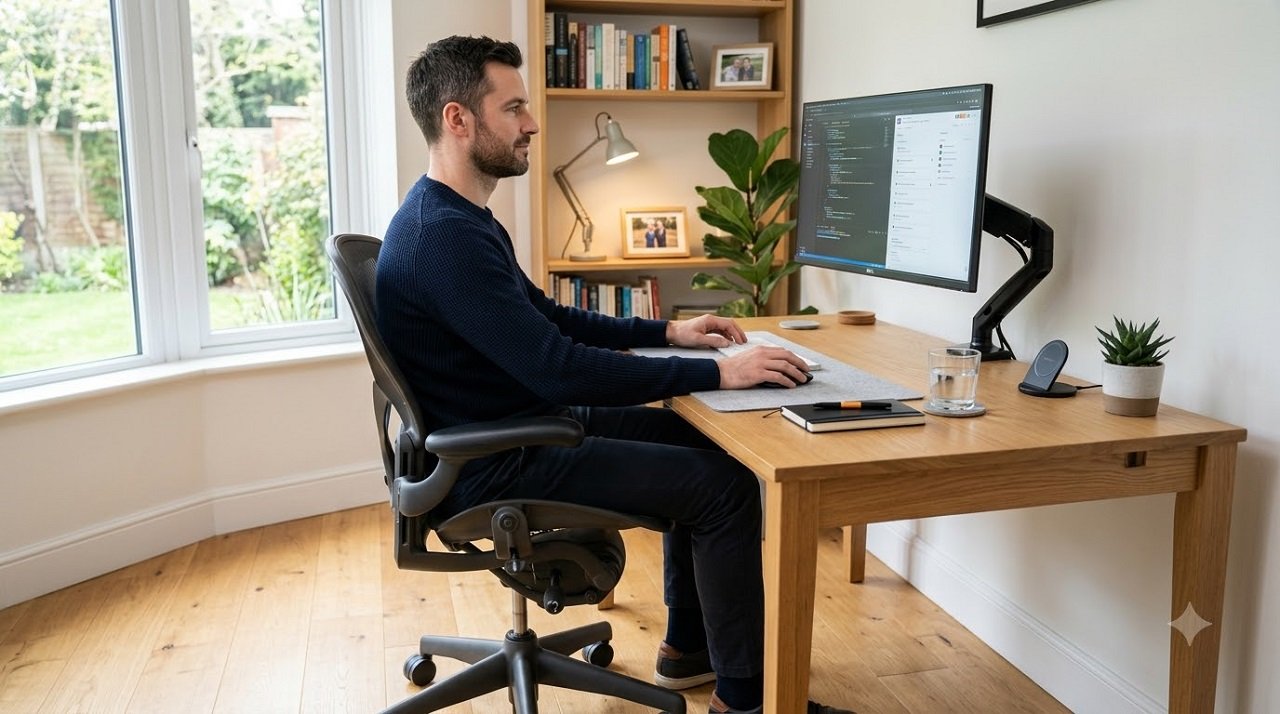
You don’t need an expensive setup — a few adjustments go a long way:
- Top of your screen roughly at eye level
- Feet flat on the floor (or a small footrest)
- Elbows close to your body at roughly a 90-degree angle
- A separate keyboard and monitor if you’re working from a laptop for long stretches
Tip 6: Alternate Sitting and Standing
You don’t need a fancy standing desk. Stacking a laptop on a stable box or shelf for part of the day works too. The goal isn’t to stand all day — it’s to avoid sitting in one position for hours straight.
Your Movement and Focus: Beat the Midday Slump
Tip 7: Schedule “Movement Snacks”
Set a recurring reminder for a five-minute walk or stretch every hour. These short bursts add up and directly counter the sedentary pattern that WFH tends to create — a CDC-published workplace study found that adding brief, frequent breaks from sitting reduced upper back and neck pain by over 50% and measurably cut sitting time among office workers [5].
Tip 8: Take “Walking Meetings” for Calls That Don’t Need a Screen
Any call where you don’t need to look at a shared screen is a good candidate for pacing around your space or stepping outside while you talk.
Tip 9: Try the Pomodoro Technique
Work in focused 25-minute blocks followed by a 5-minute break. This structure supports both focus and the regular movement breaks your body needs — and it directly addresses a gap most WFH health articles miss: pairing a productivity method with a health outcome, instead of listing them separately.
Your Nutrition: Avoid the Kitchen Graze
Tip 10: Prep Healthy Snacks in Advance
Cut vegetables, hard-boil a few eggs, or portion nuts into small containers at the start of the week. Having something ready reduces the odds of grazing on whatever’s easiest to grab.
Tip 11: Take a Real, Designated Lunch Break Away From Your Desk
Eating at your desk while working blurs the line between “break” and “work” and makes it easier to eat quickly without noticing fullness cues. Even 20–30 minutes away from your screen makes a difference.
Your Evening: Create a Firm Shutdown Ritual
Tip 12: Build a Digital “Quitting Time”
Close your work tabs, tidy your desk, and take a short walk or do something physical to mark the end of the workday. Without a commute to create this transition naturally, you have to build one intentionally — otherwise “just checking one more thing” can quietly extend your workday indefinitely.
Bonus: Mental and Social Health Tips
- Combat loneliness: Schedule a recurring virtual coffee chat or co-working session with a colleague or friend — remote work can reduce the small social interactions that happen naturally in an office.
- Set boundaries with housemates or family: A quick conversation about your work hours and when you’re not to be interrupted can prevent a lot of daily friction.
- Watch for burnout signs: Constant fatigue, irritability, or difficulty focusing that doesn’t improve with rest can be signs it’s time to reassess your workload or routine, not just push through.
How Many Breaks Should You Actually Take?
This is a commonly searched question that most WFH articles answer vaguely. A reasonable, widely cited structure is a short 5-minute break every 25–30 minutes of focused work (as in the Pomodoro method), plus one longer break of at least 20–30 minutes for lunch, and ideally one or two additional 5–10 minute movement breaks across the day. The exact ratio matters less than having some consistent rhythm — a day with zero built-in breaks is where most of the WFH health complaints (eye strain, stiffness, overeating, burnout) tend to concentrate.
A Simple Sample WFH Daily Schedule
| Time | Focus |
|---|---|
| 7:30 AM | Wake, hydrate, a few minutes of morning light |
| 8:00 AM | Get dressed, light breakfast |
| 8:30–10:30 AM | Focused work blocks (Pomodoro), movement snack between blocks |
| 10:30 AM | Short outdoor or stretch break |
| 12:30 PM | Real lunch break, away from the desk |
| 1:00–4:30 PM | Afternoon work blocks, alternating sitting/standing |
| 4:30 PM | Final movement snack or short walk |
| 5:30 PM | Digital shutdown ritual — tabs closed, desk tidied |
Treat this as a flexible template, not a rulebook — the goal is building in the structure a physical office would otherwise give you for free.
Frequently Asked Questions
How can I stay healthy while working from home?
Focus on rebuilding the structure an office naturally provides: regular movement breaks, a defined lunch break away from your desk, an ergonomic setup, and a clear start and end to your workday.
What are the disadvantages of working from home for health?
Common issues include a more sedentary routine, increased snacking, eye strain from extended screen time, poor posture from makeshift workspaces, and blurred boundaries between work and personal time that can affect sleep and stress levels.
How do I avoid weight gain working from home?
Prepping snacks in advance, taking a proper lunch break away from your screen, and scheduling regular movement throughout the day are the most consistently recommended strategies for avoiding mindless grazing and prolonged sitting.
How often should I take breaks when working from home?
A short break every 25–30 minutes of focused work, plus a longer lunch break of at least 20–30 minutes, is a commonly recommended baseline — with a couple of additional stretch or walk breaks spread through the day.
Do I really need a standing desk to work from home healthily?
No. A standing desk can help, but alternating position using whatever setup you have (like a raised laptop stand) provides similar benefits — consistency in changing position matters more than the specific equipment.
How do I stop working late when I work from home?
Building a consistent “shutdown ritual” — closing tabs, tidying your space, and doing a physical activity like a short walk — gives your brain the same “workday is over” signal a commute used to provide.
The Bottom Line
You don’t need to fix your entire routine overnight. Pick two or three tips from this list — maybe morning light, movement snacks, and a real lunch break — and build from there. Small, consistent structure is what turns remote work from something that quietly wears you down into something that genuinely works for your health.
Scientific References
- NIOSH/CDC — Module 2: Effects of Light on Circadian Rhythms: https://www.cdc.gov/niosh/work-hour-training-for-nurses/longhours/mod2/19.html
- Does sunlight exposure predict next-night sleep? A daily diary study among U.S. adults (PubMed): https://pubmed.ncbi.nlm.nih.gov/39077837/
- American Academy of Ophthalmology — Computers, Digital Devices and Eye Strain: https://www.aao.org/eye-health/tips-prevention/computer-usage
- Johnson S, Rosenfield M. 20-20-20 Rule: Are These Numbers Justified? Optometry and Vision Science 2023;100(1):52, discussed in Optometry Times: https://www.optometrytimes.com/view/deconstructing-20-20-20-rule-digital-eye-strain
- CDC Preventing Chronic Disease — Reducing Occupational Sitting Time and Improving Worker Health: The Take-a-Stand Project: https://www.cdc.gov/pcd/issues/2012/11_0323.htm
- Medical News Today — 8 tips to try to maintain health while working from home: https://www.medicalnewstoday.com/articles/working-from-home-health-tips
- Optum Workplace Well-being — Remote work wellness: tips for maintaining physical and mental health: https://www.plusoneworkplacewellbeing.com/remote-work-wellness-tips/













Medical disclaimer: This article is for general informational and educational purposes only and does not constitute medical advice. It is not intended to diagnose, treat, cure, or prevent any disease. If you have persistent digestive symptoms — such as ongoing pain, blood in your stool, unexplained weight loss, or symptoms that disrupt daily life — please consult a doctor or registered dietitian rather than relying on self-treatment.
If you’ve started seeing “gut health” everywhere and feel a little lost, you’re in the right place. Maybe you’ve heard that your gut affects your mood, your immune system, and even your skin, and you’re wondering where on earth to start. Good news: you don’t need a $200 supplement stack or a complicated elimination diet. You need five simple, foundational habits — done consistently.
Your gut is home to trillions of bacteria, collectively called your gut microbiome. Some of these bacteria help you digest food, produce vitamins, and regulate inflammation. Others, if they overgrow, can contribute to bloating, fatigue, and other issues. The balance between these communities — and how diverse that community is — is what people mean when they talk about “gut health.”
Feeling overwhelmed? This guide breaks it down into simple, non-restrictive steps you can start today, without needing to overhaul your entire diet overnight.
First: How Do You Know If Your Gut Health Needs Work?

This is a question most beginner guides skip entirely, and it’s exactly what a beginner needs to know before diving into fixes. Common signs your gut microbiome may be out of balance include:
- Frequent bloating, gas, or stomach discomfort after meals
- Irregular bowel habits (frequent constipation or diarrhea)
- Persistent fatigue or brain fog with no other clear cause
- Frequent food sensitivities or new intolerances
- Skin issues like eczema or unexplained breakouts
- Getting sick often, since a large portion of your immune system is based in your gut
None of these symptoms alone mean something is seriously wrong, and they can have many causes unrelated to gut health. But if several of these sound familiar, the five steps below are a sensible, low-risk place to start.

Step 1: Feed the Good Bugs (Eat Prebiotic Foods)
Prebiotics are a type of fiber that you can’t digest — but your gut bacteria can. Think of them as fertilizer for your good bacteria.
- Simple sources: garlic, onions, leeks, asparagus, bananas (especially slightly underripe ones), oats
- Beginner’s task: Add one serving of a prebiotic food to your diet each day this week. That’s it — just one.
Step 2: Add the Good Bugs (Incorporate Probiotic Foods)
If prebiotics are the fertilizer, probiotics are the seeds — live beneficial bacteria that can help populate your gut.
- Simple sources: yogurt with live active cultures, kefir, sauerkraut, kimchi, kombucha, miso
- Beginner’s task: Try one new probiotic food this week. Start small — a spoonful of sauerkraut on your salad, or a small glass of kefir, is plenty to begin with.
Step 3: Diversify Your Plate (The 30-Plants-a-Week Idea)
Research on the microbiome consistently points to one theme: variety matters more than any single “superfood.” The idea comes from the American Gut Project, a large citizen-science study analyzing stool samples and diet data from over 10,000 people, which found that participants eating more than 30 different plant types per week had significantly more diverse gut microbiomes than those eating 10 or fewer — regardless of whether they identified as vegan, vegetarian, or omnivore [1].
- How it works: Count fruits, vegetables, whole grains, nuts, seeds, legumes, herbs, and spices — each different plant counts toward your weekly total.
- Beginner’s task: Start counting for a few days without changing anything. Most people are surprised to find they’re closer to 30 different plants a week than they expected — and it shows you exactly where you have room to add variety, not restrict.
Step 4: Slow Down and Chew
This step gets skipped constantly, but digestion physically starts in your mouth. Saliva contains enzymes that begin breaking down food, and larger food particles mean your stomach and gut have to work harder.
- Beginner’s task: At just one meal today, try putting your fork down between bites. You don’t need to overhaul every meal — one meal is a realistic starting point.
Step 5: Notice How You Feel (A Lightweight Food-Mood Check-In)
You don’t need a detailed food journal with macros and timestamps. You just need to start paying attention.
- Beginner’s task: After meals this week, simply ask yourself: “How does my stomach feel right now?” Bloated? Energized? Sluggish? Over a week or two, patterns tend to emerge — certain foods, portion sizes, or eating speeds that consistently leave you feeling worse.
How Long Before You Actually Feel a Difference?
This is one of the most searched — and least answered — questions in gut health content, and it’s worth setting honest expectations here. Some effects, like reduced bloating after cutting back on a trigger food, can show up within days. But meaningful shifts in your microbiome’s composition and diversity generally take longer:
- First 1–2 weeks: You may notice small digestive changes (less bloating, more regular bowel movements) as you add fiber and fermented foods — though adding too much too fast can temporarily cause more gas, not less.
- 3–4 weeks: Many people report more stable energy and digestion as new bacterial populations start to establish.
- Several weeks to a few months: More lasting shifts in microbiome diversity typically take sustained, consistent habits — this isn’t a one-week fix, and that’s normal.
3 Common Beginner Mistakes to Avoid
- Going too fast. Adding a huge amount of fiber or multiple probiotic foods all at once can cause more bloating and gas, not less. Increase gradually over one to two weeks.
- Assuming you need expensive supplements. Food-first is almost always the right starting point. Save supplement decisions for after you’ve tried consistent dietary changes, and loop in a doctor or dietitian if you do want to add one.
- Expecting overnight miracles. Your gut microbiome took years to develop its current balance. Realistic expectations are weeks to months, not days.
Foods and Habits That Can Work Against Gut Health
- Highly processed foods low in fiber
- Frequent use of artificial sweeteners in large amounts
- Excess added sugar, which can feed less-beneficial bacteria
- Chronic high stress, which affects gut motility and the gut lining
- Unnecessary or overused antibiotics (never stop a prescribed course without medical advice — this is about avoiding unnecessary repeat use, not skipping treatment you need)
Simple Sample Day of Gut-Friendly Eating

- Breakfast: Oats topped with banana and a spoonful of ground flaxseed
- Lunch: Whole-grain wrap with hummus, mixed greens, and roasted vegetables
- Snack: Plain yogurt with a handful of walnuts
- Dinner: Lentil soup with garlic, onion, and a side of sauerkraut
- Anytime: Herbal tea or plenty of water throughout the day
When to Consider a Probiotic Supplement — and How to Choose One
Food-first is the best starting point, but a supplement can sometimes help, particularly after a course of antibiotics or during specific digestive issues. If you’re considering one:
- Look for a product listing specific bacterial strains (not just “probiotic blend”)
- Check the CFU (colony-forming units) count — higher isn’t always better; consistency matters more
- Choose reputable, third-party-tested brands where possible
- Talk to your doctor or a registered dietitian first, especially if you have an underlying health condition or take other medications
Frequently Asked Questions
How do I know if my gut health is bad?
Common signs include frequent bloating, irregular bowel movements, fatigue, food sensitivities, and getting sick often — though these can have other causes too, so persistent symptoms are worth discussing with a doctor.
How long does it take to improve gut health?
Small digestive improvements can appear within one to two weeks of dietary changes, while more lasting shifts in your gut microbiome’s balance typically take several weeks to a few months of consistency.
What is the fastest way to fix your gut, as a beginner?
There’s no true “fast fix,” but the quickest wins usually come from slowing down at meals, adding one probiotic food, and cutting back on ultra-processed foods — all of which can ease bloating within days.
What foods are bad for gut health?
Highly processed foods low in fiber, excess added sugar, and large amounts of artificial sweeteners are commonly linked to less favorable gut bacteria balance when eaten frequently.
Can stress really affect gut health?
Yes. The gut and brain communicate bidirectionally through what researchers call the gut-brain axis — a network of neural, immune, and hormonal pathways — and chronic stress is understood to affect gut motility, the gut lining, and the balance of bacteria living there [2].
Do I need to go gluten-free or dairy-free to improve gut health?
Not unless you have a diagnosed intolerance, allergy, or condition like celiac disease. For most beginners, adding fiber-rich and fermented foods matters more than eliminating entire food groups.
The Bottom Line
Improving your gut health as a beginner isn’t about perfection — it’s about small, repeatable habits: feed the good bacteria, add some more in, diversify your plate, slow down, and pay attention to how you feel. Give it consistent effort for a few weeks before judging the results. A healthy gut is a marathon, not a sprint.
Scientific References
- McDonald D, et al. American Gut: An open platform for citizen science microbiome research. mSystems 2018;3(3), via the American Gut Project (UC San Diego, Microsetta Initiative): https://microsetta.ucsd.edu/30-plants-per-week/
- The role of probiotics and prebiotics in modulating the gut-brain axis (PMC, National Institutes of Health): https://pmc.ncbi.nlm.nih.gov/articles/PMC10410452/
- Harvard Health Publishing — 5 simple ways to improve gut health: https://www.health.harvard.edu/healthy-aging-and-longevity/5-simple-ways-to-improve-gut-health
- Modulation of Gut-Brain Axis by Probiotics (PMC, National Institutes of Health): https://pmc.ncbi.nlm.nih.gov/articles/PMC8686316/
- Stony Brook Medicine Health News — How to Improve Gut Health: Foods & Lifestyle Tips That Work: https://health.stonybrookmedicine.edu/how-to-improve-gut-health-foods-lifestyle-tips-that-work/
- Canadian Digestive Health Foundation — 10 Ways to Strengthen Your Microbiome: https://cdhf.ca/en/10-ways-to-strengthen-your-microbiome/

Medical disclaimer: This article is for informational and educational purposes only and is not a substitute for professional medical advice, diagnosis, or treatment. Cholesterol management should always be done in partnership with your doctor, who can order a lipid panel, assess your personal and family risk factors, and decide whether medication is appropriate for you. Never stop or adjust a prescribed medication without talking to your healthcare provider first, even if you feel your lifestyle changes are working.
If your doctor just told you your cholesterol is “a little high,” you’re probably doing one of two things right now: panicking a bit, or googling “how to lower cholesterol without medication” before you even think about pills. You’re not alone. A huge number of people want to try lifestyle changes first — and for many people with mild to moderately high cholesterol, that’s a completely reasonable place to start.
Here’s the thing most articles don’t tell you clearly: cholesterol isn’t one number, and it isn’t the enemy. Your body actually needs cholesterol — it builds cell membranes, hormones, and vitamin D. The problem shows up when you have too much LDL (“bad” cholesterol, which sticks to artery walls) and too little HDL (“good” cholesterol, which helps clear it out).
This guide walks through nine changes with real evidence behind them, tells you honestly how long they take to work, and gives you a sample day of eating so you’re not left guessing what to actually put on your plate.
Important disclaimer: This article is for informational and educational purposes only and is not a substitute for professional medical advice, diagnosis, or treatment. Cholesterol management should always be done in partnership with your doctor, who can order a lipid panel, assess your personal and family risk factors, and decide whether medication is appropriate for you. Never stop or adjust a prescribed medication without talking to your healthcare provider first, even if you feel your lifestyle changes are working.
Quick Refresher: LDL, HDL, and Why the Balance Matters

- LDL (low-density lipoprotein): Often called “bad” cholesterol because high levels contribute to plaque buildup in your arteries.
- HDL (high-density lipoprotein): The “good” cholesterol — it helps carry excess cholesterol back to the liver to be removed.
- Triglycerides: A type of fat in your blood, closely tied to diet (especially sugar and alcohol) and weight.
Most of the tips below don’t just lower LDL — several also raise HDL or lower triglycerides, which is why doctors usually recommend a combination approach rather than one single “magic” food.
The Foundation: Dietary Shifts
Tip #1: Embrace Soluble Fiber (The MVP of Cholesterol-Lowering Foods)
Soluble fiber forms a gel-like substance in your gut that binds to cholesterol and bile acids, dragging them out of your body before they can be reabsorbed. It’s genuinely one of the most well-studied natural interventions for LDL — a meta-analysis of 67 controlled trials found that around 3 grams of soluble fiber from oats (about 3 servings of oatmeal) modestly but consistently lowers total and LDL cholesterol [1].
- Best sources: oats and oat bran, beans and lentils, apples, pears, psyllium husk, Brussels sprouts, barley
- How much: Aim for 10–15 grams of soluble fiber a day, on top of your regular fiber intake
- Actionable tip: Stir 1–2 tablespoons of ground flaxseed or a teaspoon of psyllium husk into your morning oatmeal or yogurt
Tip #2: Choose Your Fats Wisely
Not all fat is created equal. Saturated fat (found in red meat, butter, full-fat dairy, and coconut/palm oil) prompts your liver to produce more LDL. Swapping it for unsaturated fat does the opposite.
- Better fats: olive oil, avocado oil, avocados, walnuts, almonds, peanuts
- Actionable tip: Swap butter on toast for mashed avocado or a drizzle of extra-virgin olive oil
Tip #3: Get More Omega-3s
Omega-3 fatty acids don’t lower LDL dramatically on their own, but they’re excellent at lowering triglycerides and calming inflammation in blood vessels, which supports overall heart health.
- Best sources: fatty fish like salmon, mackerel, and sardines (aim for two servings a week), chia seeds, flaxseeds, walnuts
- Note: If you don’t eat fish, an algae-based omega-3 supplement is a reasonable substitute — ask your doctor or dietitian for a dose recommendation
Tip #4: Try Plant Sterols and Stanols
These plant compounds have a similar structure to cholesterol and physically block some of it from being absorbed in your gut. A large meta-analysis of 124 randomized controlled trials (over 9,600 adults) found that daily intakes of 0.6–3.3 grams of plant sterols or stanols lower LDL cholesterol by roughly 6–12%, with stanols in particular showing dose-dependent reductions [2]. Effects are generally measurable within a few weeks of consistent daily use, though the exact timing varies by study.
- Where to find them: fortified spreads, orange juice, and yogurt drinks, or as a standalone supplement
- Actionable tip: Check the nutrition label — you need a consistent daily dose for it to work, not a one-off spoonful
The Game Changer: Lifestyle Modifications
Tip #5: Move More, Sit Less
Exercise is one of the few natural strategies that reliably raises HDL, not just lowers LDL.
- How much: Aim for at least 150 minutes a week of moderate activity — brisk walking, cycling, swimming
- Actionable tip: A 10-minute walk after each meal is an easy way to hit your weekly total without a dedicated “workout block”
Tip #6: Lose Excess Weight, If You Have It to Lose
You don’t need to hit a “goal weight” to see benefits. A large meta-analysis of 73 randomized controlled trials found that for every kilogram of weight lost through lifestyle changes, triglycerides dropped by about 4 mg/dL, HDL rose slightly, and LDL fell by roughly 1.3 mg/dL on average [3] — so a sustained 5–10 kg loss can add up to a meaningful shift. One honest caveat most articles skip: in some large studies, like the Look AHEAD trial in people with type 2 diabetes, LDL’s response to weight loss was less consistent than the improvements seen in triglycerides and HDL [4]. In other words, weight loss reliably helps your overall lipid profile and heart health, even if your LDL number specifically doesn’t always move as much as you’d expect.
Tip #7: Quit Smoking
If you smoke, this is arguably the single most powerful change on this entire list for your cardiovascular health, not just your cholesterol. Smoking specifically lowers HDL, meaning your body has less capacity to clear excess cholesterol from your bloodstream.
Tip #8: Keep Alcohol in Moderation
Excess alcohol raises triglycerides and blood pressure, which works against everything else you’re doing. If you drink, keep it moderate — generally defined as up to one drink a day for women and up to two for men — and talk to your doctor if you’re unsure what’s appropriate for you.
The Secret Weapon: Consistency & Monitoring
Tip #9: Manage Stress and Prioritize Sleep
This is the tip most cholesterol related articles skip entirely, and it’s a real missing information — chronic stress and poor sleep both affect the hormones that regulate how your liver processes cholesterol.
- Simple starting points: a consistent sleep and wake time, 10 minutes of daily mindfulness or slow breathing, a short evening wind-down without screens
Foods to Limit or Cut Back On
- Processed and fatty red meats (bacon, sausage, deli meats)
- Fried foods and fast food
- Full-fat dairy in large amounts
- Baked goods and packaged snacks made with partially hydrogenated oils (trans fats)
- Sugary drinks, which raise triglycerides even if they contain no fat at all
How Long Does It Actually Take to See Results? (A Realistic Timeline)

This is the single biggest gap in most cholesterol content online — most articles list tips but never tell you when to expect a change, which leads people to quit too early or expect miracles overnight. Here’s a more grounded picture, based on how different interventions have played out in research:
| Timeframe | What’s Happening |
|---|---|
| Weeks 1–3 | Your body starts adjusting to less saturated fat and more fiber. Lab numbers may not move much yet, but internal changes are underway. |
| Weeks 3–6 | Fast-acting changes tend to show up here. Plant sterol/stanol intake can shift LDL by roughly 6–12% within several weeks of consistent use [2], and cutting saturated fat while adding soluble fiber often produces a similar early trend. |
| Weeks 8–12 | This is typically where diet-driven LDL reductions peak, often in the 10–15% range for people who stay consistent. |
| 3–6 months | The window most doctors use to decide whether lifestyle changes are “working.” Combined diet, exercise, and weight loss can produce meaningfully larger drops than diet alone for people who stick with it. |
Individual results vary a lot based on your starting numbers, genetics, and how strictly you follow the changes — so treat this table as a general guide, not a guarantee, and get retested on the schedule your doctor recommends.
Sample 1-Day Meal Plan (Cholesterol-Friendly)

- Breakfast: Oatmeal made with oat bran, topped with sliced apple, walnuts, and a tablespoon of ground flaxseed
- Mid-morning snack: A handful of almonds and an orange
- Lunch: Large salad with mixed greens, chickpeas, avocado, and an olive oil vinaigrette; whole-grain roll
- Afternoon snack: Plain yogurt (or a sterol-fortified yogurt drink) with berries
- Dinner: Grilled salmon, steamed broccoli, and a small serving of barley or quinoa
- Evening: Herbal tea instead of a sugary dessert
When to See a Doctor — and How These Tips Work Alongside Medication
If your cholesterol is only mildly or borderline elevated and you don’t have other major risk factors, your doctor may be comfortable giving lifestyle changes three to six months to work before considering medication. But some people — particularly those with a strong family history of high cholesterol, existing heart disease, diabetes, or very high LDL — may need medication either right away or alongside these changes, not instead of them.
If you’re already on a statin or other cholesterol medication, these tips aren’t wasted effort. They support your heart health, may allow for a lower medication dose over time (a decision your doctor makes, not you), and improve outcomes beyond cholesterol alone, including blood pressure and blood sugar.
Frequently Asked Questions
How long does it take to lower cholesterol naturally?
Most people see the first measurable changes within four to six weeks, with the biggest gains from diet and exercise typically showing up between eight weeks and six months, depending on consistency and starting levels.
What foods lower cholesterol fast?
Soluble fiber (oats, beans, psyllium) and plant sterol–fortified foods tend to act the fastest, with some research showing measurable LDL drops within two to three weeks of consistent use.
Can walking lower cholesterol?
Yes. Regular brisk walking is linked to higher HDL (“good”) cholesterol and can modestly lower LDL, especially when combined with dietary changes and, if needed, weight loss.
How much can lifestyle changes lower cholesterol without medication?
Diet and exercise together can often lower LDL by roughly 10–20% in people who are consistent, though the exact amount depends heavily on starting numbers, genetics, and adherence.
What is a good cholesterol level without medication?
General targets (for adults without other major risk factors) are often cited as LDL under 100 mg/dL and HDL above 40 mg/dL for men or 50 mg/dL for women, but your personal target should be set by your doctor based on your full risk profile.
Can you reverse high cholesterol completely with lifestyle changes alone?
For some people with mild to moderate elevation, yes — lifestyle changes alone can bring numbers into a healthy range. For others, especially those with a genetic predisposition (familial hypercholesterolemia), lifestyle changes help significantly but may not be enough on their own, and medication becomes necessary.
The Bottom Line
Lowering cholesterol naturally isn’t about one dramatic change — it’s about stacking several small, evidence-backed habits and giving them enough time to work. Start with one or two tips from this list, track your progress with regular lipid panels, and partner with your doctor throughout the process. Your heart will thank you for the consistency, even if the number on the page doesn’t move as fast as you’d like.
Scientific References
- Brown L, et al. Cholesterol-lowering effects of dietary fiber: a meta-analysis. American Journal of Clinical Nutrition (PubMed): https://pubmed.ncbi.nlm.nih.gov/9925120/
- Plant Sterols and Plant Stanols in Cholesterol Management and Cardiovascular Prevention (PMC, National Institutes of Health): https://pmc.ncbi.nlm.nih.gov/articles/PMC10343346/
- Weight Loss and Serum Lipids in Overweight and Obese Adults: A Systematic Review and Meta-Analysis (PubMed): https://pubmed.ncbi.nlm.nih.gov/32954416/
- Weight Loss and Improvement in Comorbidity: Differences at 5%, 10%, 15%, and Over — Look AHEAD data (PMC, National Institutes of Health): https://pmc.ncbi.nlm.nih.gov/articles/PMC5497590/
- Cleveland Clinic — 7 Ways To Lower Your Cholesterol: https://health.clevelandclinic.org/how-to-lower-cholesterol
- Harvard Health Publishing — How to lower cholesterol without drugs: https://www.health.harvard.edu/heart-health/how-to-lower-your-cholesterol-without-drugs
- Mechanisms underlying the cholesterol-lowering properties of soluble dietary fibre polysaccharides (PubMed): https://pubmed.ncbi.nlm.nih.gov/21776465/
- Scripps Health — How to Lower Cholesterol Without Medication: https://www.scripps.org/news_items/5641-how-to-lower-cholesterol-without-medication
- MultiCare Vitals — How to Lower Your Cholesterol Without Medication: https://www.multicare.org/vitals/how-to-lower-your-cholesterol-without-medication/

⚠️ Important Disclaimer: Always consult a qualified healthcare professional before making any changes to your diet, exercise, supplements, sleep habits, or wellness routines, especially if you are pregnant, nursing, on medication, or have any medical condition.
Gentle Yoga for Back Pain for Seniors: Did you know over 50% of seniors deal with chronic back pain? This pain often limits their movement and daily tasks[1]. Yoga, an ancient practice, offers a gentle yet effective way to tackle this issue. It focuses on building strength, improving flexibility, and connecting the mind and body. This can help seniors find lasting relief from back pain.
Yoga is a great tool for seniors to manage back pain and stay independent. Gentle yoga poses can help increase muscle mass and strengthen bones. They also improve balance, core strength, ease stiffness, lower blood pressure, and boost lung capacity. These benefits are key for staying mobile as we age[1]. Certain poses like the Standing Pelvic Tilt, Pyramid, and Standing Cat-Cow target the spine and muscles. They help relieve pain and prevent falls[1].
If you’re facing back pain due to age or want to boost your well-being, this gentle yoga guide is for you. By adding these practices to your routine, you can start a journey towards better back health and more independence.
Key Takeaways
- Yoga can help seniors build strength, improve flexibility, and achieve lasting relief from back pain.
- Gentle yoga poses target the spine and surrounding muscles to relieve pain and prevent falls.
- Specific yoga postures can increase muscle mass, strengthen bones, and enhance overall mobility.
- Consulting a doctor is advised before starting a yoga practice, especially for those with chronic conditions.
- Research shows yoga participants 65+ have a higher injury rate than other age groups — proper instruction and modification matter.
- Incorporating yoga into your routine can lead to better back health and greater independence.
Understanding Back Pain in Seniors and the Role of Yoga
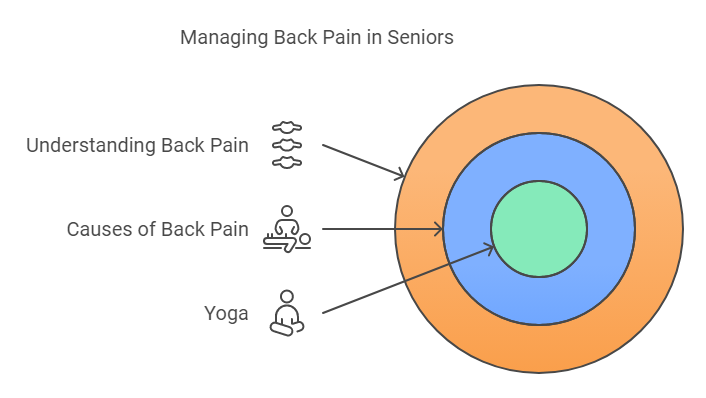
Back pain is a big problem for many seniors. It can really hurt their quality of life[2]. Things like age-related spine changes, osteoporosis, arthritis, and muscle imbalances can cause it[2]
Common Causes of Back Pain in Older Adults
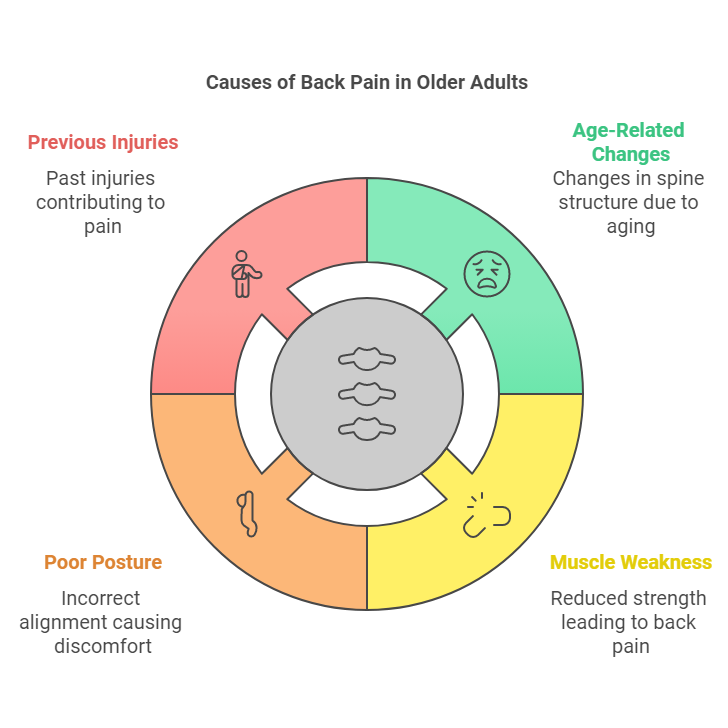
As people get older, their spines and muscles change. This makes them more likely to get back pain[2]. Osteoporosis and arthritis can also make it worse, leading to pain and less mobility[2].
How Yoga Addresses Age-Related Back Issues
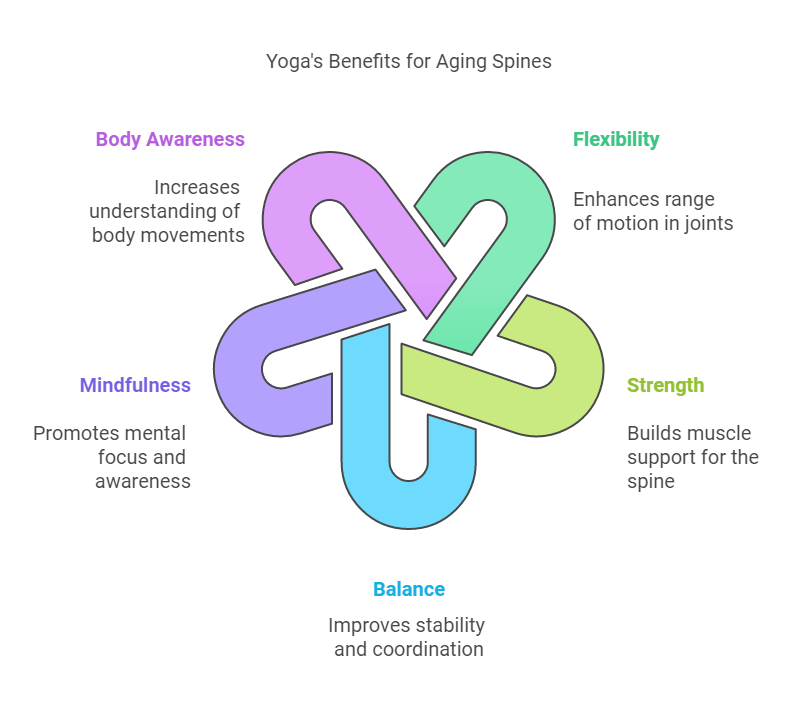
Yoga is great for managing pain, improving flexibility, and boosting strength[2]. It also helps with posture, reduces stress, and improves balance[2]. This makes yoga perfect for seniors with back pain[2].
Yoga for seniors focuses on gentle poses that ease pain without straining[2]. It’s a low-impact option that’s easy to do[2]. Always talk to a doctor before starting yoga to make sure it’s safe and right for you[2].
Yoga is a full-body solution for chronic back pain in seniors[4]. It’s as good as physical therapy for back pain in some groups[4]. It also helps seniors use less pain medicine[4].
The Mind-Body Connection in Pain Management
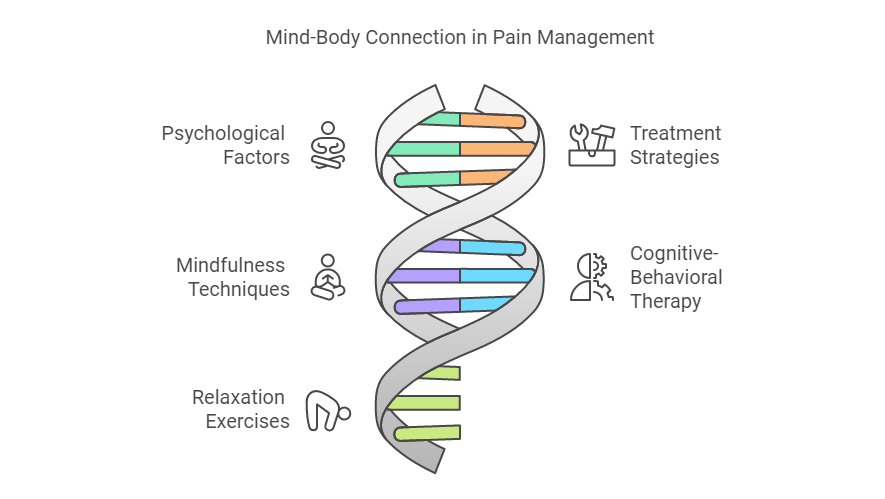
Yoga is more than just poses. It connects the mind and body. It helps reduce stress and manage pain, improving overall health[2]. Regular practice is key to feeling the benefits of pain relief[2].
Going to a yoga class for seniors with back pain is a good idea. It offers guidance, correct alignment, and adjustments in a supportive setting[2]. Yoga can help seniors live without pain, improving their quality of life and mobility[2].
“Yoga’s holistic approach targets both physical symptoms and mental well-being, making it a powerful tool for seniors seeking relief from back pain.”
Benefits of Regular Yoga Practice for Senior Back Health
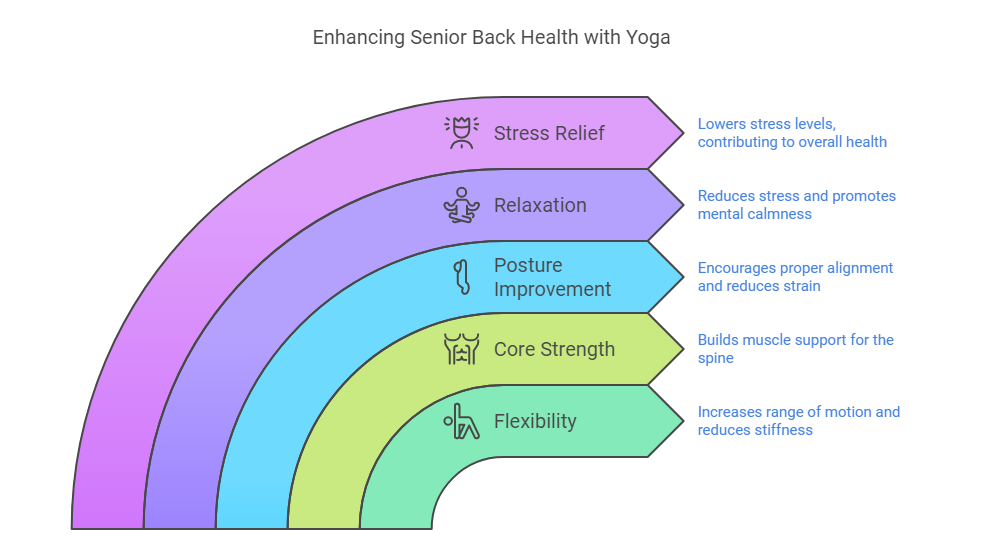
Yoga is great for seniors’ back health. It makes the spine more flexible, strengthens the core, and improves posture[3]. Studies show yoga can cut falls by 25% in seniors[3]. It also lowers anxiety and depression when practiced two times a week[3].
Yoga does more than ease back pain. It boosts mobility and overall health in seniors[5]. It improves heart health, reduces inflammation, and increases fitness[5]. Yoga also helps with breathing, ensuring enough oxygen[5].
Yoga’s mental benefits are key for older adults[5]. It reduces stress and anxiety, leading to better sleep and self-esteem[5]. Many senior communities offer yoga to keep residents active and mentally sharp[5].
Seniors gain a lot from yoga, from better back health to overall well-being[3][4][5]. Yoga improves flexibility, strength, posture, and reduces pain. Its benefits for seniors are clear[3][4][5].
Essential Safety Guidelines for Senior Yoga Practice
When seniors start senior-friendly yoga routines, safety is key. It’s important to take the right steps to avoid injuries. This way, they can enjoy the yoga stretches to alleviate back discomfort and more.
Pre-Exercise Precautions
Seniors should warm up before yoga. This gets the body ready and lowers the chance of injury[6]. It’s also vital to know your limits and adjust poses if needed.
Modifying Poses for Safety
Changing yoga poses is important for seniors. Using props like chairs helps with safety and support[7]. Gentle stretches can help with back and posture, making sure you’re comfortable.
When to Consult Healthcare Providers
Seniors should talk to their doctors before starting senior-friendly yoga. This is true if they have ongoing health issues or injuries. It helps tailor the yoga to fit their needs.
It’s also worth knowing that research has found yoga participants aged 65 and older have a higher rate of injury compared with other age groups[10] — not a reason to avoid yoga, but a real reason to prioritize proper instruction and modification over pushing into unfamiliar poses.
Following these safety tips, seniors can start their yoga stretches to alleviate back discomfort with confidence. They’ll enjoy the many benefits of yoga[6][7].
Gentle Yoga for Back Pain for Seniors: Getting Started
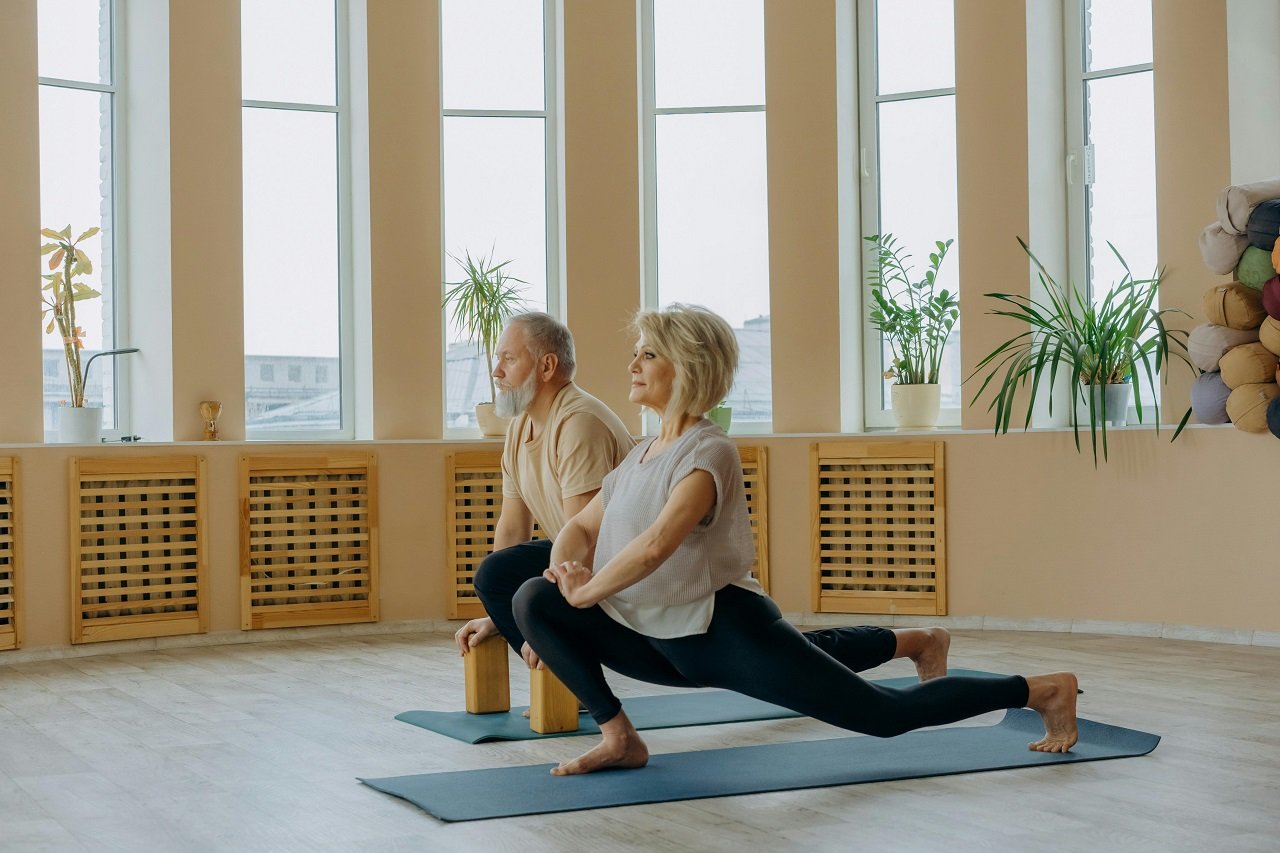
Photo by Mikhail Nilov( pexels.com )
Seniors looking for gentle exercises to ease back pain can find relief in chair-supported yoga[10]. Over a third of Americans who do yoga are 50 or older[10]. Yoga is seen as a great exercise for older adults, helping with conditions like osteoporosis and arthritis[10].
Chair yoga is designed to offer extra support and stability for seniors[10].
Seated Stretches
Seated yoga poses, like spinal twists and forward bends, are safe with chair support[11]. These stretches boost flexibility and range of motion in the back and spine[11]. Chair-supported yoga is key in preventing chronic back pain[11].
Standing Poses Using Chair Support
Standing poses with chair help seniors build strength and balance[11]. Modified warrior and triangle poses are great for the back and core[11]. Chair yoga is perfect for seniors, those who are obese, or have low flexibility or strength[11].
Balance-Enhancing Positions
Introducing balance poses, like tree pose with chair support, helps seniors feel more stable[11]. The Gentle Yoga for Back Pain Guide highlights chair yoga’s benefits for core strength and joint pain relief[11]. Chair yoga allows for a safe and gradual progression, avoiding strain[11].
The article lists chair-supported yoga poses for seniors, improving muscle strength, flexibility, coordination, and balance.[10]
“For effective chair yoga practice, consulting a doctor before starting an exercise program is recommended.”[11]
Seniors can enjoy the benefits of chair yoga while ensuring their safety and comfort.
Gentle Standing Poses for Spine Health
Yoga is a gentle way for seniors to tackle back pain and boost spinal health[12]. Poses like Cat/Cow flow, Balancing Table, Warrior I and II, Legs Up the Wall, and Savasana are great. They help reduce stiffness, strengthen the core, lengthen the spine, and improve balance and posture[12].
The Mountain Pose is a simple yet powerful standing pose. It helps seniors improve their alignment and body awareness[13]. The Standing Pelvic Tilt is also beneficial, strengthening the core and improving spinal mobility[13]. It’s important to practice these poses mindfully and adjust them as needed for safety and effectiveness[14].
The Pyramid Pose is another great standing yoga pose for seniors. It stretches the hamstrings and glutes while boosting balance[13]. By focusing on core engagement and proper alignment, seniors can see real benefits for their spine health from this pose[13].
It’s key to listen to your body and adjust poses as needed[14]. Getting advice from a healthcare provider is also wise, for those with chronic conditions or balance issues[14]. With the right approach, seniors can add these gentle standing yoga poses to their routine. This supports a healthier, more comfortable back[12].
“Yoga can be tailored for seniors of all fitness levels to promote overall well-being and relaxation.”[12]
Floor-Based Poses for Back Pain Relief
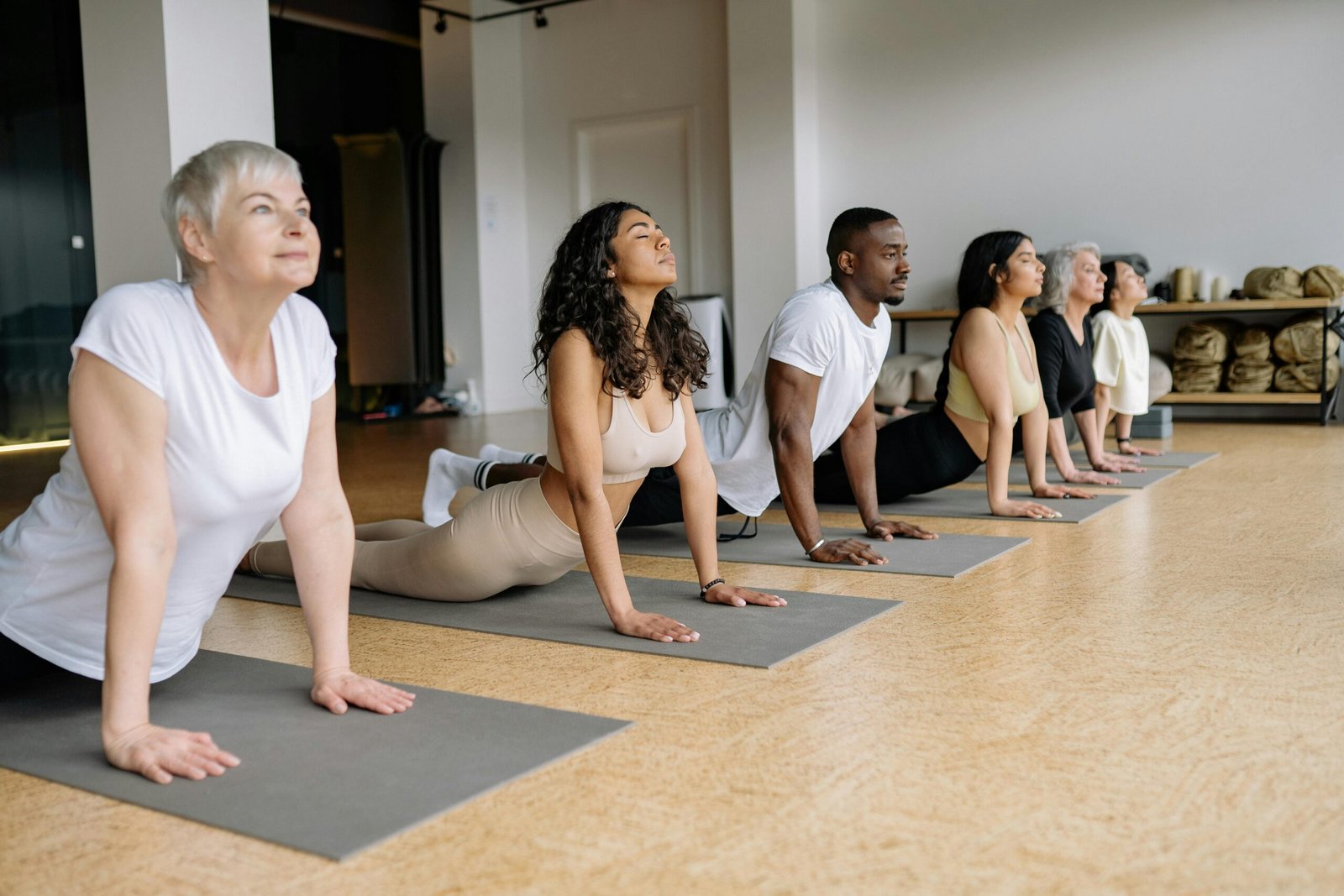
Photo by Yan Krukau( pexels.com )
Seniors looking for gentle yoga poses to ease back pain can find great benefits in floor-based exercises. These poses work on the core, spine, and muscles around them. They help increase flexibility, build strength, and improve posture, all key for managing back pain as we age.
Supine Poses
Supine poses, like the bridge pose, are great for strengthening the back and easing pain. This pose stretches the front of the body and works the glutes and hamstrings. Doing the bridge pose for 30-60 seconds, 3-5 times, can ease lower back pain.[15]
Prone Positions
Poses like the sphinx pose and cobra pose gently stretch the back muscles. They open the chest and shoulders. These poses help with a slight backbend, easing stiffness and improving movement. Doing these poses for 1-2 minutes, 1-3 times, can be helpful.[15]
Gentle Twists
Gentle twists in your yoga routine can help with spinal mobility and back pain. The two-knee spinal twist is a slow, controlled move. Hold each twist for 1-3 seconds and repeat 10 times[15]. These twists increase spinal motion and reduce stiffness.
When doing floor-based yoga for back pain, it’s important to listen to your body. Use props for support and adjust poses as needed. Regular practice and gentle movements can help seniors improve their back health and find lasting relief[16][17].
Breathing Techniques for Pain Management
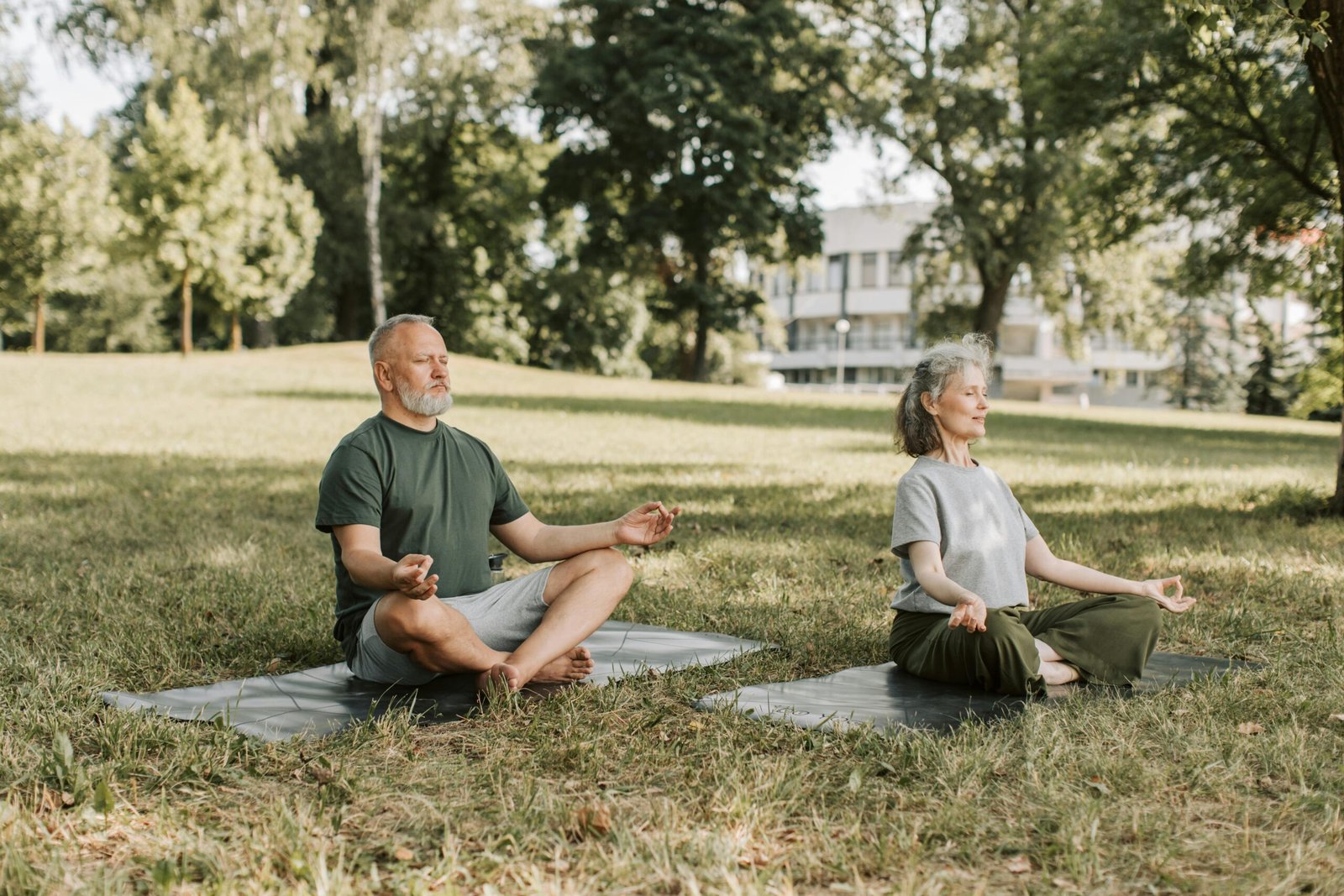
Photo by vlada Karpovich ( pexels.com )
Breathing techniques are key in yoga for back pain management and yoga therapy for back issues. Deep, controlled breathing can lessen tension and ease pain[18]. Methods like diaphragmatic breathing and alternate nostril breathing help relax and lower stress[19]. Adding these exercises to your daily routine can offer ongoing pain relief and boost your well-being.
Diaphragmatic breathing, or belly breathing, is a simple yet effective exercise for those new to breathing techniques[20]. It engages the parasympathetic nervous system, leading to relaxation and stress reduction[19]. Patients can do belly breathing 3 to 10 times per session to enjoy its stress-relieving benefits[20].
For those more experienced, techniques like counting breaths and roll breathing are very beneficial. Counting breathing involves inhaling and exhaling while mentally counting, repeated 3 to 7 times or until calm[20]. Roll breathing requires filling the lower lungs 8 to 10 times before moving to full chest breathing[20]. This advanced method can be practiced daily for weeks until it becomes a natural way to relax.
By adding these breathing techniques to a regular yoga practice, people with back pain can see significant relief and better overall well-being[19]. Regular breathwork brings more oxygen into the body, promotes relaxation, and reduces strain on back muscles, bones, and ligaments[18]. Physiotherapists may also suggest breathing exercises as part of a full treatment plan for managing back pain[18].
“Proper breathing techniques are essential to maintain the spine well-supported and in good posture.”[19]
By using a variety of breathing techniques for back pain, seniors can find relief and enhance their quality of life. Regular practice of these exercises can help manage pain, lower stress, and increase a sense of well-being.
Creating a Regular Yoga Routine for Back Health
Starting a yoga practice is essential for back health as you age. Begin with short, daily sessions of 10-15 minutes. Then, slowly increase the time as you get more comfortable[21]. Yoga is great for back health, and certain poses can ease pain and boost flexibility[21].
Try to mix standing, seated, and floor poses in your routine[21]. Different yoga poses target different back areas, like the lower back and spine[21]. Focus on being consistent, not intense. Choose poses that feel right for your fitness level. Many seniors report meaningful relief from back pain with consistent, gentle yoga practice[4].
Adjust your yoga to fit your needs and energy. Pick poses that help your back the most[21]. Yoga can help with back pain and strengthen your core[21]. Research comparing yoga to non-exercise controls has found statistically significant pain reduction at multiple follow-up points, including 4-8 weeks and 3 months[4].
Make yoga a daily habit for a healthier back. Group classes can help with long-term consistency by adding social accountability and professional guidance[21].
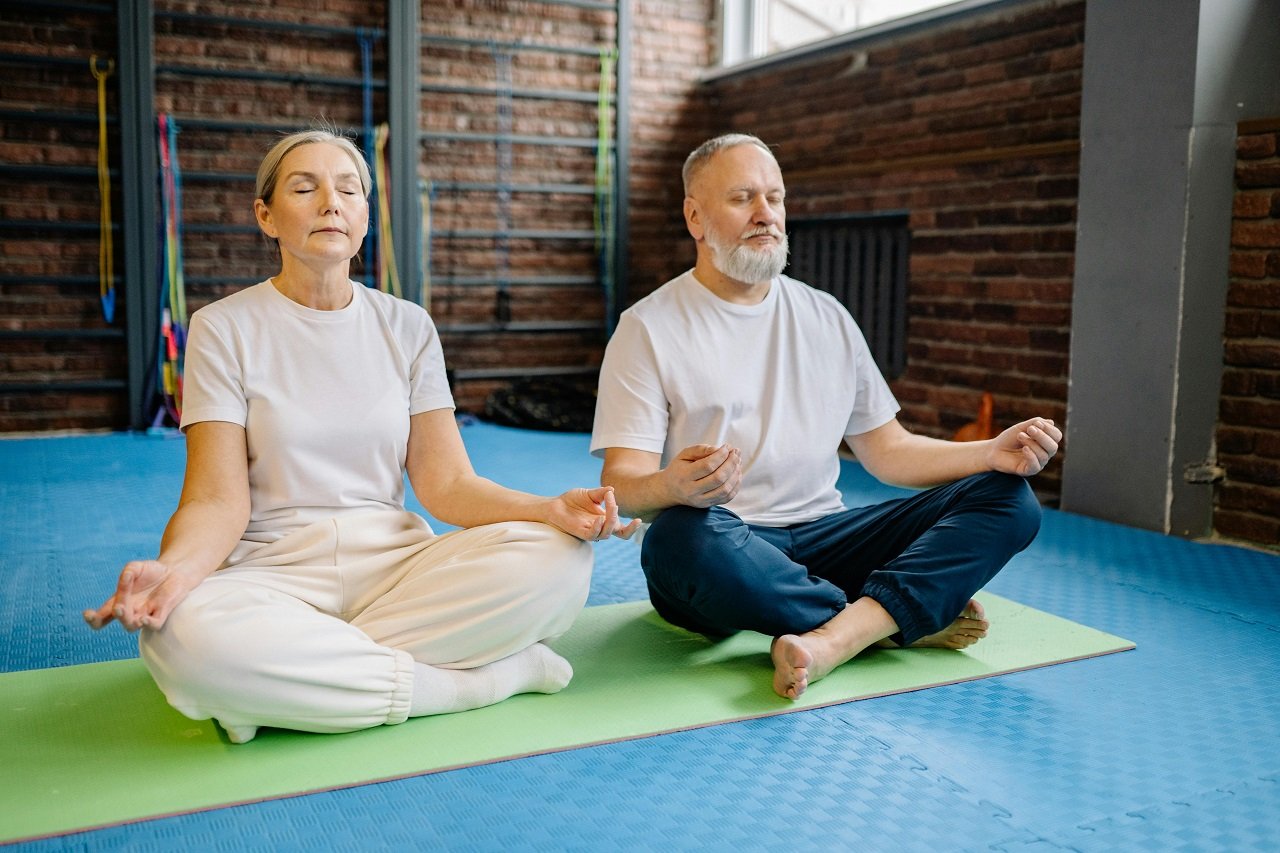
Photo by Yan Krukau( pexels.com )
Start small, listen to your body, and grow your practice slowly. With patience and dedication, yoga can greatly improve your back health[21].
Props and Equipment for Safe Practice
Using the right props and equipment is key for safe and effective yoga for seniors[22]. These tools make poses easier and more comfortable for everyone. They help ensure a safe practice and meet different flexibility levels[22].
Essential Yoga Props
Dr. Goldfarb, a yoga expert, suggests using yoga blocks and a strap[22]. Blocks help with balance and alignment in standing poses. They come in different materials and sizes for various needs[22].
Straps help stretch in poses that need extra support. They act like extra limbs, easing tight muscles like hamstrings or shoulders[22]. Blankets add warmth and support during restorative or meditation poses. They also help support knees or hips in different poses[22].
Bolsters or pillows support the body in seated or reclined poses. They help relax the lower back by placing under knees, hips, or the head[22].
Setting Up Your Practice Space
It’s important to have a safe space for senior yoga. Make sure there’s enough room to move, good lighting, and a non-slip surface like a yoga mat[23]. Having these props ready encourages regular practice and helps keep form correct. This leads to a rewarding and injury-free yoga experience[22].
FAQ
What are the common causes of back pain in seniors?
Back pain in seniors often comes from age-related changes. These include less muscle and bone density.
How can yoga address back issues in older adults?
Yoga helps by making muscles stronger and bones healthier. It also boosts balance and core strength. Yoga’s mind-body connection reduces stress and helps manage pain.
What are the benefits of regular yoga practice for senior back health?
Regular yoga improves spine flexibility and strengthens core muscles. It also enhances posture and eases chronic pain. Yoga increases range of motion and balance.
What safety precautions should seniors take when starting a yoga practice?
Safety is key in senior yoga. Start with a warm-up and check your limits. Modify poses for less flexibility and strength. Use props like chairs and blocks for safety. Research shows yoga participants 65+ have a higher injury rate than other age groups, so proper instruction matters.
Always talk to a healthcare provider before starting, if you have health issues.
How can seniors get started with yoga for back pain relief?
Start with simple, gentle movements. Try mountain pose, gentle twists, and cat-cow stretches. Focus on breathing and body awareness.
Begin with short sessions and slowly add more. Use visual aids and step-by-step guides for beginners.
What are the benefits of chair-supported yoga for seniors?
Chair-supported yoga is great for those with limited mobility. Seated stretches like spinal twists are safe. Standing poses with chair support improve balance and strength.
Introduce balance poses like tree pose with chair support to build confidence.
What gentle standing poses can benefit spine health in seniors?
Gentle standing poses like mountain pose and standing pelvic tilts improve posture and core strength. Pyramid pose stretches hamstrings and glutes while improving balance.
These poses should be done with care and modified as needed.
What floor-based yoga poses can provide back pain relief for seniors?
Floor-based poses are effective for back pain relief. Supine poses like bridge pose strengthen the spine and relieve backaches. Prone positions like sphinx and cobra poses gently stretch the back muscles.
Gentle twists like the two-knee spinal twist promote spinal mobility and relieve stiffness. Approach these poses carefully, with proper support and modifications.
How can breathing techniques benefit seniors with back pain?
Breathing techniques are key in yoga for pain management. Deep, controlled breathing reduces tension and eases pain. Techniques like diaphragmatic breathing and alternate nostril breathing relax and reduce stress.
Incorporate these breathing exercises into daily routines for ongoing pain relief and well-being.
How can seniors establish a regular yoga routine for back health?
A regular yoga routine is essential for back health. Begin with short, daily sessions of 10-15 minutes and gradually increase. Mix standing, seated, and floor-based poses.
Consistency is more important than intensity. Adapt the routine to your needs and energy levels, focusing on poses that benefit your back.
What equipment and props are essential for safe senior yoga practice?
Essential props include yoga mats, sturdy chairs, blocks, and straps. Blankets provide cushioning and support. Set up a safe space with good lighting and a non-slip surface.
Having these tools available encourages regular practice and proper form.
Source Links
- 9 Yoga Moves to Ease Back Pain – https://www.silversneakers.com/blog/yoga-seniors-poses-back-pain/
- Yoga for Seniors with Back Pain: Your Path to Relief and Wellness – https://www.neupath.com/knowledge-centre/yoga-for-seniors-with-back-pain
- The Health Benefits of Yoga for Seniors – SRG Senior Living – https://www.srgseniorliving.com/blog/benefits-of-yoga-for-seniors/
- Yoga eases moderate to severe chronic low back pain – https://www.nih.gov/news-events/nih-research-matters/yoga-eases-moderate-severe-chronic-low-back-pain
- What Is the Best Type of Yoga for Seniors? – Senior Services of America – https://seniorservicesofamerica.com/blog/what-is-the-best-type-of-yoga-for-seniors/
- Chair Yoga for Seniors: Poses and Benefits PDF | Lifeline Canada – https://www.lifeline.ca/en/resources/yoga-for-seniors/
- Adapting Yoga for Seniors Stretches and Safety Tips – The Union Fitness & Fun – https://www.theunionsa.com/blog/adapting-yoga-for-seniors-stretches-and-safety-tips
- Yoga For Seniors 101 – Body By Yoga – https://bodybyyoga.training/yoga-for-seniors/yoga-for-seniors-101-seated-5-minute-routine-for-core-strength-and-back-pain-prevention/
- 14 Chair Yoga Poses for Seniors – https://www.yogajournal.com/practice/chair-yoga-for-seniors/
- Best Chair Yoga Poses for Back Pain – Start Standing – https://www.startstanding.org/sitting-back-pain/best-chair-yoga-poses-for-back-pain/
- 6 Best Yoga Poses for Active Older Adults | Timber Ridge at Talus – https://timberridgelcs.com/blog/yoga-poses-for-seniors/
- 5 yoga poses for a healthy back (video) – Wellness – https://www.sharphealthplan.com/wellness/best-health/news/5-yoga-poses-for-a-healthy-back
- 6 Yoga Poses That Strengthen Your Spine – https://www.silversneakers.com/blog/yoga-seniors-poses-strengthen-spine/
- 8 Easy Stretches to Relieve Your Lower Back Pain – https://www.healthline.com/nutrition/stretches-for-lower-back-pain
- 15 Simple Stretches for Your Tight, Achy Back – https://www.self.com/gallery/yoga-poses-to-relieve-lower-back-pain
- These 8 Yoga Poses Are All You Need to Ease Lower Back Pain – https://www.yogajournal.com/poses/yoga-by-benefit/back-pain/yoga-lower-back-pain/
- 5 simple breathing exercises to reduce back pain | Physionorth – https://www.physionorth.com.au/blog/simple-breathing-exercises-to-reduce-back-pain/
- Breathing Exercises to Blow Away Low Back Pain – https://orthophysio.com/breathing-exercises-for-low-back-pain/
- Breathing Exercises To Calm Pain – https://www.thepaincenter.com/blog/breathing-exercises-to-calm-pain/
- The Best Yoga Poses for Back Pain – https://www.yogajournal.com/poses/yoga-by-benefit/back-pain/
- Essential Yoga Props To Make Your Sessions Better – https://health.clevelandclinic.org/yoga-props
- This One Little Tool You Can Find at a Hardware Store Can Help Heal Your Back Pain – https://www.yogajournal.com/practice/yoga-sequences/this-one-little-tool-you-can-find-at-a-hardware-store-can-help-heal-your-back-pain/


From Leaky Gut to Resilience: The Beta Glucan Breakthrough

Chamomile Tea for Sleep: How Much to Drink (And When)

Instant Relief for Trapped Gas Pain: Why Direction Matters More Than the Pose

PEMF Webinar

Why You Can’t Trust Big Pharma

The Anti-Cancer Body with Dr. Michael Karlfeldt
-
 Events2 months ago
PEMF Webinar
-
 Events3 months ago
Why You Can’t Trust Big Pharma
-
 Events4 months ago
The Anti-Cancer Body with Dr. Michael Karlfeldt
-

 Events3 months ago
The Cancer Conversation Your Oncologist Cannot Have in 15 Minutes
-

 Natural Sleep Remedies4 months ago
The 4-7-8 Breathing Technique: Step-by-Step Guide and What the Research Actually Shows
-

 Events5 months ago
Beyond the Brain
-

 Events4 weeks ago
HBOT ( Hyperbaric Oxygen Therapy ) Webinar
-
 Gut Health3 months ago
Unlock Incredible Gut Health Hacks and Transform Your Well-being Today!