
Gut Health
Home Remedy to Stop Bloating After Eating: Match the Remedy to When It Hits

The content on this website – including articles, event announcements, personal experiences, and recommendations – is for informational and educational purposes only and is not medical advice. Always consult a qualified healthcare professional before making any changes to your diet, exercise, supplements, sleep habits, or wellness routines, especially if you are pregnant, nursing, on medication, or have any medical condition.

Disclaimer: This article provides general educational information and is not a substitute for medical advice. If bloating is severe, persistent, or accompanied by unintended weight loss, blood in your stool, or fever, see a doctor rather than relying on home remedies.
Most bloating advice gives you one generic list — peppermint tea, walk it off, avoid carbonated drinks — regardless of what’s actually causing it. Here’s the more useful approach: when your bloating hits, relative to your meal, is a real diagnostic clue, and matching your remedy to that timing works better than trying everything at once.
Immediate Bloating (During or Right After Eating): It’s Probably Air
If you feel tight and swollen within minutes of eating, the most likely cause is aerophagia — swallowed air. This happens from eating too fast, talking while eating, drinking through a straw, chewing gum, or carbonated drinks. The gas involved here is mostly nitrogen and oxygen (from the air itself), not gas your gut bacteria produced.
What actually helps:
- Slow down deliberately — put your fork down between bites
- Skip carbonated drinks and straws during meals
- Avoid talking with food in your mouth (harder to control, but a real contributor)
- A short, gentle walk after eating helps move trapped air along, faster than lying down
This category of bloating typically resolves within an hour or so once the trapped air works its way out, and it responds well to simply changing eating habits going forward — there’s less of a specific “remedy” needed than a behavior adjustment.
Bloating That Peaks About an Hour Later: It’s Probably Fermentation
If your bloating builds gradually and peaks around 60 minutes after eating, the more likely cause is fermentation — your gut bacteria breaking down carbohydrates your small intestine didn’t fully digest, producing hydrogen, carbon dioxide, and sometimes methane. High-FODMAP foods (garlic, onions, wheat, legumes, certain fruits) are common triggers, and this pattern is also more common in IBS and, in persistent cases, SIBO (small intestinal bacterial overgrowth).
What actually helps:
- Peppermint tea or peppermint oil capsules — genuinely has research behind it for reducing intestinal spasm and gas discomfort, more than most single remedies on this list
- Ginger tea — supports gastric emptying, which can reduce the backup that feeds fermentation
- A short-term reduction in high-FODMAP foods, tracked in a simple food diary, to identify your specific triggers rather than guessing
- Digestive enzyme supplements, which can help break down fermentable carbohydrates before they reach the colon — a reasonable option if this pattern is frequent
This category takes longer to resolve than aerophagia-driven bloating, and if it’s a near-daily pattern, it’s worth mentioning to a doctor rather than only managing it at home indefinitely.
Bloating That Builds Through the Day, Worse by Evening
If you wake up flat and gradually swell as the day goes on, this usually reflects gas accumulating meal after meal rather than one specific trigger. It’s common with slower gut motility or mild constipation, where gas has less room to move through.
What actually helps:
- Staying hydrated throughout the day, not just at meals
- Regular movement — even light activity supports motility better than a sedentary day
- Addressing constipation directly if it’s a contributing factor (see our guide on natural remedies for constipation) rather than only treating the bloating symptom
- A smaller, earlier dinner, giving your gut more active hours to move things along before you lie down for the night
A Fast At-Home Test to Narrow It Down
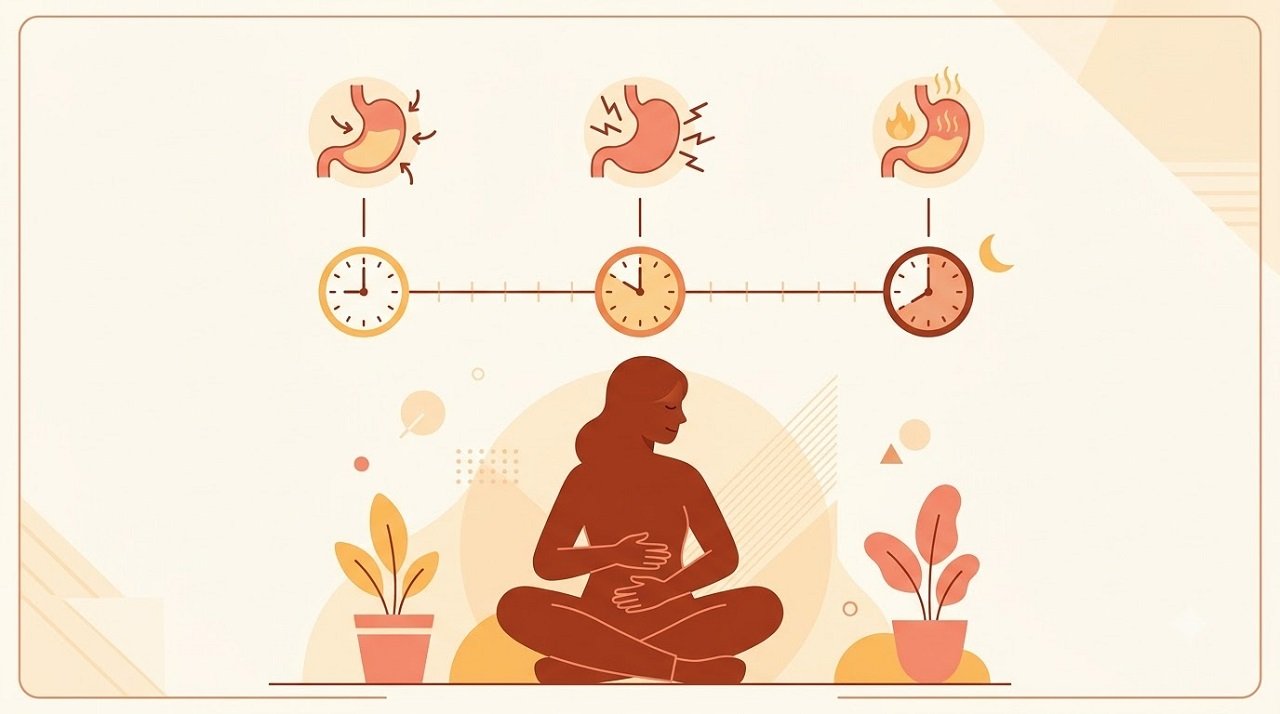
Keep a simple 3-day log: note what time bloating starts relative to your meal, and roughly how it feels (tight and gassy vs. heavy and full vs. gradual swelling). This alone often makes the pattern — and therefore the likely cause — obvious without needing a formal medical workup, and it gives you something concrete to bring to a doctor if the pattern doesn’t resolve.
When to See a Doctor Instead of Trying Another Remedy
Occasional bloating after a big or rich meal is normal. See a doctor if you notice:
- Bloating that’s severe, persistent, or getting worse over weeks
- Unintended weight loss
- Blood in your stool
- Fever alongside digestive symptoms
- Bloating no matter what or how little you eat
These can indicate something that needs proper diagnosis — SIBO, a food intolerance, or another digestive condition — rather than ongoing trial-and-error with home remedies.
Frequently Asked Questions
Why do I bloat immediately after eating?
Immediate bloating is most often from swallowed air (aerophagia) — eating too fast, carbonated drinks, or talking while eating — rather than something your gut bacteria produced.
What helps bloating fast?
For immediate, air-related bloating: slowing down and a short walk. For delayed, fermentation-related bloating: peppermint tea and identifying specific food triggers tend to help more than immediate-relief tactics.
Is bloating after every meal normal?
Occasional bloating is common, but bloating after nearly every meal is worth tracking and mentioning to a doctor — it may point to a specific, identifiable cause (a food intolerance, SIBO, or a motility issue) rather than something to just manage indefinitely.
Does peppermint tea actually work for bloating?
Yes, more than most single remedies — peppermint has real research behind it for reducing intestinal spasm and gas-related discomfort, particularly for fermentation-pattern bloating.
Sources Referenced in This Article
- Superpower — How to Stop Bloating After Eating: Causes, Patterns, and Solutions
- Summit Health — Bloating After Eating: Common Causes and How to Find Relief
- Boots Health Hub — Why Am I Bloating After Eating? Understanding Aerophagia
- Healthpath — Why Am I Bloated After Eating?













Disclaimer: This article provides general educational information and is not a substitute for medical advice. SIBO should be diagnosed and treated with a doctor. Do not stop a prescribed antibiotic or start several new supplements on your own. Call your doctor promptly if you have severe pain, fever, blood in your stool, repeated vomiting, a rash or swelling, or trouble breathing.
If you feel worse after starting SIBO treatment, the safest natural remedies are simple supportive steps: sip fluids, eat small plain meals, rest, and avoid adding several new supplements at once. Then tell your prescriber, because “die-off” is not an established medical diagnosis and your symptoms may have another cause. Here’s what we could and couldn’t find, and what to do.
Key Takeaways
- “Die-off” is a popular term, not a medical diagnosis. We found it mainly on practitioner and supplement sites, and the American College of Gastroenterology (ACG) SIBO guideline summary we reviewed does not describe it.
- Feeling worse can have other causes: medication or herbal side effects, the underlying gut condition itself, or a diet change.
- Medical treatment is usually antibiotics, such as rifaximin, chosen and dosed by your doctor.
- Natural supportive steps are basic: fluids, small plain meals and rest. They ease discomfort but don’t treat SIBO.
- Herbal treatments have weak evidence. The main study was a retrospective chart review, not a controlled trial.
- Probiotics are not supported for SIBO by the ACG guideline summary.
- Tell your prescriber if symptoms worsen, and get urgent care for fever, bleeding, severe pain, rash, swelling or breathing trouble.
What Is SIBO, and How Is It Diagnosed?
SIBO (small intestinal bacterial overgrowth) means too many bacteria in the small intestine. It’s commonly diagnosed with a breath test that measures hydrogen after you drink a sugar solution (glucose or lactulose). Methane on a breath test points to a related problem, intestinal methanogen overgrowth (IMO), not SIBO.
The ACG guideline summary says to consider testing in people with IBS, in people whose symptoms suggest a motility problem (for example scleroderma, diabetes, or taking opioids, antidiarrheals or anticholinergic medicines), and after abdominal surgery. It does not suggest breath testing in people without symptoms who take proton-pump inhibitors. In an interview, Dr. Pimentel, the guideline’s lead author, called breath testing “pretty good” but “not perfect.”
What Medical Treatment Usually Looks Like
For people with symptoms, the ACG guideline summary says treatment is a course of antibiotics to reduce the overgrowth and relieve symptoms. It lists several options, including rifaximin, a commonly used antibiotic that is mostly not absorbed into the bloodstream. Dr. Pimentel said in an interview that rifaximin barely enters the blood and “doesn’t create any kind of stable resistance.” The choice of antibiotic, dose and length of treatment is your doctor’s decision, so we haven’t listed doses here.
Two other points matter for you:
- Some doctors start with a trial of treatment. Dr. Pimentel suggested that with an antibiotic trial “within two weeks, you’ll know” whether a patient is responding. If you don’t improve, tell your doctor rather than stacking on extra supplements.
- Preventing a repeat matters. The summary stresses treating the underlying cause, such as a slow-moving gut or past surgery, to avoid repeated antibiotic courses. It says retreatment is not addressed, so ask your own doctor about your plan.
This is where the “natural” steps below fit: as comfort measures alongside treatment, not in place of it.
What Is “Die-Off,” Really?
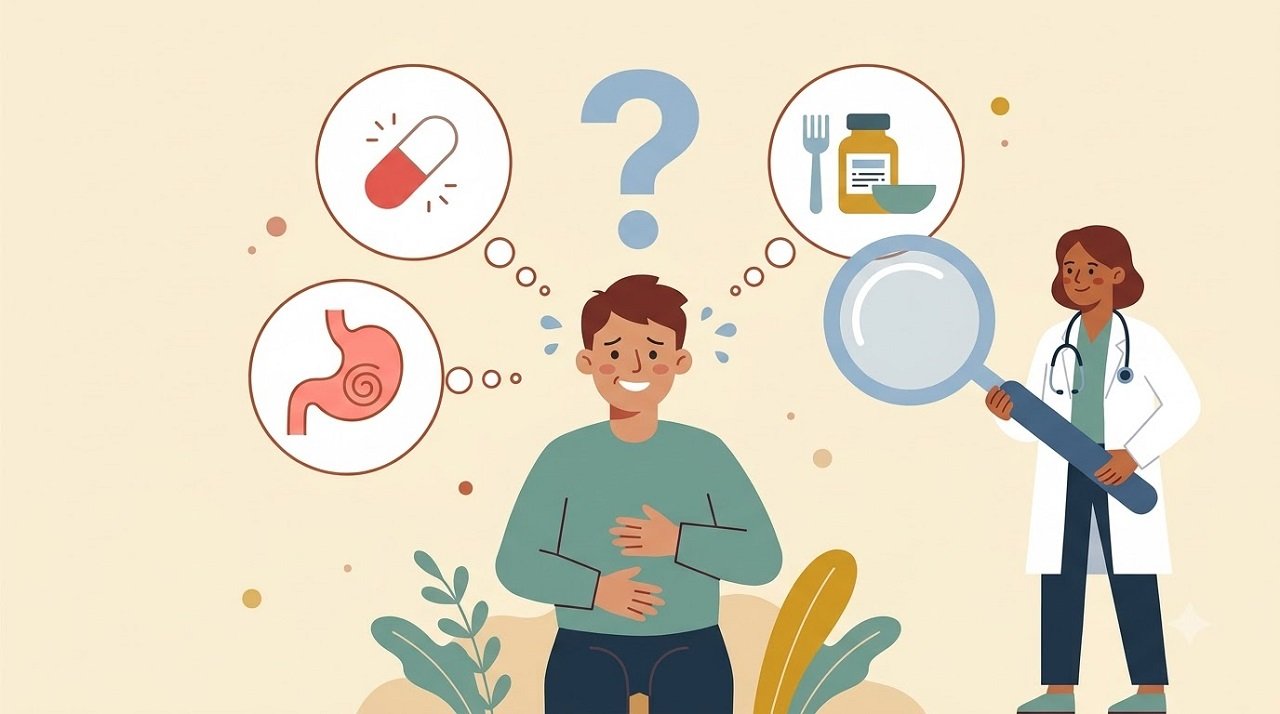
The idea is that as bacteria are killed, they release substances that cause temporary symptoms such as bloating, fatigue or headaches. Search for the term and you’ll find it mostly on practitioner and supplement websites. We did not find it described in the ACG SIBO guideline summary or in the gastroenterology sources we reviewed, so we can’t say it’s a proven, distinct reaction.
That doesn’t mean your symptoms aren’t real. If you feel worse during treatment, possible explanations include:
- Side effects of the treatment. In one study of rifaximin and herbal treatment, rifaximin patients had reactions such as diarrhea, hives, one case of C. difficile infection and one anaphylaxis. One herbal patient had diarrhea.
- Your underlying condition. SIBO overlaps with IBS and motility problems, and symptoms can flare on their own.
- Diet or supplement changes made at the same time.
The point isn’t to dismiss it. It’s to avoid assuming a harmless “die-off” when something else needs attention.
Natural Supportive Steps That Are Reasonable
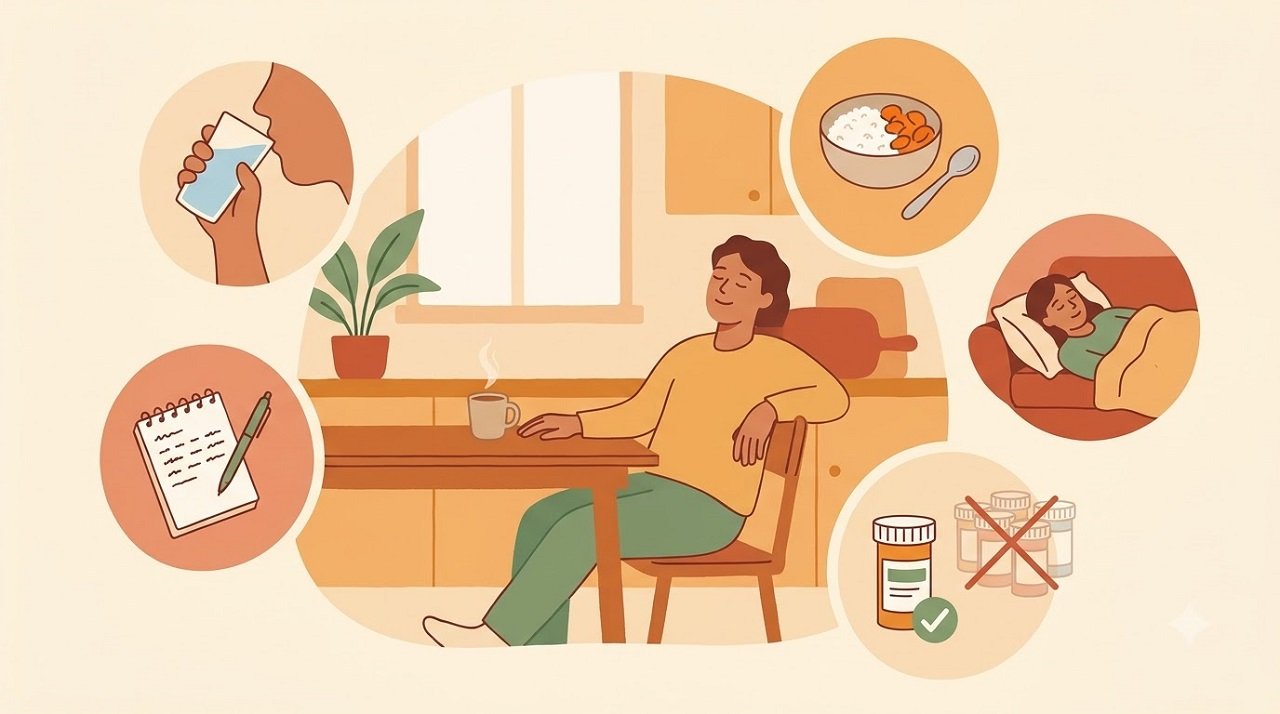
These are general comfort measures, not proven SIBO treatments:
- Sip fluids steadily, especially if you have diarrhea.
- Eat small, plain meals rather than large heavy ones, and avoid new or unfamiliar foods while symptoms are flaring.
- Rest and keep stress low. Gut symptoms often feel worse when you’re tired or anxious.
- Change one thing at a time. Starting several herbs, supplements and diets together makes it impossible to tell what’s causing what.
- Keep a simple symptom diary, noting what you took, ate and felt, to show your doctor.
What to Be Skeptical Of
- Herbal antimicrobial protocols. A 2014 study (Global Advances in Health and Medicine) concluded herbal therapy was “equivalent” to rifaximin: 46% of the herbal group and 34% of the rifaximin group had a negative breath test afterward. But it was a retrospective chart review, patients chose their own treatment, only 104 of 252 patients were analyzed, and the difference wasn’t statistically significant. That shows no detectable difference, not proven equivalence. Symptoms and recurrence weren’t tracked.
- Probiotics. The ACG guideline summary says data on specific probiotics are inconsistent and doesn’t support their use for SIBO. Dr. Pimentel also warned that adding bacteria “potentially could produce more gas.”
- Detox claims. Nothing here supports “flushing out toxins.”
Preventing a Comeback
The ACG summary emphasizes treating the underlying cause to avoid repeated antibiotic courses. Ask your doctor what might be driving your SIBO, such as a slow-moving gut, past surgery or certain medicines.
When to Call Your Doctor
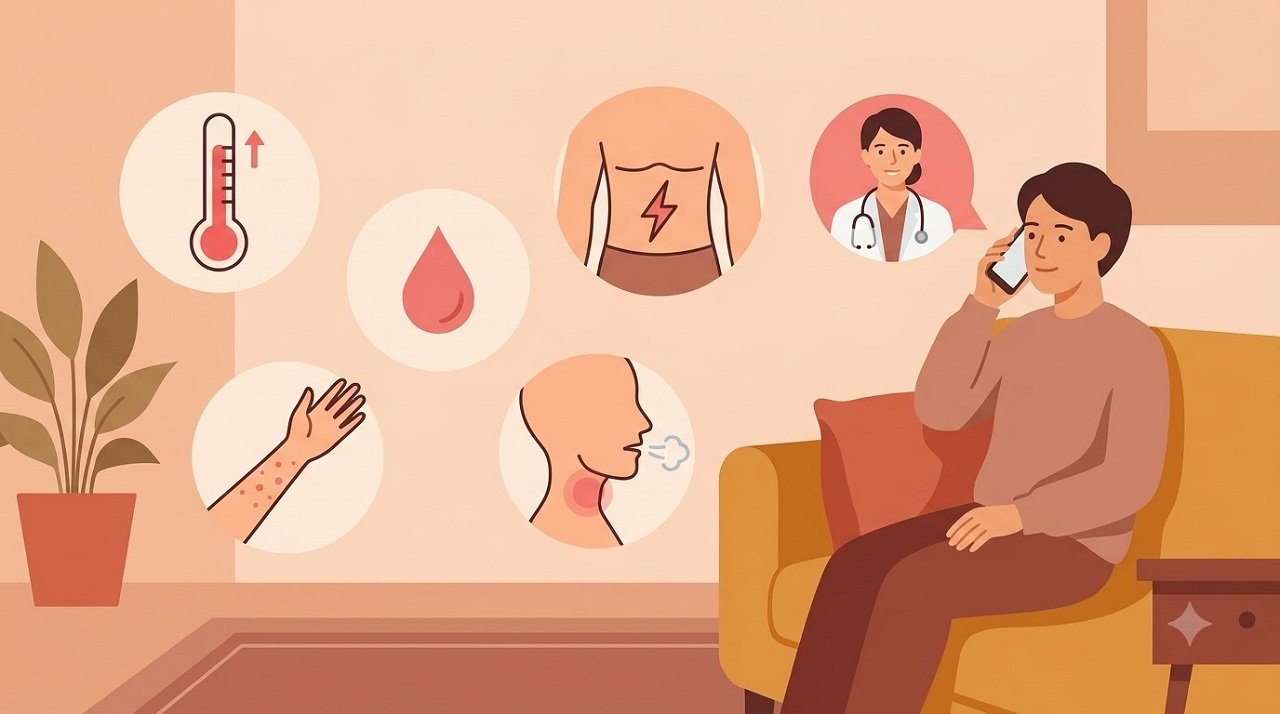
Contact your doctor promptly if your symptoms get worse instead of better, you can’t keep fluids down, or you have severe or constant pain, fever, blood in your stool, repeated vomiting, weight loss, a rash, swelling of the face or throat, or trouble breathing (the last two need emergency care).
Frequently Asked Questions
What does SIBO die-off feel like?
People describe bloating, gas, fatigue, headaches or changes in bowel habits after starting treatment. But “die-off” isn’t an established diagnosis, and similar symptoms can come from treatment side effects or the underlying condition, so check with your doctor.
How long does SIBO die-off last?
There’s no reliable timeline because the term isn’t a defined medical condition. If symptoms last or worsen, contact your prescriber instead of waiting it out.
Is SIBO die-off real?
People do feel worse during treatment, but we found no gastroenterology guideline describing “die-off” as a distinct reaction. Other explanations should be ruled out.
What helps with SIBO treatment side effects?
Fluids, small plain meals, rest and changing one thing at a time can ease discomfort, but your doctor should know about any worsening symptoms.
Do probiotics help SIBO?
The ACG guideline summary does not support them for SIBO because the data are inconsistent.
Sources Referenced in This Article
- Guideline Central: Small Intestinal Bacterial Overgrowth, patient summary of the ACG guideline (Pimentel M, et al. American Journal of Gastroenterology, 2020)
- ReachMD: Navigating the Complexities of Small Intestinal Bacterial Overgrowth (interview transcript)
- Chedid V, et al. Herbal therapy is equivalent to rifaximin for the treatment of small intestinal bacterial overgrowth. Global Advances in Health and Medicine, 2014 (summary via Clinician.com)
Gut Health
Gut Health Tips for Managing IBS Symptoms: What the Guidelines Support (and What They Don’t)

Disclaimer: This article provides general educational information and is not a substitute for medical advice. IBS should be diagnosed by a doctor, because other conditions can look similar. Do not start a restrictive diet or supplement without medical guidance, especially if you have any warning signs listed below.
The best-supported ways to manage IBS symptoms are adding soluble fiber slowly, trying a short and limited low-FODMAP diet with a dietitian, and using gut-directed therapies such as relaxation training or CBT-style approaches. Peppermint may also help. Probiotics, on the other hand, are not recommended by the American College of Gastroenterology (ACG) for overall IBS symptoms. Most “IBS tips” lists mix all of these together as if they had equal proof. This one doesn’t.
Key Takeaways
- Get diagnosed first. IBS is a diagnosis made with a doctor, and some symptoms mean you need tests, not tips.
- Soluble fiber is the best-supported dietary step. ACG recommends soluble fiber such as psyllium, oat bran or beans. Insoluble fiber is not recommended.
- Go slowly with fiber. Mayo Clinic advises increasing it over weeks, because fiber can worsen gas and cramping.
- Try low FODMAP only as a limited trial. It’s meant to be short, ideally with a dietitian, not a lifelong diet.
- Mind-gut therapies work. ACG supports gut-directed psychotherapy for overall symptoms.
- Peppermint is a “may help” (a conditional suggestion), and probiotics are not recommended for overall IBS symptoms.
- Know the warning signs. Weight loss, rectal bleeding, fever, night-time pain or anemia need medical evaluation.
First: Make Sure It’s Actually IBS
IBS involves recurring belly pain with changes in bowel habits, and it can be diagnosed positively from your symptoms rather than only by ruling out everything else. The ACG guideline suggests this positive approach to speed up proper treatment. It also suggests celiac blood tests and a stool calprotectin test (which helps rule out inflammatory bowel disease) in people with diarrhea-type symptoms.
See a doctor promptly, rather than self-treating, if you have any of these (Mayo Clinic’s list of alarm symptoms):
- Symptoms starting after age 50
- Weight loss
- Rectal bleeding
- Fever
- Persistent nausea or vomiting
- Belly pain not linked to bowel movements or that happens at night
- Ongoing diarrhea, or diarrhea that wakes you
- Low-iron anemia
Tip 1: Add Soluble Fiber, Slowly
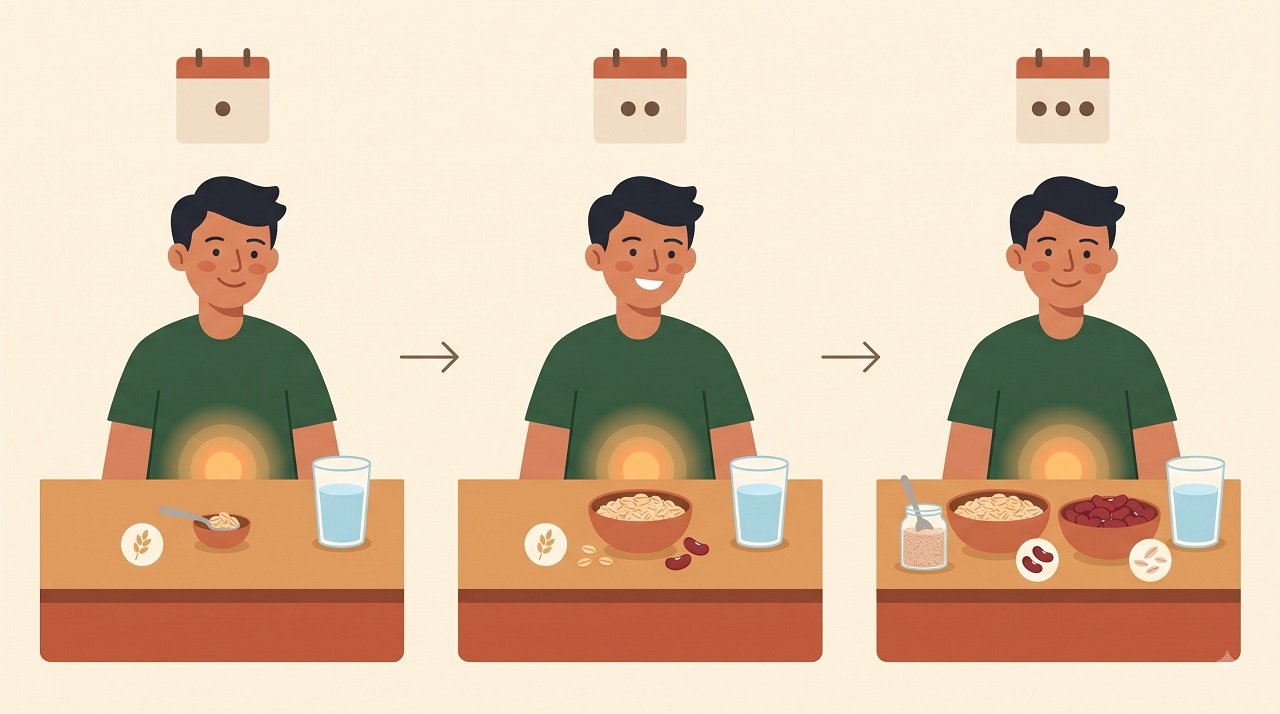
Fiber helps constipation, but it can make gas and cramping worse. The type matters. The ACG guideline’s patient summary recommends soluble fiber such as psyllium, oat bran or beans, and does not recommend insoluble fiber for IBS.
Mayo Clinic suggests increasing fiber gradually over weeks, and notes that a fiber supplement may cause less gas and bloating than fiber-rich foods. Start with a small amount and build up. If you have more diarrhea than constipation, check with your doctor before adding fiber.
Tip 2: Try a Limited Low-FODMAP Trial (With a Dietitian)
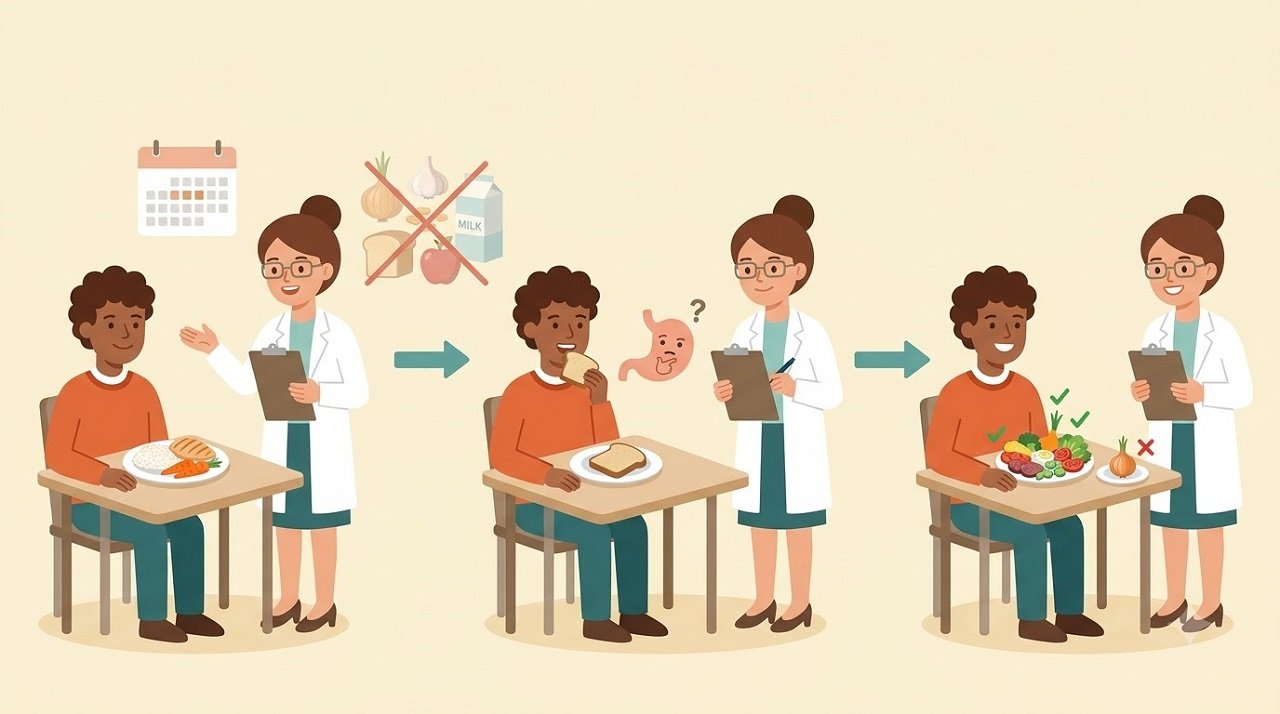
FODMAPs are a group of fermentable carbohydrates, including fructose, fructans and lactose, that some people with IBS react to. The ACG guideline supports a limited trial of a low-FODMAP diet to improve overall symptoms. Sources word the strength slightly differently: ACG’s abstract says “recommend” and its patient summary says “suggest.” Either way, it’s a limited trial, not a permanent way of eating.
Why with a dietitian? Mayo Clinic notes a dietitian can help with these changes. A restrictive diet can leave you eating a much narrower range of foods than you need, and the goal is to find your actual triggers and then bring foods back.
Tip 3: Use Mind-Gut Tools

The gut and brain talk to each other, and stress can worsen IBS symptoms. The ACG guideline suggests gut-directed psychotherapies for overall IBS symptoms, such as relaxation training or changing unhelpful thoughts. If you live with constant worry about symptoms, ask your doctor about this option. Mayo Clinic also lists regular exercise, enough sleep and fluids as basics.
Tip 4: Know Your Triggers and Eat Regularly
Mayo Clinic suggests avoiding foods that trigger your symptoms, eating at consistent times, and limiting carbonated and alcoholic drinks if gas or bloating is a problem. Small, frequent meals may help with diarrhea, while larger high-fiber meals may help with constipation. A simple food and symptom diary for two weeks can reveal patterns without cutting out whole food groups.
Tip 5: Peppermint: A Maybe
The ACG patient summary lists peppermint as a conditional suggestion for overall symptom relief. Peppermint can relax muscles in the digestive tract, but it may also worsen acid reflux in some people, so skip it if you get heartburn.
What to Skip or Be Skeptical Of
- Probiotics: the ACG guideline suggests against them for overall IBS symptoms. Mayo Clinic notes some studies suggest certain probiotics may help, but the role of alternative therapies is unclear. If you try one, treat it as an experiment and stop if nothing changes.
- Cutting out gluten on your own: Mayo Clinic says some people with IBS report less diarrhea without it, but do not stop gluten before being tested for celiac disease, because it can make the tests unreliable.
- “Detoxes” and long elimination diets: not recommended and no substitute for a diagnosis.
- Insoluble fiber (bran): can worsen symptoms, per the guideline summary.
When to See a Doctor
See a doctor if you have any alarm symptoms above, if your symptoms are new after age 50, or if your IBS treatment isn’t working. Mayo Clinic notes that if initial treatment doesn’t help, you’ll likely need more tests, and you may be referred to a gastroenterologist. Prescription medicines also exist for specific IBS types.
Frequently Asked Questions
What is the best way to manage IBS symptoms?
A combination approach has the best support: soluble fiber added slowly, a limited low-FODMAP trial with a dietitian, stress and gut-directed therapies, and avoiding your personal triggers.
Does fiber help or worsen IBS?
Both, depending on the type and amount. Soluble fiber (psyllium, oat bran, beans) is recommended, while insoluble fiber is not, and any increase should be gradual.
Does the low-FODMAP diet work?
The ACG guideline supports a limited trial to improve overall symptoms. It’s meant to be temporary and ideally guided by a dietitian.
Are probiotics good for IBS?
The ACG guideline suggests against them for overall IBS symptoms, though some people report benefit from specific products. Treat them as a trial at most.
When should I see a doctor about IBS?
Right away if you have weight loss, rectal bleeding, fever, night-time pain, persistent vomiting, anemia, or symptoms starting after 50, and any time treatment isn’t working.
Sources Referenced in This Article
- ACG Clinical Guideline: Management of Irritable Bowel Syndrome (abstract), American Journal of Gastroenterology, 2021 (PubMed)
- Guideline Central: Management of Irritable Bowel Syndrome, patient summary of the ACG guideline
- Mayo Clinic: Irritable bowel syndrome, diagnosis and treatment
Disclaimer: This article provides general educational information and is not a substitute for medical advice. Do not eat chia seeds dry. If you have trouble swallowing, a narrowed esophagus, inflammatory bowel disease, diverticulitis or ongoing constipation, check with a doctor before adding more fiber. See a doctor for constipation that lasts more than a few weeks.
Chia seed pudding can help with mild constipation because chia is a rich source of fiber (about 10 g in two tablespoons) and the soaked seeds hold a lot of water. Start with just 1 tablespoon per serving, soak it fully, and drink plenty of fluids. The usual internet advice, “more chia, faster relief,” can backfire. Here’s how to do it properly.
Why Chia Pudding May Help
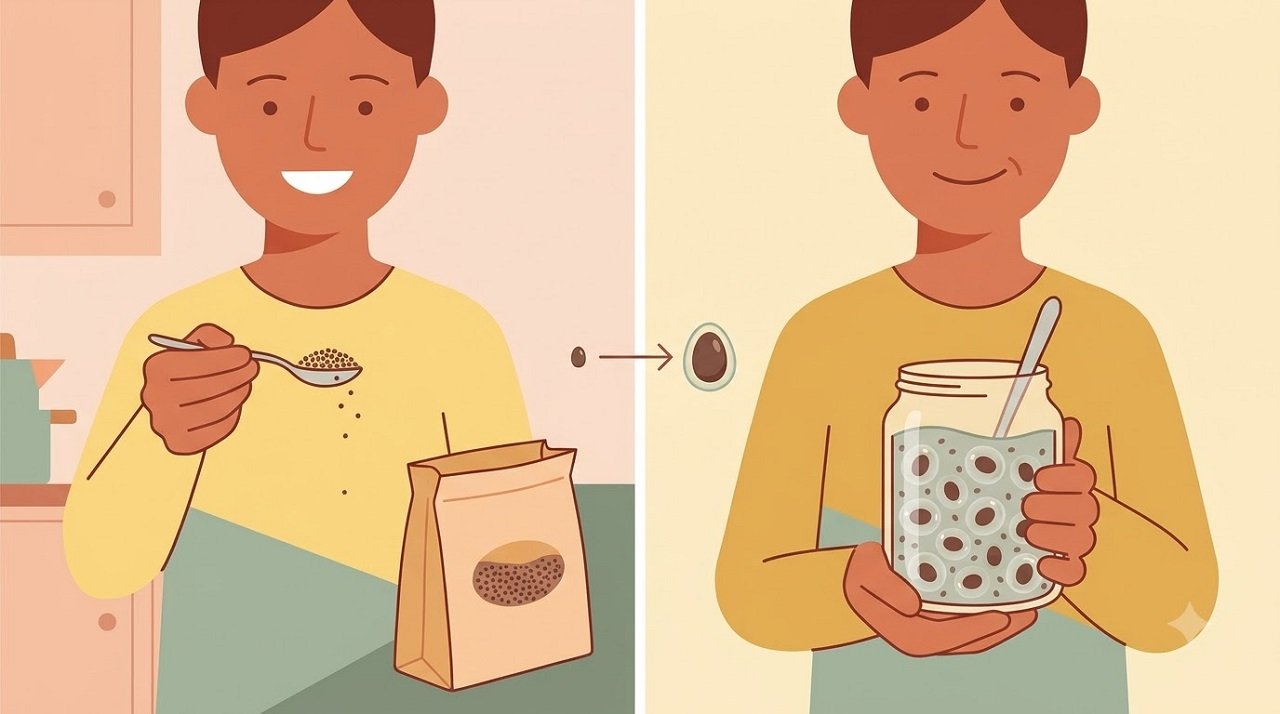
Chia seeds can absorb 12 to 15 times their weight in water, forming the gel that gives pudding its texture. The idea is that this adds bulk and moisture to stool, which makes it easier to pass. Two tablespoons provide roughly 9 to 10 grams of fiber, and most of it is insoluble fiber, the kind that adds bulk. Commonly cited daily targets are about 25 grams for women and 38 grams for men, and most people don’t reach them.
An honest caveat: this is a reasonable theory based on chia’s fiber content, not proven by chia-specific studies. We found no clinical trial showing chia pudding relieves constipation. Other fiber-rich foods, such as legumes, prunes, kiwi fruit and whole-grain bread, are also recommended for constipation.
The Mistake That Can Make Constipation Worse
Adding a lot of fiber suddenly, without extra fluids, can make stool harder, not softer, and cause gas and bloating. Nebraska Medicine dietitian Jenna Wuebker advises against regularly consuming large amounts of chia, such as the viral “internal shower” drink, and suggests easier ways to get fiber. That’s why the recipe below starts small.
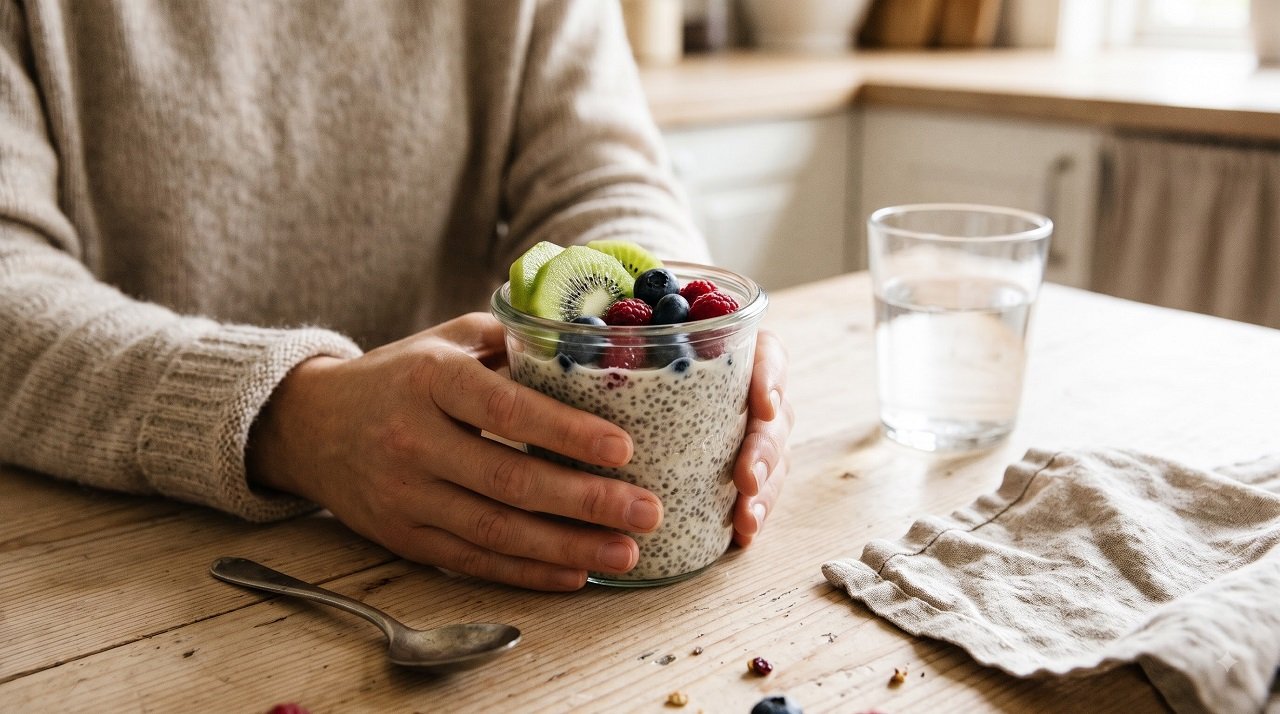
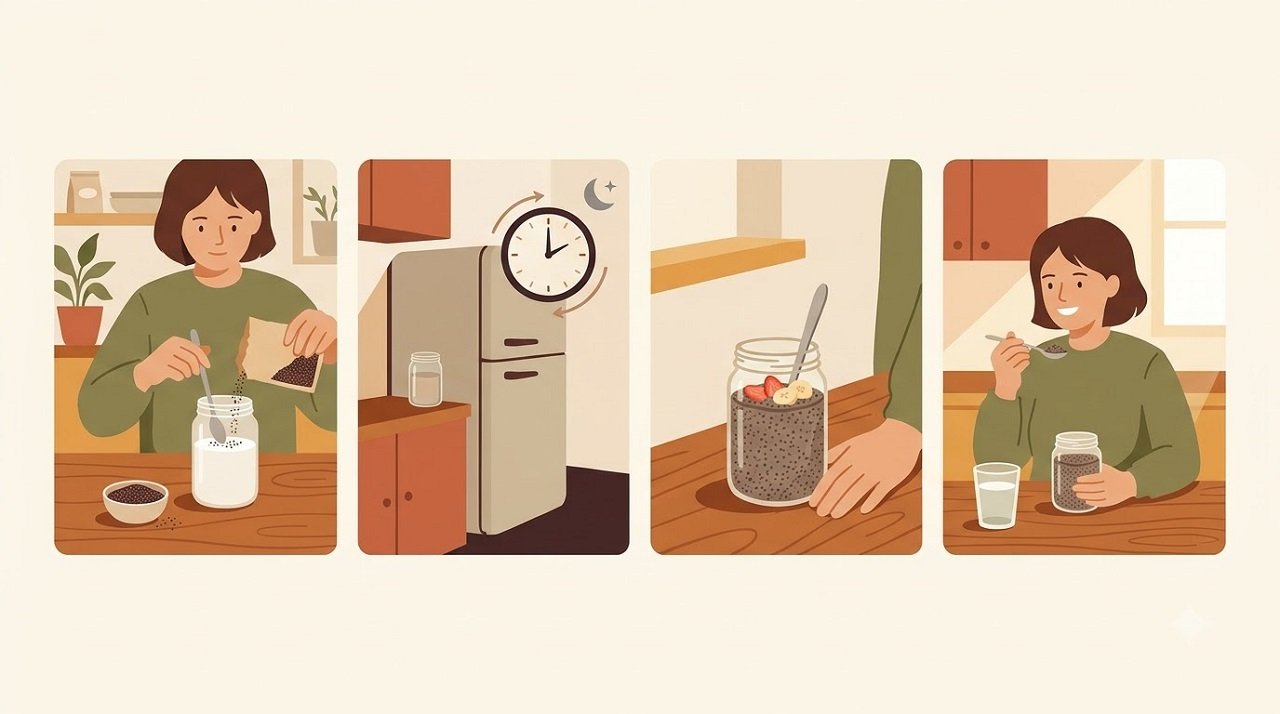
The Recipe: Gentle Chia Pudding (1 serving to start)
Ingredients
- 1 tablespoon chia seeds
- 1/3 cup (about 80 ml) milk or plant milk, plus a little extra to loosen if needed
- 1/4 teaspoon vanilla (optional)
- Toppings: chopped kiwi, berries, or a few chopped prunes
Method
- Stir the chia into the milk (and vanilla) in a jar. Stir again after 5 minutes so the seeds don’t clump.
- Cover and refrigerate for at least 2 hours, ideally overnight, until it’s a thick gel with no dry seeds.
- Top with fruit and eat with a full glass of water on the side.
Scale up slowly. Nebraska Medicine suggests starting with half a teaspoon to a teaspoon in foods and working up to about 1 tablespoon a day. If you tolerate 1 tablespoon well for a week or two, you can try 2.
Safety: Never Eat Chia Dry
Chia swells into a gel. In a 2014 case presented at the American College of Gastroenterology’s annual meeting, a 39-year-old man got a chia blockage in his esophagus after eating about a tablespoon of dry seeds and drinking water. He needed several hours of treatment under anesthesia and recovered fully. The doctor who reported it advised against eating chia dry and recommended letting seeds expand fully in liquid first, particularly for anyone with a narrowed esophagus or a feeling of food getting stuck. The same applies to a large “chia water” drink: it’s safest to soak seeds fully before swallowing.
Who Should Be Careful
Check with a doctor first if you have trouble swallowing, a narrowed esophagus, inflammatory bowel disease (Crohn’s disease or ulcerative colitis, especially during a flare), or diverticulitis.
Other Habits That Matter as Much
Chia pudding is one tool. Drinking enough water, getting a mix of fiber from fruit, vegetables, beans and whole grains, and staying active all support regularity. Don’t ignore the basics for a single food.
When to See a Doctor
See a doctor if constipation lasts more than a few weeks, you see blood in your stool, you have severe pain, unexplained weight loss or vomiting, or you have constipation that alternates with diarrhea. These need proper evaluation, not more fiber.
Frequently Asked Questions
Does chia pudding help with constipation?
It may, since chia is high in fiber and soaked seeds hold water, adding bulk and moisture to stool. There’s no chia-specific clinical trial proving it, so treat it as a helpful food, not a treatment.
How much chia should I eat a day?
Start with about 1 tablespoon a day, or less, and build up gradually. Two tablespoons give around 10 g of fiber, which is a lot for someone new to high fiber.
How long should chia soak?
At least 2 hours, ideally overnight, until it’s a thick gel with no dry seeds.
Can chia seeds make constipation worse?
Yes, if you add too much fiber too fast or don’t drink enough fluid, stool can become harder, and you may get gas or bloating.
Is the chia “internal shower” drink safe?
Nebraska Medicine’s dietitian advises against regularly drinking large amounts, and it has been linked to reports of blockages. A small, fully soaked pudding is a safer way to eat chia.
Sources Referenced in This Article
- Nebraska Medicine: Does the “internal shower drink” help you poop? The benefits and downsides of chia seeds
- WBUR: Chia Seed Alert: Superfood, Yes, But They Landed One Man in the ER (2014)
- Newshub / The Conversation (Clare Collins): Does TikTok’s chia-lemon “internal shower” really beat constipation?

10 Quick Health Tips Before a Big Meeting (Backed by Research)

Root Cause Answers

How to Stop Overthinking Before Bed: Evidence-Based Techniques That Actually Work

PEMF Webinar

The 4-7-8 Breathing Technique: Step-by-Step Guide and What the Research Actually Shows

Why You Can’t Trust Big Pharma
-
 Events2 weeks ago
PEMF Webinar
-
 Natural Sleep Remedies6 months ago
The 4-7-8 Breathing Technique: Step-by-Step Guide and What the Research Actually Shows
-

 Events2 months ago
HBOT ( Hyperbaric Oxygen Therapy ) Webinar
-
 Events6 months ago
Why You Can’t Trust Big Pharma
-

 Events6 months ago
The Anti-Cancer Body with Dr. Michael Karlfeldt
-

 Home Remedies6 months ago
Natural Home Remedies for Restless Legs at Night
-

 Events5 months ago
The Cancer Conversation Your Oncologist Cannot Have in 15 Minutes
-

 Events7 months ago
Beyond the Brain