
Mental Health
Physical Symptoms of Stress and Anxiety: Why Your Body Reacts the Way It Does

The content on this website – including articles, event announcements, personal experiences, and recommendations – is for informational and educational purposes only and is not medical advice. Always consult a qualified healthcare professional before making any changes to your diet, exercise, supplements, sleep habits, or wellness routines, especially if you are pregnant, nursing, on medication, or have any medical condition.
Informational purposes only — not a substitute for medical advice
Disclaimer: This article is for informational and educational purposes only. It does not constitute medical advice, diagnosis, or treatment. If you are experiencing unexplained or severe physical symptoms, please consult a qualified healthcare professional to rule out other conditions.
The headache that won’t lift. The knot in your stomach before a difficult conversation. The way your heart races when your inbox fills up. These aren’t coincidences — and they’re not weakness. They are the predictable, well-documented result of biological systems doing exactly what they were designed to do, just in a context those systems weren’t designed for.
According to the American Psychological Association’s research on stress and the body, stress affects every major organ system — cardiovascular, respiratory, musculoskeletal, gastrointestinal, endocrine, reproductive, and immune. The APA reports that approximately 75% of Americans experience physical or emotional symptoms they associate with stress. Gallup’s 2023 Global Emotions Report puts daily significant stress at around 49% of US adults.
These are not trivial numbers. And the symptoms they produce are not trivial either.
This article covers what stress and anxiety actually do to your body, system by system, with the physiological mechanisms explained — because understanding why something is happening is often the first step toward addressing it.
The Two-System Response: What’s Actually Happening
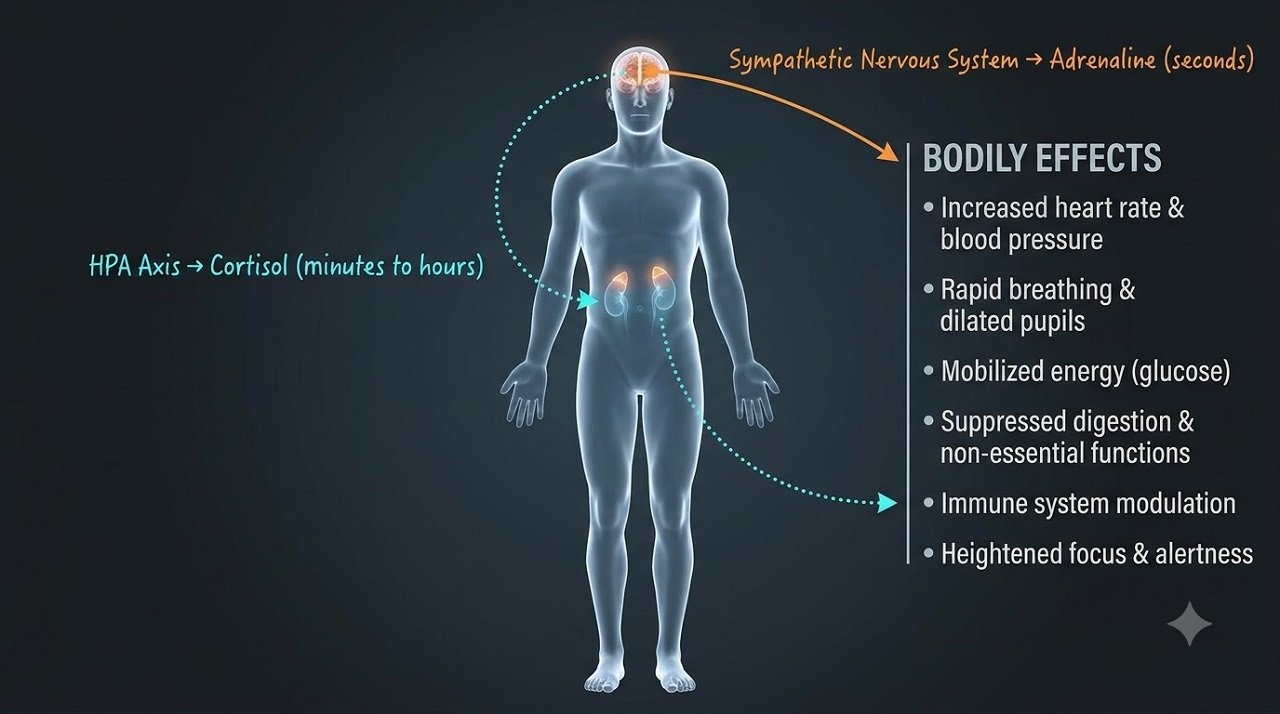
Before diving into symptoms by body system, it helps to understand the two biological systems driving them.
The sympathetic nervous system (SNS) — the fast response. When you perceive a threat — a deadline, a confrontation, a frightening piece of news — your brain’s amygdala fires an alarm signal. Your hypothalamus activates the sympathetic nervous system within milliseconds, flooding your body with adrenaline (epinephrine) and noradrenaline. Heart rate accelerates. Blood is diverted away from non-essential systems (digestion, reproduction, immune activity) toward the muscles and lungs. Your pupils dilate. Your liver dumps glucose into your bloodstream. This is the fight-or-flight response, and it is fast, powerful, and non-discriminating — it cannot tell the difference between a tiger and an unread email.
The HPA axis — the sustained response. Seconds later, the hypothalamic-pituitary-adrenal (HPA) axis activates. Your hypothalamus signals the pituitary gland, which signals the adrenal glands to release cortisol — the primary stress hormone. Unlike adrenaline, which spikes and fades, cortisol lingers. Its job is to sustain the stress response and mobilise energy over a longer period. According to the APA, cortisol normally drops once the stressor resolves. In chronic stress, it does not — and this sustained cortisol elevation is where most of the long-term physical damage originates.
Anxiety operates through the same systems. The difference is that anxiety is often triggered by perceived or anticipated threats rather than immediate ones — which means the stress response can fire repeatedly in the absence of a concrete danger, and the body pays the same physiological price regardless.
Cardiovascular System: Heart, Blood Pressure, Circulation
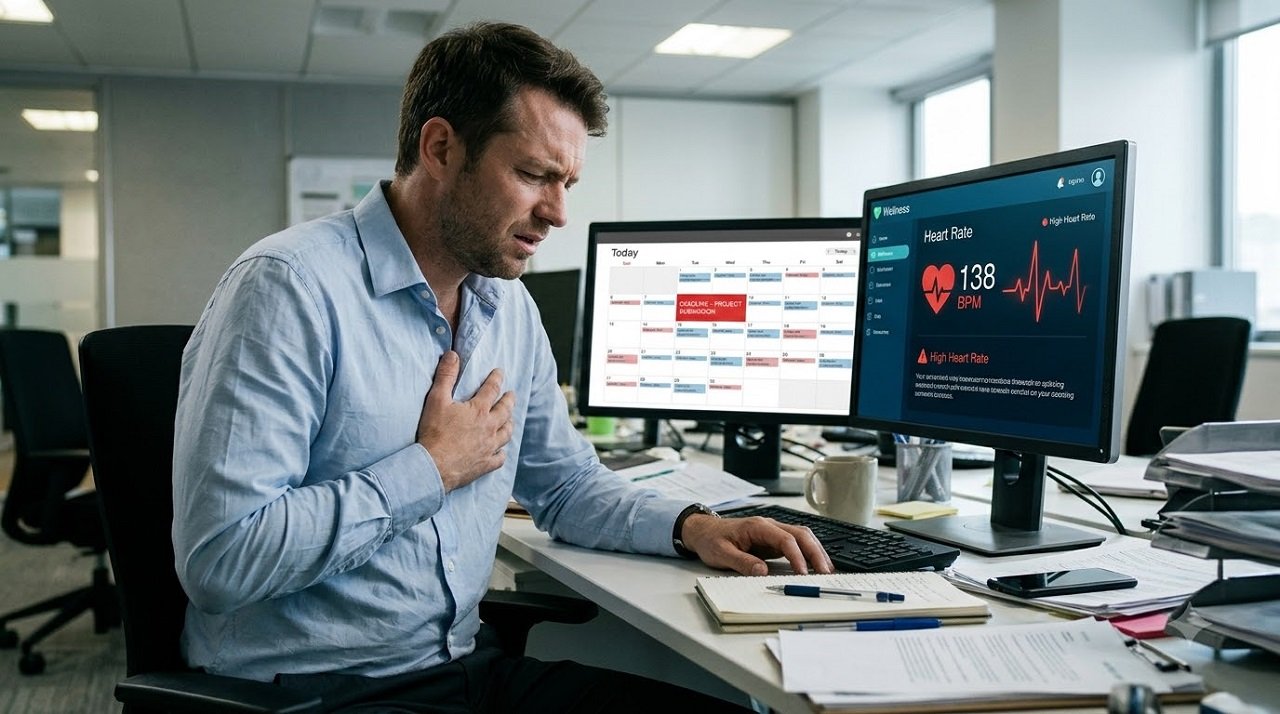
Acute response: During the immediate stress response, your heart beats faster and harder. Blood pressure rises. Blood is redirected to large muscles to support physical action.
Chronic impact: When the stress response activates frequently and stays activated, the cardiovascular system bears a disproportionate share of the cost. According to the APA, chronic stress is associated with higher risk of hypertension, inflammation in the coronary arteries, heart attack, and stroke. The mechanism involves sustained SNS activation increasing arterial pressure, while elevated cortisol promotes inflammatory processes that can contribute to arterial plaque.
Anxiety adds another layer. The palpitations, racing heart, and chest tightness that accompany acute anxiety — which are covered in detail in our article on what an anxiety attack feels like physically — activate the same cardiovascular pathways. When anxiety is persistent, those pathways stay activated.
What you may notice:
- Racing or irregular heartbeat (palpitations)
- Chest tightness or pressure
- A pounding sensation in the chest, neck, or temples
- Elevated resting heart rate
- Cold hands and feet (blood diverted from extremities)
- Elevated blood pressure readings
Musculoskeletal System: Tension, Pain, Headaches
Muscle tension is one of the most immediate and universal physical responses to stress. According to the APA, the body’s protective reflex under threat is to tighten muscles — a preparation for impact or physical action. In a genuinely physical emergency, this makes sense. Sustained under chronic stress, it produces a state of near-constant guarding that most people don’t consciously register until it produces pain.
The APA notes that job-related stress in particular is linked to tension-type headaches and low back and upper limb pain. The pathway is direct: sustained contraction of the neck, scalp, and shoulder muscles restricts blood flow and irritates surrounding tissue, producing the characteristic band-like pressure of a tension headache. Jaw clenching and teeth grinding (bruxism) — often occurring unconsciously during sleep — are closely associated with chronic stress and anxiety and can cause jaw pain, dental damage, and morning headaches.
What you may notice:
- Tension headaches — a band of pressure across the forehead or around the skull
- Neck and shoulder stiffness or aching
- Jaw soreness, especially in the morning
- Upper or lower back pain without a clear physical cause
- A general feeling of physical heaviness or fatigue
Respiratory System: Breathing, Chest, Asthma
Stress and anxiety constrict the airways. According to the APA, this constriction can cause shortness of breath and rapid breathing, and can trigger or worsen asthma and COPD in people who have those conditions.
For people with anxiety specifically, respiratory symptoms are a core physical feature — and they operate in a loop. Rapid shallow breathing (hyperventilation) reduces carbon dioxide levels in the blood, which produces tingling, dizziness, and a sense of unreality. This heightened bodily awareness then feeds back into anxiety, intensifying the breath-focused symptoms. The APA notes that stress-driven hyperventilation can trigger panic attacks in people who are prone to them.
What you may notice:
- Shortness of breath at rest or with mild exertion
- A feeling of not being able to get a full breath
- Rapid, shallow breathing
- Chest tightness
- Sighing frequently
- Dizziness or light-headedness
- Tingling in the hands, feet, or face
Gastrointestinal System: The Gut-Brain Axis

This is the body system where stress and anxiety produce the broadest range of symptoms — and the one where the physiological mechanism is most underappreciated.
The gut contains more nerve endings than the spinal cord and is sometimes called the “second brain” because of its dense neural network (the enteric nervous system). The gut and brain are in continuous, bidirectional communication via the vagus nerve — a direct highway connecting the two. This connection is why anxiety produces stomach symptoms before a presentation, and why gastrointestinal disease often worsens mental health.
According to the APA, stress can intensify pain, bloating, and nausea; change appetite; worsen heartburn and acid reflux; cause diarrhoea or constipation; produce bowel spasms; and weaken the intestinal barrier. The APA explicitly notes that stress does not cause stomach ulcers — those are caused by bacterial infection — but it can make ulcers more painful and harder to heal.
Irritable bowel syndrome (IBS) is particularly closely linked to stress and anxiety. Research in Nutrients and multiple PMC reviews confirms that the HPA axis dysregulation seen in chronic stress directly disrupts gut motility, alters the gut microbiome, and increases intestinal permeability — all of which can trigger or worsen IBS symptoms. The University of Michigan’s Digestive Health program notes that the gut-brain connection is bidirectional: stress worsens gut symptoms, and gut symptoms in turn worsen stress and anxiety.
What you may notice:
- Nausea or stomach cramps before or during stressful events
- Appetite changes — eating much more or much less than usual
- Constipation, diarrhoea, or alternating patterns
- Heartburn or acid reflux flares
- Bloating or gas
- IBS flares with no obvious dietary trigger
Immune System: Illness, Inflammation, Slow Healing
Cortisol is both an anti-inflammatory and an immune suppressant. In the short term, this is adaptive — it prevents the immune system from over-responding to the immediate stressor. Over the long term, chronically elevated cortisol impairs the immune system’s ability to respond normally to threats.
According to the APA, impaired HPA axis communication — a hallmark of chronic stress — has been linked to more frequent illness, chronic fatigue, metabolic disorders including diabetes and obesity, and immune disorders. Research published in JAMA Psychiatry found that prolonged high stress doubled the likelihood of developing metabolic syndrome. The cumulative biological cost of chronic stress on the body’s regulatory systems is sometimes described as allostatic load — a concept developed by neuroscientist Bruce McEwen at Rockefeller University to quantify the wear and tear chronic stress places on the body’s regulatory systems.
Wound healing is also impaired under stress. The PMC review published in 2026 on stress and skin conditions found that stress reduces collagen production and delays tissue repair, and that preoperative fear and anxiety are associated with impaired wound recovery.
What you may notice:
- Getting sick more often — colds, infections, minor illnesses
- Taking longer to recover from illness
- Feeling run-down even when not actively unwell
- Slow healing of minor cuts or skin irritation
- Chronic low-grade inflammation
Skin: The Visible Signal of Internal Stress
Skin is one of the most responsive organs to stress, because it has its own local HPA-like system that mirrors the systemic stress response. The 2026 PMC narrative review on psychological stress and skin conditions confirms that the HPA axis elevation seen under stress increases cortisol at both systemic and local levels, which reduces skin hydration, impairs the skin barrier, promotes inflammatory skin responses, and raises ACTH — which increases melanin production and can cause hyperpigmentation.
Specific dermatological conditions strongly linked to stress include psoriasis, atopic dermatitis (eczema), acne, alopecia areata (patchy hair loss), urticaria (hives), and seborrheic dermatitis. The review also documents a separate mechanism — catecholamines and neuropeptides released by nerve fibres near the skin triggering mast cell activation and neurogenic inflammation, which drives itch, redness, and barrier changes.
Telogen effluvium — diffuse hair shedding typically occurring two to three months after an acute stressor — is also well documented. It is caused by the stress response prematurely pushing hair follicles from the growth phase into the resting phase.
What you may notice:
- Acne flares not obviously linked to diet or hormones
- Eczema or psoriasis worsening during stressful periods
- Hives or unexplained skin redness
- Increased skin sensitivity
- Hair thinning or shedding two to three months after an intense stressor
- Slow healing of skin conditions
Sleep: Cortisol’s Most Disruptive Effect
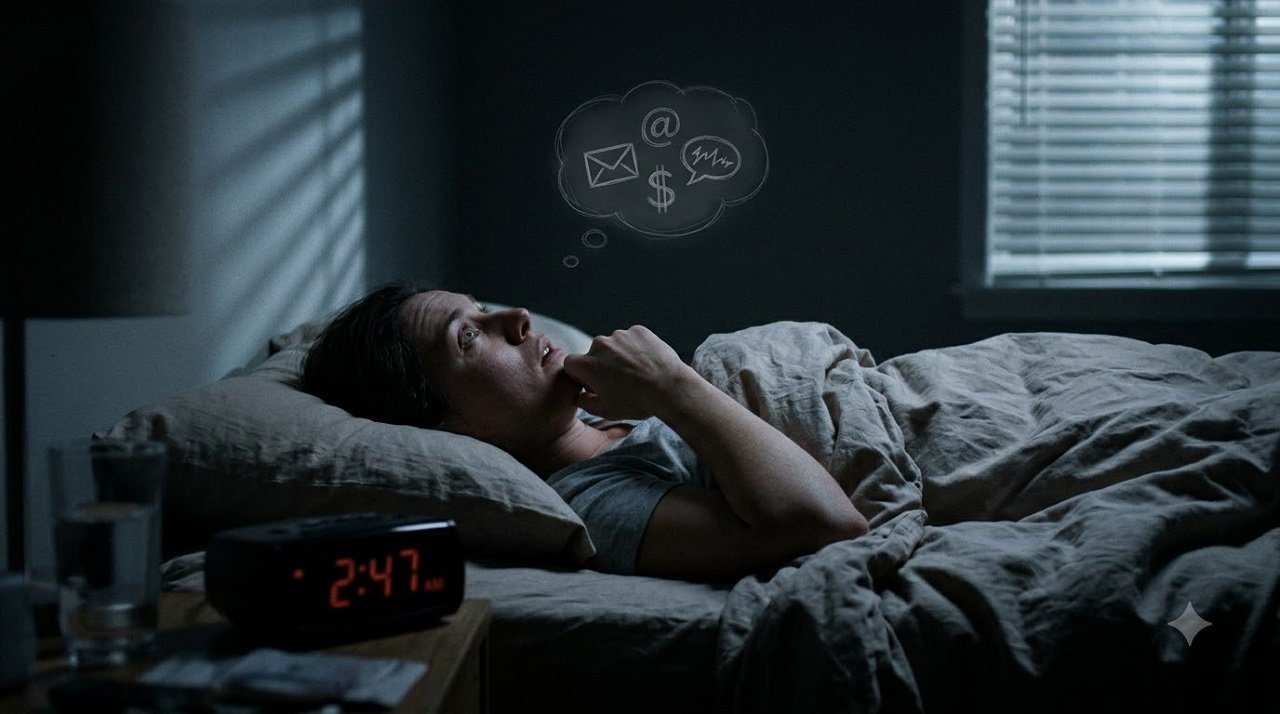
Cortisol and sleep are on opposite schedules in a healthy system. Cortisol peaks in the morning to prepare you for the day and falls through the evening to allow sleep to occur. Chronic stress disrupts this rhythm — keeping cortisol elevated into the evening, which delays sleep onset, reduces deep sleep, and can cause early-morning waking (the body’s misread attempt to mobilise for a day that hasn’t started).
According to Henry Ford Health’s 2026 overview of stress and the body, trouble sleeping is one of the most common chronic stress symptoms, alongside headaches, digestive problems, high blood pressure, and hives.
Anxiety adds its own sleep disruption: racing thoughts, physical tension, and hypervigilance around sleep itself (the anxious monitoring of whether sleep is coming) can create a feedback loop where anxiety causes poor sleep, and poor sleep worsens anxiety.
What you may notice:
- Difficulty falling asleep despite feeling tired
- Waking in the early hours and being unable to return to sleep
- Unrefreshing sleep — waking more tired than when you went to bed
- Vivid or disturbing dreams
- Racing thoughts at bedtime
Endocrine and Metabolic System: The Long-Term Cost
The HPA axis is the body’s central stress management system, but it does not operate in isolation. Prolonged HPA activation disrupts blood sugar regulation (cortisol raises blood glucose to fuel the fight-or-flight response), thyroid function, and the balance of reproductive hormones.
The APA notes that chronic HPA dysregulation has been linked to metabolic disorders including type 2 diabetes and obesity — consistent with the JAMA Psychiatry finding that prolonged high stress doubled the likelihood of metabolic syndrome. The mechanism involves sustained cortisol elevation promoting insulin resistance and visceral fat accumulation over time.
Reproductive System
In men: According to the APA, chronic stress can reduce testosterone production, lowering libido and potentially causing erectile dysfunction. One cited study found that men who experienced two or more stressful life events in the past year had lower sperm motility and a lower percentage of normal-morphology sperm than men who had not.
In women: The APA reports that stress may cause absent or irregular menstrual cycles, more painful periods, and changes in cycle length. It can reduce sexual desire, affect fertility, and worsen premenstrual symptoms and menopausal hot flashes. Conditions such as PCOS may also be worsened by chronic stress-related hormonal dysregulation.
The Anxiety Symptom Loop
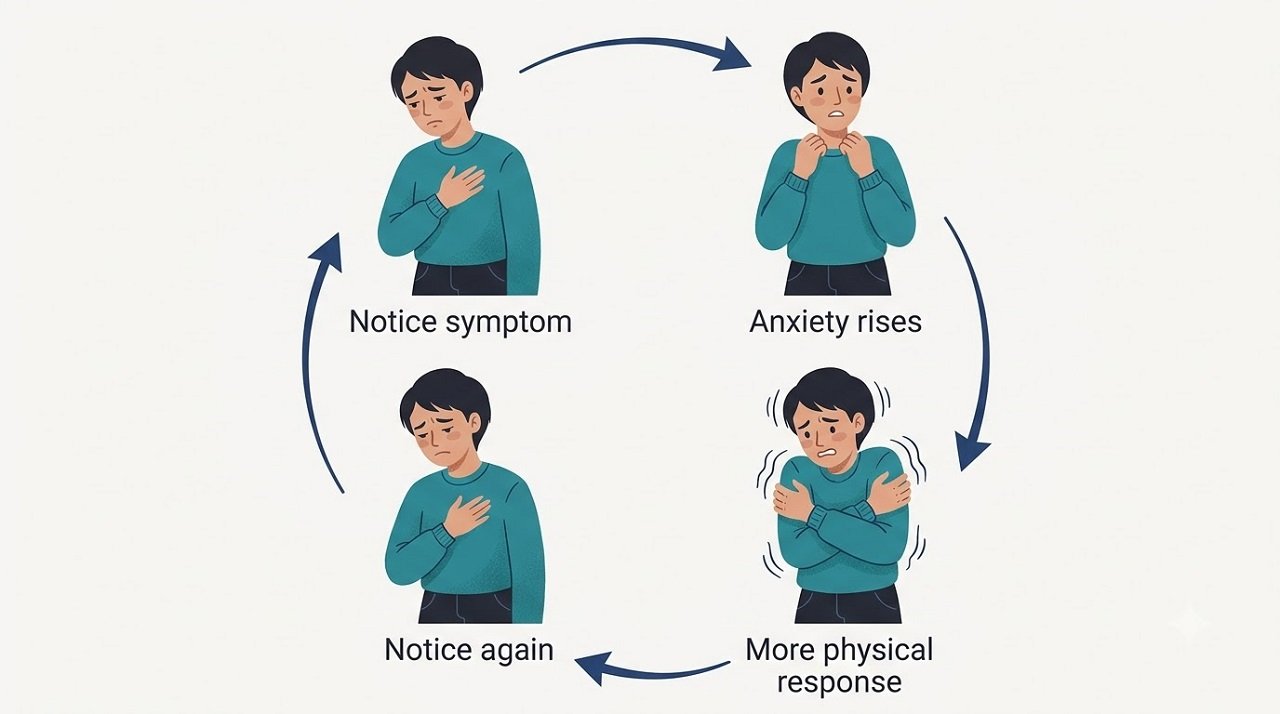
One feature of anxiety-related physical symptoms that sets them apart from stress symptoms is a feedback mechanism — sometimes called interoceptive amplification — where the physical symptom itself becomes a new source of anxiety.
You notice your heart beating harder. That noticing activates the threat-detection system, which increases the heart rate further. You notice the increased heart rate, which increases anxiety, which increases heart rate. The same loop can run with breathing, with dizziness, with gut symptoms. This is why anxiety physical symptoms can feel as though they escalate from nowhere — because the body’s own monitoring of its symptoms becomes the stressor.
Understanding this loop is important because it changes the intervention. Trying to suppress the symptom directly often makes the loop worse. Evidence-based approaches to anxiety — particularly CBT and exposure-based therapy — work in part by reducing the threat value of the bodily sensation rather than eliminating the sensation itself.
This connection between physical stress symptoms and trauma responses is also worth understanding. The fight/flight/freeze physiology that underlies trauma responses uses the same HPA and ANS pathways, and the physical symptoms can be nearly identical.
When Physical Stress Symptoms Become Chronic: Allostatic Load
Most stress responses are designed to be temporary. The body activates, the stressor resolves, and the system returns to baseline. The problem in modern life is that many stressors — work pressure, financial strain, relationship conflict, ongoing health concerns — do not resolve quickly. The stress response activates repeatedly, and the recovery periods become shorter.
This accumulation of physiological wear is what neuroscientist Bruce McEwen called allostatic load — the cumulative cost on the body’s regulatory systems from repeated or chronic stress. High allostatic load is associated with earlier onset of cardiovascular disease, metabolic disorders, immune dysfunction, and cognitive decline.
Our article on what emotional exhaustion and burnout actually are covers how this chronic activation plays out in the context of sustained life demands — it is worth reading alongside this one.
When to See a Doctor

Most physical symptoms of stress and anxiety are real — not imagined, not invented, not “just in your head” — and many resolve or significantly improve when the underlying stress is addressed. However, because stress and anxiety symptoms overlap with symptoms of conditions that need medical attention, certain presentations warrant a medical evaluation:
- Chest pain, particularly with shortness of breath, pain radiating to the arm or jaw, or sweating — these require urgent evaluation to rule out cardiac causes
- Heart palpitations that are irregular, sustained, or accompanied by dizziness or fainting
- Unexplained weight loss alongside other symptoms
- GI symptoms that are new, persistent, include blood, or cause significant weight loss
- Skin changes that don’t improve or appear to be worsening
- Severe or new headache unlike previous headaches
- Neurological symptoms — persistent numbness, vision changes, weakness in a limb
A GP or healthcare provider can assess whether symptoms are stress-related or require further investigation, and can also refer to mental health support if appropriate.
Frequently Asked Questions
Can stress and anxiety cause real physical symptoms?
Yes — completely. Physical symptoms of stress and anxiety have well-documented physiological mechanisms. They are produced by the same nervous system and hormonal pathways (HPA axis, sympathetic nervous system, cortisol) that evolved to handle physical threats. According to the APA, stress affects every major organ system in the body — cardiovascular, respiratory, gastrointestinal, musculoskeletal, endocrine, immune, and reproductive.
What are the most common physical symptoms of stress?
According to the APA and clinical literature, the most commonly reported physical symptoms of stress include headaches (particularly tension headaches), muscle tension (especially neck and shoulders), fatigue, GI problems (nausea, stomach aches, changes in bowel habits), sleep disturbance, and cardiovascular symptoms including elevated heart rate and blood pressure. Skin conditions including acne and eczema flares are also well documented.
Why does stress cause stomach problems?
The gut and brain are connected by the vagus nerve through the gut-brain axis. The gut contains its own dense neural network (the enteric nervous system), and stress activates the HPA axis, which directly disrupts gut motility, alters the intestinal barrier, and changes gut microbiome composition. The result is GI symptoms including nausea, cramping, bloating, diarrhoea, or constipation — even without any gastrointestinal disease present.
Can stress cause hair loss?
Yes. Telogen effluvium — diffuse hair shedding — is a well-documented response to significant acute stress. It occurs because stress hormones push hair follicles prematurely from the growth (anagen) phase into the resting (telogen) phase. The shedding typically appears two to three months after the stressful event, which is why the connection is often not made. In most cases, once the stressor resolves and is managed, hair regrowth follows.
How do I know if my physical symptoms are from stress or something else?
Physical symptoms that appear or worsen during stressful periods and improve when stress reduces are likely stress-related. However, because stress symptoms overlap with symptoms of several conditions requiring medical attention (heart disease, thyroid disorders, GI conditions, etc.), symptoms that are new, severe, persistent, or accompanied by red flags like chest pain with shortness of breath, unexplained weight loss, or blood in stool warrant medical evaluation. A GP can help determine the cause and, if appropriate, refer to mental health support alongside any medical treatment.
Sources & References
- American Psychological Association. “Stress Effects on the Body.” APA Help Center. apa.org/topics/stress/body
- Henry Ford Health. “How Stress Shows Up in the Body.” July 2026. henryford.com/blog/2026/07/how-stress-shows-up-in-the-body
- American Institute of Stress / Gallup. “What the Latest Reports Say About Stress in America.” Stress.org. stress.org/news/what-the-latest-reports-say-about-stress-in-america
- Gallup. 2023 Global Emotions Report. gallup.com/analytics/349280/gallup-global-emotions-report.aspx
- JAMA Psychiatry. “Prolonged High Stress and Metabolic Syndrome Risk.” 2022. jamanetwork.com/journals/jamapsychiatry
- Teo JX, et al. “Psychological Stress and Skin Conditions: A Comprehensive Narrative Review.” PMC, 2026. pmc.ncbi.nlm.nih.gov/articles/PMC12681996
- University of Michigan Digestive Health. “Gut-Brain Axis and IBS.” med.umich.edu/pdf/digestive/Gut-Brain-Axis-and-IBS.pdf
- National Institute of Mental Health (NIMH). “I’m So Stressed Out! Fact Sheet.” nimh.nih.gov/health/publications/so-stressed-out-fact-sheet
- McEwen BS. “Allostasis and Allostatic Load: Implications for Neuropsychopharmacology.” Neuropsychopharmacology, 2000. Rockefeller University. doi.org/10.1016/S0893-133X(99)00129-3
- Orlando Health. “Five Health Risks of Stress.” orlandohealth.com/content-hub/five-health-risks-of-stress
This article is for informational and educational purposes only. It does not constitute medical advice and should not be used to replace consultation with a qualified healthcare or mental health professional. If you are experiencing physical symptoms that concern you, please speak with a doctor.











Informational purposes only — not a substitute for medical advice
Disclaimer: This article is for informational and educational purposes only. It does not constitute medical advice, diagnosis, or treatment. If overthinking before bed is severely disrupting your sleep or is accompanied by significant anxiety or depression, please speak with a qualified healthcare professional.
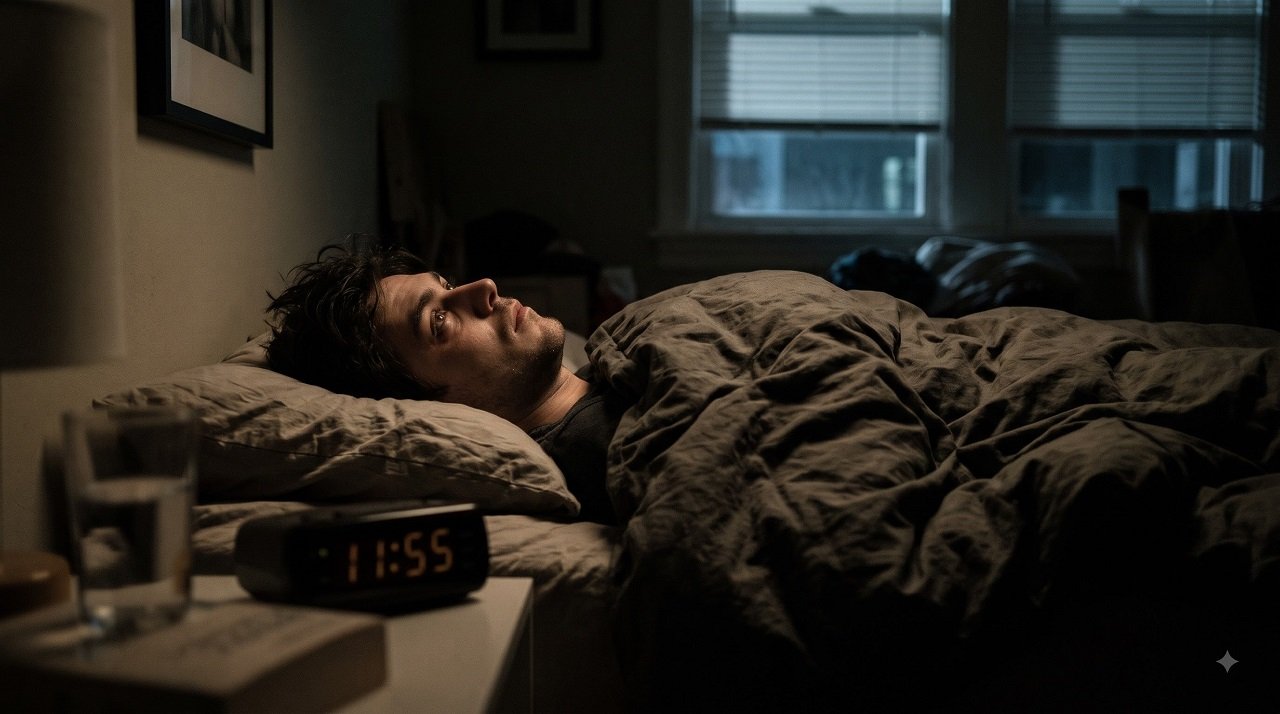
It’s 11:47 pm. You’re exhausted. You’ve been tired since 3 in the afternoon. And yet here you are — wide awake, replaying a conversation from last Tuesday, rehearsing an email you haven’t sent yet, running through a mental checklist of everything that could go wrong this week.
You are not broken. You are not uniquely anxious. And you are not doing this to yourself on purpose.
What you are experiencing has a name, a neurological explanation, and — importantly — a set of practical techniques that research has shown to actually interrupt it. This article covers both: why the brain does this at night specifically, and what you can do about it in the next five minutes.
Key Takeaways
- Nighttime overthinking is not a willpower problem — it is a predictable consequence of how the brain’s resting-state network behaves when external stimulation drops.
- The Default Mode Network (DMN), which supports self-referential thinking and future planning, becomes more active when you stop doing things — including when you try to sleep.
- Elevated cortisol at night (caused by daytime stress) keeps the brain in a state of alertness that makes sleep onset harder.
- Scheduled worry time — a technique with decades of CBT research behind it — works by giving your brain a designated time to process concerns, so it doesn’t hold onto them until bedtime.
- Cognitive shuffling, developed by cognitive scientist Luc Beaudoin, interrupts overthinking by mimicking the random, hypnagogic imagery the brain produces naturally as it drifts toward sleep.
- Progressive muscle relaxation (PMR) has the strongest body of evidence among physical relaxation techniques — a systematic review of 46 studies found significant reductions in anxiety across multiple populations.
- Trying to suppress thoughts (“stop thinking about it”) reliably makes them worse. Techniques that redirect attention are consistently more effective than techniques that resist thoughts.
- If nighttime overthinking is accompanied by persistent low mood, generalised anxiety, or is disrupting your life beyond sleep, it warrants professional support — not just better sleep hygiene.
Why Your Brain Overthinks at Night (The Actual Reason)
Understanding the mechanism matters, because most people assume nighttime overthinking is a focus or discipline problem. It isn’t. It’s a function of what the brain does when you stop giving it external tasks to process.
The Default Mode Network
Neuroscience research has identified a network of brain regions — including the medial prefrontal cortex, the posterior cingulate cortex, and the angular gyrus — that becomes more active during rest and inward-focused thinking. This is called the Default Mode Network (DMN).
The DMN is not a flaw. It is responsible for important cognitive functions: imagining future scenarios, understanding other people’s perspectives, processing memories, and constructing your sense of self. During your waking hours, goal-directed tasks suppress DMN activity and keep it in check. The moment you stop doing things — particularly in the dark, quiet of a bedroom with no screen, no task, and no social input — the DMN activates, and it brings everything it has been holding in reserve with it.
That unfinished conversation. That looming deadline. That thing you said three weeks ago that might have landed badly. The DMN does not distinguish between productive reflection and unproductive rumination. It simply processes what it has been given.
Cortisol and the Nighttime Alertness Problem
The body follows a natural cortisol rhythm: cortisol peaks in the morning to promote waking and alertness, then gradually drops through the day, reaching its lowest point in the evening to allow sleep onset. Chronic stress, according to the American Psychological Association, disrupts this rhythm — keeping cortisol elevated in the evening when it should be falling. As covered in our article on physical symptoms of stress and anxiety, this sustained cortisol elevation has measurable effects on the body’s ability to downregulate — including on the brain’s ability to transition from alert wakefulness to sleep-ready rest.
The result is a physiology that is biologically ready to stay awake and think, in a body that is physically exhausted, in a room designed for sleeping. The mismatch is the problem.
The Bidirectional Trap
There is also a feedback loop worth naming. Research published in the Journal of Sleep Research identifies pre-sleep cognitive activity — the racing thoughts, rehearsal, and worry that occur in bed — as a significant contributor to delayed sleep onset and insomnia. But the loop runs in both directions: poor sleep also increases daytime emotional reactivity, reduces the prefrontal cortex’s ability to regulate the amygdala, and makes the following night’s overthinking more likely. Poor sleep makes you more anxious; more anxiety makes sleep worse.
This is not a cycle you can simply decide your way out of. It requires deliberate interruption.
The Difference Between Normal Worry, Rumination, and Anxiety
Before getting to techniques, it helps to know which pattern you’re dealing with — because they respond slightly differently.
Normal worry is future-focused, often problem-solvable in principle, and typically reduces once the stressor resolves. If you’re running through tomorrow’s presentation in your head, that is probably normal worry.
Rumination is predominantly past-focused — replaying events, re-examining what was said, re-running decisions already made. It is notably resistant to reassurance because there is nothing left to solve. Rumination is a core feature of depression and can persist independent of active stressors.
Anxiety-driven overthinking involves hypervigilance to potential future threats — catastrophising, “what if” spiralling, pattern-matching for signs of danger. It tends to involve physical symptoms of arousal (racing heart, tight chest, difficulty breathing). If your nighttime overthinking feels like this, the article on what an anxiety attack feels like physically is relevant reading alongside this one.
The techniques below address all three patterns, but it is worth noting which one you are predominantly experiencing.
Techniques That Work: What the Evidence Shows
1. Scheduled Worry Time
This is one of the most consistently supported techniques in cognitive behavioural therapy for anxiety and insomnia. The principle, developed out of decades of work on the psychology of worry — including Thomas Borkovec’s foundational research at Penn State — is straightforward: rather than trying to suppress worrying thoughts, you give them a designated time and place.
How to do it:
- Pick a 15–20 minute window earlier in the day — not within two hours of bedtime. Directly after dinner works for most people.
- During that window, sit with your worries deliberately. Write them down. Think them through. If a problem has a solution, sketch one. If it doesn’t, acknowledge it and set it aside.
- When anxious thoughts arise at bedtime, the instruction to your brain is not “stop” — it is “not now; that’s for tomorrow’s worry time.” You are not dismissing the thought; you are deferring it to a time when you are better equipped to handle it.
A randomised controlled trial examining worry postponement, published by researchers at the University of Leeds, found that participants who used structured worry postponement showed significant reductions in both daily worry and sleep disturbance compared to controls. The technique works because it honours the brain’s need to process concerns — just not at 11:47 pm.
2. Cognitive Shuffling
This is a lesser-known technique that deserves significantly more attention than it gets in mainstream sleep advice. It was developed by Luc Beaudoin, a cognitive scientist at Simon Fraser University in Canada, and it is based on a specific insight into what the brain does as it naturally transitions toward sleep.
As you drift off, your thinking becomes random, fragmented, and image-based — a state called hypnagogic thinking. People with insomnia and habitual overthinking tend to have more organised, narrative, problem-focused pre-sleep thoughts, which keeps the brain in a waking cognitive mode rather than allowing it to transition.
Cognitive shuffling deliberately mimics hypnagogic thinking to ease that transition.
How to do it:
- Pick a neutral word — something with no emotional charge. “Bedtime,” “garden,” “rainfall” work well.
- Think of an unrelated object or image for each letter of the word, one at a time. Visualise it briefly and vividly before moving to the next letter.
- If a stressful thought intrudes, acknowledge it and return to the shuffle.
- Keep going until you’re asleep.
A study by Beaudoin, Digdon, O’Neill, and Racour (2016) examined an analogous method called the Serial Diverse Imagining Task (SDIT) in 154 college students with insomnia. Participants reported reduced pre-sleep arousal and improved sleep quality. The research base is still developing, but the mechanistic logic is sound and the technique has no downsides.
3. Progressive Muscle Relaxation (PMR)
Progressive muscle relaxation was developed by American physician Edmund Jacobson in the 1920s, and it has accumulated one of the strongest evidence bases of any mind-body relaxation technique. A 2023 systematic review of 46 studies across 16 countries and 3,402 adult participants found significant post-intervention reductions in anxiety (effect sizes ranging from Cohen’s d = 0.25 to 2.54), stress, and depression across both standalone PMR and PMR combined with other approaches.
The rationale is physiological: physical tension and psychological anxiety are mutually reinforcing. Deliberately releasing muscle tension interrupts the cycle from the body side rather than trying to manage it cognitively.
How to do it:
- Lie down in bed. Start with your feet.
- Tense the muscles in your feet firmly — not painfully — for 5 seconds. Then release completely and notice the contrast for 10 seconds.
- Move systematically up the body: calves, thighs, abdomen, hands, forearms, shoulders, face.
- By the time you reach the top, most people find both physical tension and mental activity noticeably reduced.
This technique is particularly useful if your overthinking comes with physical tension — a clenched jaw, tight shoulders, or a constricted chest.
4. The 4-7-8 Breathing Method
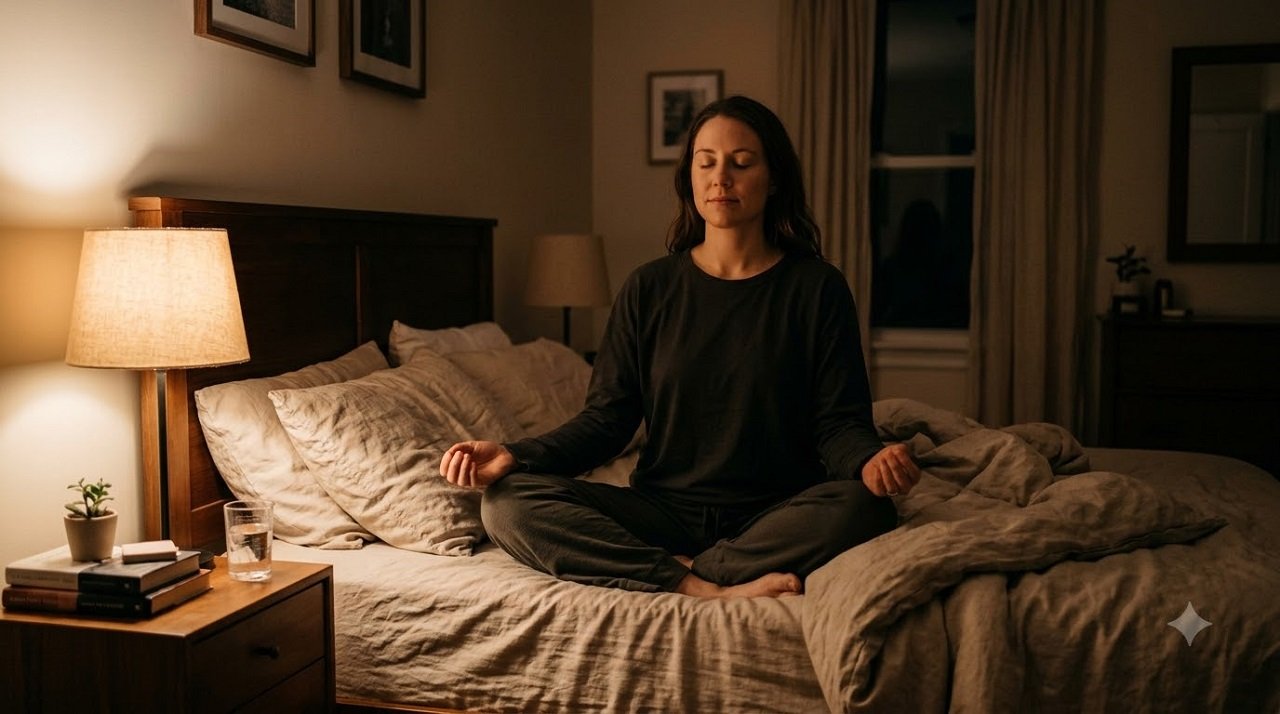
Slow, controlled breathing activates the parasympathetic nervous system — the physiological counterpart of the sympathetic “fight or flight” state that stress and anxiety maintain. The 4-7-8 pattern (inhale for 4 counts, hold for 7, exhale for 8) is widely used because the extended exhale is particularly effective at triggering the vagal response that lowers heart rate and signals safety to the brain.
How to do it:
- Lie in bed. Breathe in through the nose for 4 seconds.
- Hold for 7 seconds.
- Exhale completely through the mouth for 8 seconds.
- Repeat 4–6 cycles.
The extended exhale is the key. Exhalation is the phase of breathing associated with parasympathetic dominance — which is why a slow, deliberate breath out is calming in a way that an equivalent inhale is not.
5. Body Scan Meditation
Where cognitive techniques work by redirecting thought content, body scan meditation works by redirecting attention itself — from the cognitive (thinking, planning, replaying) to the sensory (physical sensation in the present moment).
How to do it:
- Begin at the top of the head or the soles of the feet.
- Move attention slowly through the body, noticing sensation without judgment — warmth, pressure, tingling, the contact of the bed beneath you.
- When thoughts intrude (they will), simply return attention to whatever part of the body you were last attending to.
The technique is a core component of Mindfulness-Based Stress Reduction (MBSR), the programme developed by Jon Kabat-Zinn at the University of Massachusetts, and mindfulness-based approaches have an established evidence base for both anxiety and sleep disturbance across multiple clinical populations.
6. The Doorway Event Boundary
This one is counterintuitive but research-supported. A study published in Psychonomic Bulletin & Review found that physically passing through a doorway acts as an “event boundary” in memory — the brain treats the new room as a new episode, which can help compartmentalise the thoughts associated with the previous space.
If you have been lying awake overthinking for more than 20 minutes, get up. Go to another room. Sit in low light. Do something calm and low-stimulation for 15–20 minutes — reading a physical book, light stretching, or simply sitting. Then return to bed.
This principle underpins stimulus control therapy, one of the components of Cognitive Behavioural Therapy for Insomnia (CBT-I) — the gold-standard psychological treatment for chronic sleep problems. The bed should be associated with sleep, not with wakefulness and anxious thinking. Every night you spend hours overthinking in bed reinforces the association between your bedroom and mental activation.
What Doesn’t Work (And Why)
Trying to suppress the thoughts. Psychologist Daniel Wegner’s “white bear” experiments in the 1980s demonstrated what most overthinkers already know intuitively: instructing yourself not to think about something reliably increases the frequency of that thought. Suppression activates a monitoring process that keeps scanning for the forbidden content — which means the more you try to stop thinking about something, the more you think about it. Redirect, don’t suppress.
Checking your phone. Blue light aside, the content of a phone — news, social media, messages — is specifically designed to trigger engagement, comparison, and emotional response. It is the worst possible input for a brain that is already overactivated and looking for material to process.
Having “just one more” problem-solving loop. The feeling that you are productively working through something at midnight is almost always an illusion. The prefrontal cortex — the part of the brain responsible for reasoned, rational problem-solving — is impaired by sleep deprivation. The quality of thinking you are doing at midnight after a poor night’s sleep is not the quality of thinking you believe it to be.
When Overthinking Before Bed Is Something More
Difficulty quieting the mind at bedtime is so common that it is often dismissed as a quirk of modern life. But persistent, severe, or worsening nighttime overthinking — particularly when accompanied by daytime anxiety, persistent low mood, or significant functional impairment — may indicate something that benefits from professional support.
Cognitive Behavioural Therapy for Insomnia (CBT-I) is recommended as the first-line treatment for chronic insomnia by multiple clinical guidelines, including the American College of Physicians. It includes structured techniques such as sleep restriction, stimulus control, and cognitive restructuring that go beyond what a single article can replicate.
If what you are experiencing feels closer to generalised anxiety or depression than to ordinary sleep difficulty — particularly if it is bleeding into your days, affecting your work, relationships, or ability to function — that is worth exploring with a clinician rather than managing alone with breathing exercises. Our article on signs of emotional exhaustion versus burnout may help you identify whether what you are experiencing is broader than a sleep problem.
Frequently Asked Questions
Why do I only overthink at night and not during the day?
During the day, your brain is occupied with external tasks — work, conversations, decisions. These goal-directed activities suppress the Default Mode Network, the brain’s resting-state network that generates self-referential thinking and rumination. At night, when external inputs drop away, the DMN activates and surfaces everything it has been holding. This is not a character flaw; it is predictable neuroscience.
How long does it take for these techniques to work?
Some techniques — particularly breathing exercises and cognitive shuffling — can interrupt an overthinking episode within minutes when applied consistently. Scheduled worry time typically takes one to two weeks of regular practice before the brain begins to reliably defer evening thoughts to the designated window. Progressive muscle relaxation becomes more effective with regular practice as the body learns the tension-release response. For most people, consistent use over two to four weeks produces measurable improvement.
Is overthinking at night a sign of anxiety disorder?
Not necessarily. Occasional or situational nighttime overthinking is a normal human experience, particularly during periods of high stress. It becomes clinically significant when it is persistent (most nights), when it causes meaningful distress or functional impairment, or when it accompanies other symptoms of an anxiety disorder — excessive worry during the day, physical symptoms of anxiety, avoidance behaviours. If you are unsure, a conversation with a GP or mental health professional is a reasonable next step.
What is the fastest way to stop overthinking at night right now?
The fastest interruption for most people is a combination of the 4-7-8 breathing method (which activates the parasympathetic nervous system within a few cycles) and cognitive shuffling (which redirects the content of thinking from narrative/analytical to random/imagistic). Used together, most people find their mental activity slows noticeably within 10–15 minutes.
Can overthinking before bed cause long-term health problems?
Chronic sleep disruption — of which nighttime overthinking is a major cause — is associated with a wide range of health consequences including impaired immune function, increased cardiovascular risk, metabolic disruption, and worsening mental health. The sleep-stress bidirectional cycle, once established, can become self-sustaining. Addressing it early — rather than waiting until it becomes a nightly pattern — is meaningfully better for long-term health.
Sources & References
- Ohayon MM. Prevalence and correlates of nonrestorative sleep complaints. Archives of Internal Medicine. 2005;165(1):35–41. https://jamanetwork.com/journals/jamainternalmedicine/fullarticle/486473
- Harvey AG. Pre-sleep cognitive activity: a comparison of sleep-onset insomniacs and good sleepers. British Journal of Clinical Psychology. 2000;39(3):275–286. https://pubmed.ncbi.nlm.nih.gov/11033749/
- Beaudoin LP, Digdon N, O’Neill H, Racour G. Serial Diverse Imagining Task and mind-wandering: novel techniques to manage pre-sleep arousal. 2016. (Abstract presented at Sleep conference.) Referenced at: https://drcraigcanapari.com/the-cognitive-shuffle/
- Toussaint L, et al. Effectiveness of progressive muscle relaxation, deep breathing, and guided imagery in promoting psychological and physiological states of relaxation. Evidence-Based Complementary and Alternative Medicine. 2021. https://pubmed.ncbi.nlm.nih.gov/34306146/
- Worry postponement RCT — University of Leeds / White Rose Repository. Effects of worry postponement on daily worry and sleep: a randomised controlled trial. https://eprints.whiterose.ac.uk/id/eprint/235230/1/Effects%20of%20worry%20postponement%20on%20daily%20worry%20and%20sleep%20%20a%20randomised%20controlled%20trial.pdf
- Oura Health. How to stop overthinking at night. https://ouraring.com/blog/how-to-stop-overthinking-at-night/
- Sleep Foundation. Relaxation exercises for sleep. https://www.sleepfoundation.org/sleep-hygiene/relaxation-exercises
- American Psychological Association. Stress effects on the body. https://www.apa.org/topics/stress/body
This article is for informational and educational purposes only. It does not constitute medical advice and should not replace consultation with a qualified healthcare or mental health professional. If you are experiencing persistent sleep disruption or significant anxiety, please speak with your doctor.

Informational purposes only — not a substitute for medical advice
Disclaimer: This article is for informational and educational purposes only. It does not constitute medical advice, diagnosis, or treatment. ADHD is a clinically diagnosed neurodevelopmental condition. The approaches covered here are evidence-based lifestyle and complementary strategies — they are not substitutes for professional evaluation, diagnosis, or treatment. If you or your child have ADHD, please work with a qualified healthcare professional before making changes to any treatment plan.
If you search “natural remedies for ADHD,” you will find a spectrum of content — everything from rigorous clinical research to frankly implausible claims involving essential oils and herbal supplements that have no meaningful evidence behind them. The gap between those two ends of the spectrum is enormous, and for anyone managing ADHD or supporting someone who does, that gap matters.
This article cuts through the noise. It covers what actually has research behind it, what the evidence says specifically (not just “this may help”), what the evidence doesn’t support, and how these approaches fit alongside — not instead of — the clinical care that ADHD requires.
Key Takeaways
- ADHD is a neurodevelopmental condition with established, evidence-based treatments. The lifestyle approaches covered here are adjuncts — they can meaningfully support symptom management, but they are not replacements for professional diagnosis or treatment.
- Exercise has the strongest non-pharmacological evidence base. A 2025 meta-analysis found medium effect sizes for inhibitory control and working memory in children with ADHD. The mechanism is real: aerobic exercise raises dopamine and norepinephrine — the same neurotransmitters targeted by ADHD medication, via a different route.
- Omega-3 supplementation shows the most benefit in people who are actually deficient. A 2026 meta-analysis found that children with low baseline omega-3 levels showed moderate symptom improvement; those with normal or high levels showed no measurable benefit. Getting tested before supplementing makes sense.
- Mindfulness-based interventions show promising results in adults particularly — reduced inattention, improved executive function, better emotional regulation — but research quality is still generally poor and clinical recommendations for children are premature.
- Sleep is a critical but underappreciated lever. The relationship between ADHD and sleep is bidirectional: ADHD disrupts sleep, and poor sleep reliably worsens ADHD symptoms. Improving sleep hygiene is one of the highest-impact things you can do regardless of anything else.
- Essential oils, most herbal supplements (ginkgo biloba, St. John’s wort), and CBD oil do not have meaningful clinical evidence for ADHD symptom management. Including them in this article without noting that would be a disservice.
- If you are currently on ADHD medication, do not adjust or stop it based on anything in this article. Talk to your prescribing doctor.
First: What “Natural” Should and Shouldn’t Mean Here
The word “natural” in the context of health content can mean almost anything. For the purposes of this article, it means: non-pharmacological, lifestyle-based, or supplementary approaches with peer-reviewed research examining their effect on ADHD symptoms.
That definition excludes things with no research. It also means being honest about effect sizes — a “statistically significant improvement” in a clinical trial does not always mean “this will transform daily life.” The interventions below are genuinely useful, particularly in combination. They tend to be most effective when layered on top of a care plan that includes professional support, not in place of one.
ADHD — formally Attention-Deficit/Hyperactivity Disorder — is diagnosed according to DSM-5 criteria and affects an estimated 8.4% of children and 2.5% of adults in the US, according to the American Psychiatric Association. If you are still at the stage of wondering whether what you are experiencing is ADHD, our article on adult ADHD symptoms in women walks through the clinical picture in detail.
1. Exercise: The Strongest Non-Pharmacological Evidence
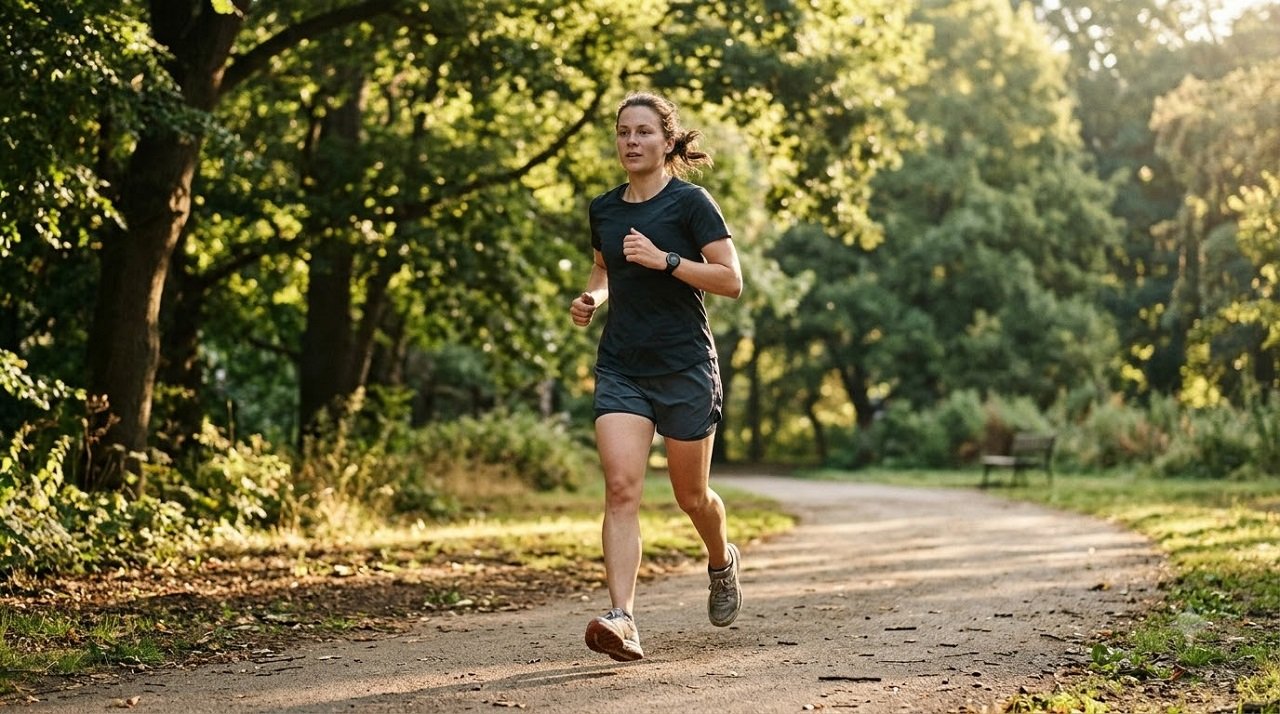
If there is one lifestyle intervention backed by consistent, mechanistically plausible research for ADHD, it is aerobic exercise. And the reason it works is not mysterious: it operates through the same neurochemical pathways that ADHD medication targets.
ADHD involves dysregulation of dopamine and norepinephrine in the prefrontal cortex — the brain region responsible for executive function, working memory, attention regulation, and impulse control. Stimulant medications (methylphenidate, amphetamines) work primarily by increasing the availability of these neurotransmitters. Aerobic exercise does the same thing — through a different mechanism, at a lower magnitude, but through the same fundamental pathway.
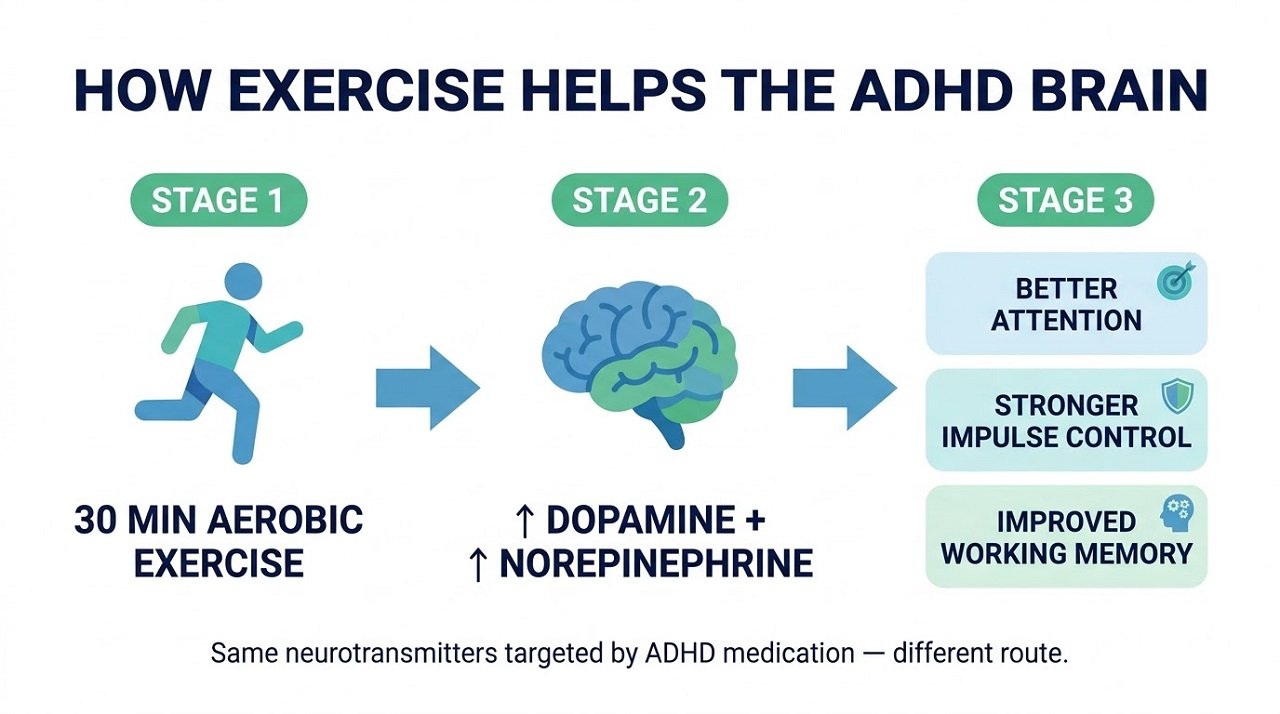
A 2025 meta-analysis published in BMC Public Health (Liu et al.), pooling randomised controlled trials of school-age children with ADHD, found:
- Medium effect sizes for inhibitory control under both positive and reverse scoring
- Medium effect sizes for working memory under both scoring methods
- Small to medium effect sizes for cognitive flexibility, significant under reverse scoring
The FITKids randomised controlled trial, published in Pediatrics, found that approximately 30 minutes of daily aerobic activity improved mood and reduced ADHD symptoms in children. Studies in adults, while fewer, also point toward improvements in motivation, impulse control, and emotional symptoms.
What type of exercise? The research covers aerobic exercise most extensively — running, cycling, swimming, dancing — but emerging evidence suggests that activities combining physical and cognitive demands (martial arts, team sports, gymnastics) may offer additional benefits by engaging the prefrontal cortex more directly. Even a brisk 20–30 minute walk appears to produce acute improvements in attention that last several hours afterward.
Practically: Exercise is not a replacement for medication or behavioural therapy. It is, however, one of the most accessible, side-effect-free, and well-evidenced tools available. Building consistent daily movement into the routine — particularly aerobic activity — is one of the most useful things anyone with ADHD can do.
2. Sleep: The Lever Most People Underestimate

The relationship between ADHD and sleep is one of the most important and least-discussed aspects of managing the condition day to day.
Research consistently shows that sleep difficulties are significantly more common in people with ADHD than in the general population — with estimates suggesting that up to 70-80% of children with ADHD experience some form of sleep disturbance. The problems include difficulty falling asleep (delayed sleep phase is particularly common), restless sleep, difficulty waking, and daytime drowsiness.
The relationship is bidirectional and self-reinforcing: ADHD symptoms — including an overactive mind, difficulty winding down, and hyperfocus on evening activities — make sleep harder. And poor sleep reliably worsens ADHD symptoms the following day: attention, working memory, impulse control, and emotional regulation all deteriorate significantly with sleep loss. The result is a cycle that, left unaddressed, keeps both sleep and ADHD symptoms at their worst.
“The physiological stress this cycle places on the body — and how chronic sleep disruption affects multiple body systems — is covered in detail in our article on physical symptoms of stress and anxiety.”
Importantly, sleep deprivation can also cause or worsen symptoms that look like ADHD in both children and adults — meaning that poor sleep hygiene may sometimes be misread as ADHD severity when it is actually a primary contributor. Improving sleep is therefore both a treatment target in its own right and a tool for getting a clearer picture of underlying ADHD.
Practical sleep hygiene for ADHD:
- Consistent sleep and wake times — including weekends, which is particularly hard for people with ADHD but particularly important
- A screen-free wind-down window of at least 30–60 minutes before bed; blue light and dopaminergic screen content (social media, gaming) are especially activating for ADHD brains
- A predictable pre-bed routine to signal transition; ADHD brains often struggle with self-initiated transitions, and an external routine reduces the cognitive load of that shift
- Melatonin may help with sleep onset specifically (the evidence for this is reasonable) but has no documented effect on ADHD symptoms themselves; it is a sleep aid, not an ADHD intervention
For more on what helps when the mind won’t settle at night, our article on how to stop overthinking before bed covers evidence-based techniques in detail.
3. Omega-3 Fatty Acids: Useful — But Only for Some
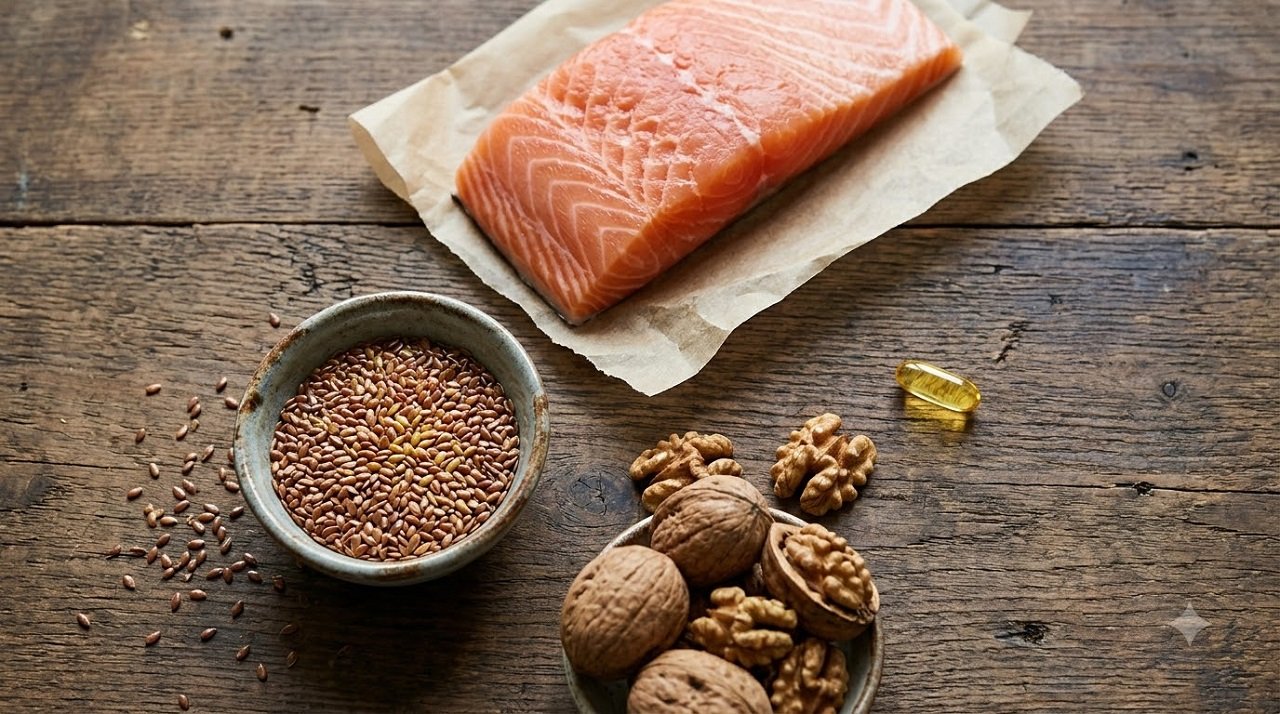
Omega-3 supplementation is one of the most researched nutritional interventions for ADHD, and the evidence is more nuanced than most summaries suggest.
A 2026 biomarker-stratified meta-analysis published in Frontiers in Public Health (Xiao Fu, Ling Feng, Mingyan Jiang, and Jinrong Li) pooled seven randomised controlled trials covering 654 children with ADHD. The key finding — and the one almost universally missing from popular coverage:
- Children with low baseline omega-3 levels showed moderate symptom improvement with supplementation (four trials, 369 children)
- Children with normal or high baseline omega-3 levels showed no measurable improvement (six trials, 559 children)
In plain terms: omega-3 supplementation appears to help people who are actually deficient. For those whose omega-3 status is already adequate, supplementation does not appear to add meaningful benefit for ADHD symptoms.
This matters practically. Rather than simply starting omega-3 supplements because you have read they might help, it makes sense to have omega-3 status checked first — either through a healthcare provider or a home test. If deficiency is present, supplementation becomes a meaningfully supported intervention. If levels are adequate, the money and effort are better spent elsewhere.
The researchers note caveats worth flagging: the evidence rests on only seven trials, baseline omega-3 was defined differently across studies, and some subgroup comparisons were post-hoc. The authors describe their findings as hypothesis-generating rather than conclusive. The evidence is promising, not settled.
Food-first approach: Oily fish (salmon, sardines, mackerel), walnuts, flaxseed, and chia seeds are dietary sources of omega-3. For those who don’t eat fish regularly, a quality EPA/DHA supplement (not ALA-only) is the form with the most direct evidence.
4. Mindfulness-Based Interventions: Promising for Adults
Mindfulness-based approaches — including Mindfulness-Based Stress Reduction (MBSR) and mindfulness-based cognitive therapy adapted for ADHD — have an emerging but carefully caveated evidence base.
A systematic review and meta-analysis by Kretschmer, Göz Tebrizcik, and Dommett (2022), pooling 22 studies across 1,237 individuals with ADHD (ages 7–65), found:
- Reduced inattentive symptoms in both adults and children
- Improved executive function in adults (less consistent in children)
- Improved emotional regulation across groups
- Better quality of life and self-compassion in adults
- Reduced anxiety and depression symptoms in adults with ADHD
The limitations are significant and the authors are explicit about them: study quality was generally poor, samples were small, randomisation and blinding were often inadequate, and high heterogeneity meant meta-analyses could not always be run. The authors conclude that better-designed trials are needed before clinical recommendations can be made — particularly for children.
For adults with ADHD specifically, the picture is more encouraging. Mindfulness practices that build present-moment awareness, slow intentional responding, and self-compassion address the impulsivity, emotional dysregulation, and self-criticism that often accompany ADHD in adults at a mechanistic level. The practice of deliberately noticing when attention has wandered and returning it — the core skill of mindfulness meditation — is essentially a training protocol for the same cognitive function ADHD disrupts.
A realistic starting point: 10–15 minutes of guided mindfulness daily (apps like Headspace or Insight Timer, or MBSR-structured programmes) over at least 8 weeks is what most research protocols use. Informal mindfulness throughout the day — paying deliberate attention during meals, during walking, during conversations — may also contribute.
5. Diet and Nutrients: What the Evidence Supports (and Doesn’t)
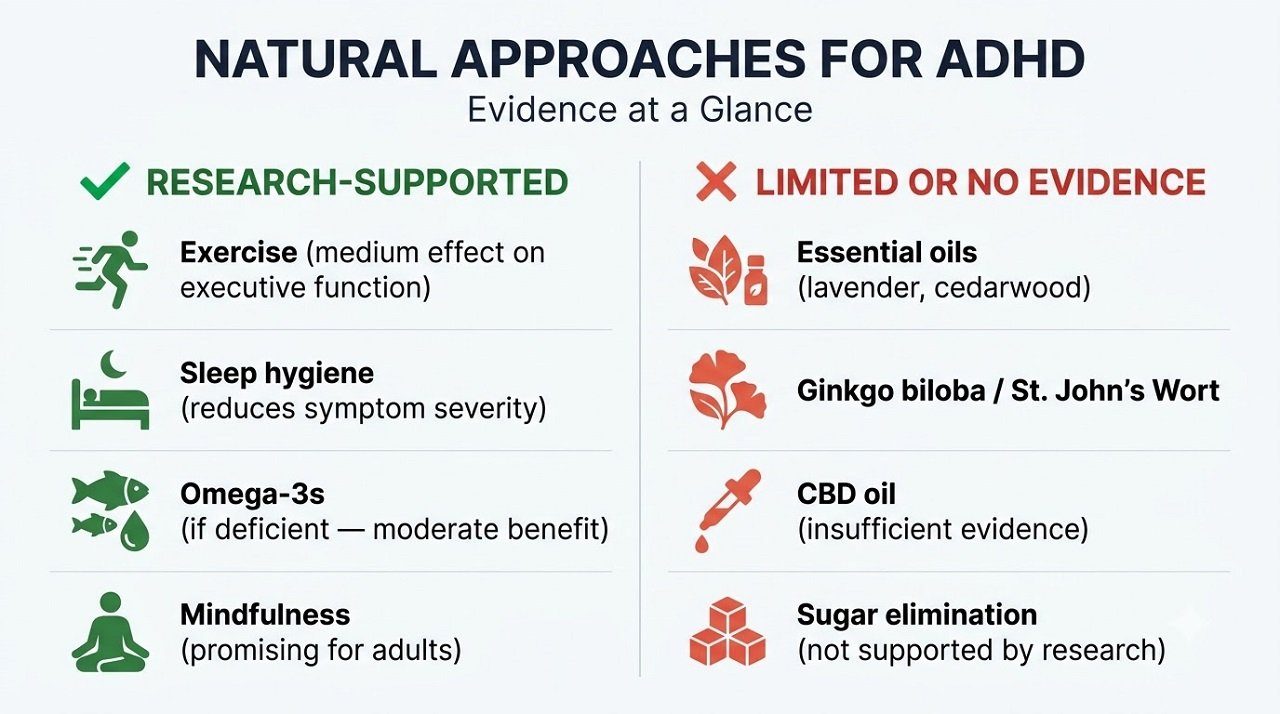
The sugar myth: Despite its persistence in popular belief, research has not shown a consistent link between sugar consumption and ADHD symptom severity. Multiple controlled studies have examined this. The perception may partly reflect the excitement loop — high-stimulation environments (like birthday parties) where sugary food appears — rather than the sugar itself.
Elimination diets: The evidence for restricting artificial food colourings (the “Feingold diet” and its variants) in children with ADHD shows some effect in a subset of children who appear sensitive to specific additives — but it is not a universal finding, the effects tend to be modest, and highly restrictive elimination diets carry their own nutritional risks in growing children. The European Food Safety Authority has flagged certain artificial food colourings as potentially worsening hyperactivity in sensitive children, which has influenced UK food labelling. If you observe consistent symptom patterns after specific foods in your child, that is worth discussing with a paediatrician.
Minerals — zinc, iron, magnesium: Research does suggest a link between deficiency in these minerals and ADHD symptom severity. A review published in Child and Adolescent Psychiatric Clinics of North America found that supplementation may help in cases of documented deficiency. The operative word is deficiency: supplementing minerals at levels already adequate does not appear to add benefit and can cause harm in some cases (iron toxicity, for example, is a real risk in children). A blood panel to check levels before supplementing is the right approach.
What to skip: Essential oils (lavender, cedarwood, vetiver), most herbal remedies (ginkgo biloba, St. John’s wort, French maritime pine bark), and CBD oil do not have meaningful clinical evidence for ADHD symptom management. St. John’s wort also has real drug interaction risks — it affects the metabolism of numerous medications including some ADHD medications. Using it without medical supervision is not advisable.
What These Approaches Can and Cannot Do
The lifestyle interventions covered above — regular aerobic exercise, good sleep hygiene, targeted supplementation based on documented deficiency, mindfulness practice — are not alternative treatments for ADHD. They are genuinely useful adjuncts that the clinical literature supports.
What they cannot reliably do is replicate the effect of appropriate pharmacological treatment in moderate to severe ADHD. Medication for ADHD — when correctly prescribed and monitored — has a well-documented evidence base and is recommended as first-line treatment for adults and many children by NICE (UK), the American Academy of Pediatrics, and the American Psychiatric Association. Lifestyle approaches work best as additions to, not replacements for, that level of care.
The question to ask is not “natural or medication” — it is “what combination of approaches gives this person the best quality of life?” For many people with ADHD, the answer involves multiple layers: professional support, possibly medication, and the kind of consistent lifestyle foundations covered here.
When to Seek Professional Help
If ADHD has not been formally assessed, start there. The lifestyle approaches in this article may help with attention, mood, and energy regardless of ADHD diagnosis — but accurate diagnosis shapes what kind of support is most appropriate.
Seek professional support promptly if:
- ADHD symptoms are significantly affecting school, work, or relationships
- There are co-occurring symptoms of anxiety or depression (common in ADHD)
- Sleep difficulties are severe or persistent despite good sleep hygiene
- A child is falling behind academically or showing distress
ADHD often co-occurs with anxiety, depression, and learning differences — including conditions like complex PTSD, whose overlap with ADHD presentations can complicate diagnosis. A thorough professional assessment is the foundation everything else builds on.
Frequently Asked Questions
Can ADHD be managed without medication?
Some people with mild to moderate ADHD manage effectively with a combination of behavioural strategies, lifestyle modifications, and appropriate support — without medication. Others find that medication is necessary to reach a functional baseline on which everything else can build. The decision is individual and should involve a clinician who knows the full picture. What the research does not support is the idea that lifestyle changes alone are reliably equivalent to medication for moderate to severe ADHD.
Do omega-3 supplements help with ADHD in adults?
Most of the omega-3 research has been conducted in children. The 2026 meta-analysis (Fu et al., Frontiers in Public Health) covered paediatric populations specifically. Adult data is limited. The same logic applies — if omega-3 levels are low, supplementation may be beneficial; if levels are already adequate, the evidence for additional benefit is thin.
Is exercise as effective as medication for ADHD?
No — the effect sizes for exercise, while meaningful, are smaller than those documented for stimulant medication. Exercise is an important adjunct with strong supporting evidence, particularly for executive function and mood. It is not a clinical equivalent of medication for most people with ADHD. The framing of “exercise versus medication” is a false binary; for many people, both are part of an effective approach.
Can diet cause ADHD?
No. ADHD is a neurodevelopmental condition with strong genetic and neurological components. Diet does not cause ADHD. Some dietary factors — particularly omega-3 deficiency and deficiency of certain minerals — may worsen symptoms, and improving these may modestly reduce symptom severity. That is a different claim from diet being a cause.
How long does it take to see results from lifestyle changes?
Exercise can produce acute improvements in attention within a single session, with cumulative gains building over weeks of consistent practice. Sleep improvements typically produce noticeable symptom benefits within days of consistent better sleep. Omega-3 supplementation, in those who are deficient, typically shows effects over 4–12 weeks. Mindfulness effects in research studies build over 8-week protocols. None of these are overnight changes — consistent practice over weeks to months is the realistic timeframe.
Sources & References
- American Psychiatric Association. What Is ADHD? https://www.psychiatry.org/patients-families/adhd/what-is-adhd
- Liu et al. Meta-analysis of exercise interventions and executive function in children with ADHD. BMC Public Health. 2025. Referenced at: https://adhdevidence.org/blog/meta-analysis-reports-executive-function-gains-from-exercise-interventions-for-adhd
- Fu X, Feng L, Jiang M, Li J. Baseline omega-3 nutritional status and supplementation response in pediatric ADHD: a systematic review and biomarker-stratified meta-analysis. Frontiers in Public Health. 2026. Referenced at: https://adhdevidence.org/blog/new-research-on-omega-3s-and-adhd
- Kretschmer A, Göz Tebrizcik A, Dommett EJ. Mindfulness-based interventions for ADHD: systematic review and meta-analysis. 2022. Referenced at: https://www.simplypsychology.org/?p=55616
- WebMD. ADHD natural remedies. https://www.webmd.com/add-adhd/adhd-natural-remedies
- ADDitude Magazine / ADAA. ADHD and sleep disturbances. Referenced at: https://www.betterhelp.com/advice/sleep/why-do-people-with-adhd-have-trouble-sleeping-adhd-symptoms-and-sleep-disorders
- National Institute of Mental Health (NIMH). Attention-Deficit/Hyperactivity Disorder. https://www.nimh.nih.gov/health/topics/attention-deficit-hyperactivity-disorder-adhd
This article is for informational and educational purposes only. It does not constitute medical advice and should not replace consultation with a qualified healthcare professional. ADHD diagnosis and treatment decisions should always be made in collaboration with a clinician.
Mental Health
How to Know If You Have Social Anxiety or Just Shy: The Difference That Actually Matters
Informational purposes only — not a substitute for medical advice
Disclaimer: This article is for informational and educational purposes only. It does not constitute medical advice, diagnosis, or treatment. Only a qualified mental health professional can diagnose social anxiety disorder. If you recognise yourself in this article, use it as a starting point for a professional conversation, not a conclusion.
Most people have felt nervous in a social situation. Job interviews, first dates, speaking in front of a group — that discomfort is common, normal, and not what this article is about.
The question this article is about is a more persistent one: Is what I feel in social situations a personality trait I was born with — or is it a clinical condition that is quietly limiting my life?
The answer changes everything about what you should do next. Shyness doesn’t require treatment. Social anxiety disorder does — and it responds well to treatment that most people with it never seek, often because they’ve spent years telling themselves they’re just shy.
Here is how to tell the difference.
What Shyness Actually Is

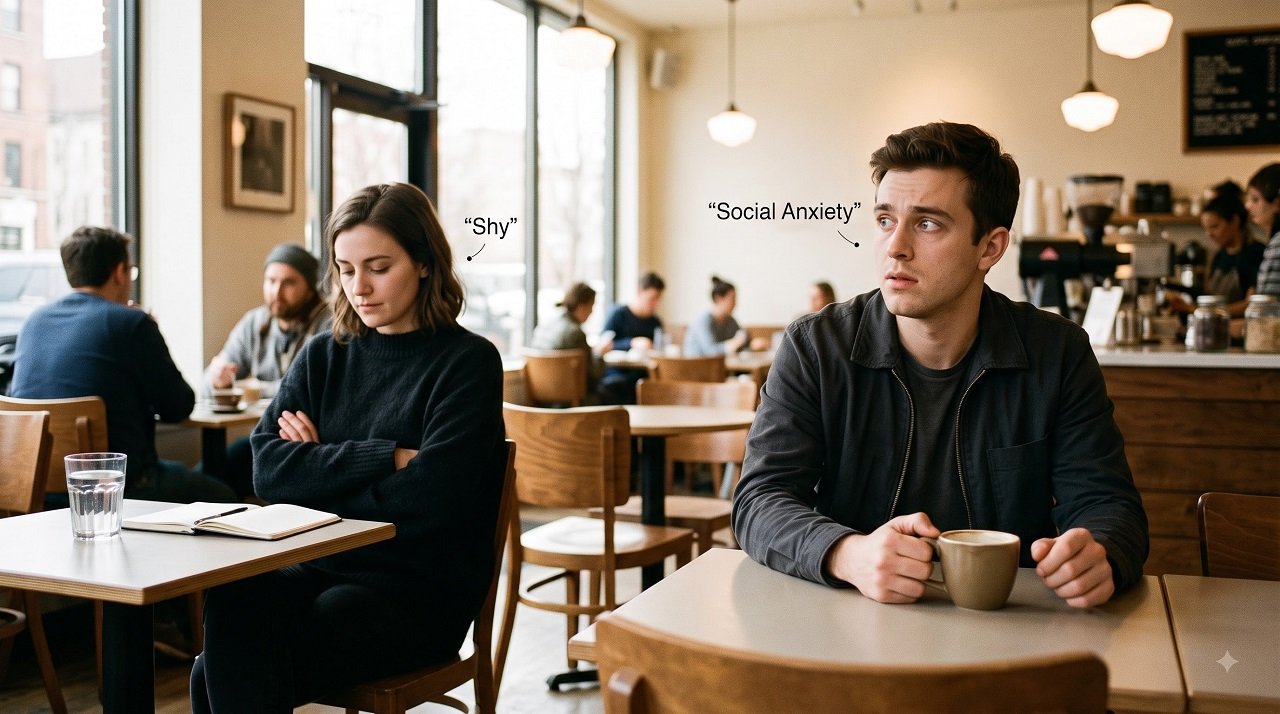
Shyness is a personality trait — a normal variation in temperament, not a clinical condition. According to established personality research, shyness is categorised as a stable personality characteristic involving consistent patterns of behaviour, thought, and emotion across various social contexts. Psychological research distinguishes between two types: state shyness, a temporary response to an unfamiliar situation, and trait shyness, a long-term and stable personality characteristic.
Key features of shyness as a personality trait:
- It fades with familiarity. Shy people typically feel most uncomfortable in new or unfamiliar social situations and warm up as the situation becomes familiar. The nervousness is situationally bound and time-limited within that situation.
- It doesn’t necessarily involve fear. Shyness is characterised more by inhibition and hesitation than by intense fear. Many shy people enjoy social interactions once they feel comfortable; they are simply slower to get there.
- It doesn’t prevent functioning. A shy person may avoid going first, may hang back at parties, may take time to open up — but shyness does not typically prevent them from attending, from performing when required, or from maintaining meaningful relationships.
- It can improve naturally with experience. Research cited by UNSW notes that shyness may improve with age and accumulated social experience, without any clinical intervention.
Importantly, shyness is not a prerequisite for social anxiety disorder. According to the Social Anxiety Institute, only about half of people diagnosed with social anxiety disorder report having been shy. Social anxiety is about fear of judgment — it is not a personality type, and it is not exclusively the domain of introverts or quiet people. Outgoing, extroverted individuals can and do have social anxiety disorder.
What Social Anxiety Disorder Actually Is
Social anxiety disorder (SAD), also known as social phobia, is a diagnosable mental health condition listed in the DSM-5 under code 300.23. It is one of the most common anxiety disorders.
According to the DSM-5-TR, social anxiety disorder is defined as a marked fear or anxiety about one or more social situations in which the individual is exposed to possible scrutiny by others. The individual fears that they will act in a way, or show anxiety symptoms, that will be negatively evaluated — that they will be judged, humiliated, rejected, or embarrassed.
The DSM-5 diagnostic criteria require all of the following to be present:
- Marked, persistent fear or anxiety about social situations involving scrutiny
- The social situations almost always provoke fear or anxiety
- The fear or anxiety is disproportionate to the actual threat posed
- Social situations are avoided or endured with intense fear or anxiety
- The fear, anxiety, or avoidance causes clinically significant distress or impairment in social, occupational, or other important areas of functioning
- The fear, anxiety, or avoidance is persistent, typically lasting six months or more
According to NIMH data from the National Comorbidity Survey Replication, social anxiety disorder affects approximately 7% of US adults in any given year, with a lifetime prevalence of 12.1%. Women are more affected than men — the past-year prevalence is 8.0% for females versus 6.1% for males. Among adolescents, NIMH reports a lifetime prevalence of 9.1%, with females (11.2%) significantly more affected than males (7.0%).
The Merck Manual Professional Edition notes that the median age of onset is 13, with 75% of cases presenting between ages 8 and 15 — which means many adults with social anxiety disorder have been living with it since childhood, often without a diagnosis.
The Five Questions That Tell Them Apart
The distinction between shyness and social anxiety disorder, when distilled to its clinical core, comes down to five questions. Clinicians assessing for SAD are essentially asking these five things.
1. How intense is the fear, and does it arrive before the situation even starts?
Shyness: mild to moderate discomfort that tends to arrive in the moment and fade as you settle in.
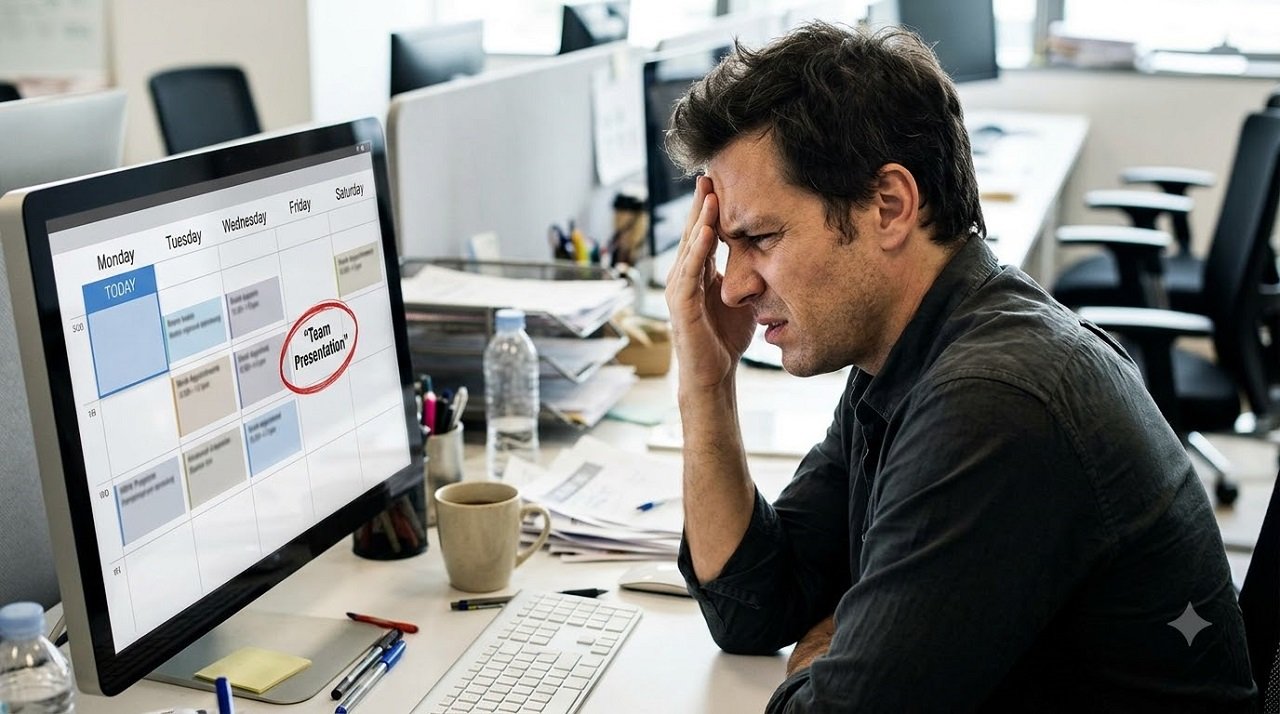
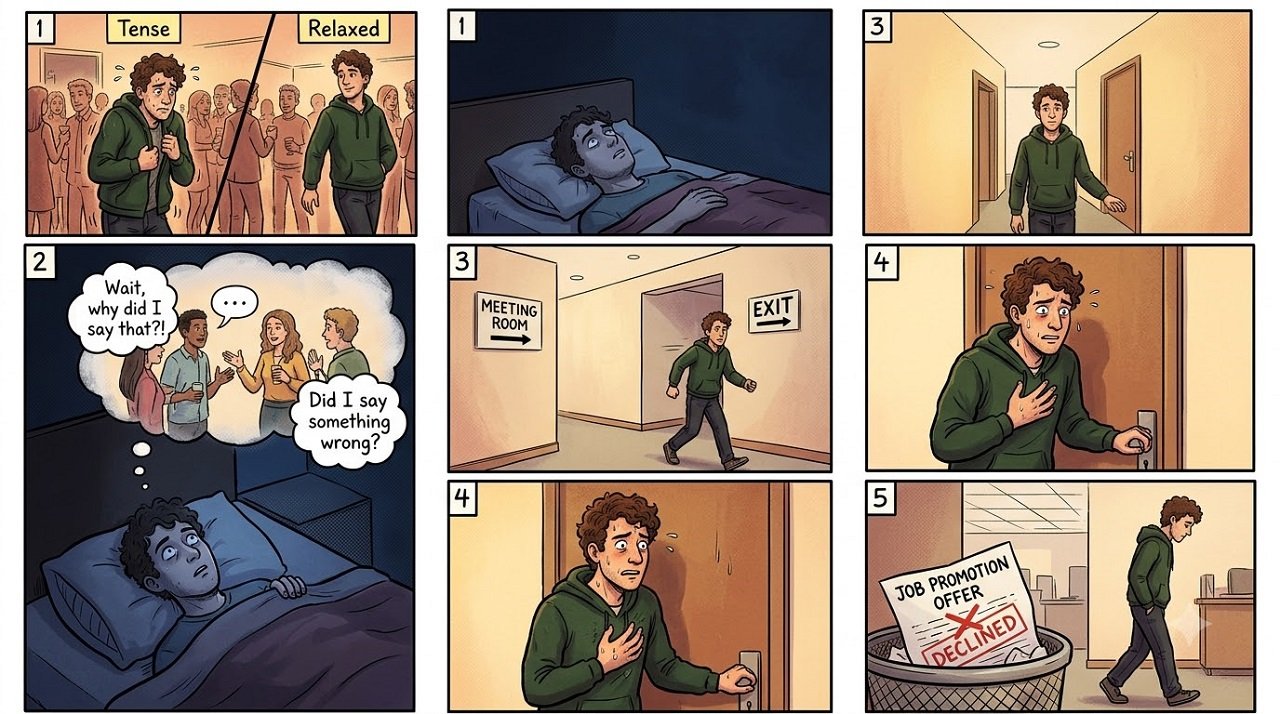
Social anxiety: fear that begins well before the event. A meeting scheduled for Friday may generate significant dread from Monday onward. The anticipatory anxiety can be as debilitating as the event itself — and sometimes more so. People with social anxiety often spend weeks or even months dreading an event before it happens.
2. How long does the discomfort last after the situation ends?
Shyness: the discomfort ends when the situation does. Once you’ve left the party or the meeting, you move on.
Social anxiety: the discomfort continues afterward in the form of post-event processing — replaying the interaction in detail, cataloguing what you said that might have come across wrong, what your face did, how your voice sounded, what people must be thinking now. This rumination loop — anticipatory anxiety before, hypervigilance during, and post-event analysis after — is a defining cognitive pattern of SAD that is entirely absent from typical shyness.
3. Does the discomfort lead you to avoid situations you’d otherwise want or need to be part of?
Shyness: shy people may participate reluctantly or with some effort, but they generally participate.
Social anxiety: avoidance is one of the DSM-5 diagnostic criteria. People with SAD often turn down opportunities — professionally, socially, romantically — to avoid the feared situation. The avoidance provides temporary relief and sustains the anxiety long-term, because the feared situation is never encountered in a way that could update the fear. Each avoided situation makes the next one feel more threatening.
4. Are there physical symptoms — and do they arrive in anticipation rather than only in the moment?
Shyness: some mild physical discomfort is possible, but it is generally not intense or disabling.
Social anxiety: physical symptoms are a core clinical feature. According to research on prevalence and severity of SAD, physiological symptoms during anxiety in social situations include restlessness, stomach aches, blushing, palpitations, muscle tension, and sweating. These can appear before the situation begins — in the hallway on the way to a meeting, in the car on the way to an event — in a pattern that is closer to a full anxiety response than to ordinary social discomfort. Our article on what an anxiety attack feels like physically covers how the body activates under that kind of threat-perceived stress in detail.
5. Is the discomfort significantly affecting your functioning — your career, your relationships, your daily life?
This is the clinically decisive question. The DSM-5 requires clinically significant distress or impairment in social, occupational, or other important areas of functioning for a diagnosis of SAD. Without this criterion, the symptoms alone do not reach the diagnostic threshold.
Shyness: does not significantly interfere with functioning. A shy person may prefer smaller gatherings and take longer to open up, but their career advancement, relationship maintenance, and daily life are not substantially impaired by the discomfort.
Social anxiety: the impairment is measurable. It may show up as passing on a deserved promotion because it involves presenting, avoiding romantic relationships because the initial anxiety is unbearable, losing friendships through gradual withdrawal, underperforming academically because the classroom feels like a stage. According to Cleveland Clinic, social anxiety disorder generally doesn’t go away on its own — unlike shyness, it typically worsens without treatment.
The Rumination Loop: What Social Anxiety Looks Like From the Inside
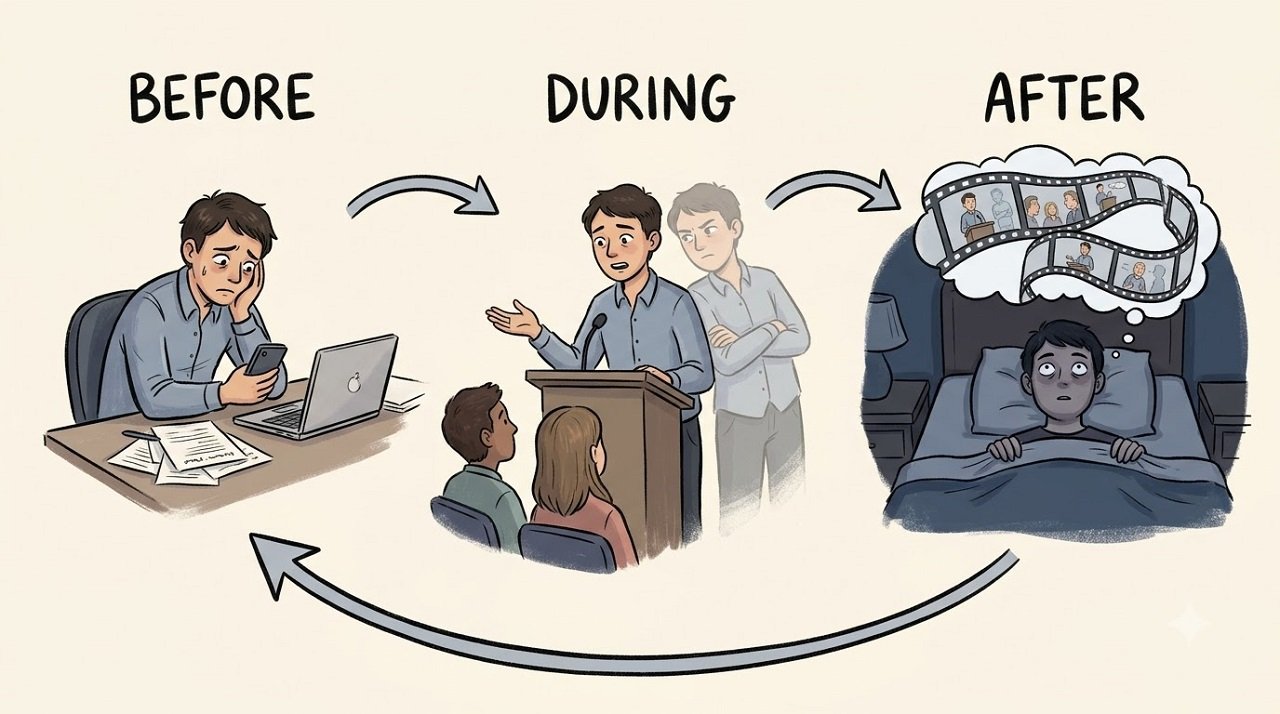
The three-phase cognitive cycle of social anxiety — anticipatory anxiety, in-situation hypervigilance, and post-event processing — is the feature most people with SAD recognise most viscerally but find hardest to name. Understanding it is one of the most useful things you can do with this information, because it distinguishes SAD clearly from anything that shyness produces.
Before: You know a social situation is coming. Rather than ordinary mild anticipation, you experience sustained dread — imagining everything that could go wrong, rehearsing what you’ll say, catastrophising about how you’ll be perceived. This can begin days or weeks in advance for significant events.
During: You are present in the situation but operating on two levels simultaneously. One part of you is participating; another part is monitoring continuously — watching yourself from the outside, assessing how you’re coming across, detecting signs that others are judging you, adjusting your behaviour in real time to manage the perceived impression. This dual processing is exhausting and interferes directly with the quality of your social interaction.
After: The situation has ended. For most people, so has the social discomfort. For someone with SAD, a new phase begins: replaying the interaction, often in detail, identifying the moments that felt wrong, inferring what people thought, feeling shame or embarrassment about things that happened or might have been perceived a certain way. This post-event processing can last hours, days, or longer.
This three-phase pattern is absent from shyness. It is a cognitive signature of social anxiety disorder, and it is one of the primary targets of CBT treatment.
You Don’t Have to Be Shy to Have Social Anxiety
This is the content gap most articles on this keyword miss entirely, and it matters enough to warrant its own section.
It is widely assumed that social anxiety is simply extreme shyness, and that quiet, introverted, or reserved people are the ones who have it. The clinical picture is more nuanced.
According to the Social Anxiety Institute, only about half of those diagnosed with social anxiety disorder report having been shy. Approximately half were not particularly shy — they were simply afraid of specific social situations in a way that was disproportionate, persistent, and impairing.
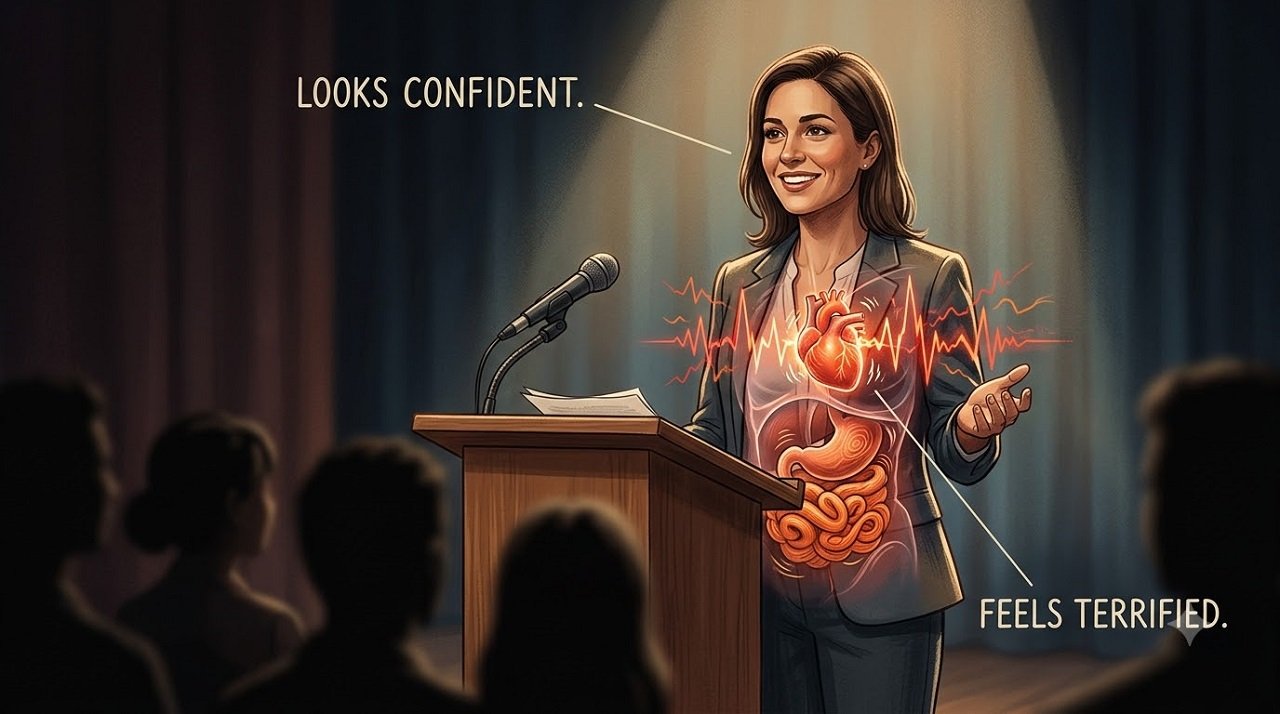
People with social anxiety disorder desire social contact and want to participate in social situations — their anxiety can become unbearable, but the desire to connect is there. This is fundamentally different from introversion (a preference for less social stimulation) or shyness (hesitation and inhibition in social situations). Outgoing people can have social anxiety. Extroverts can have social anxiety. People who appear confident can have social anxiety — particularly in the performance-only specifier.
The DSM-5 performance-only specifier is worth understanding here. Social anxiety disorder can be limited specifically to performance situations — public speaking, presentations, performing in front of an audience — without generalising to other social situations. A person who is comfortable at parties, in one-on-one conversations, and in daily social interactions but experiences debilitating fear specifically when performing or presenting may meet criteria for SAD with the performance-only specifier. This presentation is frequently missed because it doesn’t fit the stereotype of the shy, withdrawn person.
Side-By-Side Comparison
| Feature | Shyness | Social Anxiety Disorder |
|---|---|---|
| Clinical status | Personality trait — not a disorder | DSM-5 diagnosable condition (300.23) |
| Core experience | Hesitation, inhibition, discomfort | Intense fear of negative evaluation and judgment |
| Timing | Discomfort in the moment | Before, during, and after social situations |
| Physical symptoms | Mild | Often significant — palpitations, sweating, trembling, nausea |
| Avoidance | Minimal | Characteristic and progressive |
| Post-event | Ends with the situation | Rumination and post-event analysis |
| Impact on functioning | Minimal | Clinically significant distress or impairment |
| Duration | Situational | Persistent — 6 months or more by DSM-5 criteria |
| Trajectory without intervention | May improve with experience | Typically worsens |
| Requires clinical treatment | No | Yes — and responds well to it |
Does Social Anxiety Disorder Overlap With Other Conditions?
Yes, significantly — and this is one reason it stays undiagnosed. According to a PMC narrative review on SAD’s associated conditions and therapeutic approaches, social anxiety disorder commonly co-occurs with depression, other anxiety disorders, and in some cases high-functioning depression, where the social withdrawal driven by SAD can compound persistent low mood to the point where both conditions are present and interacting.
The relationship between social anxiety and trauma responses is also worth noting. The hypervigilance of the fawn response — the constant monitoring of others’ emotional states and reactions — can closely resemble the in-situation monitoring phase of social anxiety. They are distinct in origin and mechanism, but they can coexist and reinforce each other.
What Treatment Looks Like for Social Anxiety Disorder

Social anxiety disorder is highly treatable. The evidence base is stronger and more consistent than for most anxiety conditions.
A 2024 systematic review and Bayesian network meta-analysis comparing six psychotherapies across 92 studies and 90 randomised controlled trials found that cognitive behavioural therapy (CBT) is the most effective psychological intervention for SAD, recommended as first-line treatment in clinical guidelines internationally. The pooled between-group effect size for CBT was large at post-treatment.
Importantly, treatment gains from CBT for social anxiety continue to improve after therapy ends. According to Cleveland Clinic, one study found CBT for SAD reduces symptoms for 12 months or longer after therapy concludes. Research drawing on longitudinal data found that 48% of people no longer met diagnostic criteria for SAD five years after completing internet-based CBT.
A 2026 network meta-analysis published in Frontiers in Psychology comparing non-pharmacological interventions found that CBT ranked highest in effectiveness with an SUCRA value of 86.4%, ahead of combination therapy (71.7%) and psychotherapy generally (70.7%). The same review found virtual reality exposure therapy and attention training also showing beneficial effects.
Medication — primarily SSRIs and SNRIs — is used alongside CBT when symptoms are severe or when therapy alone produces partial improvement. The combination of CBT and medication generally produces better outcomes than either alone in moderate to severe presentations.
The fact that social anxiety disorder responds well to structured treatment is one of the most important pieces of information for people who have been labelling their experience as shyness for years. The discomfort isn’t a personality defect to push through. It is a clinical condition that can be substantially reduced with the right intervention.
Frequently Asked Questions
What is the key difference between being shy and having social anxiety?
Shyness is a personality trait characterised by hesitation and discomfort in social situations that fades with familiarity. Social anxiety disorder is a DSM-5 diagnosable clinical condition characterised by persistent, intense fear of negative evaluation in social situations, avoidance behaviours, physical symptoms, and clinically significant impairment in daily functioning. The critical clinical distinction is functional impairment: shyness does not significantly impair daily life; social anxiety disorder, by definition, does.
Can you have social anxiety without being shy?
Yes. According to the Social Anxiety Institute, approximately half of people diagnosed with social anxiety disorder were not particularly shy. Social anxiety is about fear of judgment and negative evaluation — it is not a personality type. Extroverted and outgoing individuals can have social anxiety disorder, particularly in the performance-only specifier.
At what age does social anxiety disorder usually start?
According to the DSM-5, the median age of onset is 13, with 75% of cases beginning between ages 8 and 15. Many adults with social anxiety disorder have been living with it since adolescence without a diagnosis, often because they attributed their experience to shyness or introversion.
Does social anxiety go away on its own?
Unlike shyness, which may improve with experience and familiarity, social anxiety disorder typically worsens without treatment. The avoidance behaviour that provides short-term relief sustains and strengthens the anxiety long-term. Cleveland Clinic states clearly that social anxiety disorder generally doesn’t go away on its own — but it does respond well to evidence-based treatment, particularly CBT.
Is social anxiety the same as introversion?
No. Introversion is a preference for less social stimulation — introverts find large amounts of social interaction draining rather than energising. It is a temperament, not a disorder, and it does not involve fear. Social anxiety disorder involves fear of negative evaluation and judgment, not a preference for solitude. An introvert can be entirely comfortable in social situations they choose to be in. A person with social anxiety disorder experiences fear in social situations regardless of whether they’ve chosen to be there.
Sources & References
- American Psychiatric Association. Diagnostic and Statistical Manual of Mental Disorders, 5th Edition, Text Revision (DSM-5-TR). APA Publishing, 2022. psychiatry.org
- National Institute of Mental Health (NIMH). “Social Anxiety Disorder: Statistics.” U.S. Department of Health and Human Services. nimh.nih.gov
- Merck Manual Professional Edition. “Social Anxiety Disorder.” Reviewed 2024. merckmanuals.com
- Cleveland Clinic. “Social Anxiety Disorder: Symptoms and Treatment.” Reviewed 2024. my.clevelandclinic.org
- Social Anxiety Institute. “Shyness or Social Anxiety Disorder?” socialanxietyinstitute.org
- Talkiatry. “Shyness vs Social Anxiety: Are They the Same?” March 2024. talkiatry.com
- UNSW Sydney. “What’s the Difference Between Shyness and Social Anxiety?” 2024. unsw.edu.au
- Prevalence and Severity of Social Anxiety Symptoms. PMC, 2024. doi:10.3389/fpsyg.2024. pmc.ncbi.nlm.nih.gov/articles/PMC10909235
- Iimori M, et al. “Comparative effectiveness of non-pharmacological interventions for social anxiety disorder in adults: a systematic review and meta-analysis.” Frontiers in Psychology, 2026. doi:10.3389/fpsyg.2026.1787151. frontiersin.org
- Nordmo M, et al. “Cognitive behaviour therapy for social anxiety disorder: a systematic review and meta-analysis investigating different treatment formats.” Australian Psychologist, 2024. doi:10.1080/00050067.2024.2356804. tandfonline.com
- Bayesian Network Meta-Analysis on psychotherapies for SAD. Journal of Affective Disorders, 2024. sciencedirect.com
- Social Anxiety Disorder: Associated Conditions and Therapeutic Approaches. PMC, 2023. doi:10.3390/ijerph20010036. ncbi.nlm.nih.gov/pmc/articles/PMC9847330
- Wikipedia. “Shyness.” en.wikipedia.org/wiki/Shyness
This article is for informational and educational purposes only. It does not constitute medical advice and should not be used to self-diagnose or replace consultation with a qualified mental health or medical professional. If social anxiety is significantly affecting your daily life, speaking with a GP or mental health professional is the most effective next step.

10 Quick Health Tips Before a Big Meeting (Backed by Research)

Root Cause Answers

How to Stop Overthinking Before Bed: Evidence-Based Techniques That Actually Work

PEMF Webinar

The 4-7-8 Breathing Technique: Step-by-Step Guide and What the Research Actually Shows

Why You Can’t Trust Big Pharma
-
 Events2 weeks ago
PEMF Webinar
-
 Natural Sleep Remedies6 months ago
The 4-7-8 Breathing Technique: Step-by-Step Guide and What the Research Actually Shows
-
 Events2 months ago
HBOT ( Hyperbaric Oxygen Therapy ) Webinar
-
 Events6 months ago
Why You Can’t Trust Big Pharma
-
 Events6 months ago
The Anti-Cancer Body with Dr. Michael Karlfeldt
-
 Home Remedies6 months ago
Natural Home Remedies for Restless Legs at Night
-
 Events5 months ago
The Cancer Conversation Your Oncologist Cannot Have in 15 Minutes
-

 Events7 months ago
Beyond the Brain